A weekday meal with a familiar rhythm
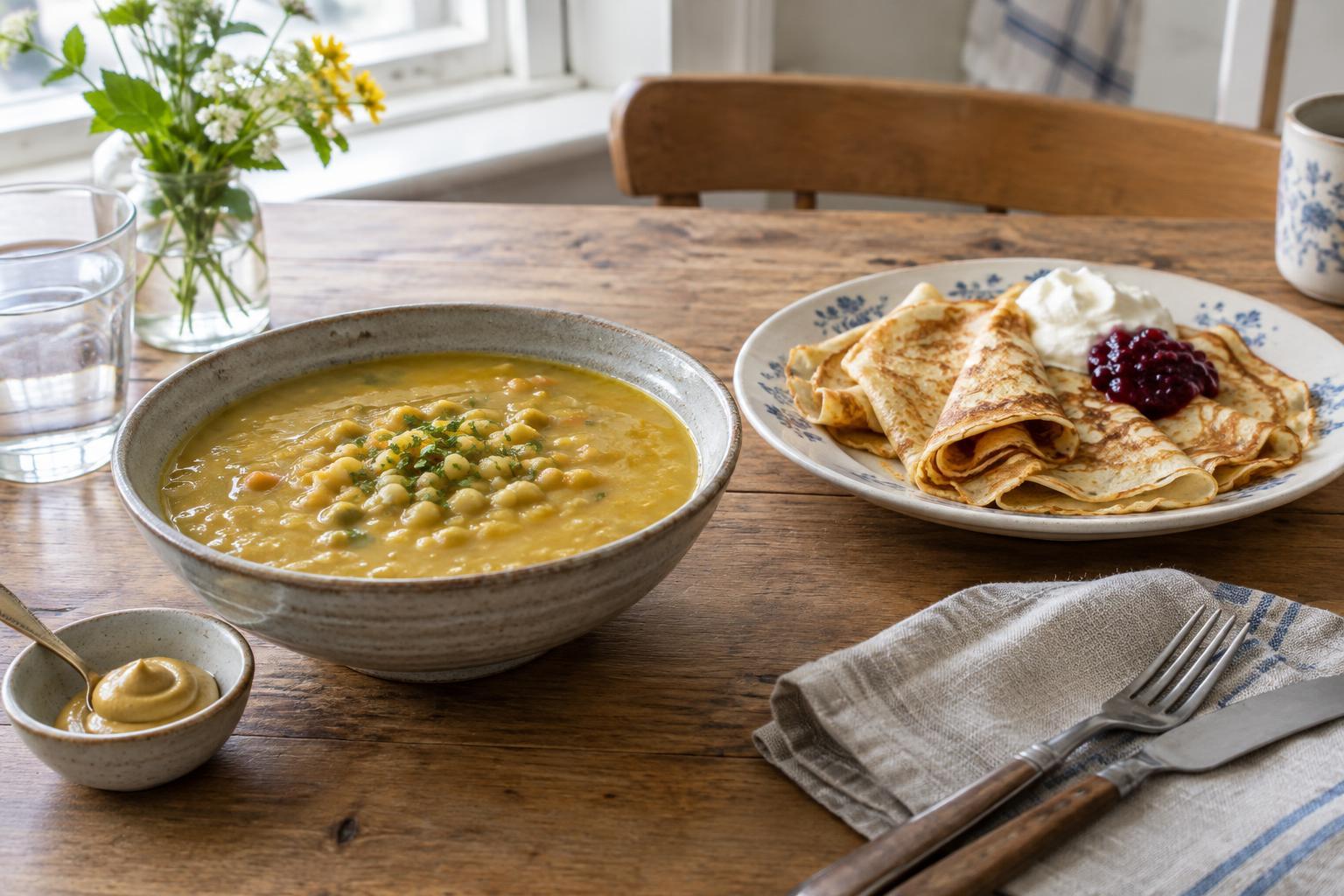
In Sweden, a bowl of yellow pea soup followed by pancakes is closely associated with Thursday. The soup, called ärtsoppa, is usually made from dried yellow peas and often includes pork, onion and herbs. Mustard is a common addition at the table. Afterward come thin Swedish pancakes, or pannkakor, typically served with jam and sometimes whipped cream. The pairing is so familiar that many people recognize it even if they do not eat it every week.
It is an appealing sequence: a substantial, savory main course followed by something sweet. That contrast helps explain why the custom has lasted. It also makes Thursday feel a little different from the other weekdays without requiring an elaborate celebration.
Why Thursday? There is no single certain answer
One common explanation looks back to the period when Friday fasting shaped meals in parts of Christian Europe. A filling meal on Thursday may have been especially welcome before a day with restrictions on eating meat. Sweden’s religious practices changed over time, however, and it would be too simple to treat this as a complete explanation for today’s pea-soup custom.
Practicality offers another part of the picture. Dried peas store well, and a large pot of soup can feed many people. Those qualities made pea soup suited to households and communal kitchens alike. Repeating it on a set day also made planning easier. Older fasting customs, economical ingredients and routine cooking may all have helped Thursday become the day associated with the dish; the tradition does not need one neat origin story.
Why soup first and pancakes afterward?
Yellow pea soup is hearty enough to anchor a meal, especially when it contains pork. Pancakes provide a gentle change of pace rather than another heavy main course. In the traditional pairing, they are often thought of as the sweet finish: thin, tender and served with something fruity. Together, the dishes offer variety while relying on straightforward ingredients.
The combination also works well in settings that serve regular lunches. Soup can be prepared in a large batch, while pancakes make the menu feel more inviting. Over time, repetition in homes, schools, workplaces and restaurants can make a meal seem like a fixed custom. People encounter it in more than one place, then carry the expectation that Thursday might mean soup and pancakes.
What a Thursday serving looks like
There is no single required recipe. A classic version uses dried yellow peas simmered until soft, with pork lending a salty, savory flavor. Onion and herbs help round it out, and mustard lets each person adjust the sharpness of their bowl. Some cooks make the soup without meat or use a different seasoning balance. The defining feature is the warm, satisfying pea soup, not an exact list of additions.
The pancakes are different from thick, fluffy pancakes: Swedish pannkakor are thin and broad. They can be rolled or folded around jam, or simply eaten with a spoonful on the side. Whipped cream is a familiar extra, but it is not essential. If you want to try the Thursday meal at home, the easiest approach is to make a pot of soup and follow it with a small stack of thin pancakes. There is no need to reproduce a particular family’s version to understand the pairing.
A tradition, not a rule
Not everyone in Sweden eats pea soup on Thursdays. Preferences, dietary needs and daily schedules vary, and some people know the meal mainly from a lunch menu. Its place in Swedish food culture comes less from universal observance than from recognition: it is a shared idea of what a Thursday lunch can be.
That is part of what makes the custom interesting. Ordinary foods can gain meaning through the days on which they are served and the memories attached to them. Pea soup and pancakes offer a way to notice that rhythm of everyday life, whether you order them together or cook them yourself. Sweden Culture Guide is an independent culture magazine, not a consulate or government service.