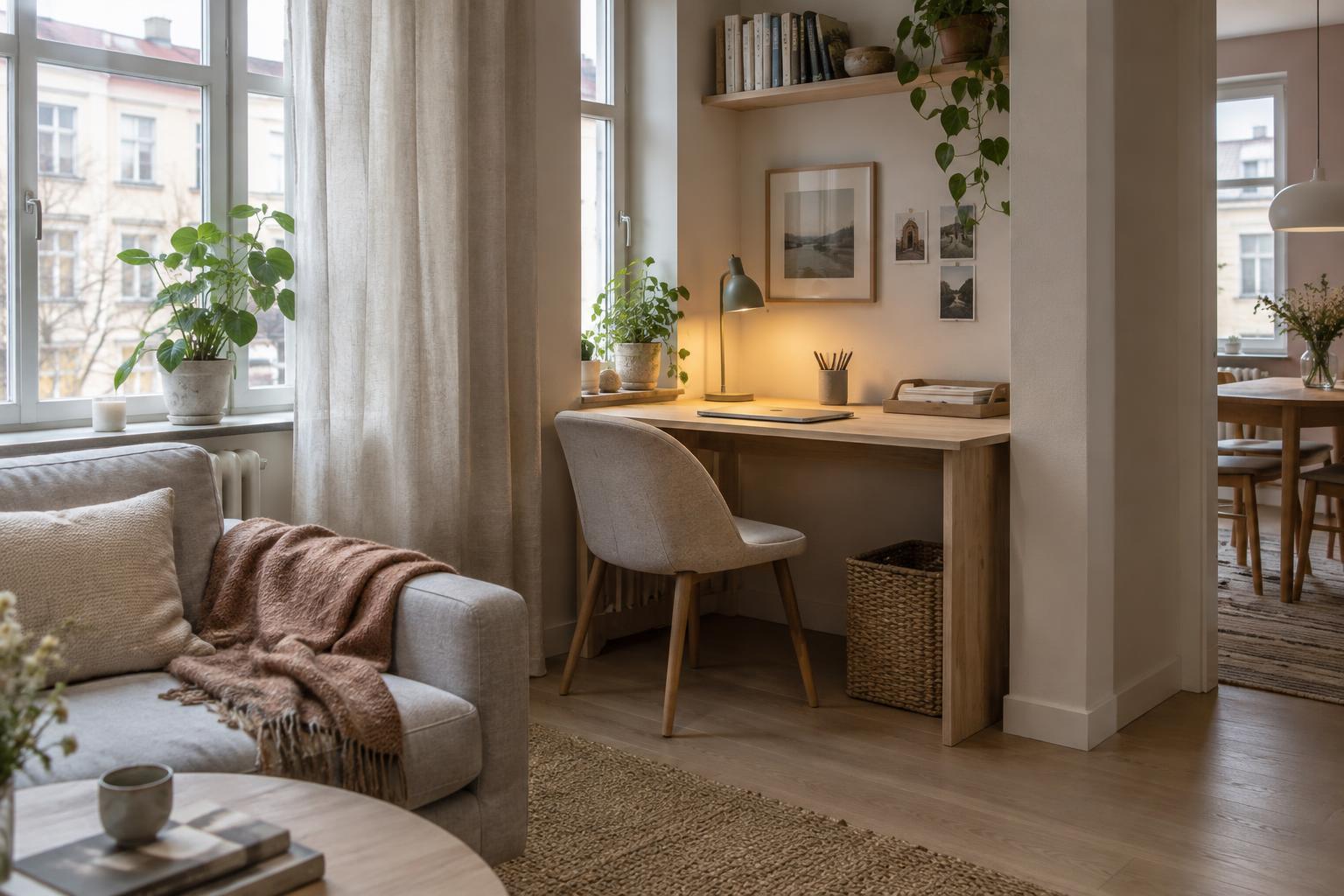
Start with the work, not the desk
A Swedish-inspired workspace need not look like a separate office. It can be a modest part of a living room, bedroom or hallway, arranged to work well without dominating the space. Before choosing furniture, list what you do there: focused computer work, reading, drawing, paperwork or occasional household tasks. A laptop and notebook need a different surface from a large monitor or materials that must stay spread out.
Notice when and how long you use the space. If you sit there for extended periods, give the chair and its clearance priority. If you use it briefly, a compact desk may be enough. This is a design approach, not an official Swedish standard: Sweden Culture Guide is an independent culture magazine, not a consulate or government service.
Give the workspace a sensible footprint
Measure the space while imagining the chair pulled out, drawers open and someone walking past. A desk that fits against a wall may still obstruct a doorway or make a room feel cramped in use. Mark its proposed footprint on the floor with removable tape, then try moving through the room. This simple test is especially helpful when a workspace shares an area used for meals or relaxation.
Consider what the desk will face. A view outside may be pleasant, but a screen placed directly in front of a bright window can be difficult to see. Turning the desk slightly or positioning it beside the window may offer more flexibility. Keep cables, sockets and access to a task light in mind before settling on a layout.
Choose furniture that earns its place
Restrained forms and useful materials can help a workspace sit comfortably alongside the rest of a home. A simple wooden desk, a secondhand table or a narrow wall-mounted surface could each work, depending on the task. Check that the surface feels steady and leaves room for the items you actually use. A beautiful table that wobbles or cannot hold your equipment will soon become frustrating.
Choose a chair for how it feels during your usual working session, not only for its appearance. Make sure it fits beneath the desk and allows you to sit without crowding your legs. If a softer chair suits the room but lacks support for longer sessions, it may be better reserved for reading. Matching furniture is less important than pieces that work together.
Make storage easy to maintain
A calm workspace is easier to keep when frequently used objects have obvious places. Put current papers within reach, but give older documents and spare supplies a separate home. One shallow drawer, a small shelf or a few labeled boxes may be more useful than an elaborate storage system. Leave some clear desk space so you can begin a task without first moving a pile.
In a shared room, decide what should remain visible when work ends. A tray can gather pens and charging cables; a closed cabinet can conceal equipment that would otherwise stay on display. This is not about hiding every sign of work. It is about making the transition between working and living in the room feel manageable.
Finish with light, texture and a workable routine
A task lamp lets you light the work surface without relying entirely on the room’s main light. Try it in the evening before committing to a position: your hand, monitor or nearby objects may cast shadows where you need to see. Curtains or a shade can help you adjust strong daylight, while a rug or fabric-covered pinboard may soften an area with many hard surfaces.
Keep the finishing touches selective. A plant, a favorite print or a small ceramic cup can make the workspace feel connected to the home without reducing its useful surface. Once the setup is in place, use it for a week and notice what you keep reaching for or moving out of the way. Those small adjustments often matter more than achieving a perfectly styled desk on the first attempt.