Start with the pause, not the menu
Fika is often described as a coffee break, but the drink is only part of it. It is a chance to step away from a task, sit down and enjoy a little time alone or with others. Something sweet often accompanies the coffee, though an elaborate spread is not required. A fika at home might last fifteen minutes at the kitchen table or stretch into a longer afternoon visit.
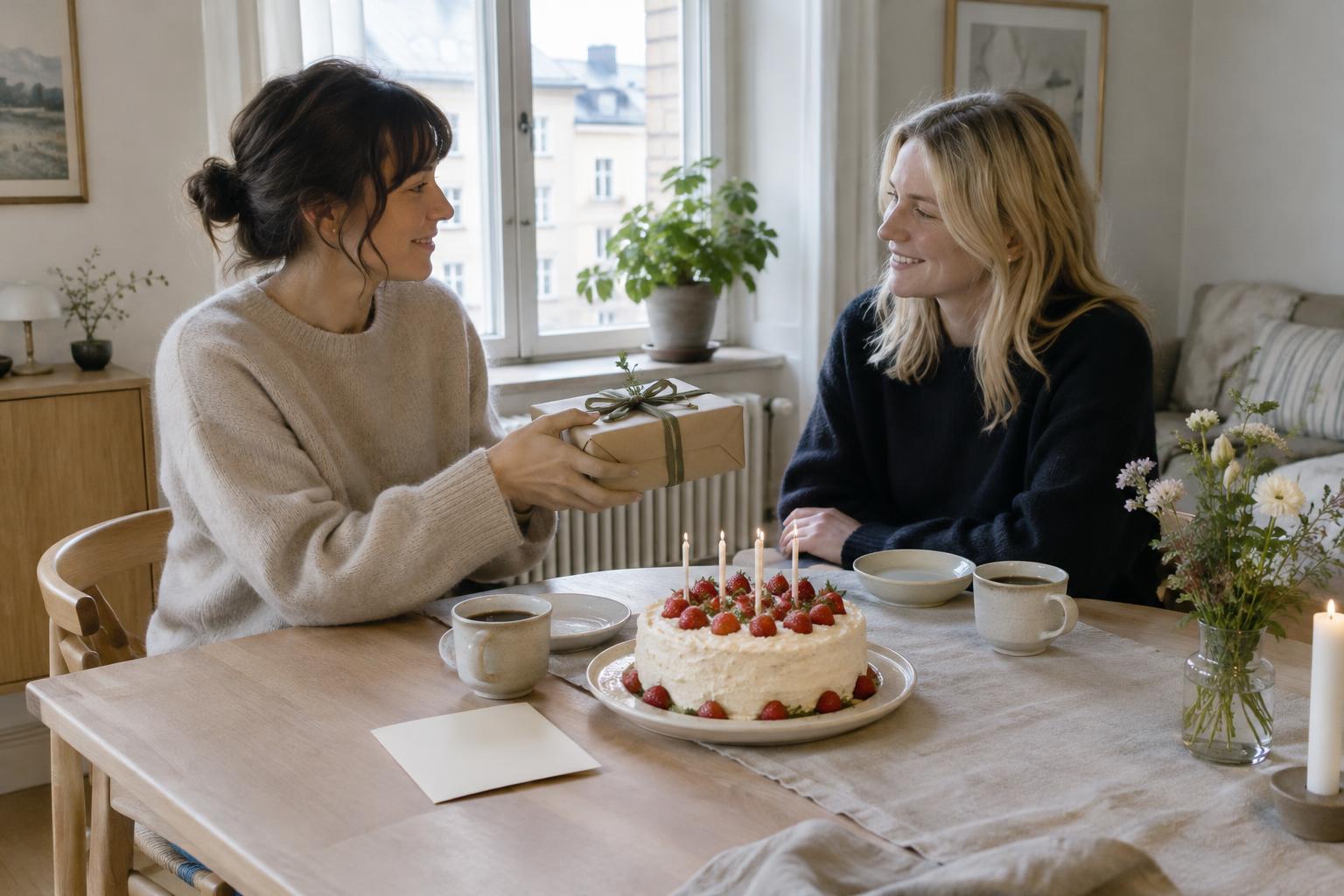
If you are inviting people over, choose a time when you can pause with them rather than continuing to prepare food while they sit. Clear a place to gather, put the kettle or coffee maker on, and have most of the food ready beforehand. The aim is not to reproduce a particular café display. It is to give everyone, including the host, permission to slow down.
Offer one good thing to eat
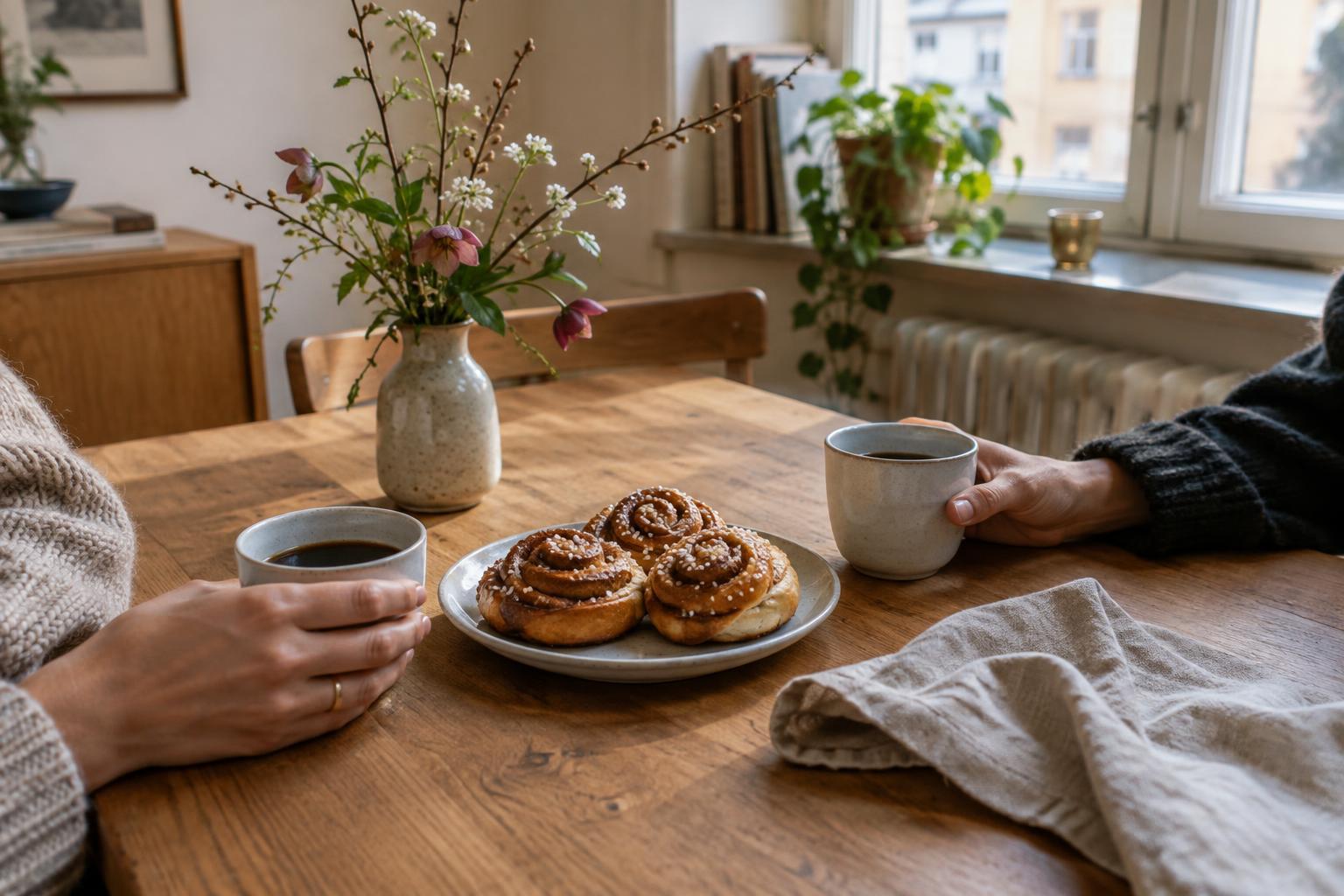
A cinnamon bun or cardamom bun is a familiar choice for fika, but there are many other possibilities: a slice of simple cake, a biscuit, a small pastry or a piece of homemade tray bake. Choose something you enjoy making or can buy easily. Freshly baked food can be lovely, but it does not make the gathering more authentic than a thoughtfully chosen shop-bought treat.
For a small group, one sweet option is usually enough. If guests have different preferences, add a bowl of fruit or a second, contrasting item rather than filling the table with desserts. Serve portions that are easy to pick up or cut, and put out small plates and napkins. This keeps the food pleasant to share without making it the centre of attention.
Make drinks easy to choose
Coffee is closely associated with fika. Brew it shortly before your guests arrive, or set things up so you can make another pot without leaving the conversation for long. Tea is worth offering too, along with water. If children are joining, or someone would rather avoid caffeine, a suitable non-caffeinated drink lets them take part in the same pause.
You do not need a specialised coffee setup. A pot of filter coffee and cups people can refill work well. Set out milk or another preferred addition separately, and let guests prepare their drinks as they like. Before the visit, it is considerate to ask about dietary needs; that simple question is more useful than guessing what everyone can eat or drink.
Leave room for conversation
Fika can be social without having an agenda. Put phones aside if that feels comfortable, bring the food to the table, and let conversation develop at its own pace. Guests might talk about their week, notice the view from the window or simply enjoy a quiet moment. There is no need to explain the tradition throughout the visit unless someone is curious.
A relaxed invitation also makes the end of the gathering easier. Let people know roughly how long you have, especially if you are hosting during a workday or between other plans. When it is time to finish, offer a final cup or begin clearing the table together. A short fika can feel complete when everyone knew from the start that it was a break, not an open-ended party.
Let the custom fit your home
Fika is flexible enough for a balcony, a shared office kitchen or a table beside a window. You might invite a neighbour for coffee after a walk, take a bun to the park with a friend, or make a quiet afternoon cup for yourself. The setting matters less than taking the break deliberately instead of drinking while rushing through another task.
Swedish customs vary between households, workplaces and individuals, so there is no single correct table setting or number of biscuits to serve. Begin with a drink, a small bite if you want one, and time to enjoy both. Sweden Culture Guide is an independent culture magazine, not a consulate or government service; this guide is an invitation to explore an everyday tradition in a way that works for you.