Food and Traditions
How to Host a Swedish-Style Fika at Home
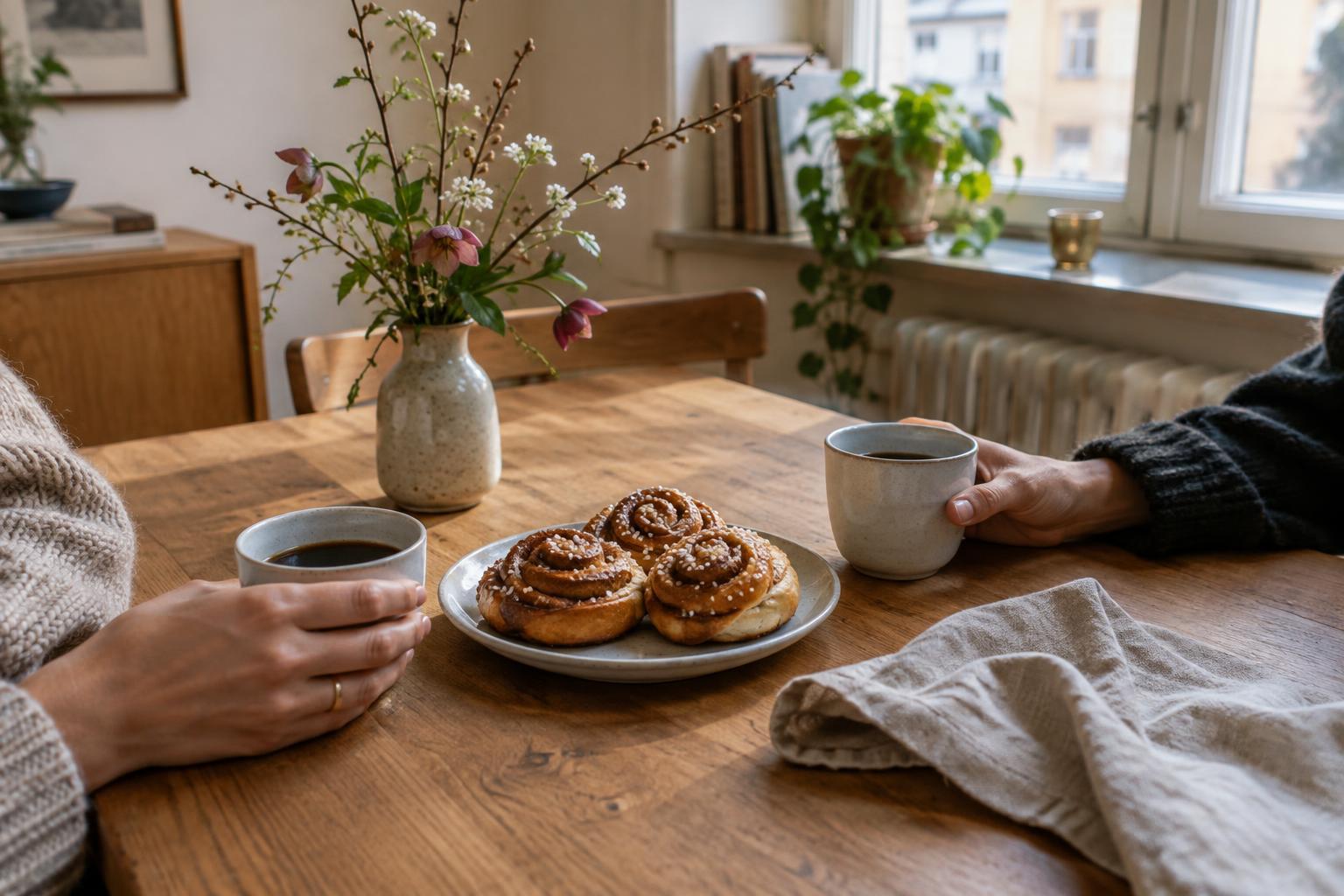
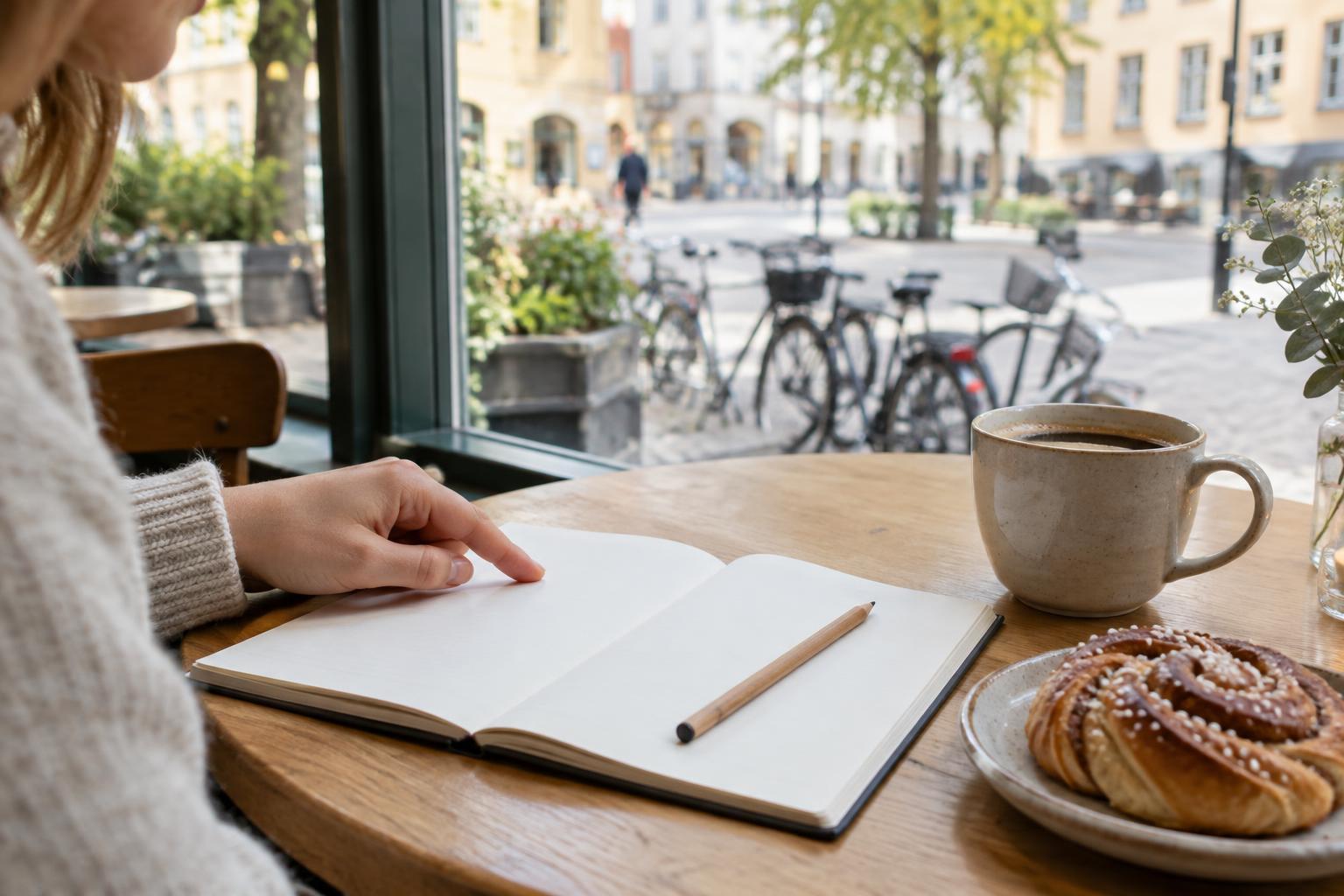
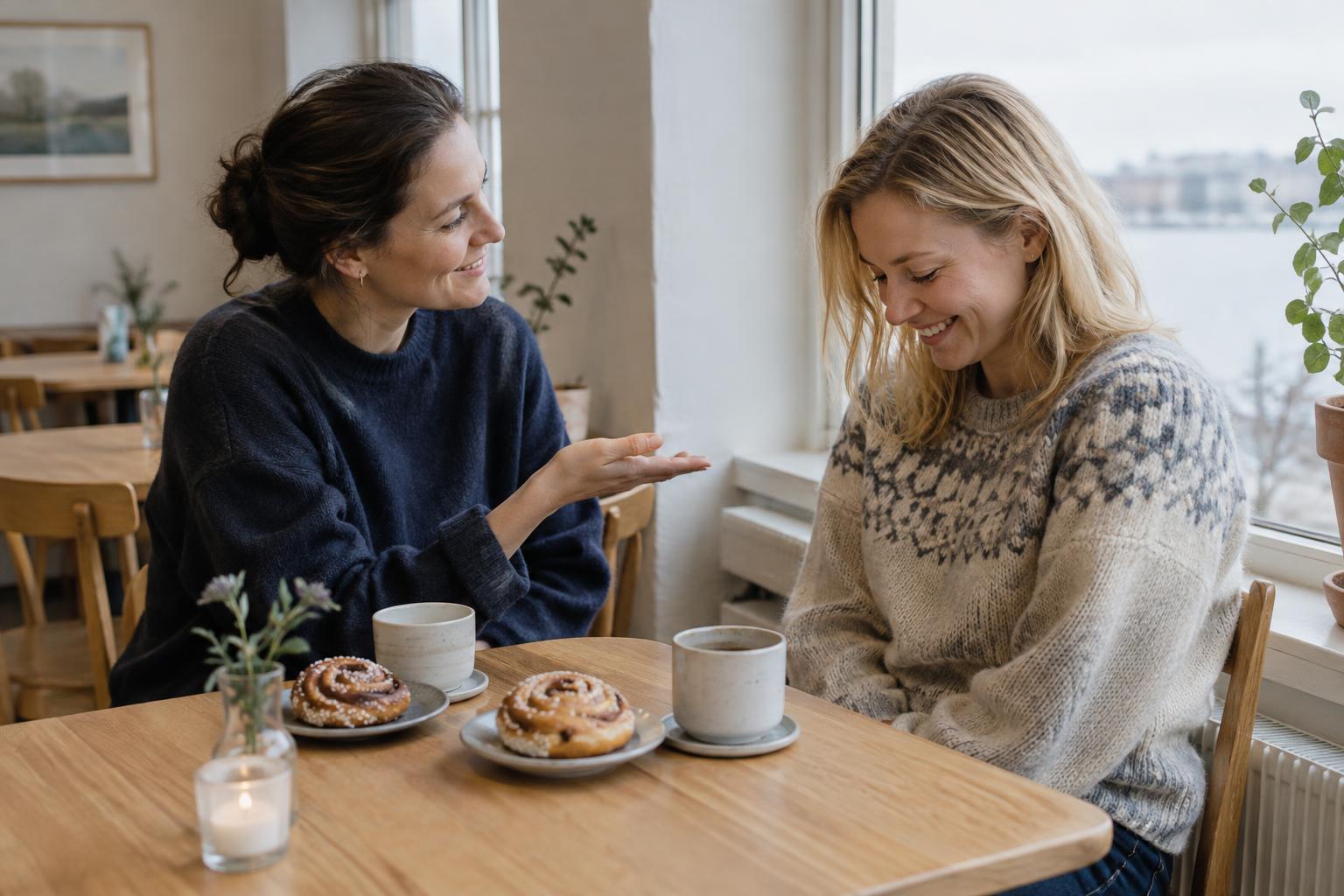
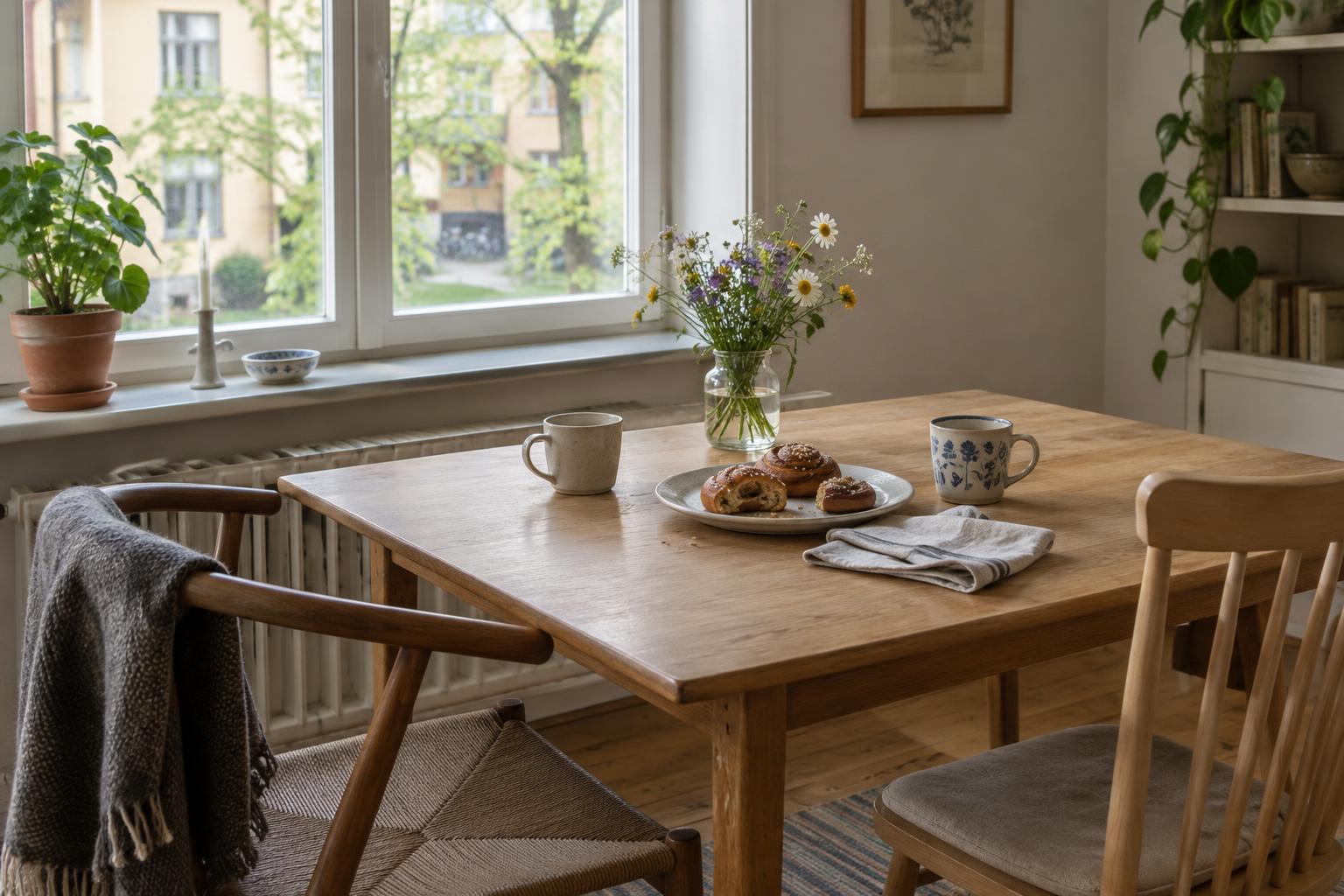
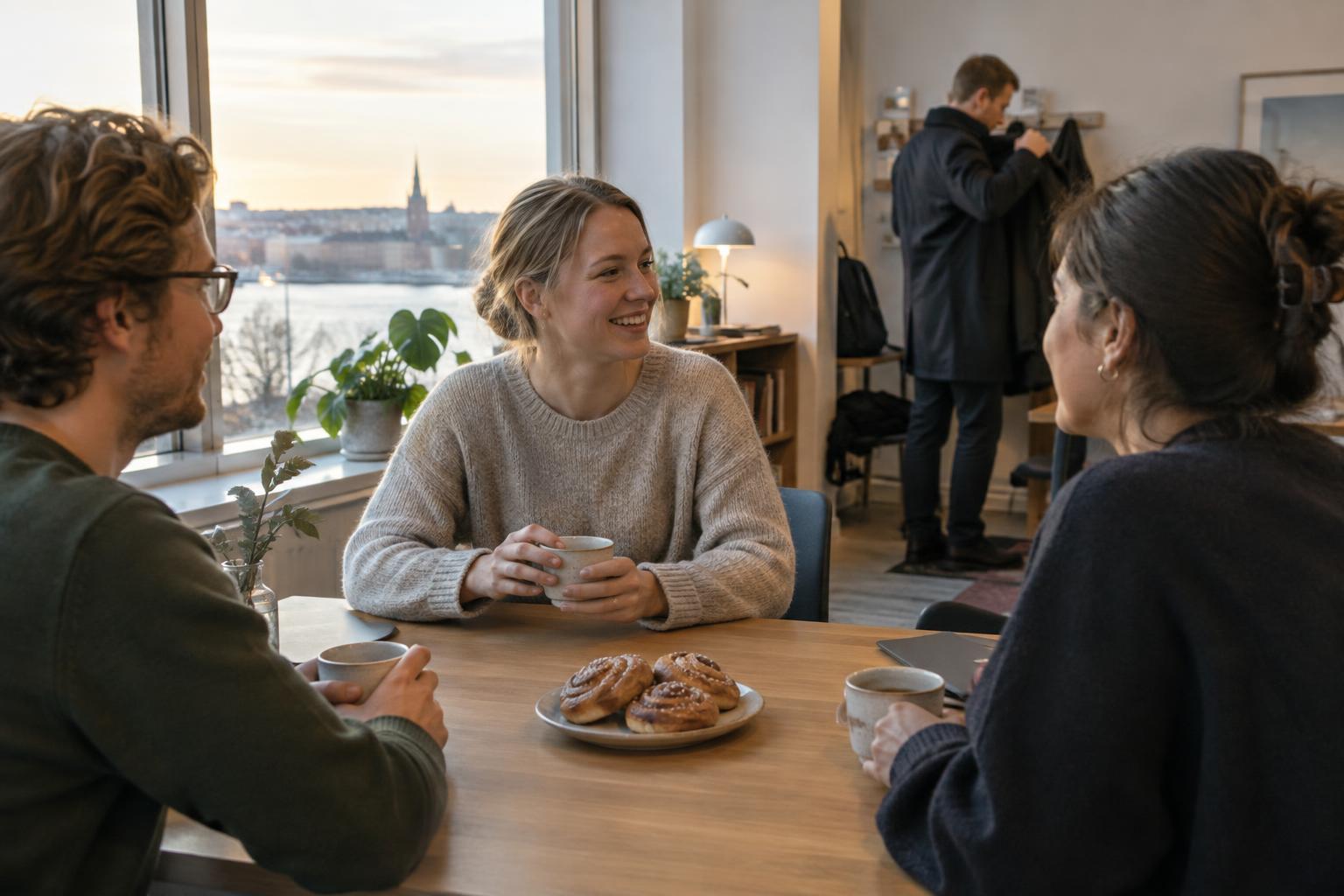
Fika is a pause for coffee, conversation and often something to eat. Here’s how to make room for it at home without turning a relaxed Swedish custom into a formal event.
Read article ↗Swedish Culture
More to discover ↗
Food and Traditions

Fika is a pause for coffee, conversation and often something to eat. Here’s how to make room for it at home without turning a relaxed Swedish custom into a formal event.
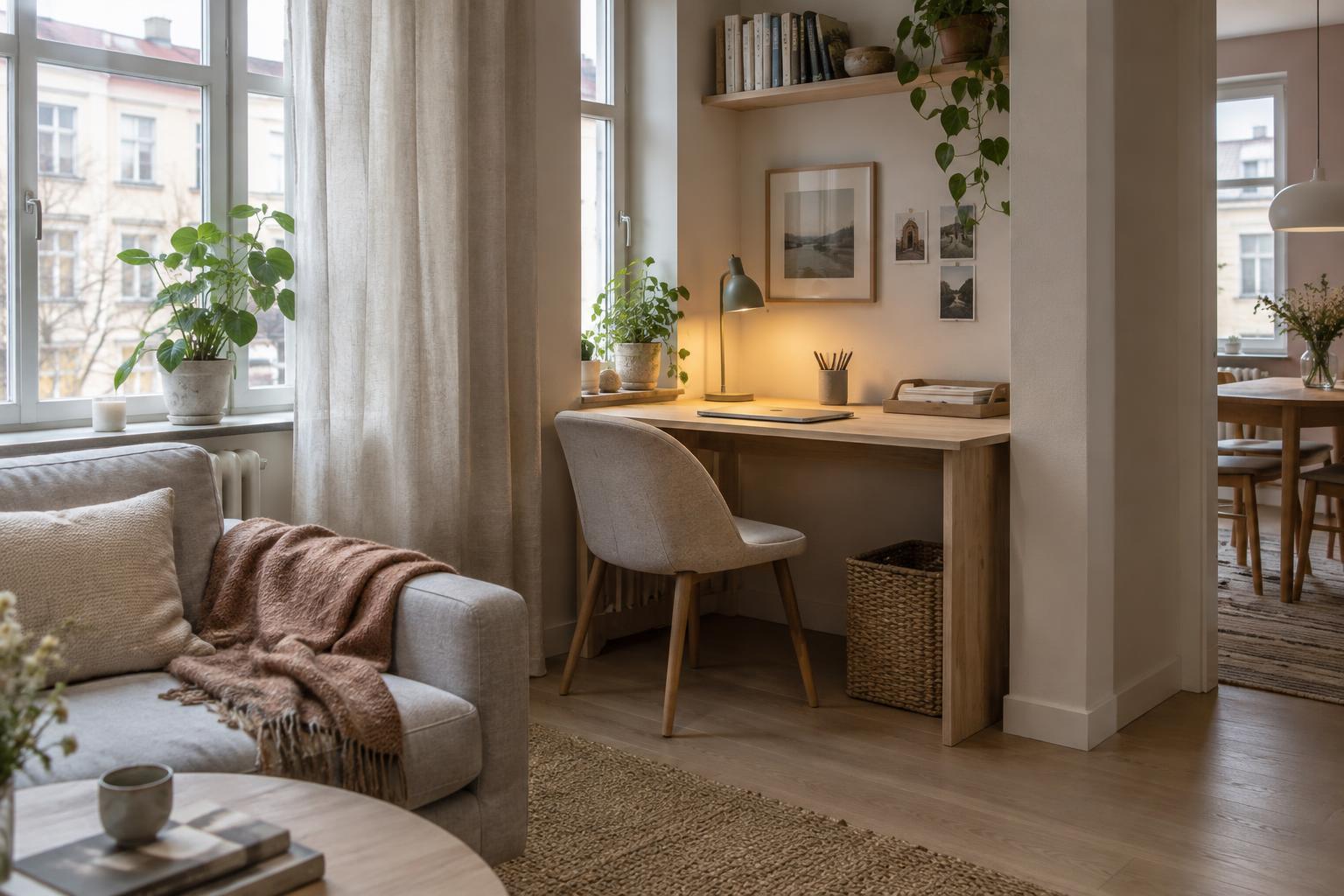
Read article ↗A useful home workspace needs more than a good-looking desk. Learn how to plan its footprint, manage everyday clutter, choose comfortable lighting and make the area feel at home in the rest of the room.
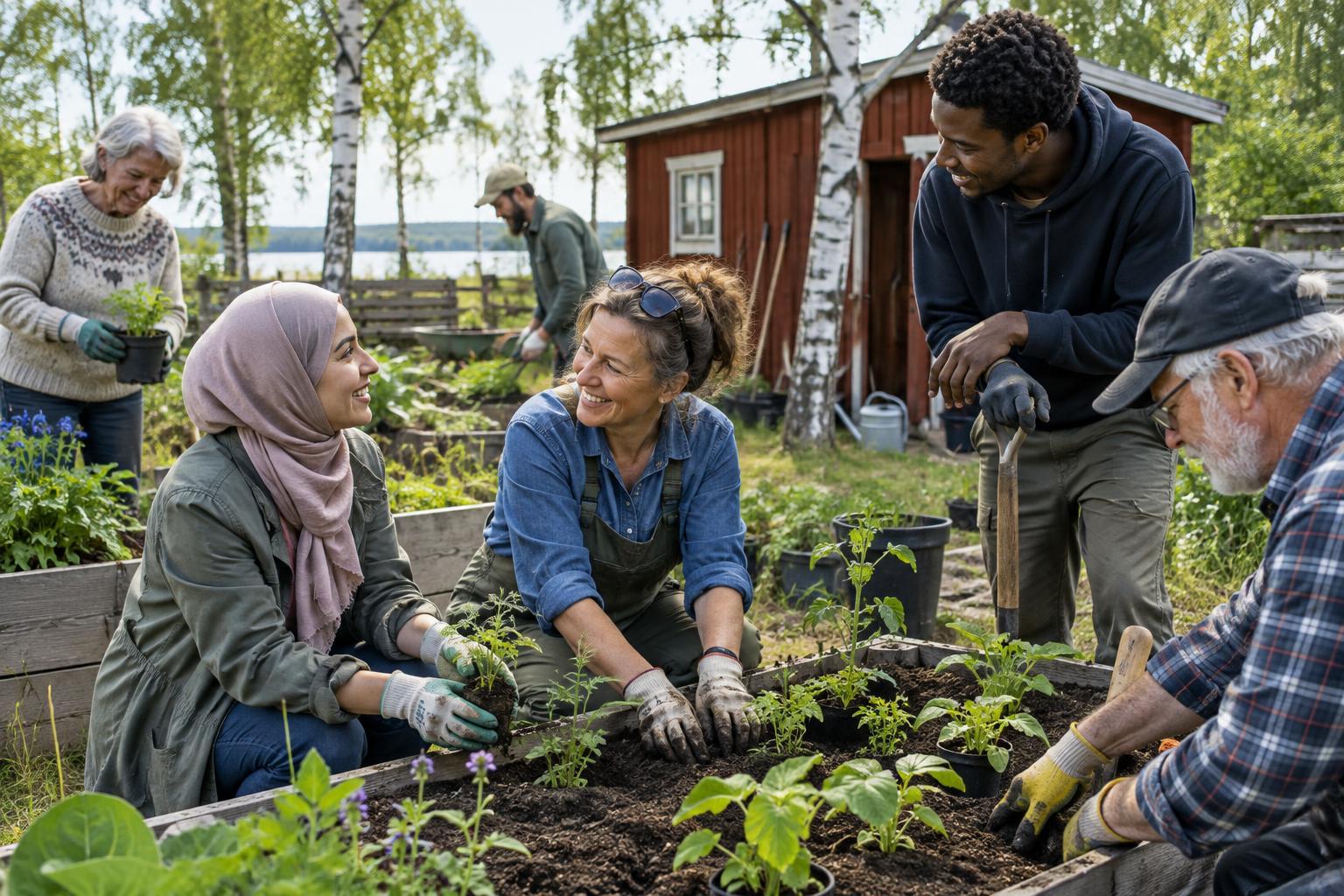
Read article · 3 min↗From sports teams and choirs to gardening groups and local history societies, Swedish associations offer a way to share interests and meet people. Here is how föreningsliv works in everyday life and how to approach it as a newcomer.
Read article · 3 min↗Wetlands offer a different way to experience Sweden’s landscapes. Learn how to choose an accessible route, prepare for soft ground and changing weather, watch wildlife respectfully, and leave sensitive habitats undisturbed.
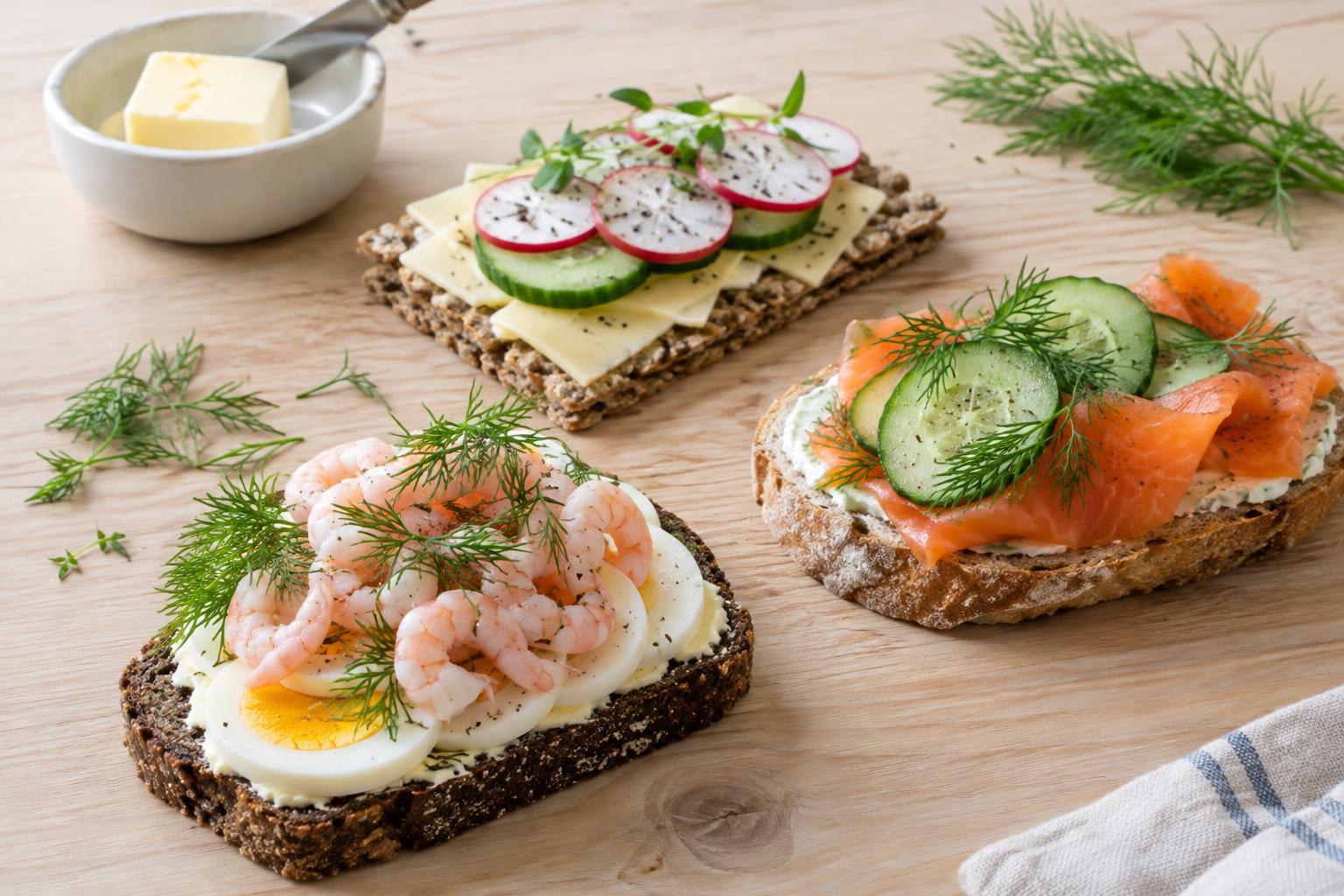
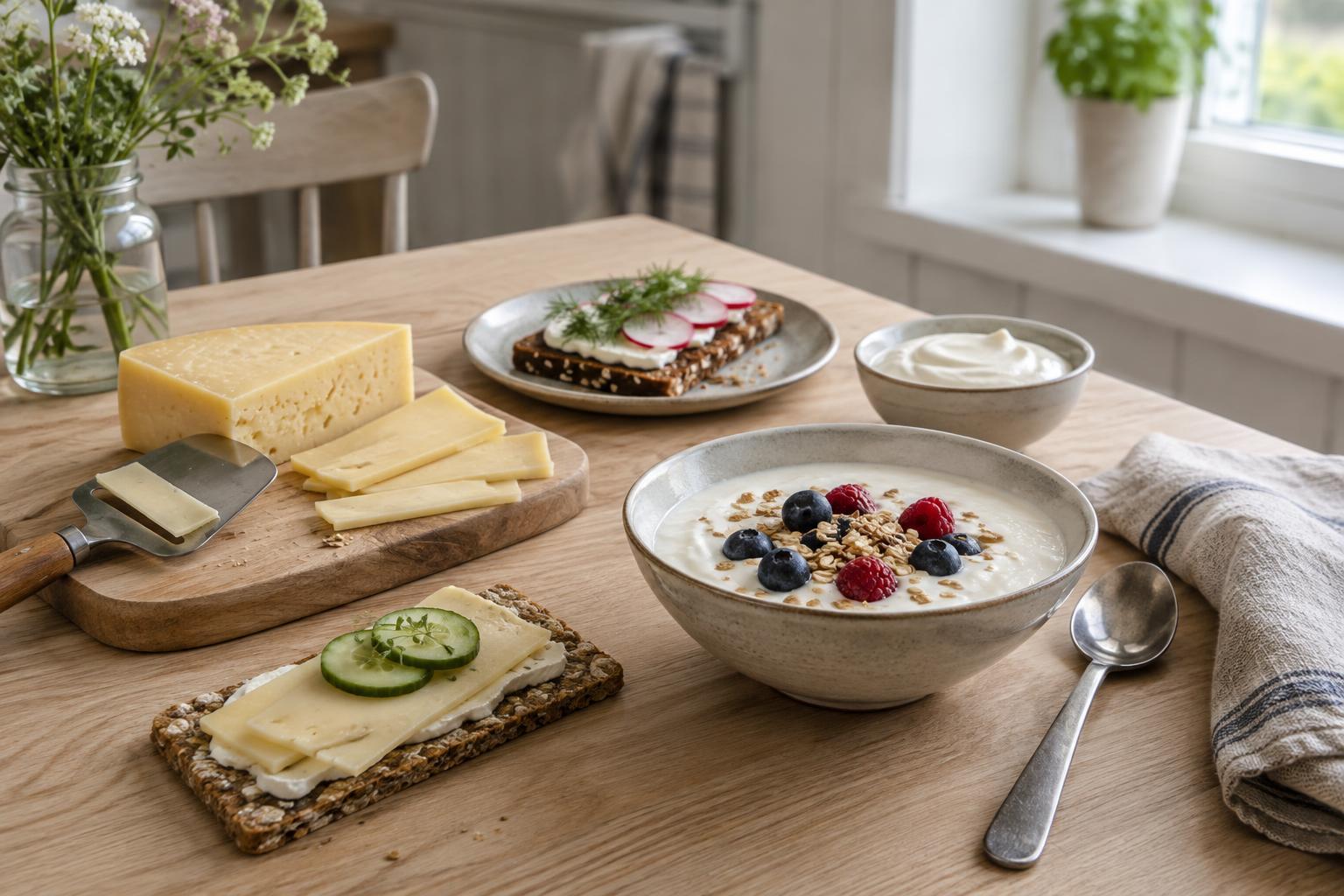
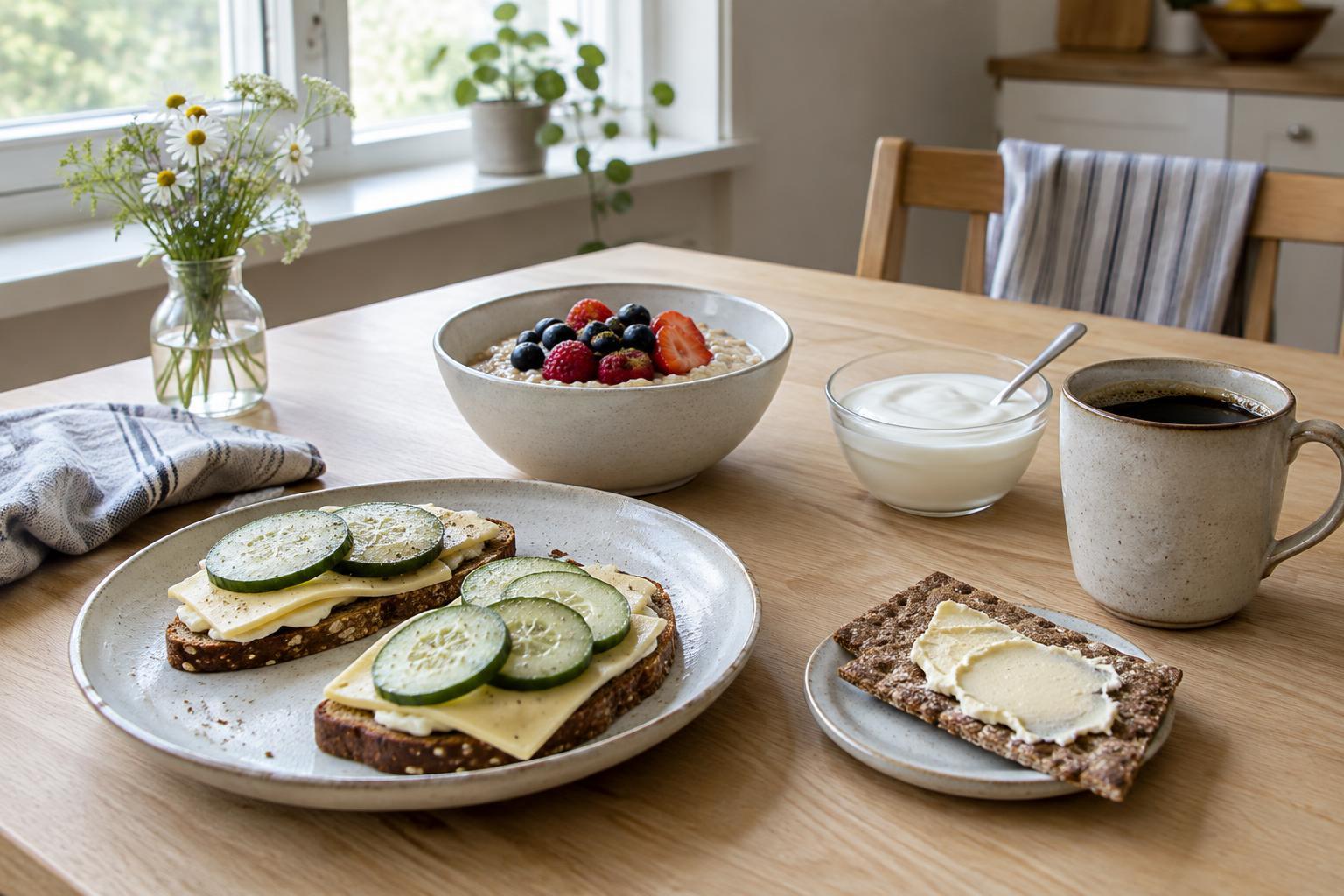
Read article · 3 min↗A Swedish open-faced sandwich can be as simple as buttered bread with cheese or as substantial as a light meal. Learn how to choose a base, balance toppings and put together a few easy combinations.
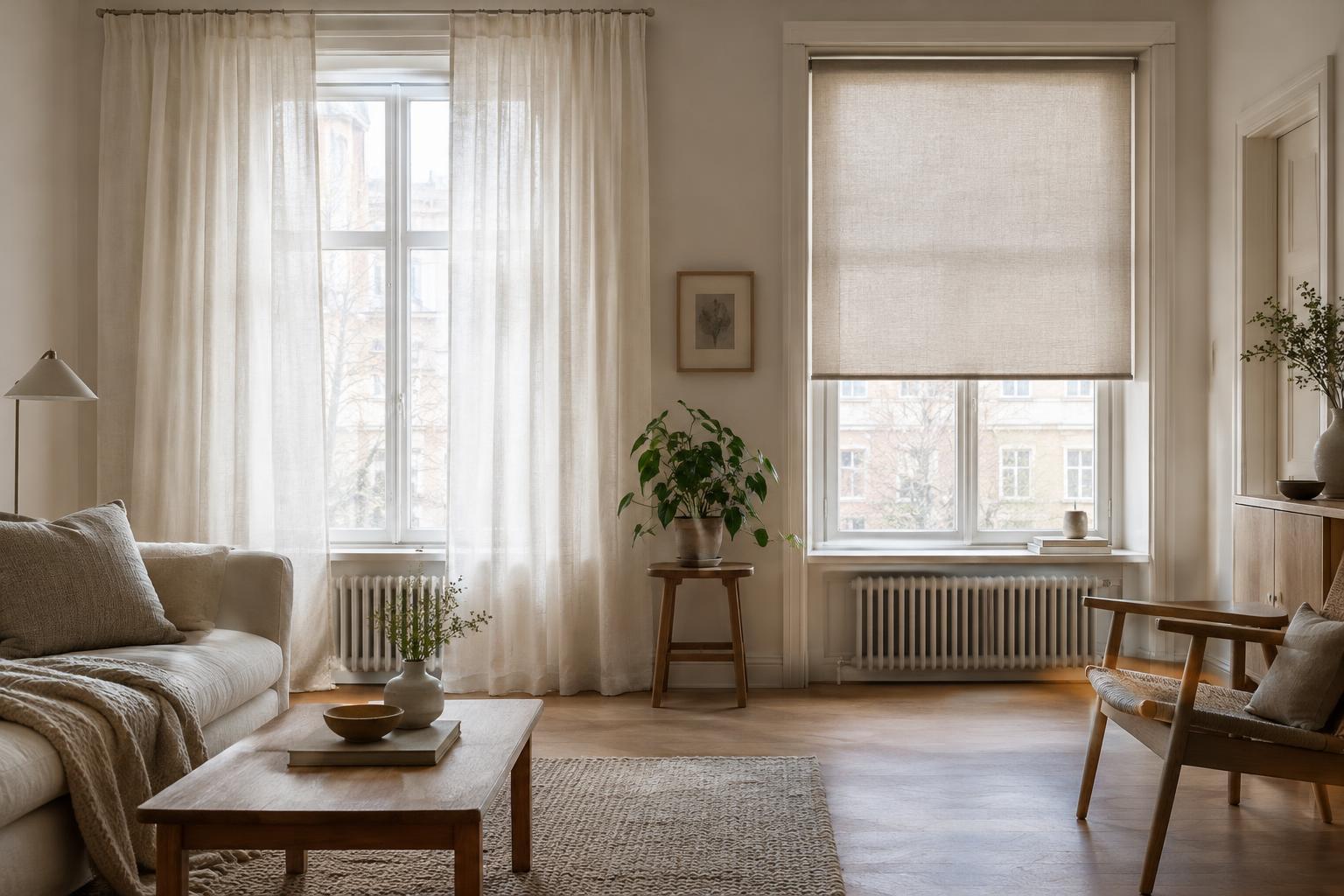
Read article · 3 min↗A practical guide to choosing curtains, blinds and shades for a Swedish-inspired home. Learn how to balance daylight, privacy and visual calm without assuming every window needs the same treatment.
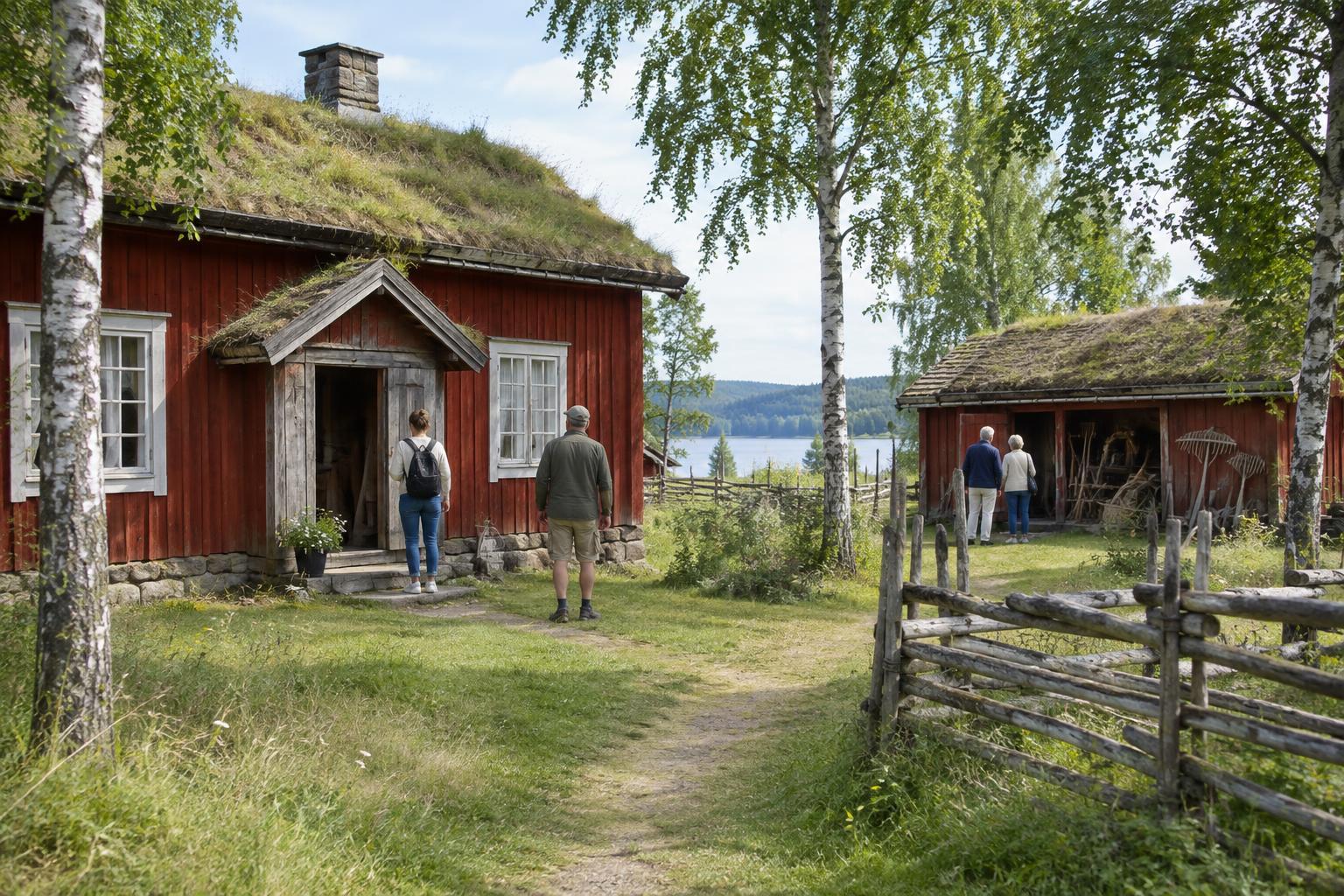
Read article · 4 min↗Open-air museums bring buildings, objects and demonstrations together to show how people lived and worked in different parts of Sweden. Here is how to explore them with curiosity while keeping the limits of any historical display in mind.
Read article · 3 min↗Sweden’s public libraries are places to borrow books, but they also offer room to read, learn and spend time without buying anything. Explore how libraries fit into everyday community life and what to expect when visiting one.
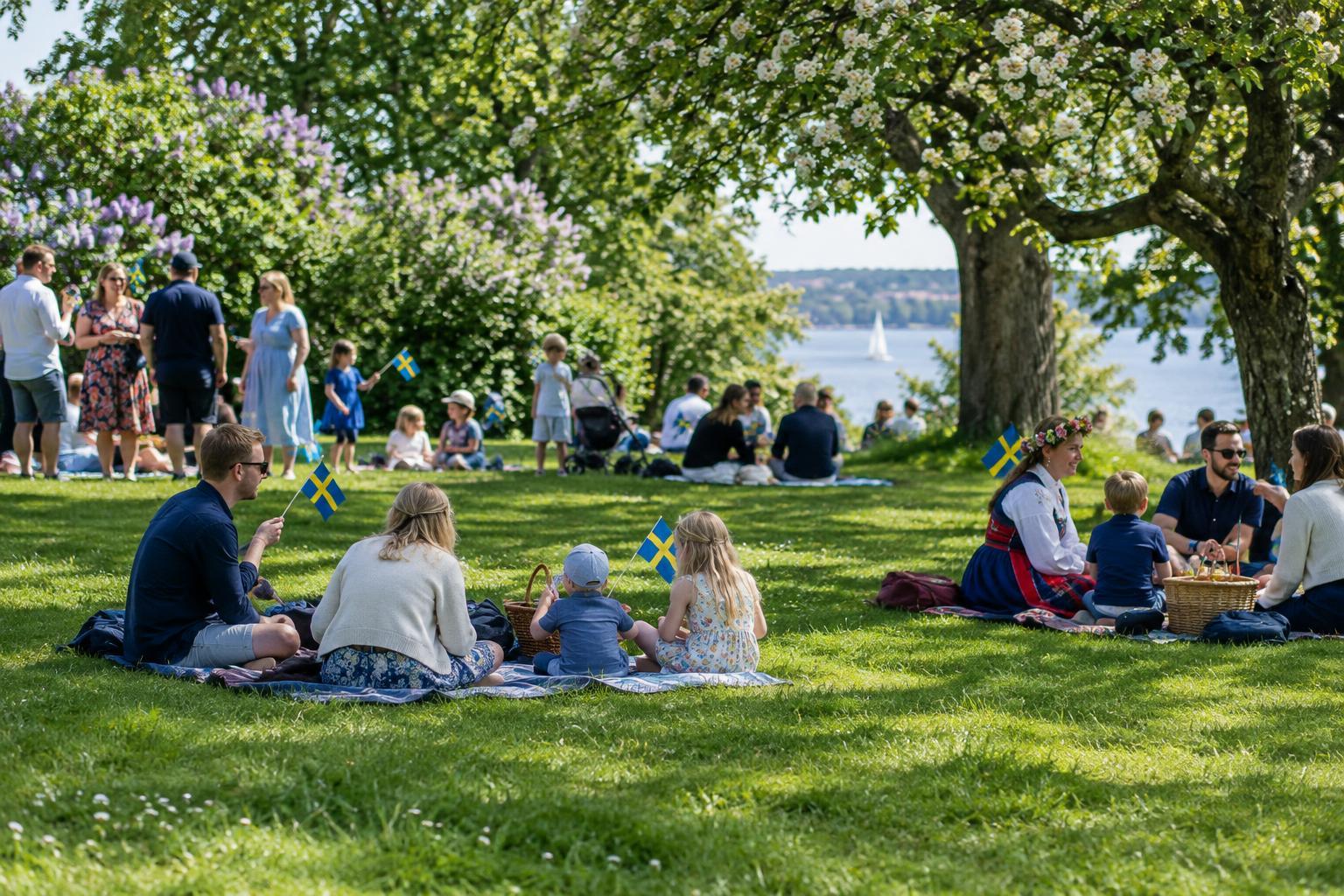
Read article · 4 min↗Sweden celebrates its National Day on June 6. Explore the history behind the date, the meaning of its familiar symbols, and the relaxed mix of public events and personal traditions that marks the occasion.

Read article · 3 min↗On April 30, many people in Sweden welcome spring with bonfires, choir songs and gatherings outdoors. Known as Valborg, the evening can feel very different in a small town and a university city. Here is what the traditions mean and how to enjoy a local celebration.

Read article · 4 min↗A practical introduction to Swedish theatre, from choosing a performance and finding the right venue to understanding intervals, applause and other audience customs.
Read article · 4 min↗From Rococo portraits to luminous landscapes and early abstraction, Swedish painting is far more varied than its familiar images of red cottages and northern light. This introduction follows key artists and movements, with a few simple ways to look more closely at their work.
Read article · 4 min↗Swedish cinema is more varied than its reputation for solemn drama suggests. Explore the work of Ingmar Bergman alongside filmmakers who use comedy, social observation and personal stories to show different sides of life in Sweden.
Read article · 4 min↗From Martin Beck to contemporary mysteries, Swedish crime fiction offers more than a puzzle to solve. Explore its recurring themes, varied settings and a few accessible starting points.
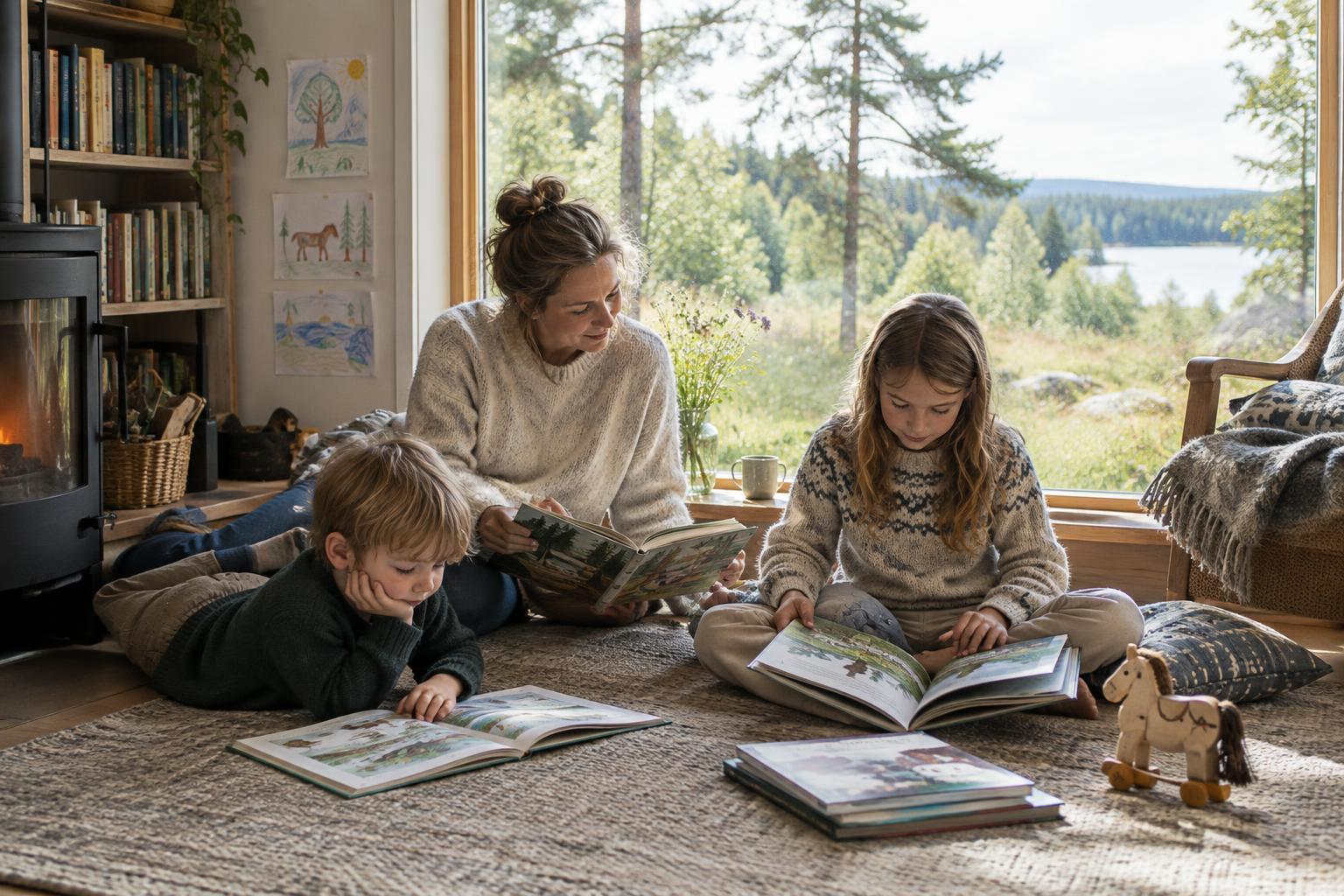
Read article · 4 min↗From Astrid Lindgren’s independent children to Gunilla Bergström’s familiar family moments, Swedish children’s books make room for adventure, worry, humor and wonder. Meet influential authors and explore the themes that connect their work.
Read article · 4 min↗Three major Swedish writers offer very different ways into the country’s literary past. Start with a sharp play, a story-rich novel or an intimate moral dilemma, then follow the questions that interest you most.
Read article · 4 min↗From church choirs and student ensembles to community groups and seasonal concerts, singing together has many places in Swedish cultural life. Here is why the tradition endures and how newcomers can take part.
Read article · 4 min↗From ABBA’s harmonies to Robyn’s dance-pop and the electronic sounds of Avicii, Swedish pop has many entry points. This guide explores the styles, artists and songwriting connections that have helped music from Sweden travel.
Read article · 4 min↗Swedish folk music is more than a sound preserved from the past. Explore the fiddle, the many ways a polska can move, and the gatherings that keep tunes alive today.
Read article · 4 min↗Swedish folk costumes are often called folkdräkter, but they do not form one national outfit. Explore how local traditions shaped their colours, garments and details, and why people still wear them for celebrations and community events.

Read article · 4 min↗The carved Dala horse and the flowering patterns of kurbits are closely associated with Sweden, especially Dalarna. Discover where these traditions took shape, how their makers used wood and paint, and why the two are connected without being the same art form.

Read article · 4 min↗In Swedish traditional stories, trolls may lurk beyond the village, a tomte may watch over the farm, and a forest spirit may lead a traveler astray. Explore what these figures reveal about work, hospitality and the uncertain boundary between familiar places and the wild.
Read article · 4 min↗Sámi culture is not a single tradition or a chapter of the past. Explore its languages, creative practices and ties to land, along with thoughtful ways to learn from Sámi voices.
Read article · 4 min↗Sweden recognizes five national minority languages: Finnish, Meänkieli, the Sámi languages, Romani Chib and Yiddish. Here is an introduction to their histories, the communities that speak them and the places where you may encounter them.
Read article · 4 min↗Swedish can sound quite different from one region to another. Explore some of the rhythms, pronunciations and local words that give regional speech its character, from Skåne and Gotland to Dalarna and northern Sweden.

Read article · 4 min↗Start recognizing the sounds and spelling patterns of Swedish, from å, ä and ö to vowel length and familiar loanwords. This practical introduction helps beginners read signs, menus and everyday expressions with more confidence.

Read article · 4 min↗From Viking Age trade to industrialization and the welfare state, this beginner’s guide follows the changes that shaped Swedish culture—and the traditions that do not fit neatly into a national timeline.

Read article · 4 min↗Sweden’s forests, lakeshores and meadows are worth exploring, even when insects are active. A few habits—covering exposed skin, using repellent as directed and checking for ticks after a walk—can make time outdoors more comfortable.
Read article · 4 min↗Sweden’s coastline offers wide sandy beaches, smooth granite rocks and sheltered archipelago coves. Learn how to choose a coastal setting, prepare for changing sea conditions and enjoy the shore with care.

Read article · 4 min↗Sweden offers paddling trips on sheltered lakes, winding rivers and island-studded coasts. Learn how to choose a route that suits your experience, read the weather with care and pack for conditions that may change while you are on the water.

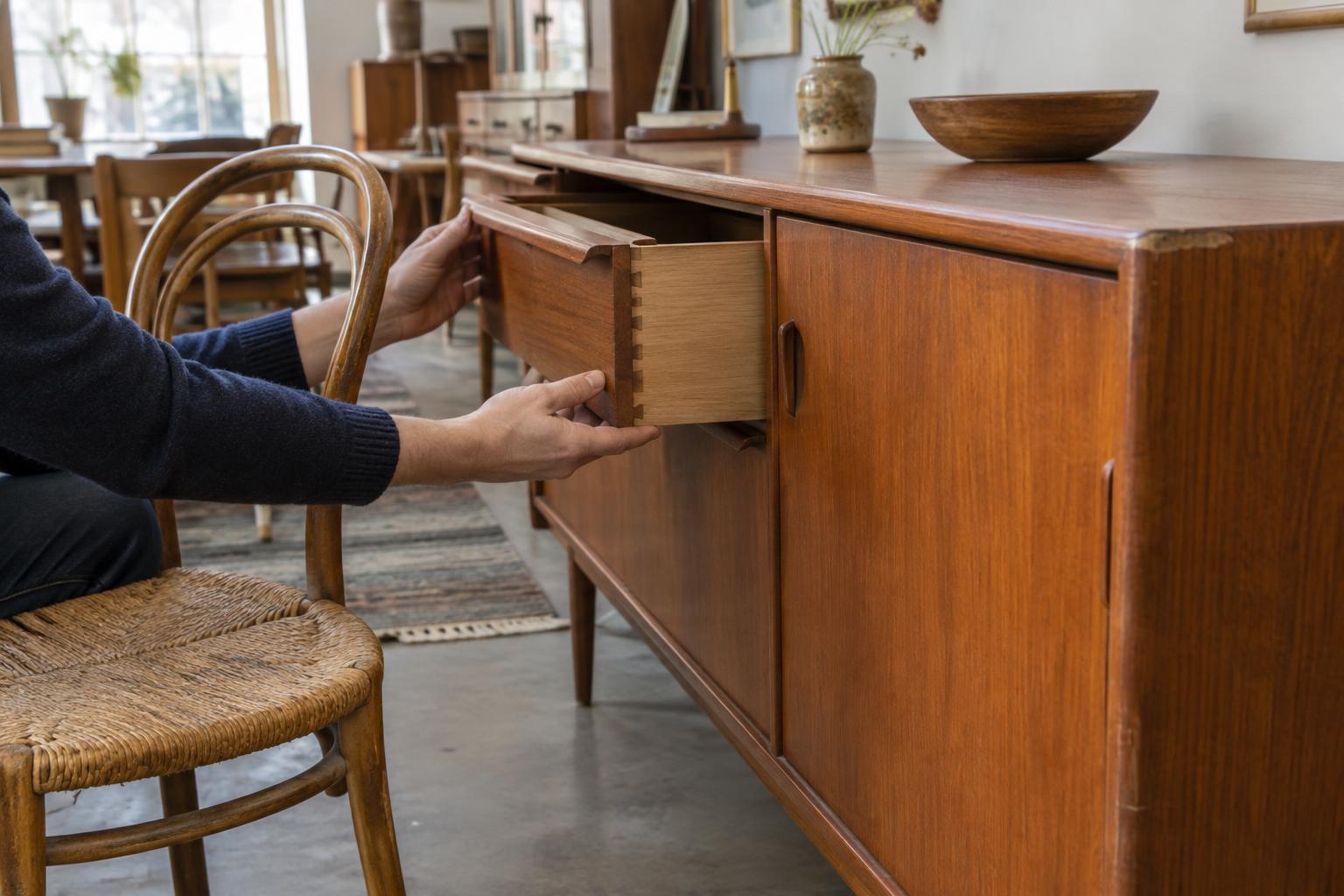
Read article · 4 min↗Sweden’s forests, wetlands, coasts and northern landscapes offer many chances to notice wildlife. Learn where to look, what you might see and how to watch without disturbing animals or the places they depend on.
Read article · 4 min↗A rural drive in Sweden can take you from open fields to quiet forests and small coastal communities. Plan for changing road conditions, allow time beyond the distance on the map, and stay alert for wildlife—especially when visibility is poor.
Read article · 4 min↗From the Stockholm–Gothenburg corridor to journeys into northern Sweden, train travel can be a practical way to connect Swedish cities. Learn how to plan a route, compare tickets and allow time for changes.
Read article · 4 min↗A first swim in a Swedish lake is easier to enjoy when you know what to look for: a suitable entry point, clear local information, basic facilities and a plan for changing weather and water conditions.
Read article · 4 min↗A northern lights trip works best when you plan for darkness, flexible evenings and the possibility of cloudy skies. Learn where to base yourself in northern Sweden, how to choose a viewing spot and why the aurora should be one part of a rewarding winter journey.
Read article · 4 min↗The northern lights may inspire a trip to Swedish Lapland, but they are only one part of the experience. Explore the region through its seasons, landscapes, communities and food, with practical tips for planning a first visit.
Read article · 4 min↗Both archipelagos offer rocky shores, sea air and a break from city streets, but they reward different ways of travelling. Compare the compact island outings near Gothenburg with the wider range of routes and landscapes around Stockholm.
Read article · 4 min↗The Stockholm archipelago offers everything from short boat rides to quiet walking paths and longer island outings. Learn how to choose an island, check ferry connections and plan a day trip with enough room to enjoy the journey.
Read article · 4 min↗Sweden’s protected landscapes range from coastal islands and forests to wetlands and mountains. Learn how national parks and nature reserves differ, why local rules matter, and how to plan a considerate visit.
Read article · 4 min↗A winter walk in Sweden can be quiet and beautiful, but short days, slippery ground and changing weather reward a little preparation. Here are common mistakes to avoid, from dressing for movement to choosing a route home.
Read article · 4 min↗A practical packing guide for summer walks in Sweden, from coastal paths and forest trails to cooler mountain routes. Learn how to choose layers, stay comfortable in rain and carry the essentials without overpacking.
Read article · 4 min↗A paper map, a compass and careful attention to trail signs can make a walk in Sweden easier to follow when your phone has no signal. Learn how to check local marking conventions, read the landscape and make decisions at uncertain junctions.
Read article · 4 min↗Sweden offers walks ranging from short forest loops to long routes through remote mountain country. Learn how to choose between a day hike and a multi-day trek by weighing time, terrain, weather, access and the gear you can comfortably carry.
Read article · 4 min↗A first hike in Sweden can be a short woodland loop, a coastal walk or a longer journey between mountain huts. Learn how to choose a suitable trail, estimate a comfortable distance and prepare for changing conditions.
Read article · 4 min↗Sweden’s right of public access makes it possible to enjoy many forests, shores and open landscapes. Learn the practical boundaries for walking, pitching a tent and picking wild food, with respect for residents, wildlife and the land.
Read article · 3 min↗Sweden feels different from one season to the next, and the best time to visit depends on what you want to do. Use this guide to compare daylight, weather and activities, while keeping the country’s north–south differences in mind.
Read article · 4 min↗Sweden changes character as you travel north. Use this guide to compare the south’s coastal towns and farmland, the lake-and-forest landscapes of central Sweden, and the wide-open spaces of the far north—and choose a trip that suits your pace and season.
Read article · 4 min↗Surströmming is fermented Baltic herring with a powerful smell and a place in Swedish food tradition. Learn how it is usually served, why the setting matters, and how to approach a first taste without making a spectacle of it.
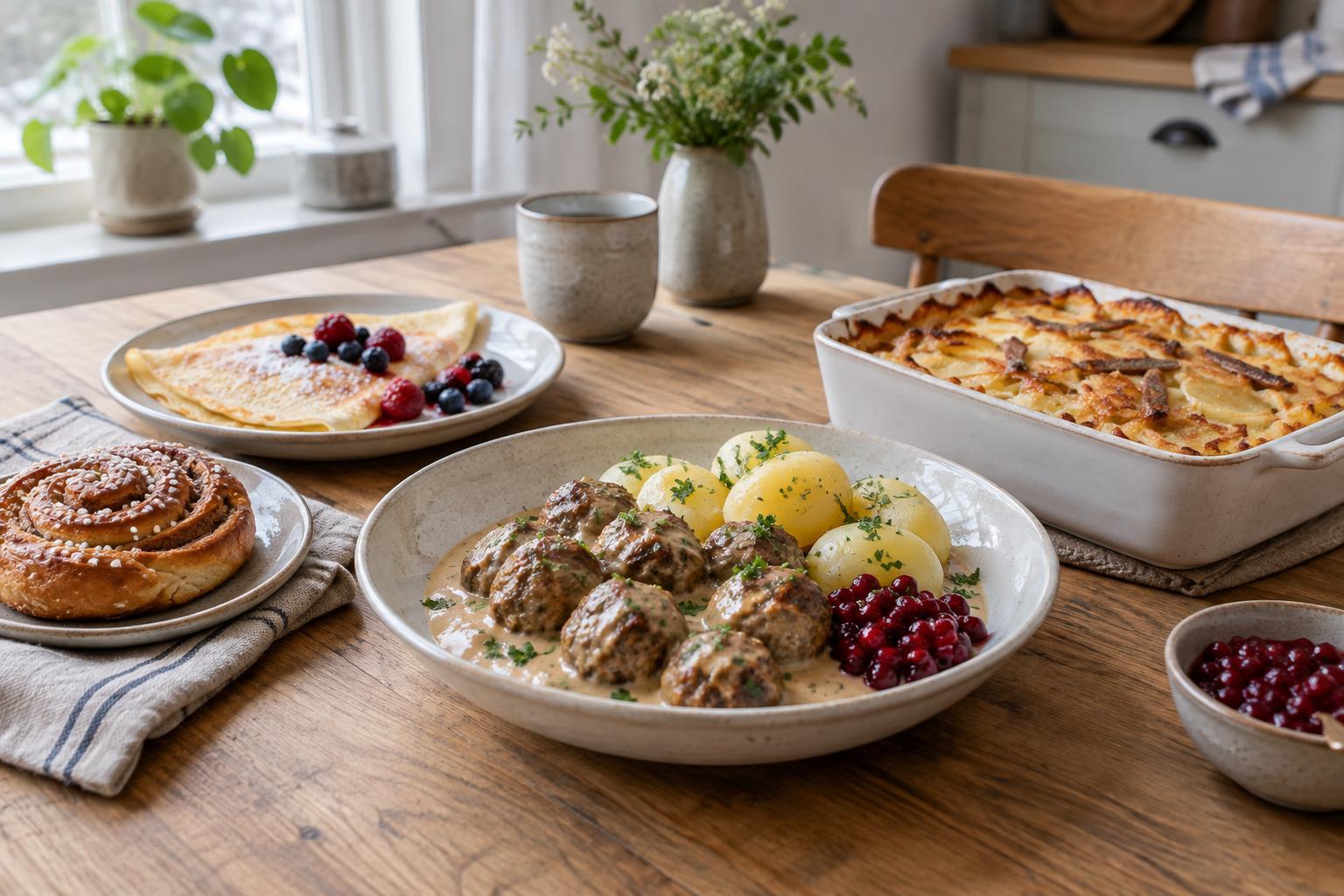
Read article · 3 min↗Swedish classics often depend on small choices: a gentle pan for meatballs, the right fish for a potato gratin, and patience with cardamom buns. Here are practical ways to make familiar dishes taste and feel closer to their Swedish counterparts.
Read article · 4 min↗From sliced hushållsost on breakfast bread to tangy filmjölk in a bowl, dairy is part of many ordinary Swedish meals. This guide explains familiar cheeses and cultured dairy products, how they are commonly eaten, and what to look for on a shop shelf.
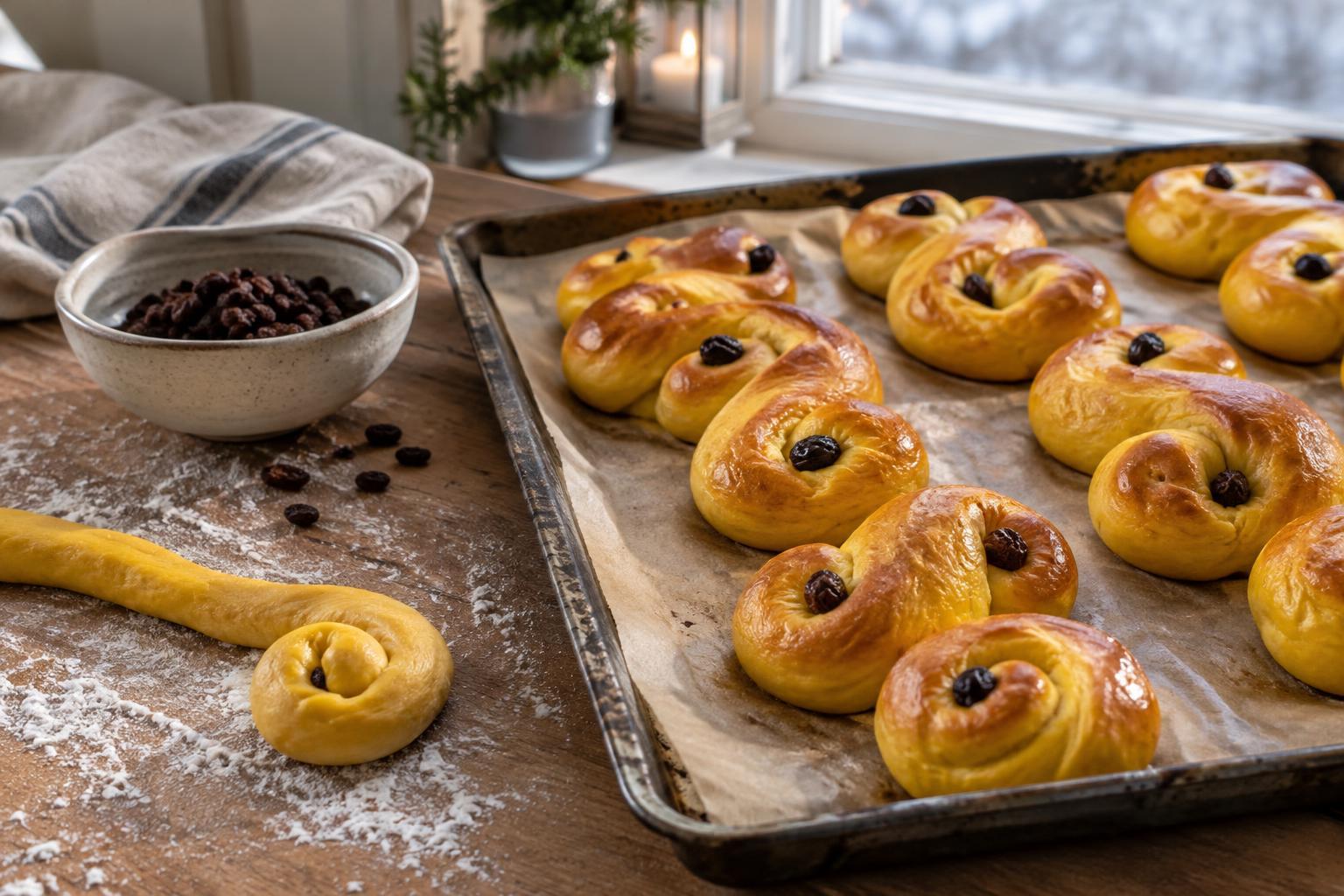
Read article · 4 min↗Lussekatter, the golden saffron buns associated with Lucia, are as enjoyable to shape as they are to eat. Learn how to make a soft dough, form the familiar curled buns and avoid common baking problems.
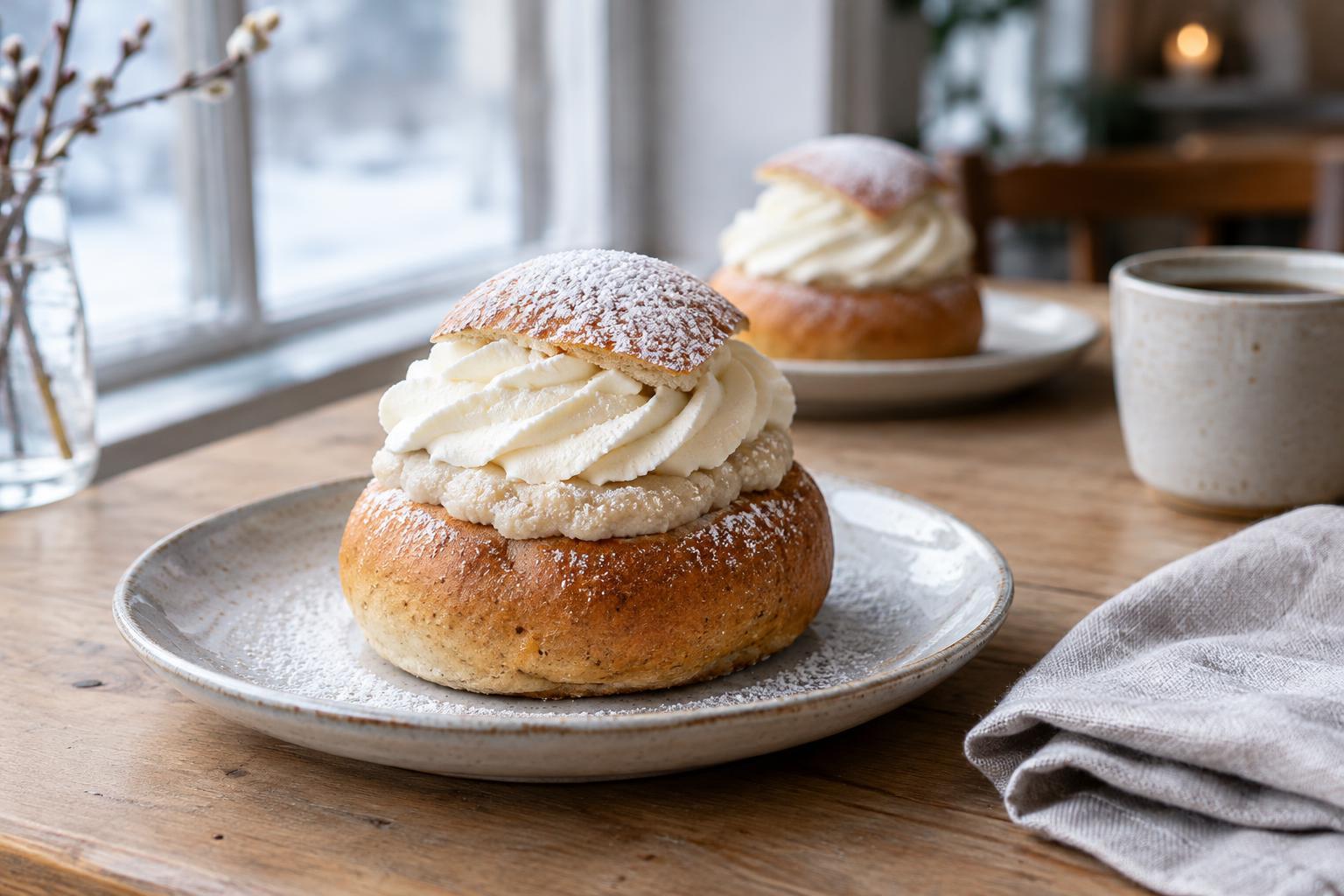
Read article · 4 min↗A semla is a cardamom-scented bun filled with almond paste and whipped cream. Here is what makes it distinctive, why it appears around Fettisdagen, and how to enjoy one.
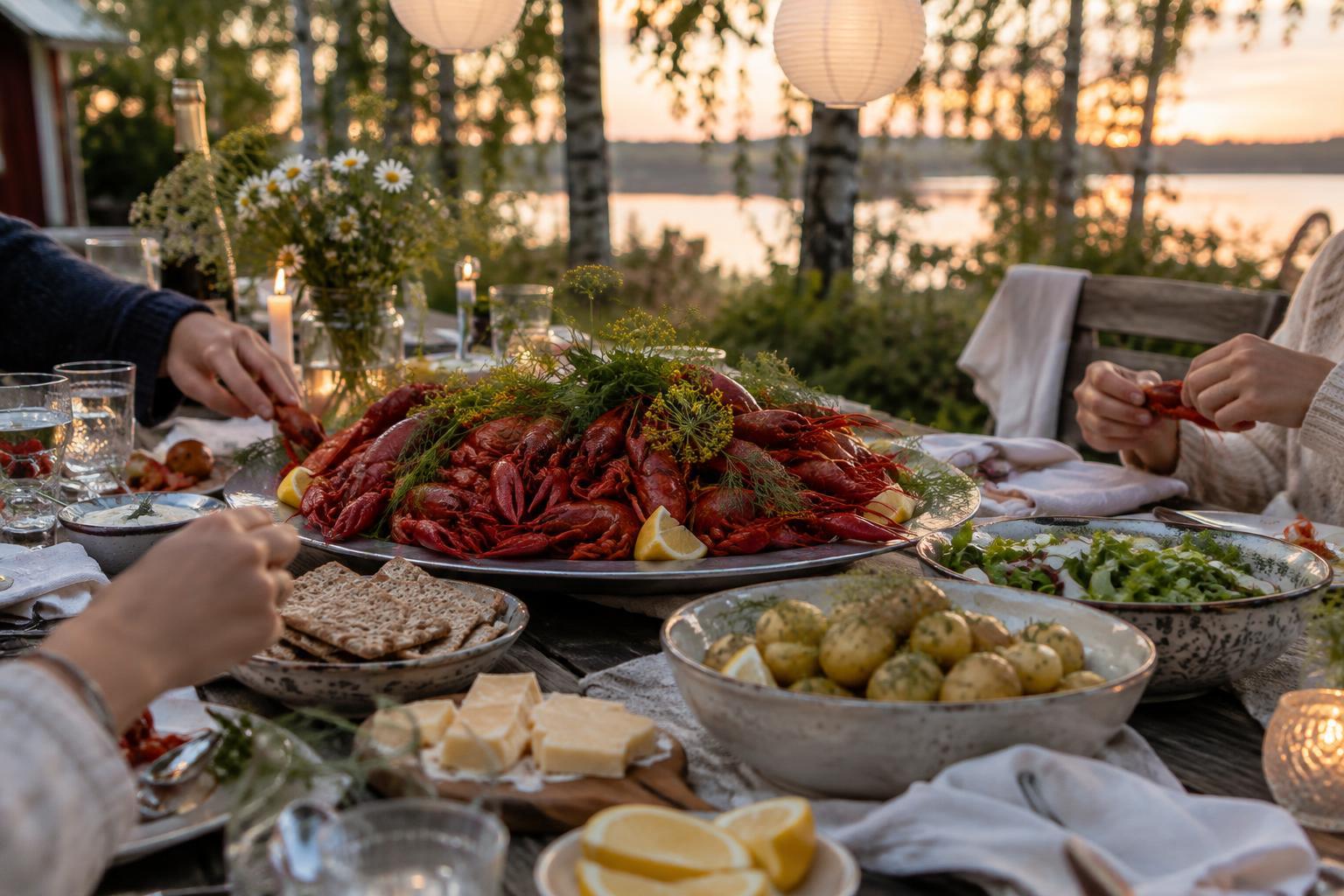
Read article · 4 min↗A Swedish crayfish party, or kräftskiva, is a relaxed late-summer gathering built around chilled crayfish, shared side dishes, songs and plenty of napkins. Here is what to expect and how to put together a welcoming table.
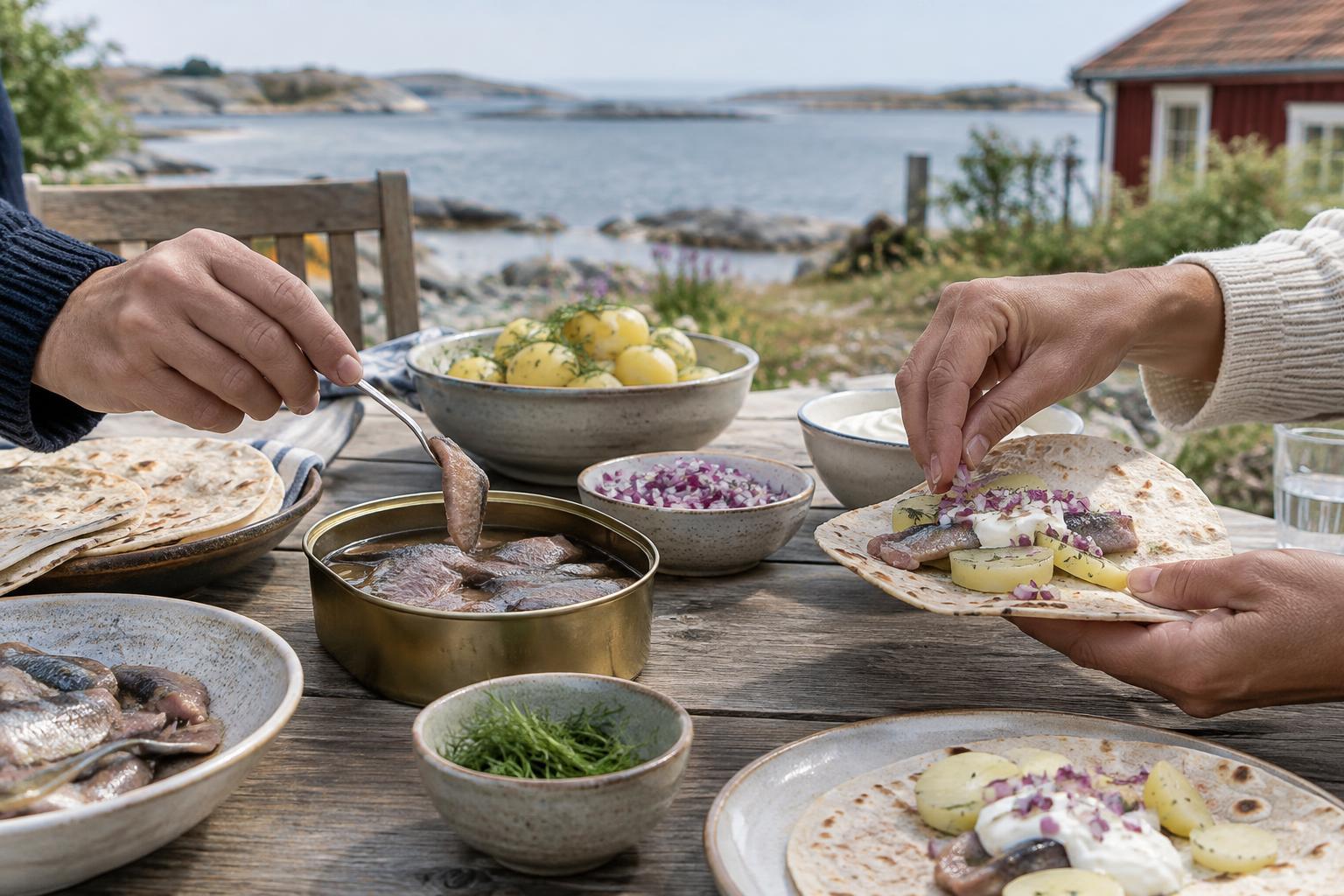
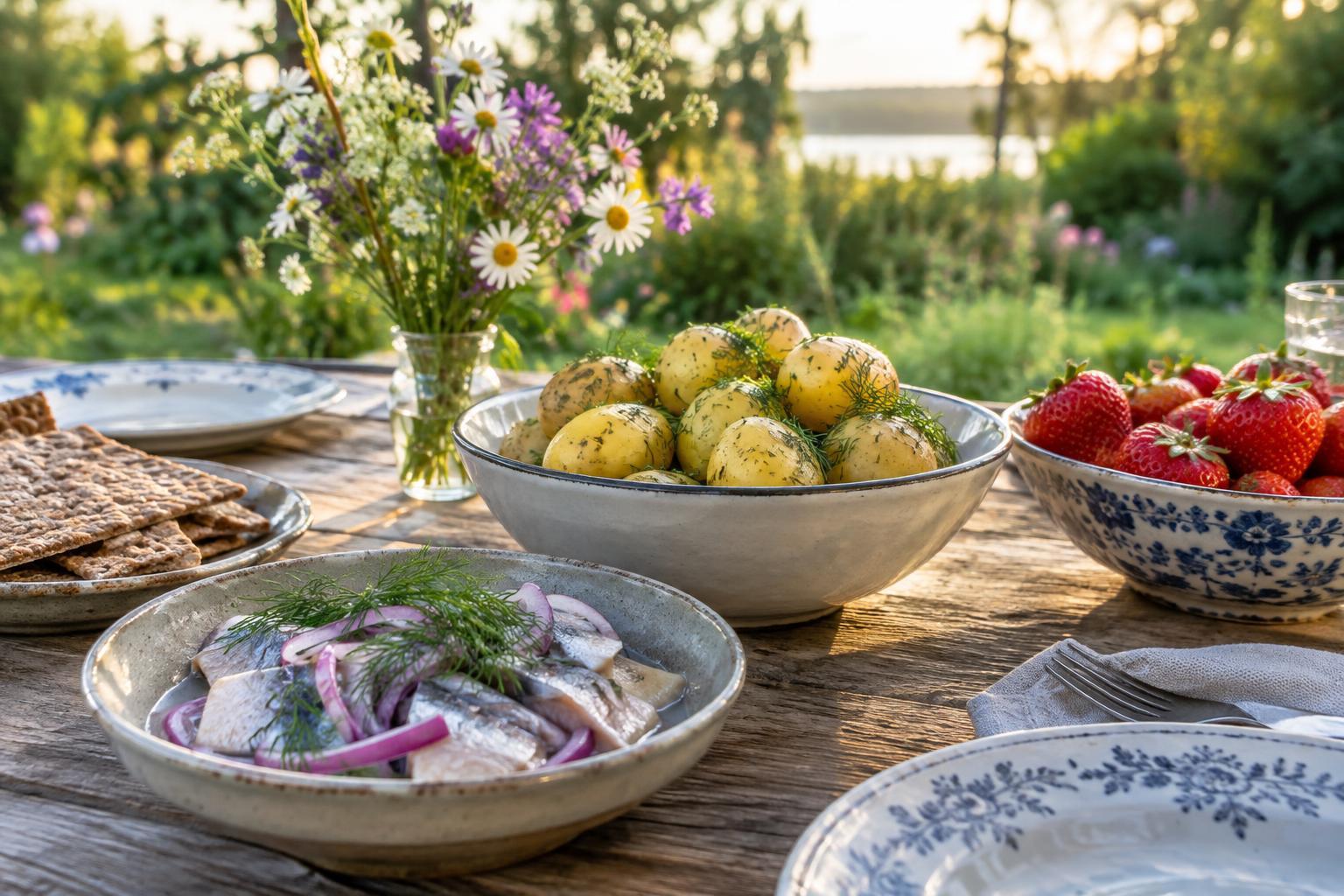
Read article · 4 min↗A Swedish Midsummer table often brings together pickled herring, tender new potatoes, fresh herbs and strawberries. Here is how the meal comes together, and how to enjoy its simple, flexible traditions.
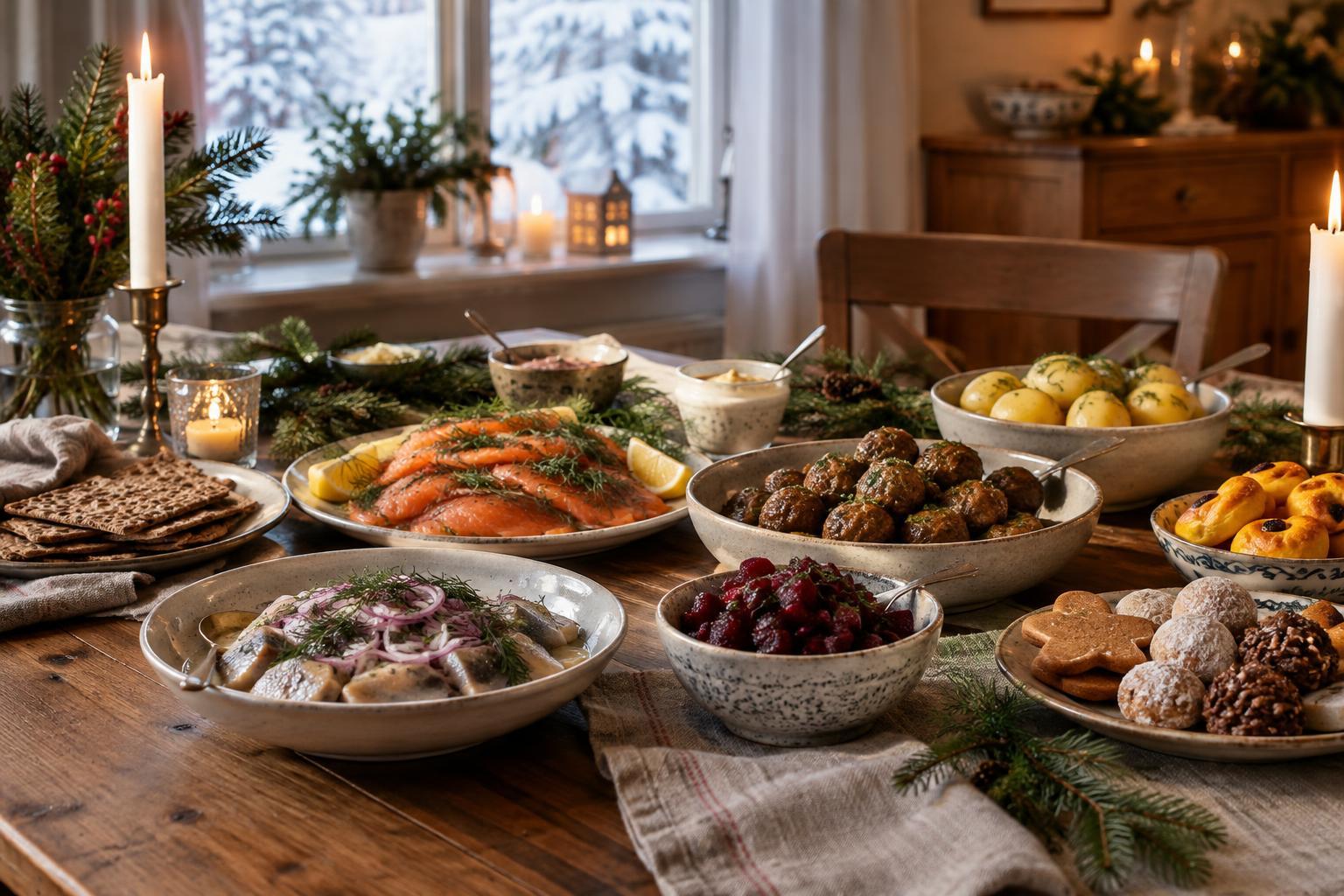
Read article · 3 min↗The Swedish Christmas julbord is a festive buffet built around familiar favorites, from pickled herring and cured salmon to meatballs, potatoes and sweets. Learn what to expect, how to pace yourself and how to enjoy the tradition without feeling that you must try everything.
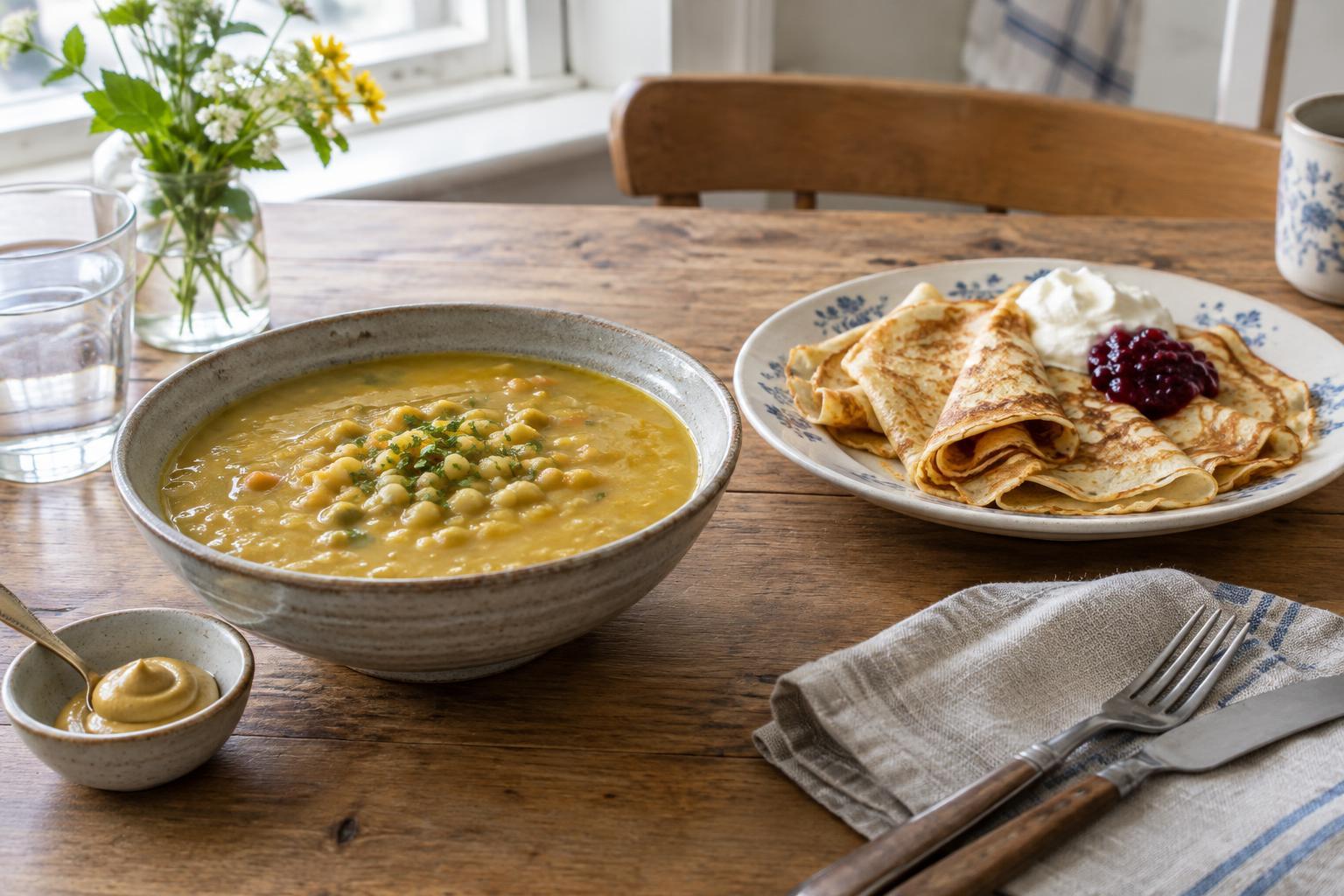
Read article · 4 min↗Yellow pea soup followed by pancakes is one of Sweden’s best-known weekday food traditions. Its Thursday association draws on older food customs, practical cooking habits and the appeal of a meal that is easy to repeat.
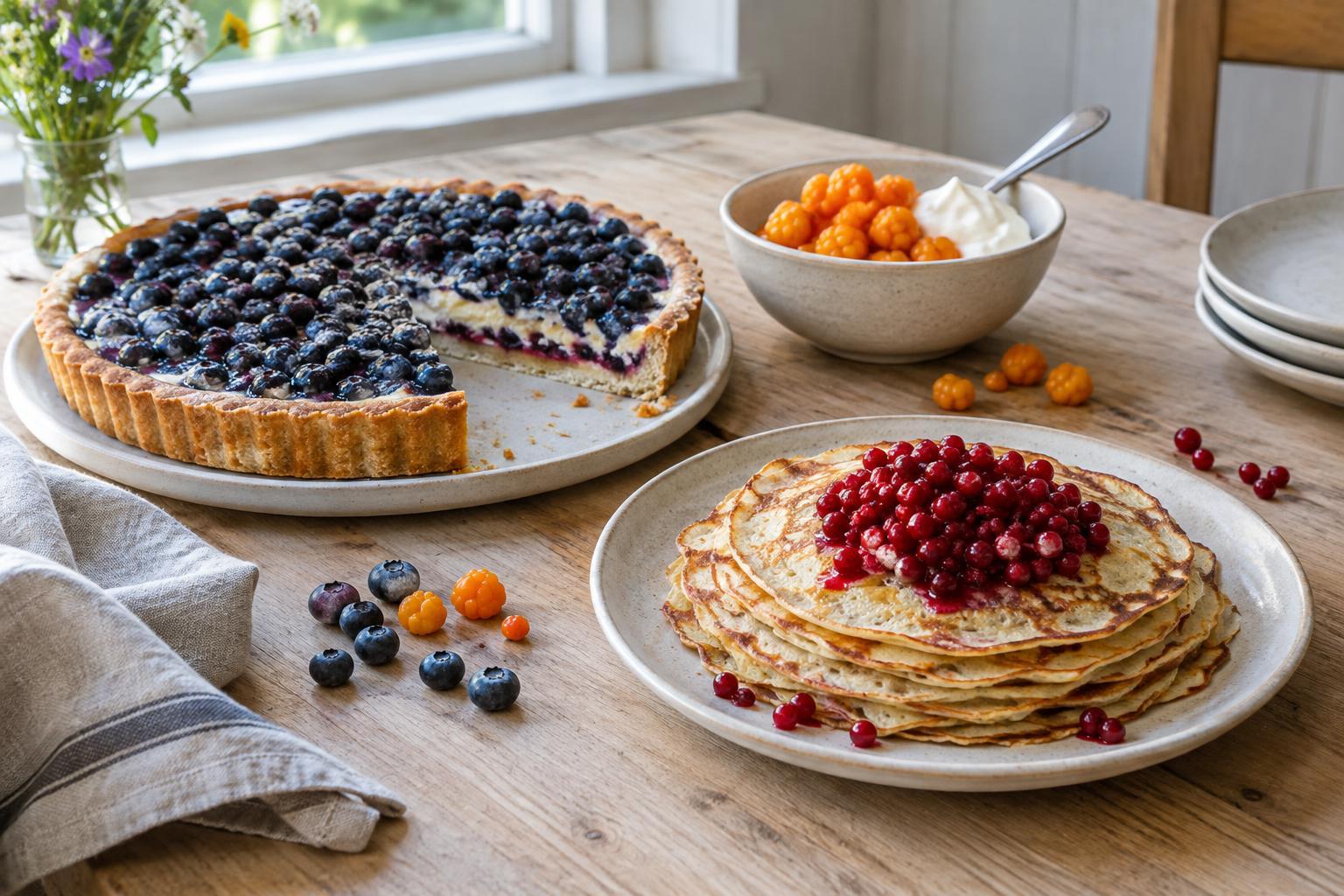
Read article · 3 min↗Swedish blueberries, cloudberries and lingonberries each bring something different to dessert. Learn how their flavors work in simple pies, spoon desserts, pancakes and cakes, whether you have fresh, frozen or preserved berries.
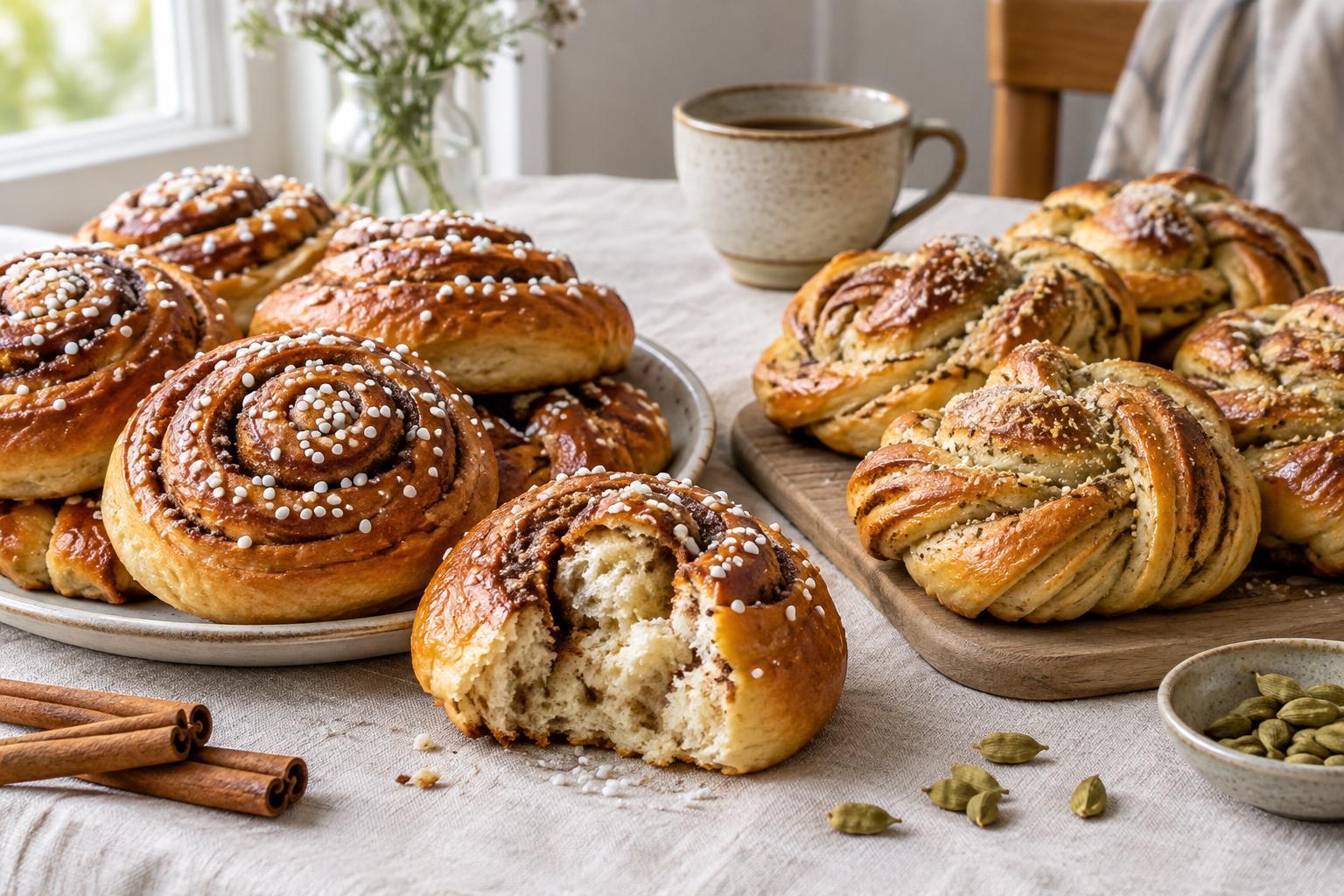
Read article · 4 min↗Swedish cinnamon buns and cardamom buns share a soft, buttery dough, but their fillings give them distinct characters. Learn what sets them apart, why their shapes vary, and how to bake a batch of each.
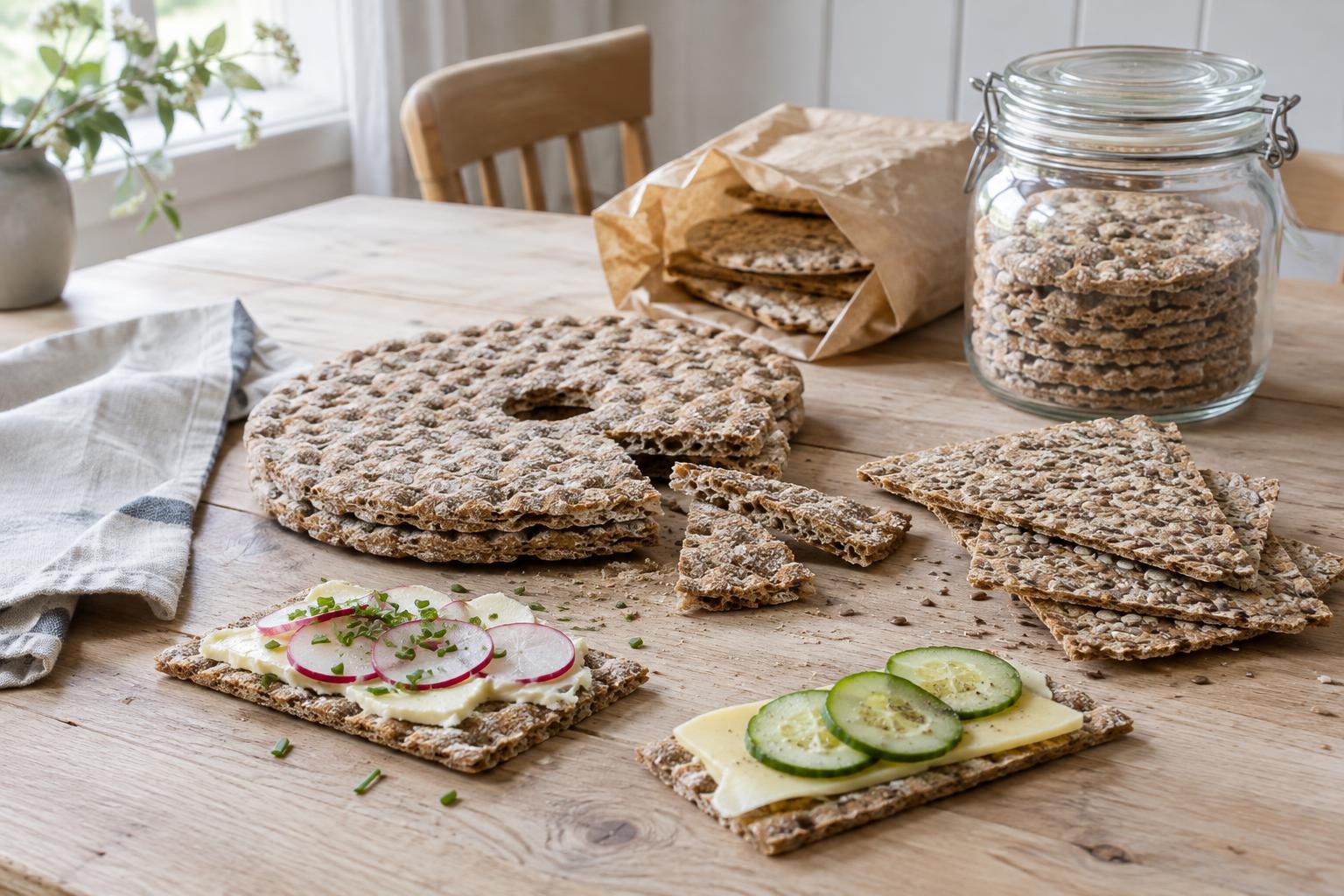
Read article · 4 min↗From sturdy rye rounds to thin seed-studded sheets, Swedish crispbread offers more variety than its simple appearance suggests. Learn how to choose a style, pair it with toppings and store it so the last piece stays as appealing as the first.
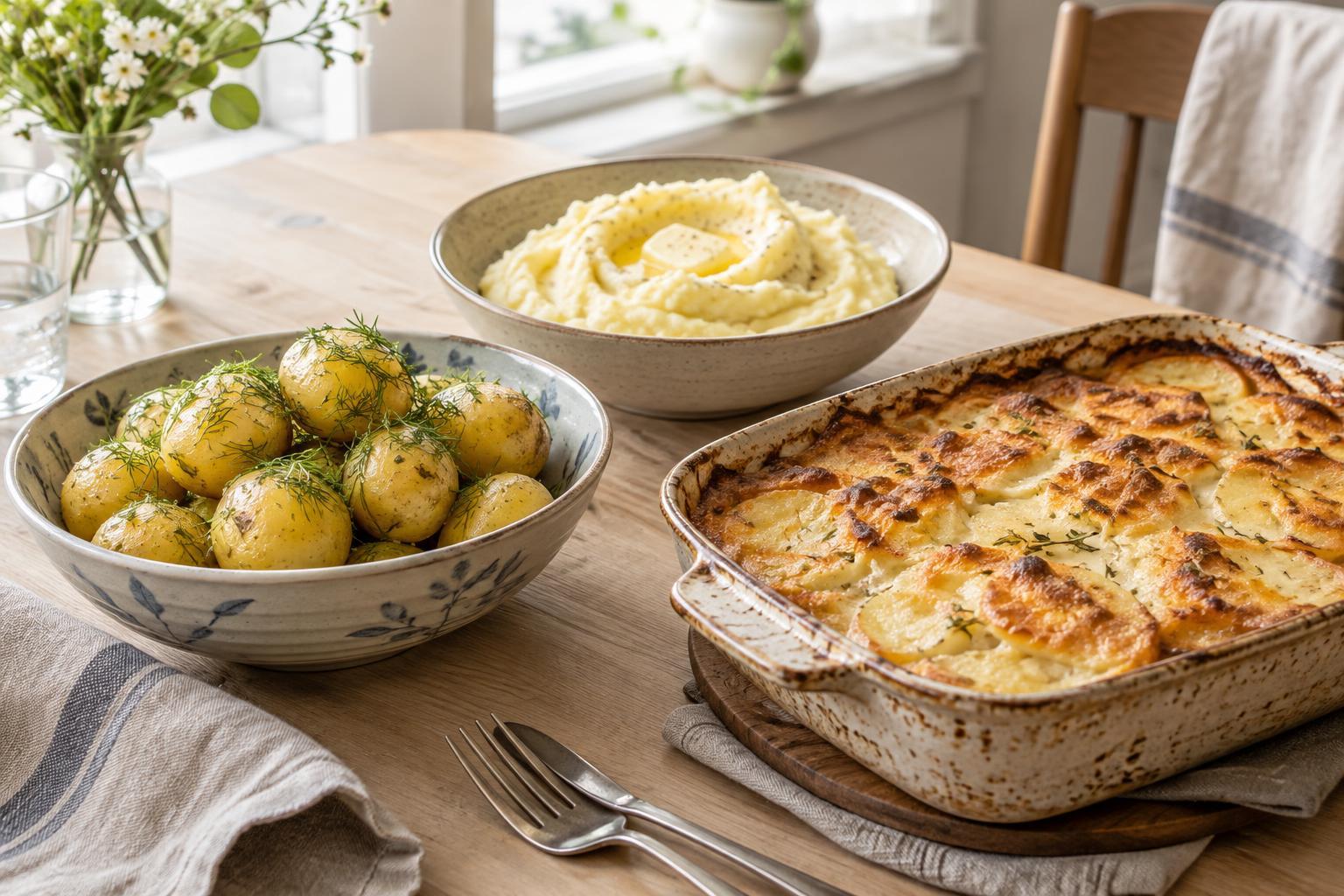
Read article · 4 min↗From dill-scented new potatoes to smooth mash and creamy gratin, potatoes are a versatile part of Swedish home cooking. Learn what distinguishes each preparation and how to make it work at your table.
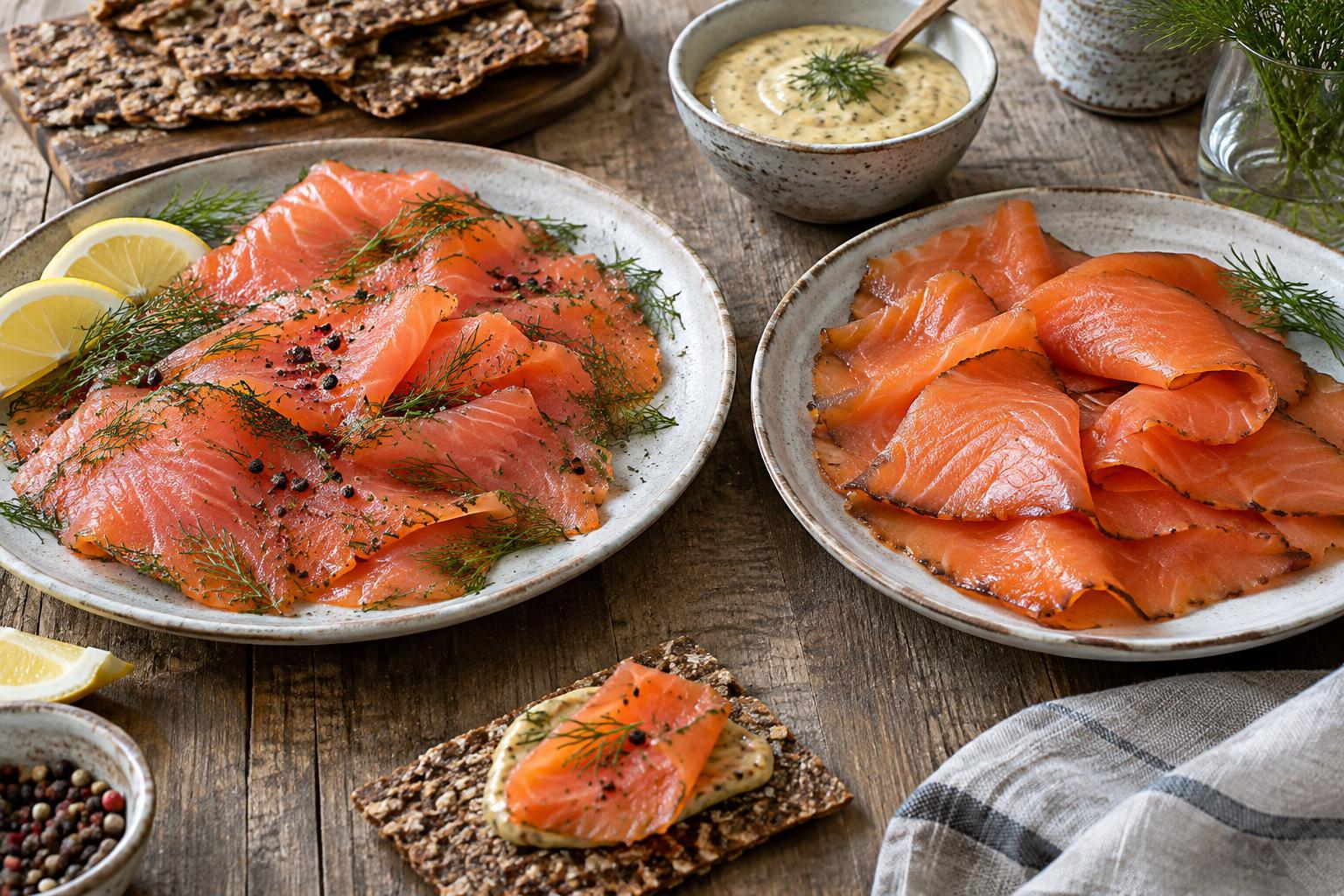
Read article · 4 min↗Gravlax and smoked salmon can look similar on a Swedish table, but they get their flavors and textures in different ways. Here is how to recognize each one, serve it, and choose between them.
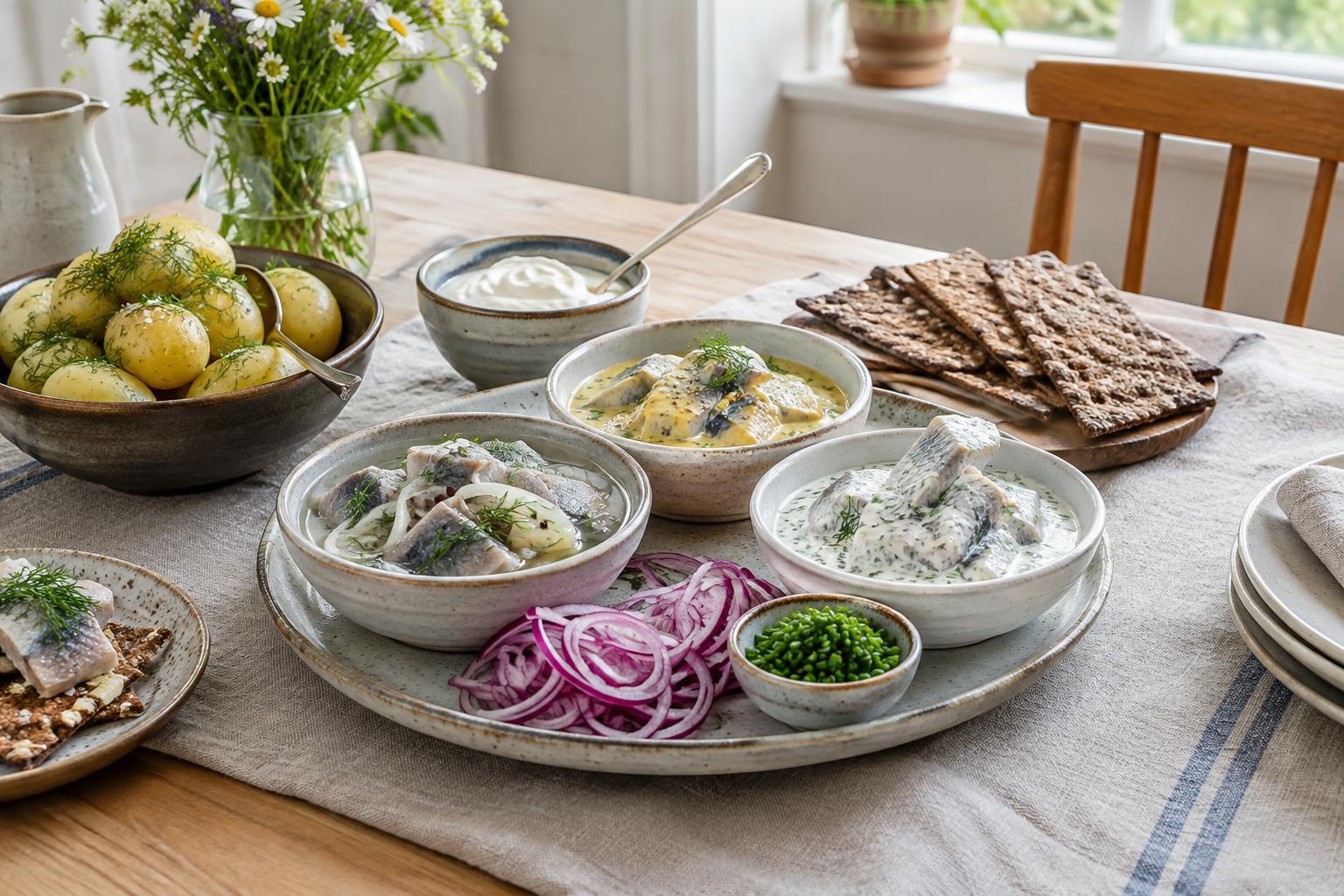
Read article · 4 min↗Pickled herring, or sill, is a familiar part of Swedish holiday tables and summer meals. Learn how common varieties differ, what to serve alongside them, and how to put together a simple herring plate.
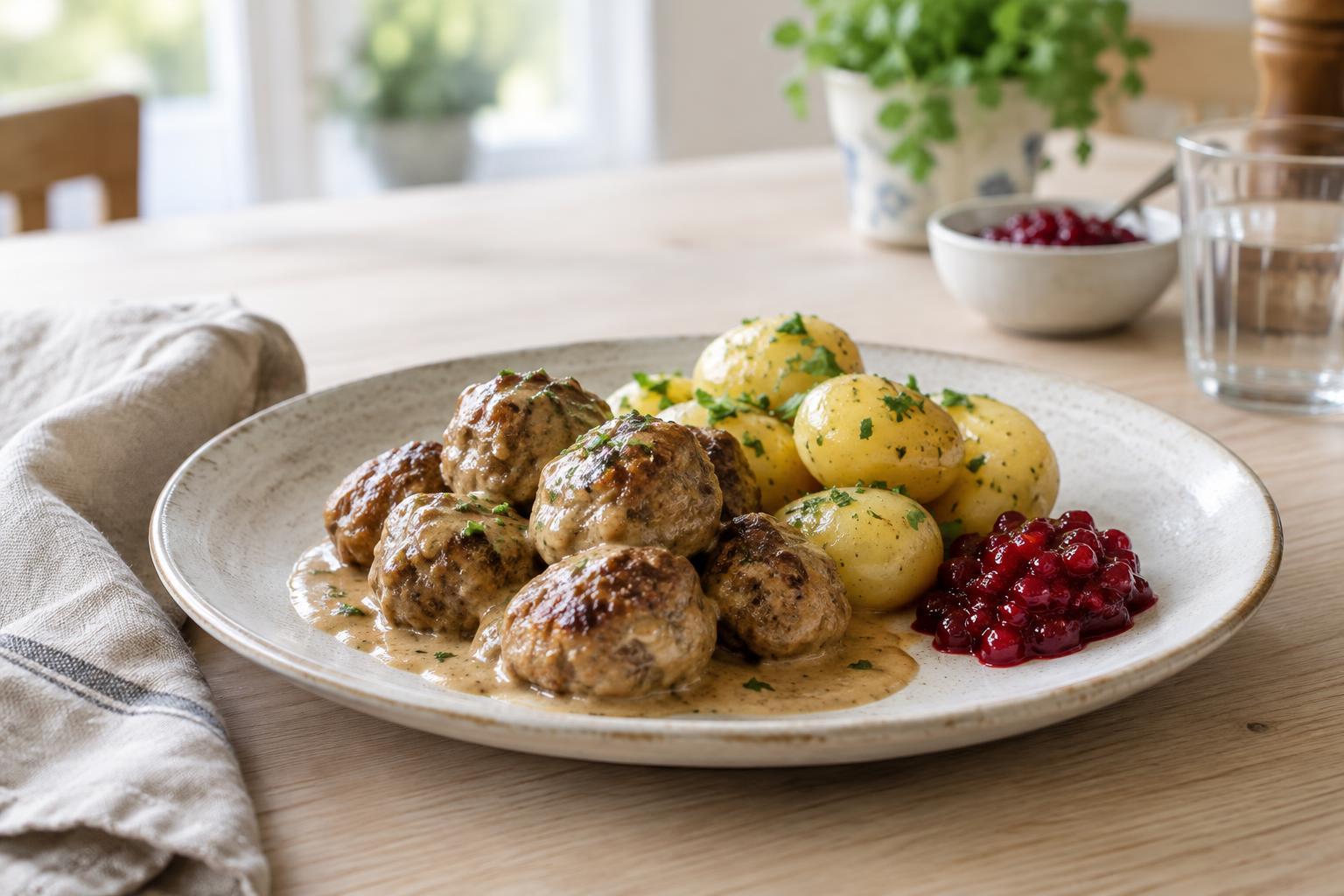
Read article · 4 min↗Make tender Swedish-style meatballs with a simple cream sauce, then serve them with lingonberries and potatoes. This approachable recipe explains how to mix, brown and simmer the meatballs without drying them out.
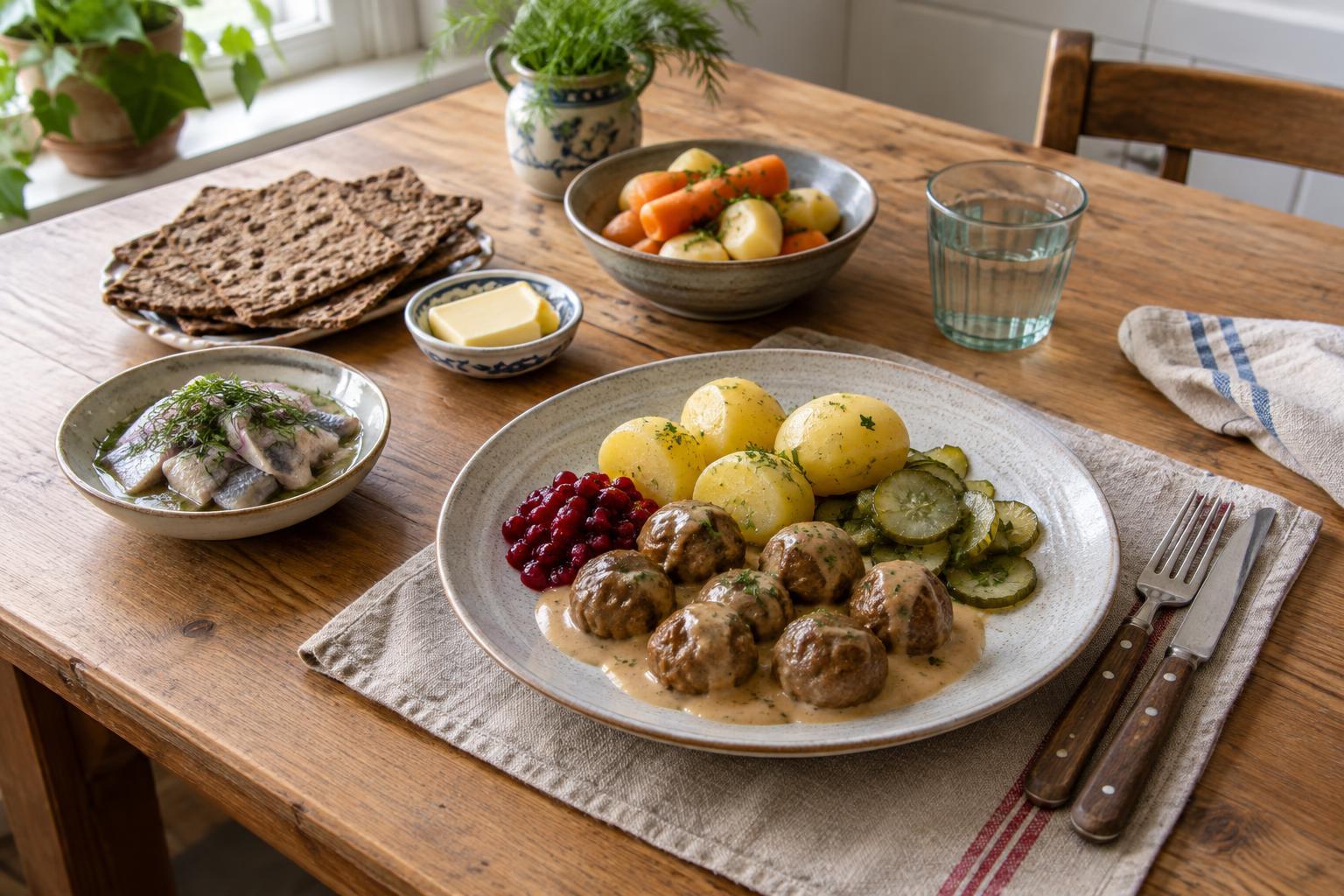
Read article · 4 min↗Husmanskost is the comforting, practical side of Swedish cooking: familiar dishes built around potatoes, grains, vegetables, fish and meat. Here is how to recognize it, what to try first and how to bring its everyday spirit into your own kitchen.
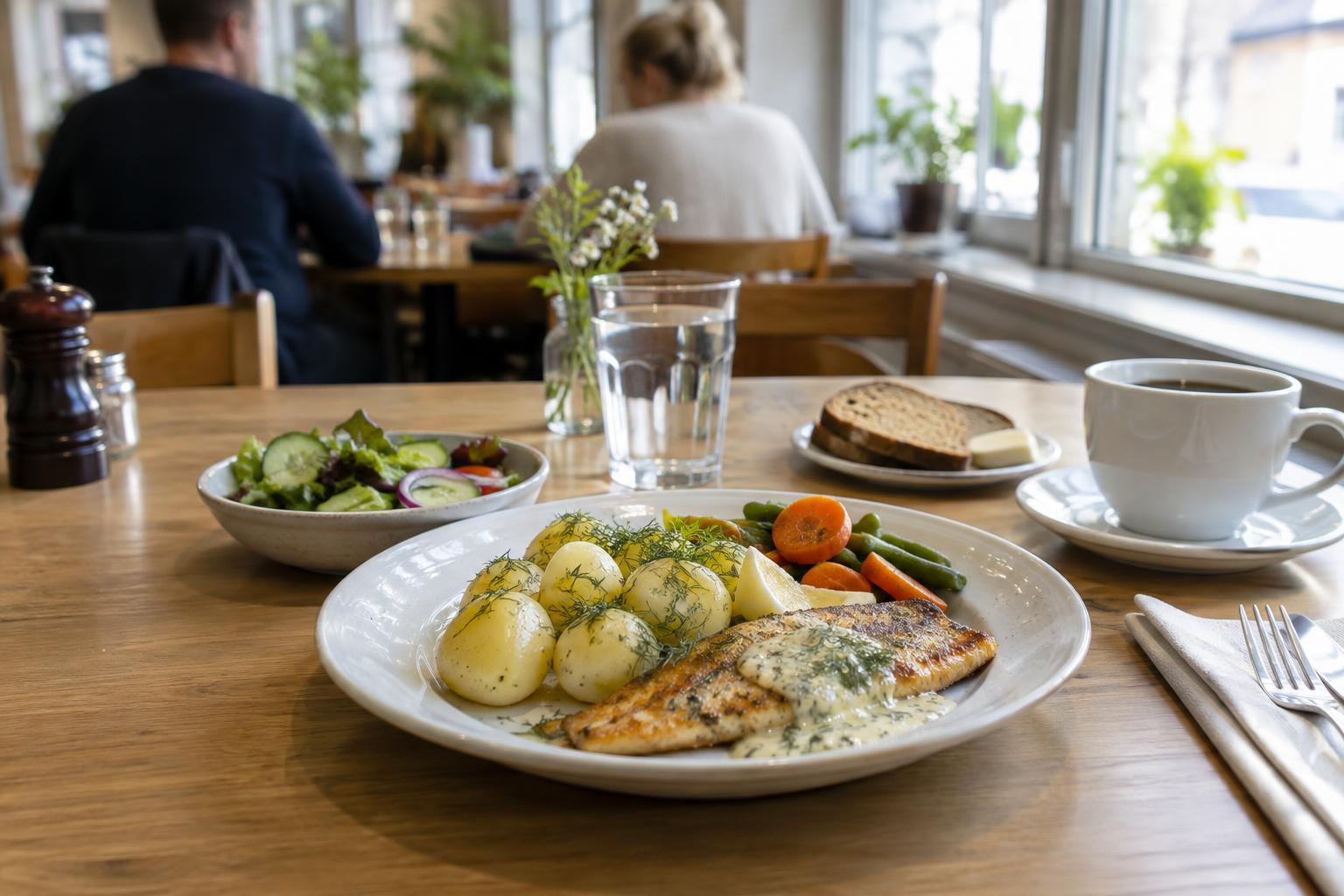
Read article · 3 min↗Dagens lunch is a familiar part of the Swedish workweek: a midday meal built around one or more changing dishes. Here is how to read the menu, what may be included, and what to expect when you order.
Read article · 4 min↗Swedish breakfast is often a simple meal built around bread, a topping and something to drink. Here is a guide to common choices, from crispbread and cheese to porridge and yogurt, and the ways breakfast varies between households.
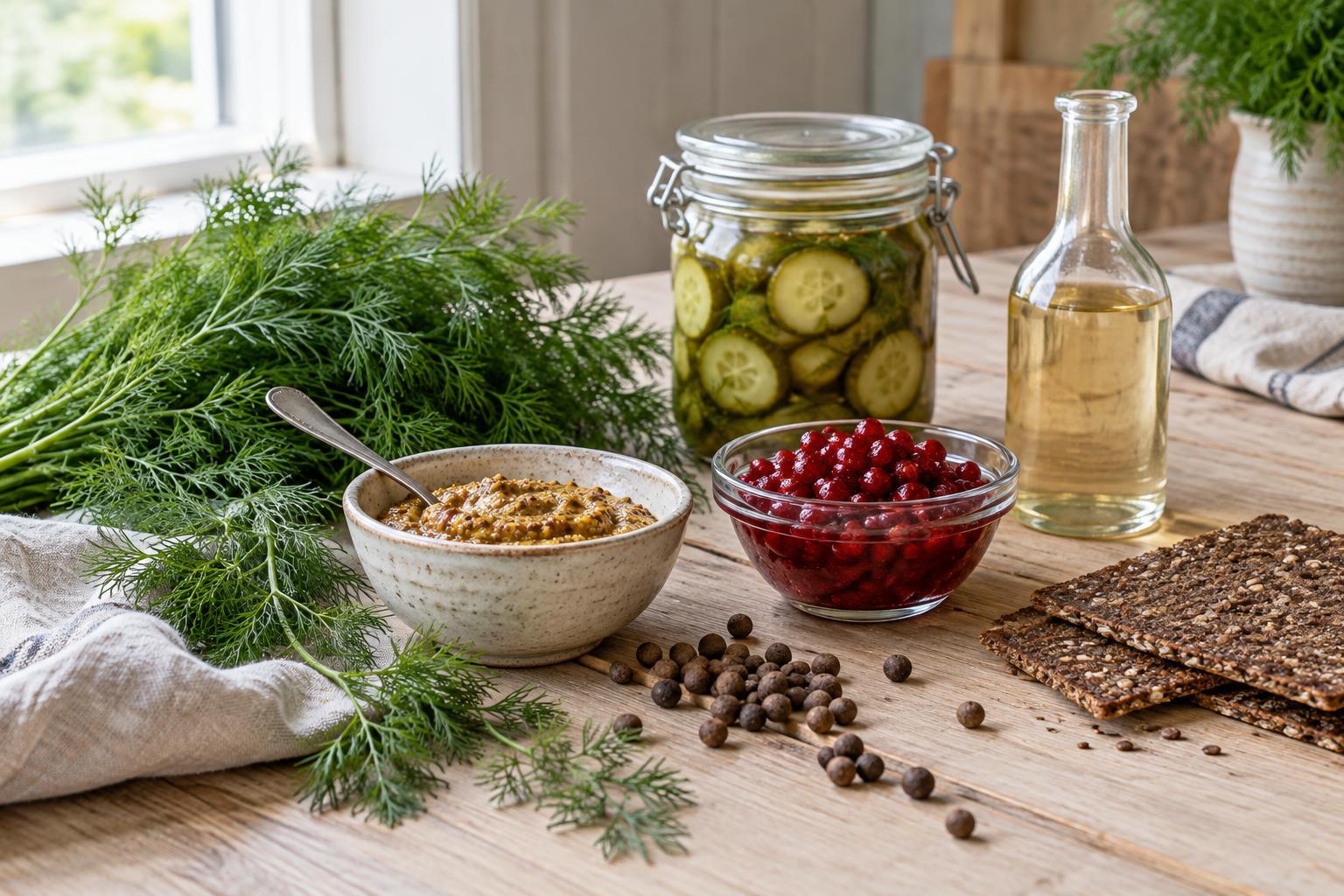
Read article · 3 min↗Swedish cooking often draws on a small set of familiar flavors: fresh dill, sharp mustard, warm allspice, tart berries and the sweet-sour balance of pickles. Here is a practical guide to what they bring to the table and how to use them at home.
Read article · 4 min↗Cards and phone payments make many everyday purchases straightforward in Sweden, but not every payment method works for every visitor. Here is how to prepare for shops, cafés, transport and small purchases without relying on cash.
Read article · 4 min↗Disagreement does not have to sound confrontational. Learn practical ways to share another view in Swedish everyday settings, from choosing the right moment to explaining your reasoning without turning a conversation into a contest.
Read article · 4 min↗A practical guide to using your phone considerately in Swedish cafés, trains and other shared spaces. Learn when to lower your voice, use headphones, step aside for a call and follow the cues around you.
Read article · 4 min↗How do you give or receive a compliment in Sweden without making the moment awkward? A practical guide to understated praise, modest replies and the importance of context.
Read article · 4 min↗Lagom is often translated as “just enough,” but it is more useful as a way to think about balance than as a rule for living. Explore how the idea can shape ordinary choices around food, shared space, conversation and spending—without mistaking it for a description of every Swedish person.
Read article · 3 min↗From a shared coffee break to a clearly signaled end to the workday, Swedish workplace habits often make room for life outside work. Here is a practical guide to understanding those habits without assuming every workplace follows the same routine.
Read article · 4 min↗Swedish workplace meetings often value preparation, clear agendas and contributions from across the group. Here is a practical guide to joining the conversation, understanding consensus and helping quieter colleagues be heard.
Read article · 3 min↗A practical guide to the small courtesies that make buses, trams, trains and metros easier to share in Sweden, from letting passengers off first to choosing a seat and keeping calls quiet.
Read article · 4 min↗New to Swedish household recycling? Learn how to recognize common waste categories, where everyday items usually go, and why local signs are the best guide when you are unsure.
Read article · 4 min↗A practical guide to neighbourly life in Swedish apartment buildings, from keeping noise down to using shared laundry rooms and handling small disagreements.
Read article · 3 min↗In many Swedish apartment buildings, residents share a laundry room known as a tvättstuga. Here is how booking systems, laundry slots and everyday courtesy tend to work, plus what to check when the rules in your building differ.
Read article · 4 min↗Paying separately is often a straightforward option when friends meet in Sweden, but there is no single rule for every meal or group. Here is how to agree on a fair split, handle shared dishes and avoid awkwardness at the table.
Read article · 4 min↗A practical guide to shared dishes, relaxed toasts and the small ways guests show appreciation at a meal in Sweden. These customs vary from home to home, but a little attention to your host goes a long way.
Read article · 3 min↗Invited to someone’s home in Sweden? A few habits—confirming plans, checking what to do with your shoes and following your host’s lead—can help you feel at ease. Customs vary by household, so curiosity and consideration matter more than memorizing rules.
Read article · 4 min↗Small talk in Sweden often starts with something shared and easy to answer: the weather, the journey, or the place you are both visiting. Learn how to begin a conversation, read the response, and keep personal questions for later.
Read article · 4 min↗A little distance, a pause before speaking, or a quiet journey can be easy to misread. This guide looks at everyday social cues in Sweden and offers practical ways to be considerate without assuming that everyone follows the same rules.
Read article · 4 min↗At many Swedish counters, waiting your turn starts with a numbered ticket rather than a visible line. Learn how to spot a ticket machine, follow the display, and handle common queue situations without guesswork.
Read article · 3 min↗Arriving on time is a useful default in Sweden, but a meeting, a casual coffee and a dinner invitation call for slightly different approaches. Here’s how to plan your arrival, handle a delay and follow your host’s lead.
Read article · 4 min↗Fika is often described as a Swedish coffee break, but the drink is only part of it. Learn how this everyday ritual creates room for conversation, hospitality and a pause in the day.
Read article · 3 min↗A simple hej, a first name and a little attention to the situation will take you far in Sweden. This guide explains common ways to greet people, when a handshake fits and why the informal du is usually the natural choice.
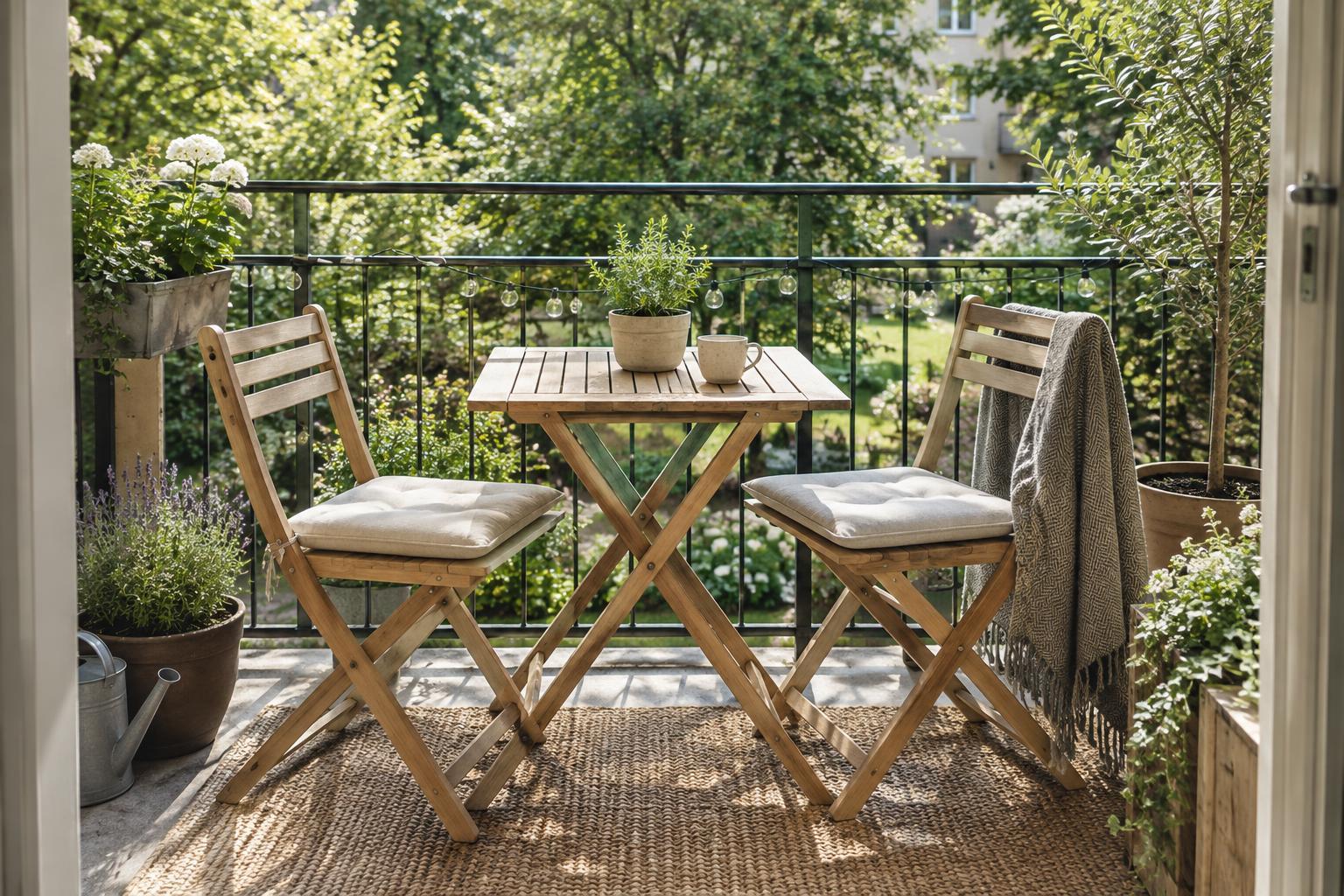
Read article · 3 min↗Swedish-inspired outdoor spaces make room for fresh air, everyday meals and quiet moments. Learn how to choose furniture that fits your space, handles changing weather and feels inviting without demanding constant upkeep.
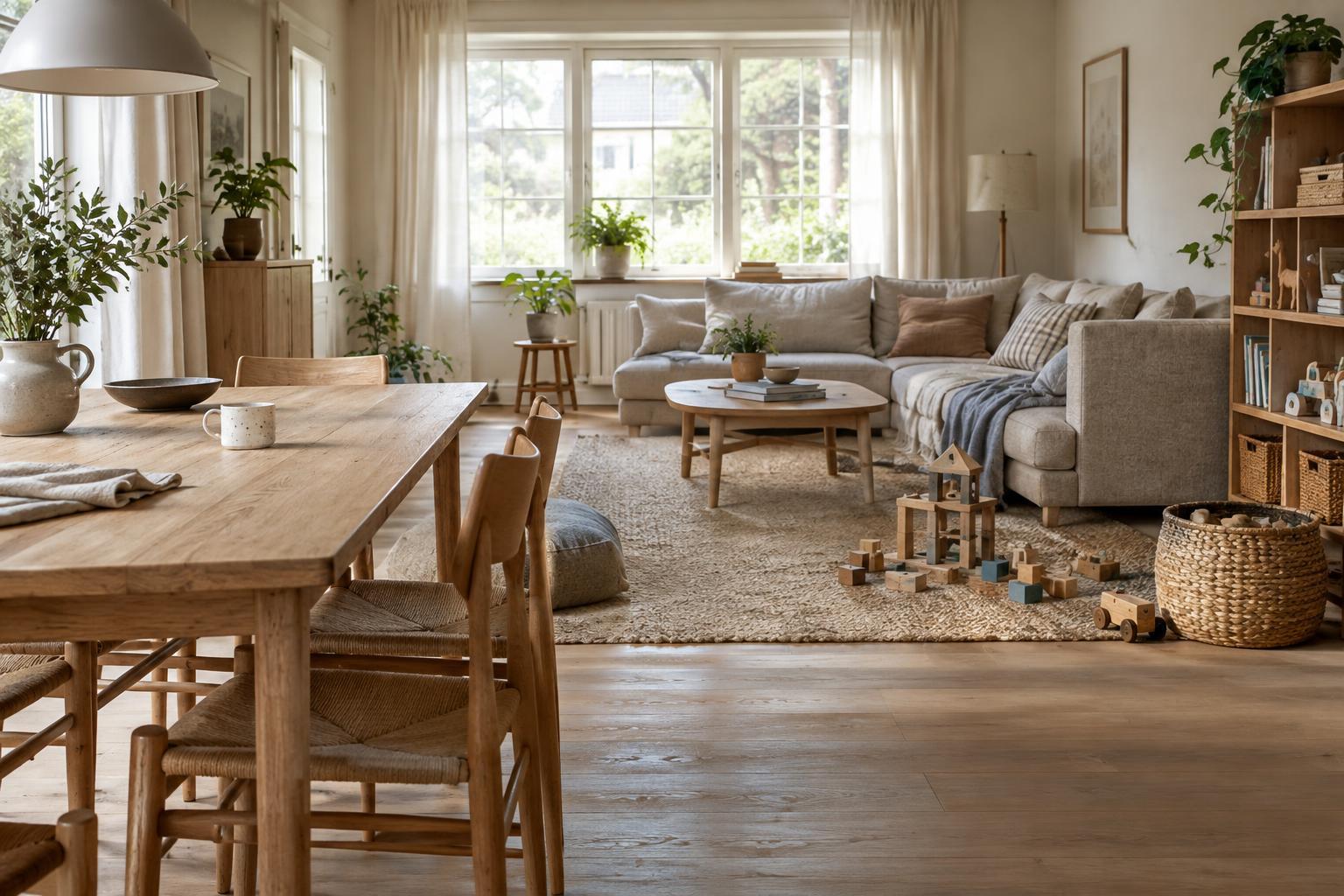
Read article · 4 min↗A Swedish-style family home can feel calm without being precious. Choose furniture that suits everyday routines, can be cleaned and repaired, and leaves room for people to move, play and gather.
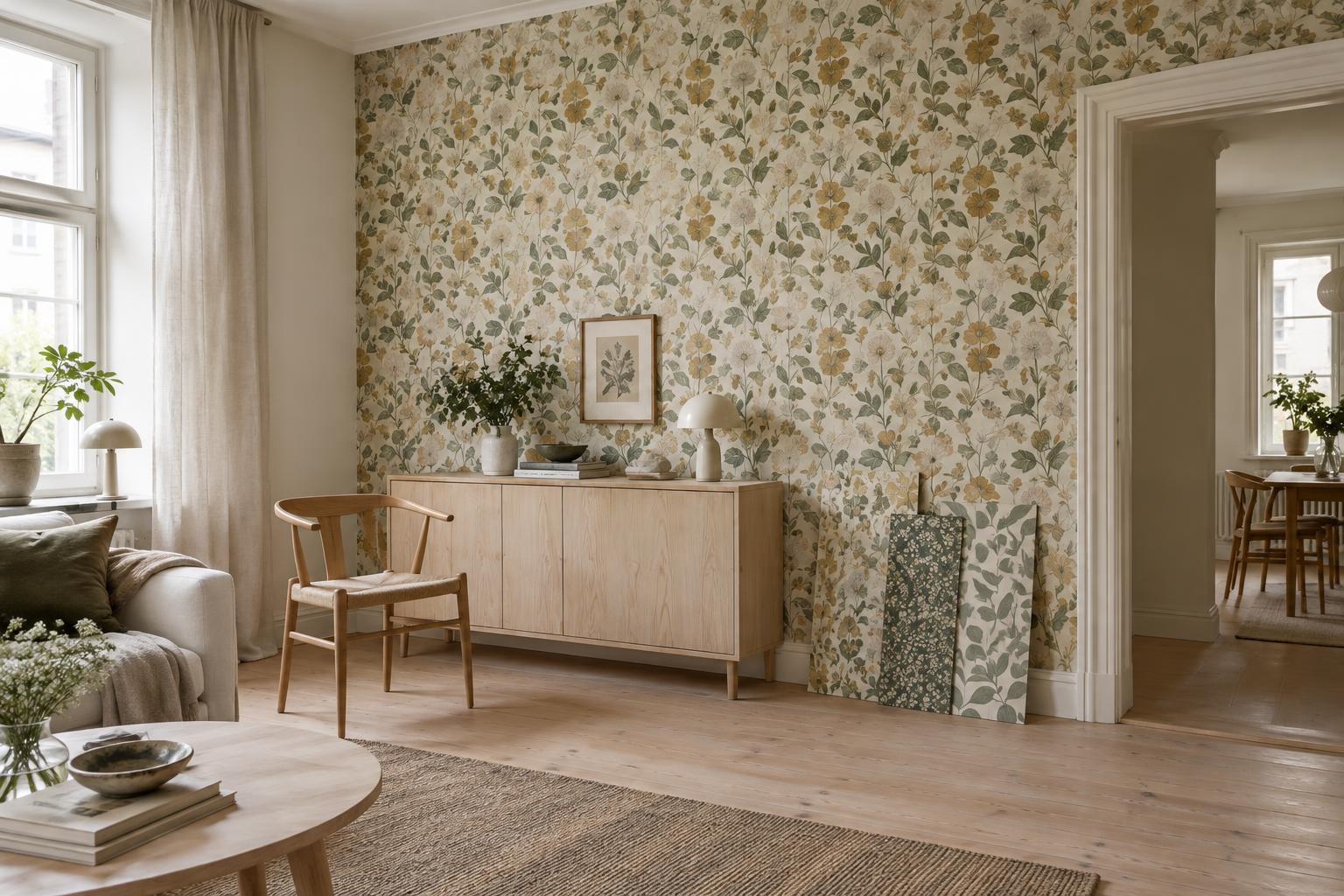
Read article · 4 min↗Swedish wallpaper can be quiet or exuberant. Learn how to read a pattern’s scale, choose where it belongs and test it against the light, furniture and architectural details of a room.
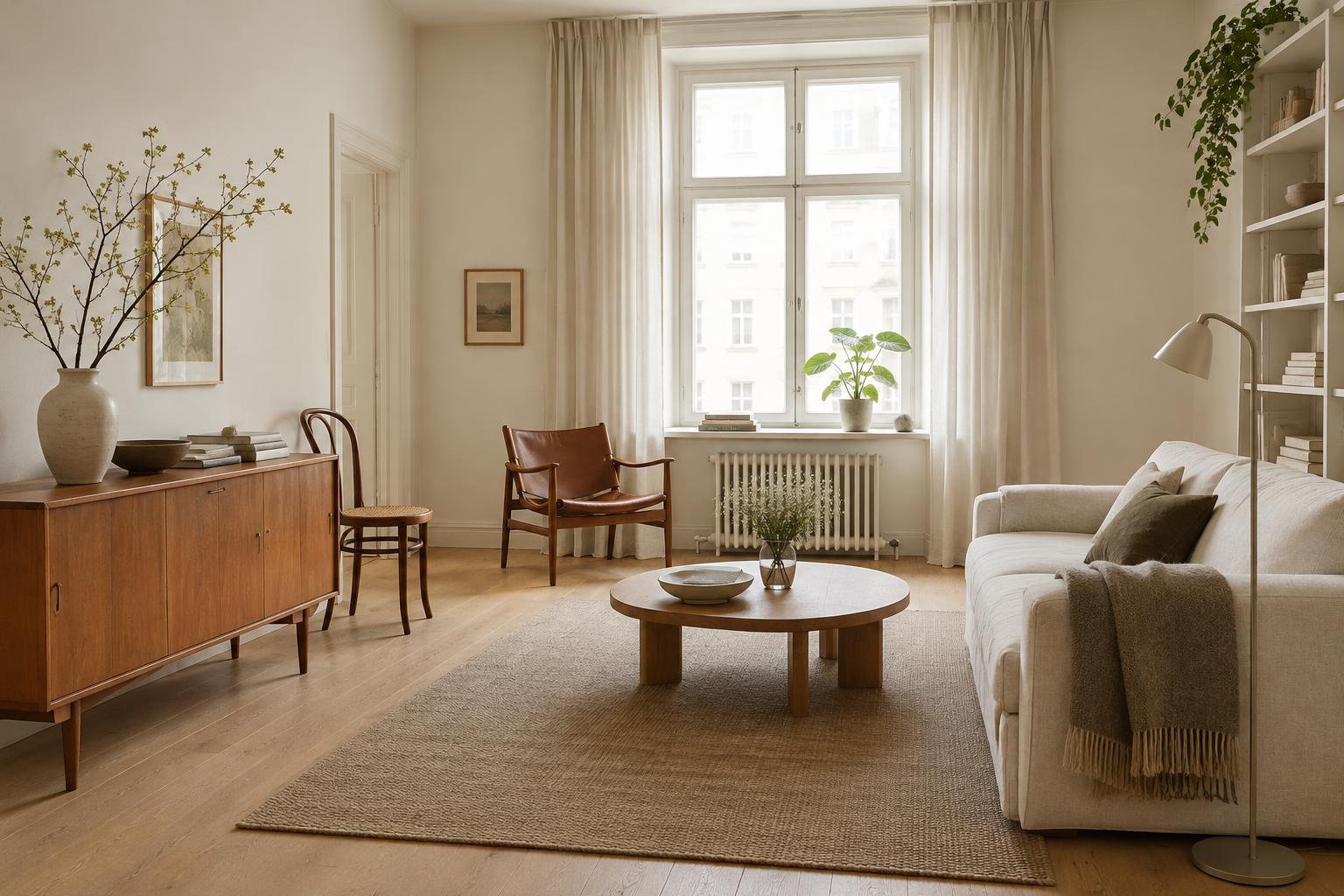
Read article · 3 min↗A room can feel both lived-in and uncluttered when old and new furnishings share a purpose. Explore practical ways to pair vintage finds with contemporary design through proportion, materials, lighting and everyday use.
Read article · 4 min↗A Swedish-inspired room is more than pale walls and light wood. Learn how to avoid common missteps with color, lighting, furniture, texture and personal details while making the space work for everyday life.
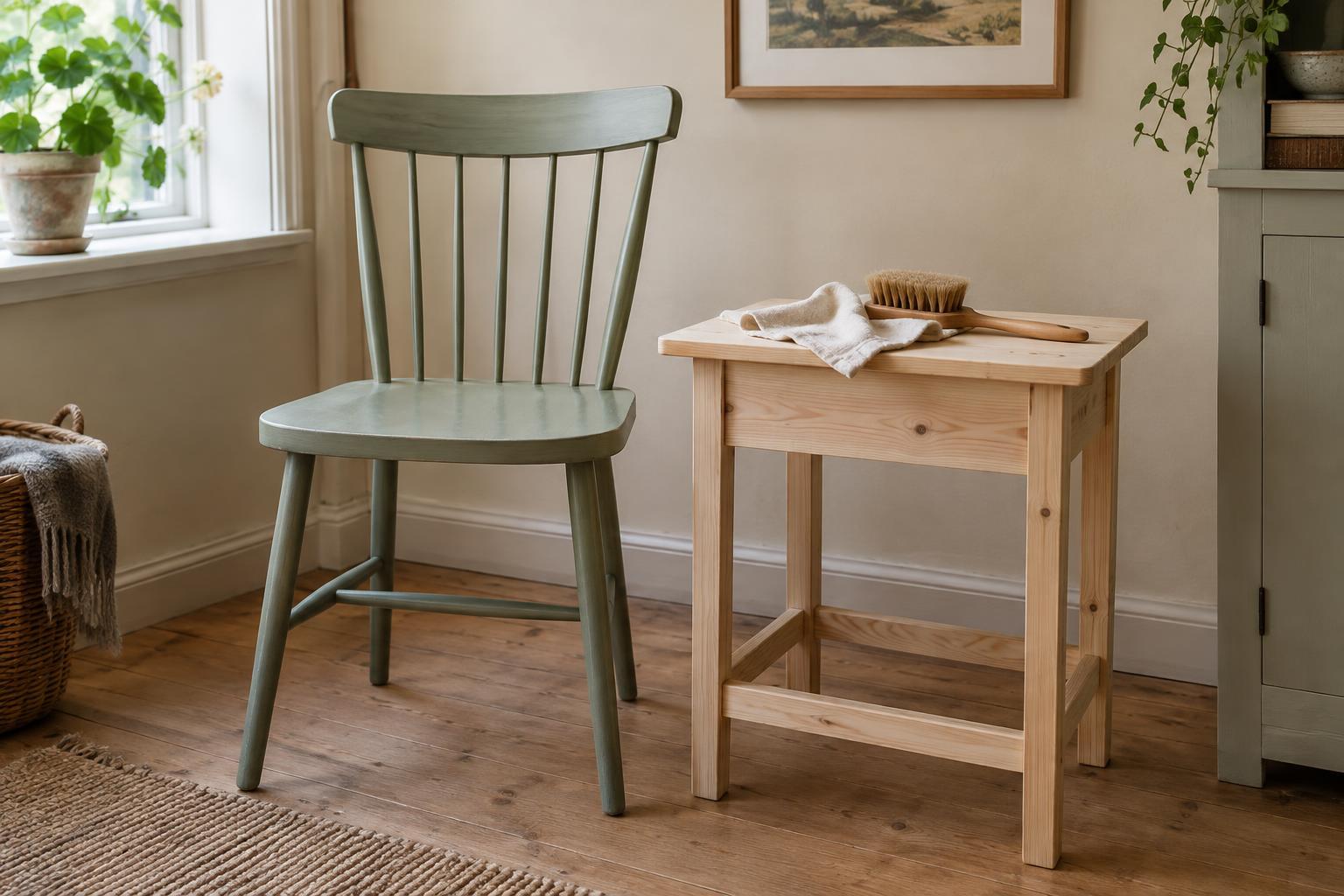
Read article · 4 min↗Painted and unfinished wood need different kinds of care. Learn how to dust, clean, protect and maintain wooden furniture without assuming every surface can tolerate water, polish or oil.
Read article · 4 min↗A practical guide to choosing secondhand Swedish furniture, from checking construction and condition to judging restoration, fit and everyday usefulness.
Read article · 4 min↗Swedish table settings often favor useful pieces that feel good to handle and easy to live with. Explore how ceramics, glassware, linens and simple arrangements can work together for everyday meals.
Read article · 4 min↗A Swedish-style kitchen is less about matching a photograph than making everyday tasks feel easy. Start with how you cook and gather, then choose durable surfaces, useful storage, layered light and a few personal details.
Read article · 4 min↗A compact home works best when storage supports daily routines rather than simply hiding belongings. These ideas, inspired by Swedish apartment interiors, show how to make use of walls, furniture and overlooked corners without making a room feel crowded.
Read article · 4 min↗A Swedish-style entryway works hard without feeling crowded. Learn how to create a clear path from wet shoes to dry storage, make room for coats and winter accessories, and keep everyday essentials easy to find.
Read article · 4 min↗Linen towels, wool blankets and woven rugs bring texture and usefulness to Swedish interiors. Explore how these textiles work in the home, what their patterns can express and how to choose pieces that suit everyday life.
Read article · 4 min↗Swedish flat-weave rugs can bring color, texture and a sense of craft to a room without the height of a thick pile. Learn how to recognize common styles, choose a size and material, and place one where it will work well in everyday life.
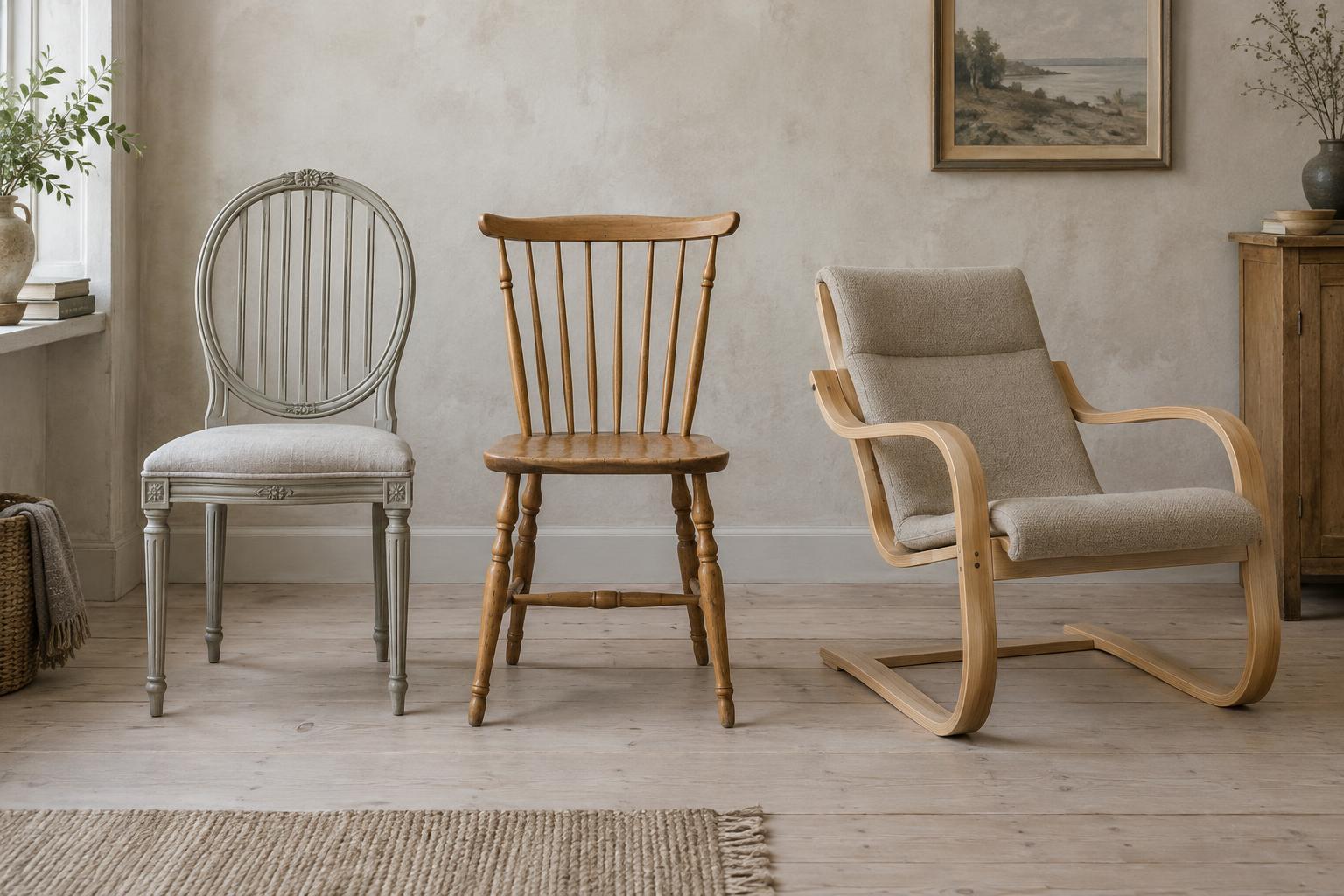
Read article · 4 min↗From painted Gustavian seats to everyday pinnstolar and curved modernist loungers, Swedish chairs come in many forms. Learn what their silhouettes, materials and joints can tell you—and why a familiar style is not proof of a chair’s age or origin.
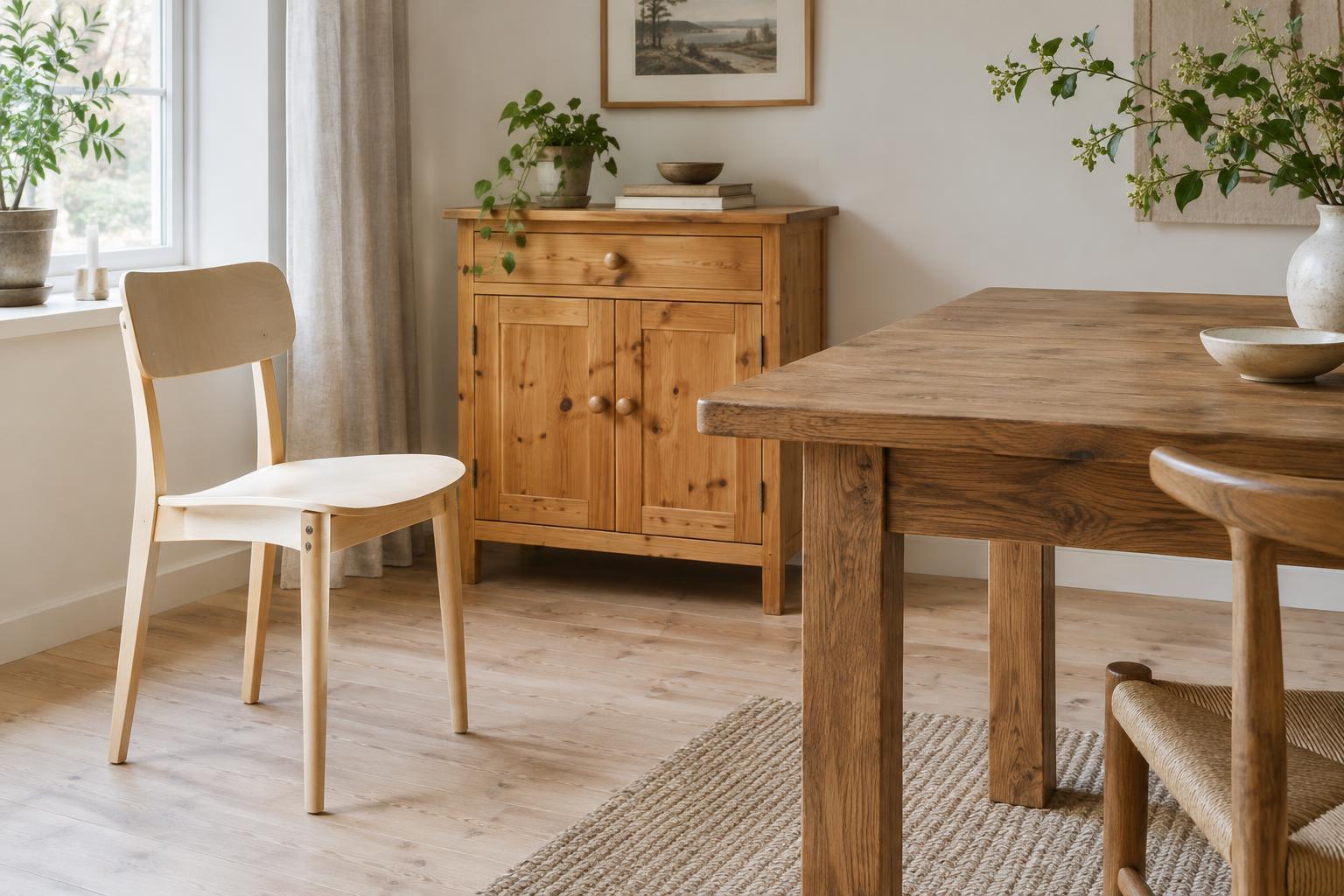
Read article · 4 min↗Birch, pine and oak each bring a different character to furniture. Compare their color, grain, durability and care needs to choose a wood that suits your room and the way you live.
Read article · 4 min↗A welcoming living room rarely relies on one bright ceiling light. Learn how to combine ambient, task and accent lighting, choose comfortable bulbs, and place lamps where they support everyday life.
Read article · 4 min↗In Sweden, the light entering a room can change dramatically across the year. A flexible approach to windows, surfaces, textiles and lamps can make a home feel welcoming in both bright summer evenings and darker winter afternoons.
Read article · 4 min↗A Swedish-inspired room can be warm, colorful and quietly expressive. Learn how to build a palette from muted greens, earthy reds, soft blues and natural materials without losing the sense of light and calm often associated with Swedish interiors.
Read article · 4 min↗Swedish Grace brought refined proportions and quiet ornament to the early twentieth-century interior. Functionalism put everyday needs, light and efficient living at the centre. Together, their ideas still offer useful ways to think about a room.
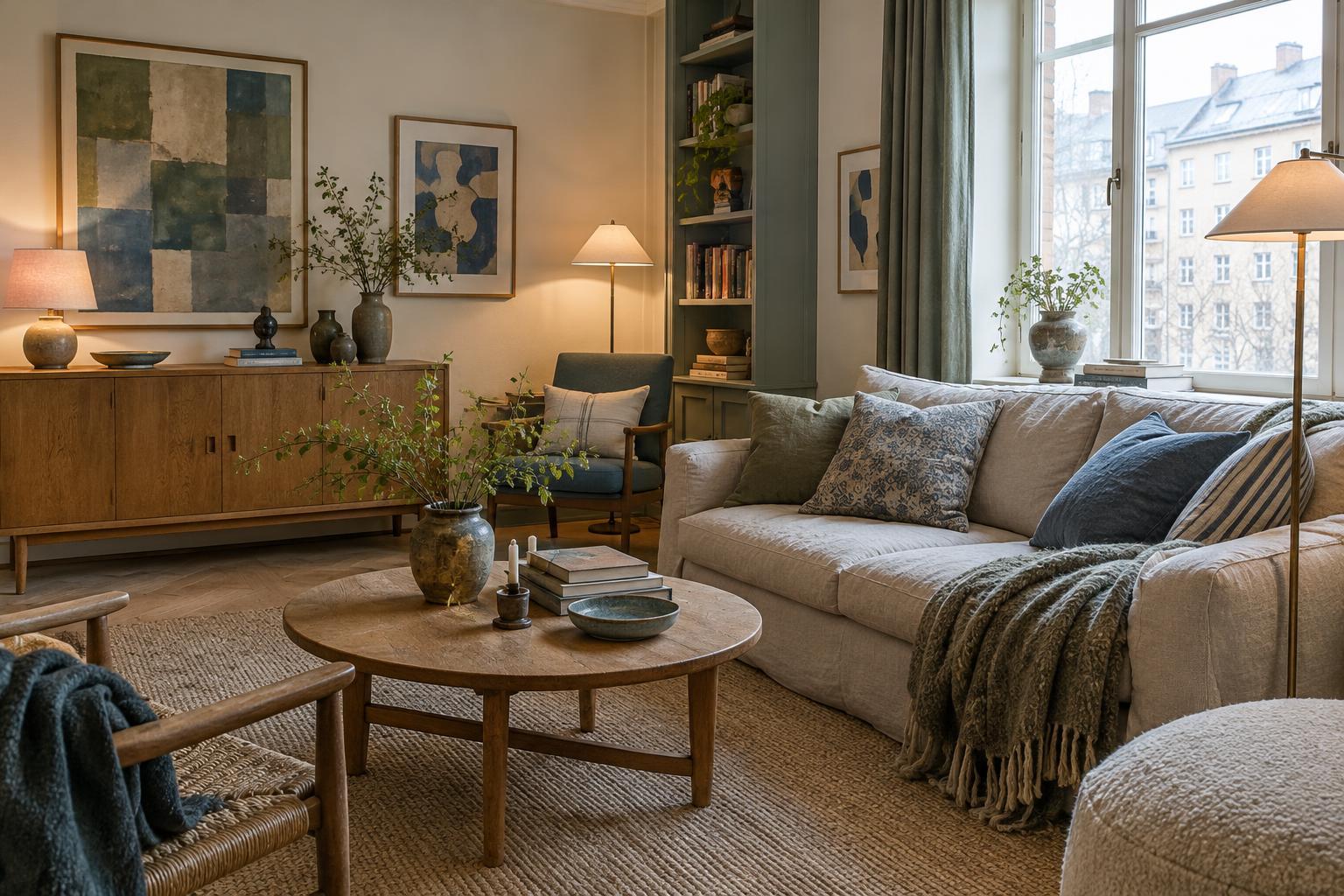
Read article · 4 min↗Swedish interiors are often described as light and simple, but their appeal also comes from comfort, useful details and a sense of ease. Learn how to work with space, natural materials, color and lighting without turning your home into a showroom.
Read article · 4 min↗Recommended

Swedish design often invites a simple question: will this object work with the life you already lead? The same question is useful when choosing a scarf. A well-judged accessory can make a familiar coat feel different, give a plain shirt a new focal point or bring colour into a wardrobe built around quiet neutrals. This independent English-language magazine explores Sweden’s culture, design, food, landscapes and everyday customs; it is not a consulate or a government service. Here, our design-minded approach turns to UniqueYou and its scarves, shawls, wraps and square scarves. Rather than treating an accessory as the start of an entirely new outfit, consider how it might become part of the clothes you already enjoy wearing.
The most helpful place to begin is not a trend forecast but the open wardrobe door. Look at the coat you wear on ordinary cold mornings, the jacket that accompanies you through spring and the tops that appear repeatedly in your laundry. Their colours, necklines and proportions reveal what a scarf needs to do. A patterned square may bring energy to a plain shirt; a long, calm-coloured scarf may sit more comfortably beside a textured coat. Neither choice is inherently better. The useful choice is the one that makes an existing outfit feel more complete.
UniqueYou’s approach centres on elegant, accessible accessories that can be chosen to match a woman’s existing wardrobe. That is a practical idea, not a demand for a particular look. Someone whose clothes are mostly black, navy and grey might want one warm accent near the face. Someone who already wears vivid prints might prefer a scarf with less visual competition. Before browsing, name two or three outfits you would actually wear the accessory with. If you can picture a weekday version and a more dressed-up version, you have a clearer basis for choosing than an attractive image alone can provide.
UniqueYou began in 2014 with scarves and clothing. Its history includes a pause and a later return after the domain was recovered, so it would be misleading to describe the business as having traded without interruption since its founding. That distinction matters: a brand story is more interesting when it is told plainly. Today, the name provides a useful starting point for looking at accessories as personal choices, shaped by the wearer’s habits rather than by a single prescribed silhouette.
The visual identity also has its own continuity. An original brown wordmark includes a horse motif and the words “Since 2014”; a neutral taupe palette gives the identity a restrained setting. Those details can suggest a mood, but they do not tell you whether any particular scarf will suit your coat, feel comfortable at your neck or fall the way you hope. For those answers, look beyond the brand image to the individual item’s dimensions, composition, colour and photographs. Style begins with an impression, but a satisfying choice depends on the details.
A long scarf offers several straightforward ways to change an outfit: let its ends hang beside an open coat, loop it once when you want a closer frame around the face, or tuck it inside an outer layer for a tidier line. A shawl or wrap covers more of the shoulders and can add a layer over a simple dress or knit. A square scarf works at a different scale. Folded into a narrow band, it can sit neatly at the neck; left broader, it can make a more visible feature of its colour or pattern.
UniqueYou offers women’s scarves, shawls, wraps and square scarves, so begin by asking which shape solves a real styling need. If your coat already has a high collar, a smaller square may feel easier to arrange than a bulky wrap. If you often move between an outdoor layer and a cooler indoor space, a larger piece may offer more styling options. Think about how much fabric you enjoy handling, whether you prefer a compact knot or a loose drape, and where the edges will fall against the garments you wear most.
Silk, cashmere and wool appear among UniqueYou’s categories, but composition varies by product. A category name is a place to begin exploring, not a reason to assume every item has the same fibre content or feel. Check the individual product description before deciding. The listed composition, measurements and care guidance are more useful than a broad impression created by a photograph. If a particular fibre matters to you, verify it on the exact scarf under consideration rather than extending a description from one piece to another.
Material also affects how an accessory behaves in an outfit. A lighter, smoother scarf can create a crisp fold and sit close to a shirt collar; a softer-looking, fuller piece may make a more relaxed line against a coat. These are styling considerations, not guarantees about any individual fabric. Consider the conditions in which you expect to wear it: a brisk walk, an indoor gathering, a journey with frequent changes of temperature. The best-looking choice on a hanger is not necessarily the one you will enjoy arranging again and again.
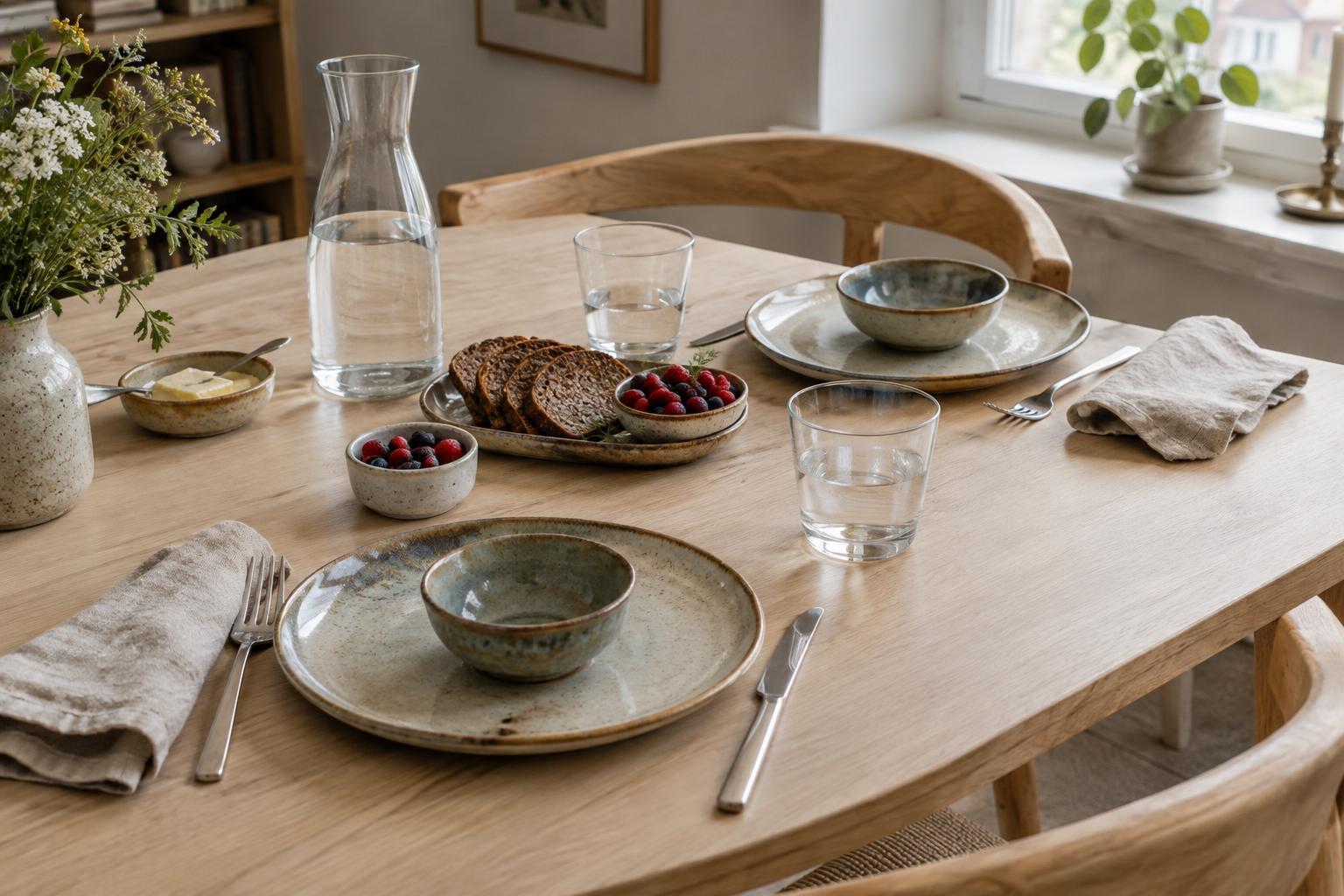
Swedish interiors are often discussed in terms of light, texture and the space around objects. That way of looking can be useful for clothes too, without suggesting there is only one Swedish way to dress. A pale scarf beside a dark coat changes the balance around the face. A muted brown or taupe can connect a navy jacket to tan shoes. A strong red accent can be especially clear when the rest of an outfit is quiet. Notice what the scarf does in relation to neighbouring garments, rather than judging its colour in isolation.
The principle is not minimalism for its own sake. A patterned scarf can be the most expressive part of an otherwise restrained outfit, while a plain scarf can give a lively dress room to breathe. Try placing the accessory beside the clothes you already own, even if only by comparing photographs and familiar colours. Look at undertones as well as colour names: a warm cream can feel different from a cooler white, and a rust-red accent has a different effect from a clearer red. Small distinctions can decide whether a scarf feels integrated or merely added.
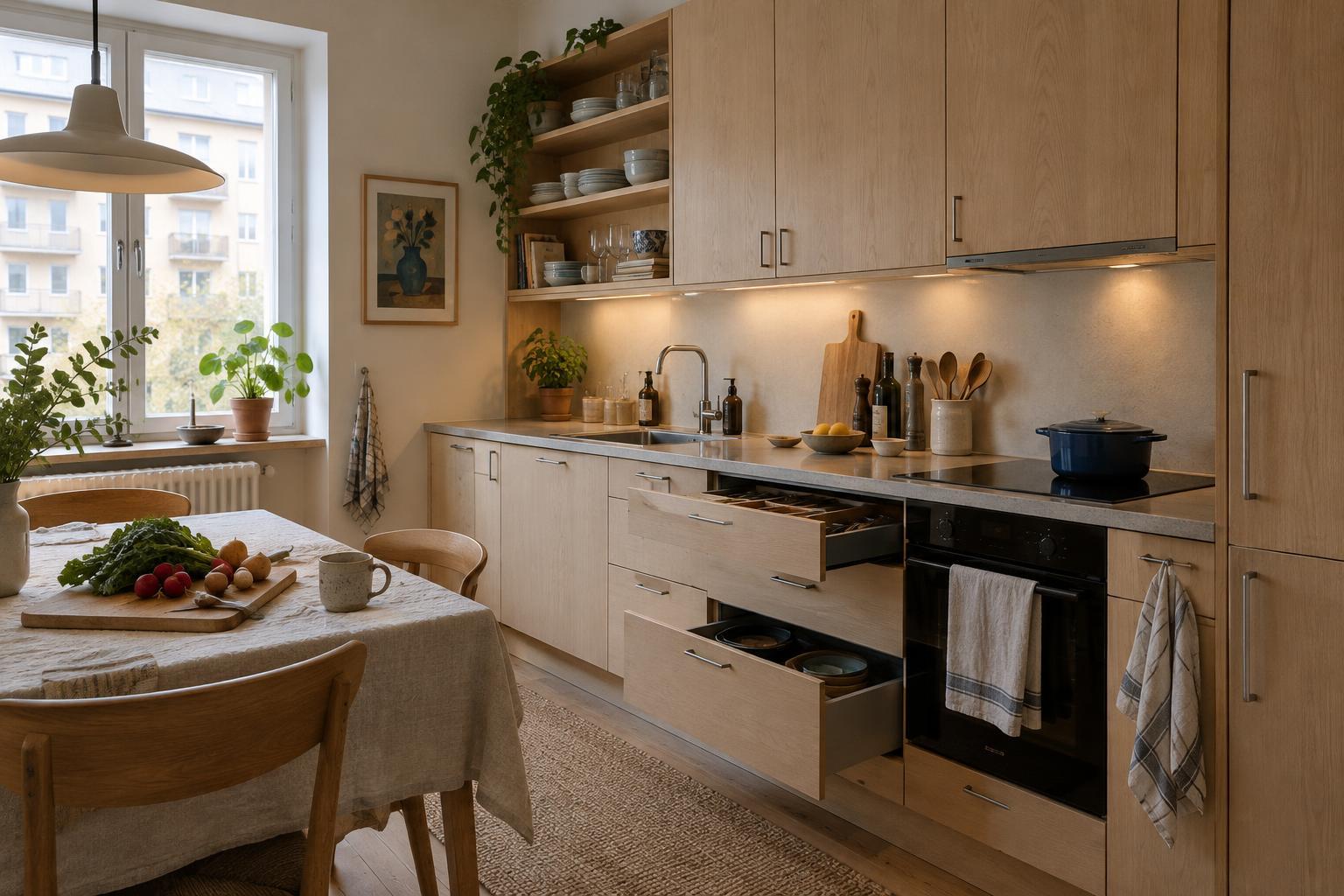
A scarf changes more than colour. It adds volume near the face and shoulders, creates lines down the front of a coat and can shift where the eye rests. A large wrap over an oversized jacket may be exactly the generous shape you want; alternatively, it may feel like more fabric than you enjoy managing. A narrow scarf against a long, simple coat can provide a deliberate vertical line. There is no universal rule that a particular body shape requires a particular scarf size. Comfort and the effect you want are better guides.
When comparing pieces, pay attention to width and length as well as the overall silhouette in photographs. Ask whether you like the ends to remain visible, whether you tend to tie a knot, and whether you need the scarf to fit beneath a fastened coat. A square scarf introduces another consideration: the size of the fold determines whether it behaves like a small neck accent or a more substantial layer. These practical questions can spare you from choosing a beautiful shape that asks for more arranging than you would normally give it.

Scarves can make thoughtful gifts because they do not require the same fit decisions as many garments, but they still call for attention. Start with what the recipient actually wears. Is their favourite coat dark and tailored, light and casual, or richly patterned? Do they usually choose small accessories, or do they enjoy a visible wrap? If you rarely see them wear colour near the face, a dramatic print may reflect your taste more than theirs. A gift feels personal when it acknowledges habits as well as occasions.
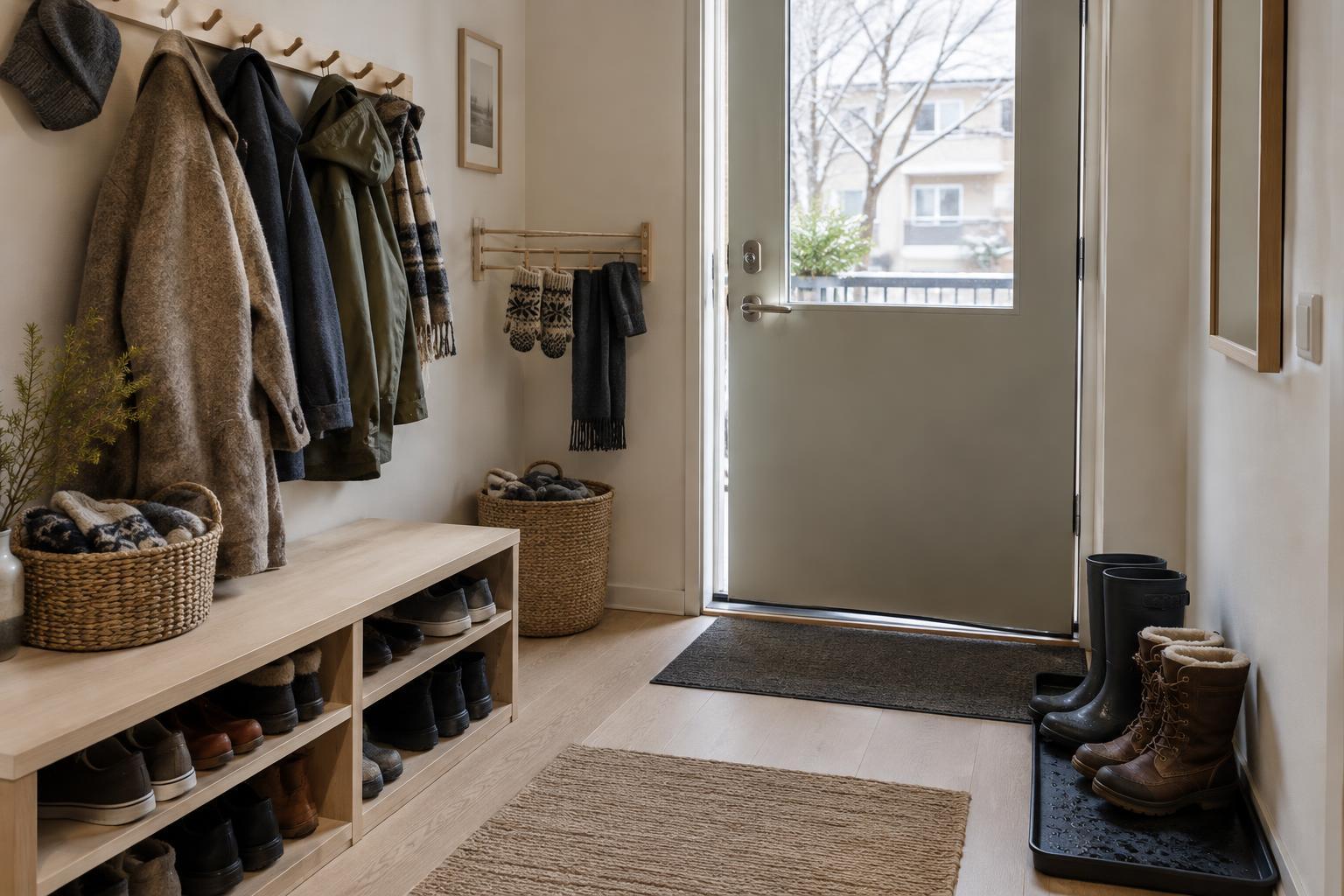
A useful way to narrow the choice is to imagine three outfits from the recipient’s existing wardrobe and ask whether the scarf belongs with at least two of them. Consider texture preferences and any care requirements that might matter to them; read the specific item information rather than assuming a material from its appearance. If you are uncertain, a familiar colour in a different shape can be a gentler experiment than both an unfamiliar colour and an unfamiliar silhouette. The aim is not to surprise someone into changing their style, but to give them a new way to enjoy it.
A scarf earns its place when it can move between the moments that fill a week. For a morning walk, you might draw a long scarf close beneath a coat. Later, with the coat open, you could loosen it so its colour shows against a knit. A square scarf might sit close to the neck under a jacket during the day and become a softer, more visible fold over a simple top in the evening. These changes do not require a new wardrobe; they ask only that you try a few arrangements before settling on one.
It helps to test a scarf in natural light and against more than one garment. Colours that seem subtle indoors can become clearer outside, while a busy pattern may look calmer when only a small folded section is visible. Give yourself permission to wear a piece in a simple way. One loose loop or one comfortable knot is enough if that is what works for your day. The purpose of a versatile accessory is not to perform every possible styling trick, but to make getting dressed feel a little more considered and a little less complicated.
A regional collection is most useful when you arrive with a question. If warmth and everyday outerwear are on your mind, investigate wool or merino-wool categories and then check individual compositions. If you want a light-looking accent for a shirt or dress, explore square scarves or silk categories and compare dimensions. If the problem is colour, begin with the coats and tops you own: a red scarf might enliven a neutral base, while a white or darker piece may offer a different kind of contrast. Collection names help organise the search; item details should settle the decision.
UniqueYou has 20 regional domains, 21 regional-language versions and 16 distinct languages. Those numbers differ because countries may share a language, and one country may have more than one language version. The United Arab Emirates has an Arabic root version and an English version at /en. The guide below identifies each destination language before its links, including cases where neighbouring countries use the same language. Choose the region and language that make browsing comfortable, then return to the central question: which accessory fits the clothes and routines already yours?
Each entry names the country and the language of its destination. The linked brand name or local collection phrase leads to the corresponding regional version; a homepage reference leads to that region’s starting page. Where a collection is suggested, use it as a way to explore a shape, colour or material, and check individual items for the details that matter to you. Shared languages do not make the countries interchangeable, while the two United Arab Emirates entries distinguish its Arabic root from its English /en version.
For a Polish-language starting point, visit UniqueYou. If wool scarves are the useful next comparison for a familiar winter coat, the Polish collection invitation — Zobacz kolekcję — leads to that category. Check individual pieces before deciding which texture and size work with your outerwear.
For Germany’s German-language starting page, use https://uniqueyou-store.de/. The brand link UniqueYou leads to stoles, a shape worth considering if you like fabric over the shoulders. For a bolder colour question, the German collection invitation — Kollektion entdecken — leads to red scarves.
The Czech-language homepage is reached through https://uniqueyou.cz/. If you are comparing smaller scarf shapes, UniqueYou leads to a scarves collection. For a darker accessory to try against light outerwear, the Czech collection invitation — Prohlédněte si kolekci — leads to black scarves.
Begin at the Spanish-language homepage through https://uniqueyou.es/. The brand link UniqueYou opens a wool-scarf category for comparison with your usual layers. If you would rather browse scarves more broadly first, the Spanish collection invitation — Descubre la colección — leads to that wider selection.
The French-language starting page is https://uniqueyou.fr/. To consider a shawl alongside a dress or simple knit, UniqueYou leads to a cashmere-shawl category; verify each item’s composition. For a broader scarf search, the French collection invitation — Découvrez la collection — opens a scarf collection.
For Hungary’s Hungarian-language version, start with UniqueYou. If a square or smaller scarf sounds more useful than a long wrap, the Hungarian collection invitation — Nézd meg a kollekciót — leads to scarves you can compare for scale, pattern and the outfits you already wear.
The Italian-language starting point is UniqueYou. If your wardrobe includes cream, navy or earthy tones, you might explore brown as one possible bridge between them. The Italian collection invitation — Scopri la collezione — leads to brown scarves; compare shades against your own clothes.
Begin with the Romanian-language version at UniqueYou. For someone considering a larger layer rather than a close-fitting neck scarf, the Romanian collection invitation — Descoperă colecția — leads to cashmere shawls. Review individual dimensions and composition before settling on a gift or outfit.
The Slovak-language starting point is UniqueYou. A scarf can also be considered for the head or hair rather than only for a coat. The Slovak collection invitation — Pozrite si kolekciu — leads to that category, where size and ease of folding are useful things to compare.
Reach the Finnish-language homepage through https://uniqueyou.fi/. The brand link UniqueYou leads to merino-wool scarves, a useful category to inspect when planning cold-weather outfits. For a different way to wear a scarf, the Finnish collection invitation — Tutustu mallistoon — leads to head and hair scarves.
For Sweden’s Swedish-language homepage, use https://uniqueyou-store.se/. The brand link UniqueYou leads to merino-wool scarves to compare with the coat you wear most often. If you want to consider a broader drape instead, the Swedish collection invitation — Se kollektionen — leads to shawls.
The Danish-language starting page is https://uniqueyou.dk/. The brand link UniqueYou leads to scarves for the head and hair, where a square shape may be worth considering. If colour is the stronger question, the Danish collection invitation — Se kollektionen — leads to red scarves.
Belgium’s Dutch-language starting page is https://uniqueyou.be/. The brand link UniqueYou leads to white scarves, useful to compare against darker clothes. For a stronger accent instead, the Dutch collection invitation — Bekijk de collectie — leads to red scarves on the Belgian version.
For Austria’s German-language version, begin at UniqueYou. If you are looking for a smoother-looking accent to arrange with shirts or dresses, the German collection invitation — Kollektion entdecken — leads to silk scarves. Check the particular item for its composition and care details.
The Netherlands has a Dutch-language starting point at UniqueYou. If you want to see whether a vivid accent works with a familiar neutral coat, the Dutch collection invitation — Bekijk de collectie — leads to red scarves. Try judging the shade beside garments you already own.
For the United States English-language version, start with UniqueYou. If you are still deciding between a long scarf and another shape, the English collection invitation — Explore the collection — leads to the broader scarves collection. Compare measurements as well as photographs.
For the United Arab Emirates, UniqueYou leads to the Arabic-language root version. This is distinct from the country’s English /en version below. Choose the Arabic destination when that is the language in which you want to explore the brand and inspect individual accessories.
The United Arab Emirates also has an English-language version at /en. To reach that English destination, use the English invitation — Discover more. It is the language alternative to the Arabic root, not another regional domain; compare item details there in your preferred language.
For Ireland’s English-language homepage, use https://uniqueyou.ie/. The brand link UniqueYou leads to red scarves if you want to test an accent against quieter clothes. If material is your starting question instead, the English collection invitation — Explore the collection — leads to wool scarves.
The United Kingdom’s English-language starting point is UniqueYou. For a broad first look before choosing a shape, colour or material, the English collection invitation — Explore the collection — leads to scarves. Keep a couple of your most-worn outfits in mind while comparing options.
Reach the Portuguese-language homepage through https://uniqueyou.pt/. The brand link UniqueYou leads to scarves, a useful place to compare everyday shapes. If a wider layer appeals more than a neck scarf, the Portuguese collection invitation — Descubra a coleção — leads to shawls.
The most convincing scarf is not necessarily the loudest or the most versatile on paper. It is the one you can imagine wearing with a coat, a shirt or a favourite knit that already feels like you. Let colour, shape and verified item details guide the choice, and give the accessory room to become part of everyday life.