Start with the piece, not the label
Secondhand Swedish furniture can be appealing for its useful proportions, restrained forms and variety of finishes. But “Swedish” is a broad description, not a guarantee of quality or age. A simple pine cupboard, a mid-century teak sideboard and a painted dining chair call for different kinds of inspection. Start by deciding what you need the piece to do, where it will go and which signs of wear you can happily live with.
Sweden Culture Guide is an independent culture magazine, not a consulate or government service. This guide is about assessing furniture as an everyday purchase, rather than authenticating a valuable object. If a seller attributes a piece to a particular designer or maker, ask what supports that description. A label, stamp or receipt may help, but none should replace a careful look at the furniture itself.
Check the structure before the surface
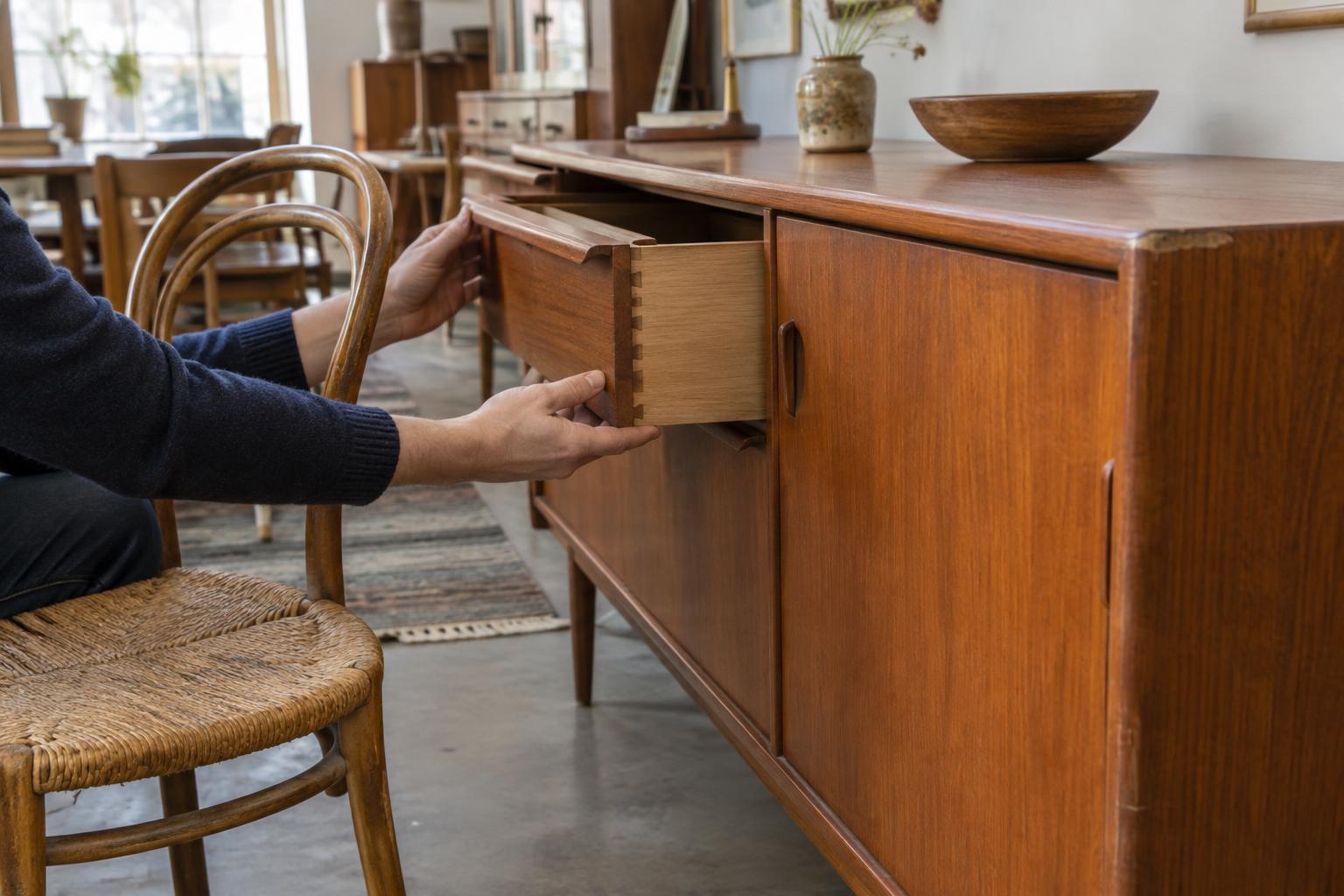
Begin with the parts that carry weight. Set a chair on a level floor and sit in it gently: does it rock because the floor is uneven, or do its joints move? Press lightly on a table’s corners and check whether its legs feel secure. Open every drawer and door. They should move without excessive force, even if an older piece has some minor irregularity. Look underneath and behind the furniture, where loose joints, improvised braces and missing screws are easier to spot.
Small scratches and dents may add character; instability is a different matter. Check for cracks that run through a leg, frame or supporting rail. On a cabinet, look for sagging shelves and doors that no longer line up. Inspect any previous repair rather than assuming it is a problem: a neat, sound repair can extend a piece’s life, while a patch that conceals movement may mean more work ahead.
Identify the material and judge the finish
Solid wood and veneer both appear in well-made furniture. Veneer is a thin layer of decorative wood over a supporting material, not automatically a sign of poor quality. Inspect edges, corners and areas near handles for lifting, chips or missing sections. Minor damage may be repairable, but widespread peeling or swelling can be difficult to address neatly. On painted furniture, look for flaking, heavy overpainting and signs that drawers or doors have been painted shut.
Use touch and smell as well as sight. A finish that feels sticky may need cleaning or refinishing; a persistent musty smell inside drawers may be hard to remove. Water rings on a tabletop are different from a soft, swollen edge or a warped panel. If you hope to restore the piece, be realistic about your skills and budget. Stripping a painted surface or sanding a thin veneer can cause damage, and old finishes or coatings may call for extra care when disturbed.
Inspect upholstery and moving parts
For upholstered chairs and sofas, check the frame first, then the cushions, fabric and underside. Sit in more than one position. Notice whether the seat supports you evenly, whether springs make unusual noises and whether the fabric has tears along seams or worn spots on arms. Fresh upholstery can transform a chair, but it can also hide a weak frame. Ask what work was done and examine whatever parts remain visible.
Test every hinge, latch, extension leaf and adjustable component. A dining table should extend and close smoothly; a folding piece should lock securely. For storage furniture, bring a small flashlight to inspect drawer interiors and the back panel. Be particularly cautious with vintage lamps or furniture that includes wiring: appearance alone cannot tell you whether an electrical component is safe to use.
Make sure it fits your home and your plans
Measure more than the space where the furniture will stand. Note doorways, stairs, lifts and tight turns along the route in. Check the height of a chair against your table, the depth of a sofa against your room and the clearance needed to open cabinet doors. Photograph the piece from several angles, and take measurements before committing. If you cannot inspect it in person, request clear images of the underside, back, joints and any damage described by the seller.
Finally, consider the total effort of bringing the piece home. Transport, cleaning and repairs can change whether a bargain feels worthwhile. A sturdy, unremarkable cabinet that suits your space may serve you better than a celebrated design that needs extensive work. The best secondhand choice is one whose condition you understand, whose imperfections you accept and whose usefulness will last beyond the excitement of finding it.