There is no single Swedish breakfast
A Swedish breakfast is often practical rather than elaborate: something filling enough to start the day, but quick enough for a weekday morning. Bread with toppings, porridge, yogurt or soured milk, fruit, and coffee or tea are all familiar choices. Most people do not put all of these on the table at once. What appears depends on appetite, household habits and how much time there is before work or school.
Sweden Culture Guide is an independent culture magazine, not a consulate or government service. This guide describes everyday food customs rather than a fixed national menu. A hotel breakfast buffet may present many Swedish favorites together, but a breakfast at home is usually much simpler.
Bread, crispbread and toppings
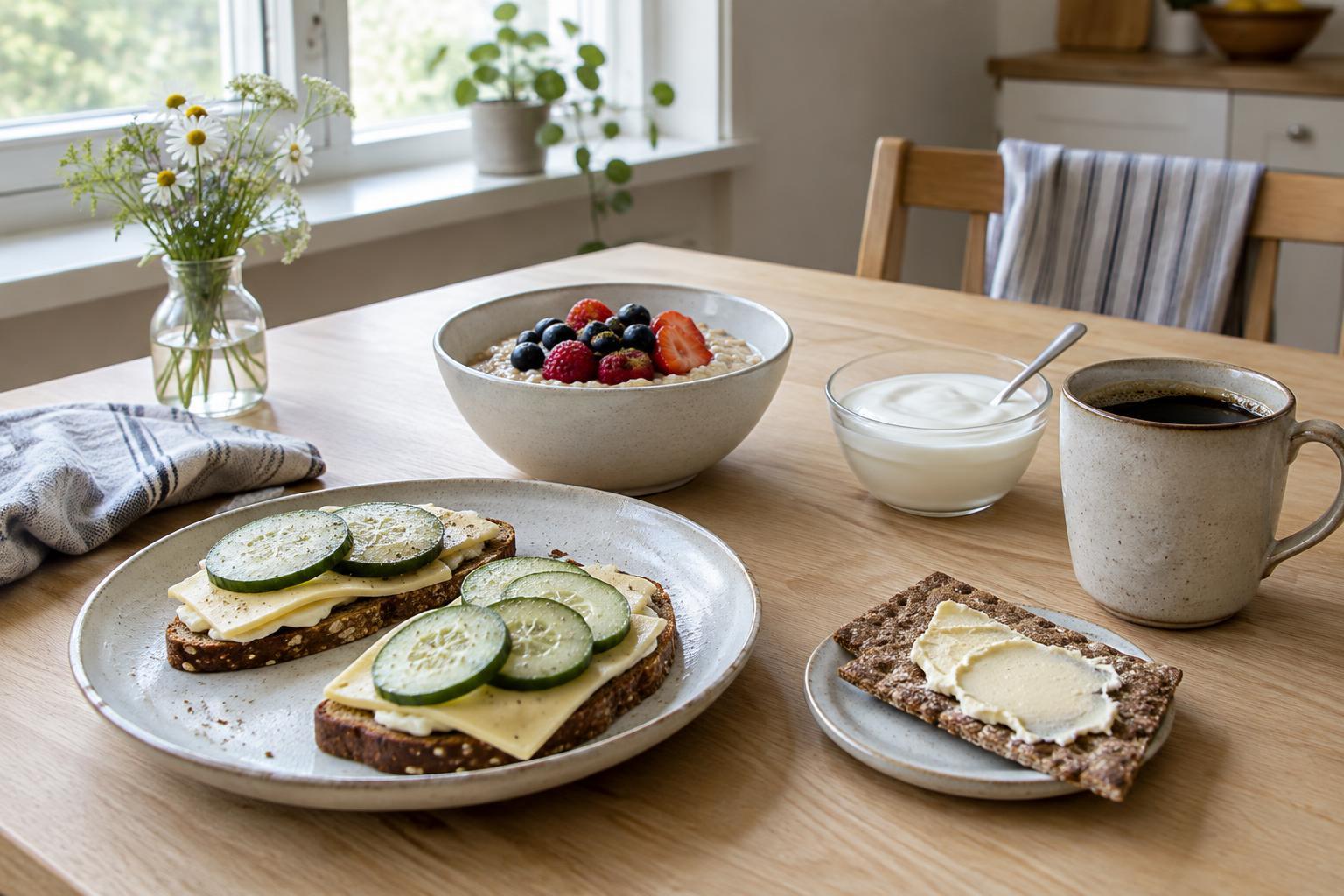
An open-faced sandwich is a common breakfast choice. The bread might be a soft roll, a slice of rye or other whole-grain bread, or knäckebröd, the crispbread that keeps well in a cupboard. Butter or another spread often goes on first, followed by cheese, ham, sliced cucumber, tomato or a boiled egg. A sweet option might be bread with jam or marmalade.
Crispbread is especially useful when fresh bread is not on hand. Its firm texture also works well with mild cheese and crisp vegetables. Breakfast sandwiches tend to be assembled according to taste, not a strict recipe: one person may make a substantial sandwich, while another has a small slice alongside yogurt. If you are making a Swedish-inspired breakfast elsewhere, choosing one good bread and a few straightforward toppings captures the spirit better than trying to offer every possible combination.
Porridge, yogurt and other bowl breakfasts
Oat porridge, called havregrynsgröt in Swedish, is another familiar way to begin the day. It can be cooked with water or milk and topped with berries, fruit, cinnamon, milk or a spoonful of jam. Warm porridge may be particularly appealing on a cold morning, though it is by no means reserved for winter.
Cold bowls are common too. Yogurt, often eaten with muesli or cereal, makes a quick breakfast. Filmjölk, a tangy cultured milk product, is another familiar option; it is thinner than many yogurts and is commonly poured into a bowl with cereal or grains. The exact combination varies. Some people prefer a plain, unsweetened bowl, while others add fruit or something crunchy. These choices are useful reminders that a Swedish breakfast can be as modest as a single bowl and a drink.
Coffee, tea and the pace of the morning
Coffee is a familiar part of Swedish food culture and a common breakfast drink, often served black or with milk. Tea is another ordinary choice, and children may have milk, water or another drink. Coffee's place at breakfast should not be confused with fika: that is a separate habit of taking a break over a drink, often with something to eat.
On busy weekdays, breakfast might be eaten quickly at home or packed to take along. A less hurried weekend morning may leave time to boil eggs, set out several toppings and sit together at the table. Some households favor a cooked breakfast; others stick with their usual sandwiches or cereal. The distinction is less about rules than about available time and personal preference.
How to make a simple Swedish-style breakfast
Start with a choice of soft bread and crispbread, then put out butter, cheese, cucumber and a boiled egg. Add a bowl option such as oat porridge or yogurt with muesli, plus fruit or berries if you have them. Coffee, tea or another preferred drink completes the meal. There is no need to prepare both a sandwich and a bowl for everyone; offering a choice is enough.
If you are a guest at a Swedish home, expect the breakfast to reflect that household rather than a national checklist. Dietary needs, family schedules and individual tastes all shape what is served. The most reliable picture of a typical Swedish breakfast is not a lavish spread, but an adaptable routine built from familiar ingredients.