What is Valborg?
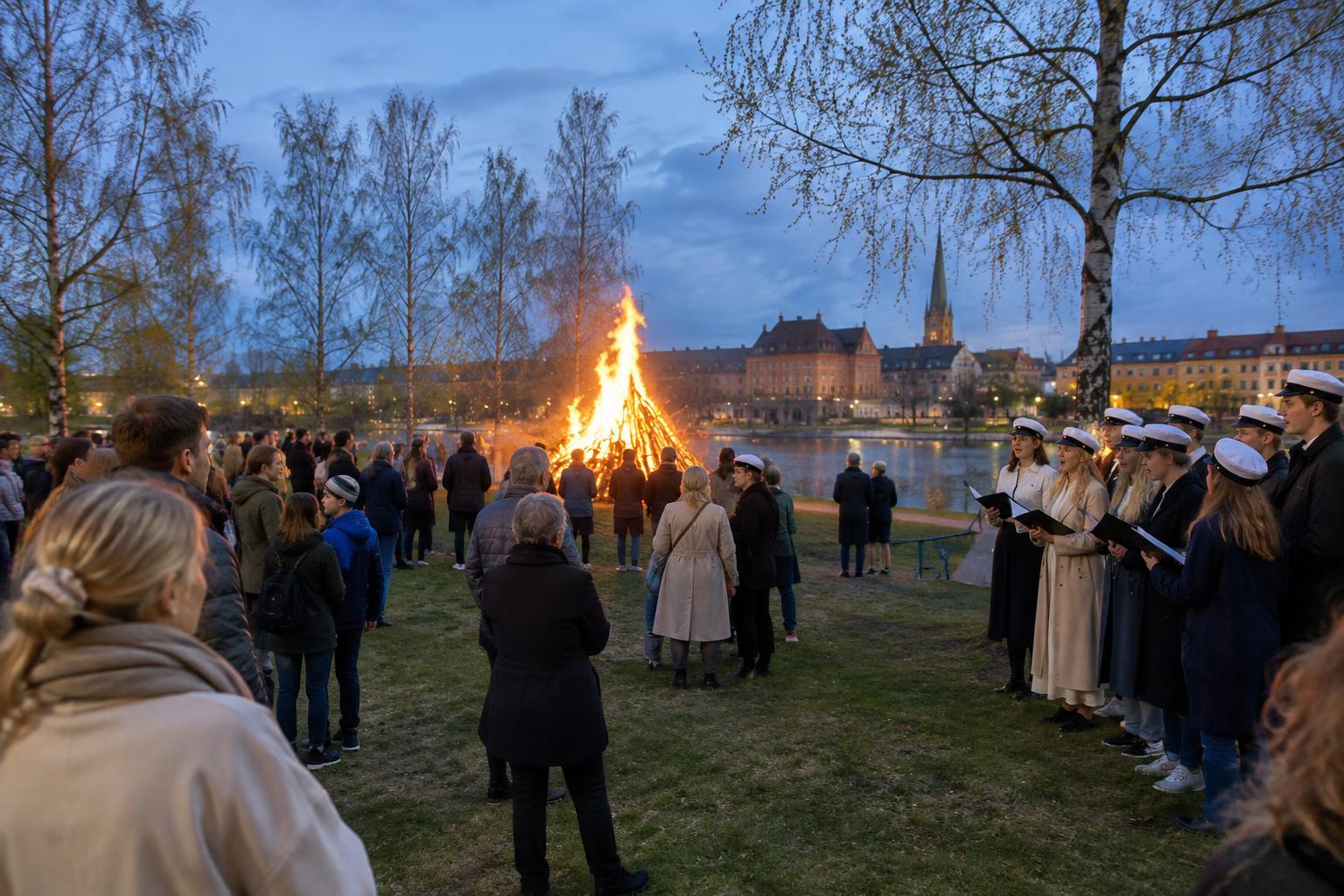
Walpurgis Night, called Valborg or Valborgsmässoafton in Swedish, falls on April 30. For many people, it marks a welcome turn toward brighter evenings and warmer weather. The familiar scene is a crowd gathered outside, listening to a choir or a short speech before a bonfire is lit. Yet there is no single way to celebrate: one town may hold a large public event, while another has a modest gathering or none at all.
The name is connected to Saint Walpurga, but most celebrations today are social occasions rather than religious observances. Valborg brings together several familiar ways of greeting spring: making a fire, singing about the season and meeting neighbours after winter. May 1 follows the next day, which can make the evening feel like the start of a longer break.
Why bonfires are part of the evening
The bonfire is Valborg’s most recognisable feature. People often arrive before it is lit, find a place to stand and wait as the gathering takes shape. Families may come for the spectacle, while friends use the occasion to catch up. Even with a large fire, an April evening can be chilly, so warm layers are useful.
A Valborg bonfire is usually an organised community event, not an invitation to build a fire wherever there is open ground. Whether a fire can be held depends on local arrangements and conditions. Dry weather or fire restrictions may mean that an event changes or takes place without flames. If you hope to attend, check the organiser’s information and follow signs or instructions on site. Keep a sensible distance from the fire and leave room for others to watch safely.
The sound of spring: choirs and speeches
Songs are as central to many Valborg gatherings as the bonfire. A local choir, often made up of students or community singers, may perform traditional spring songs outdoors. The music tends to be hopeful and ceremonial, celebrating light and the arrival of a new season. You do not need to know the words to appreciate the moment; many people simply listen.
Some events also include a short spring speech. Together, the singing and speech give the evening a gentle sense of occasion before people return to conversation or head home. Programmes vary, and a smaller gathering might have music but no formal speech, or a bonfire without either. That variety is part of what makes Valborg feel local rather than staged to a single national script.
Why university cities celebrate differently
In university cities such as Uppsala and Lund, Valborg has a strong student identity. Daytime gatherings and student-organised activities can extend the celebration well beyond the evening bonfire. Student caps, choirs and traditions associated with particular institutions add to the atmosphere. For some participants it is a major event in the academic calendar; for others, it is simply a chance to spend time outside with friends.
It helps to distinguish these student celebrations from Valborg across Sweden. A crowded city-centre gathering is not the only authentic version of the holiday, and some student activities are intended for members or ticket holders rather than the general public. If you prefer a quieter experience, a local community bonfire may be a better choice. In either setting, treat parks and shared spaces with care and take your litter with you.
How to enjoy your first Valborg
Start by looking for a public event in the place where you will be staying, then check its location and programme before setting out. Arriving a little early can make it easier to hear the singing and find a comfortable viewing spot. Dress for the weather rather than the calendar: spring sunshine during the day does not guarantee a warm evening.
There is no special etiquette to master. Listen when a choir performs, give others space around the fire and expect the pace to be relaxed. If an event is cancelled or the bonfire is not lit, the gathering may still offer a glimpse of how people welcome spring together. Valborg is less about following a fixed ritual than sharing a moment when the changing season feels worth celebrating.
Sweden Culture Guide is an independent culture magazine, not a consulate or government service.