Before you arrive: make the plan clear
An invitation to a Swedish home might be for coffee, dinner or a relaxed evening together. The wording can be casual, but it helps to settle the practical details: the day, the time and whether food will be served. If someone says, “Come by sometime,” you can suggest a specific day rather than assuming a visit is planned. Once you have agreed, let your host know promptly if you need to change or cancel.
Aim to arrive at the agreed time, rather than much earlier. A host may still be preparing the meal or tidying up, and an early arrival can interrupt that work. If you are running late, send a short message with a realistic estimate. For a first visit, it is also reasonable to ask whether you should bring anything. Your host may say no, and you can take that answer at face value.
Sweden Culture Guide is an independent culture magazine, not a consulate or government service. The suggestions here describe everyday social situations, not rules that apply in every Swedish household. Your host’s preferences are always the best guide.
At the door: follow the household’s lead on shoes
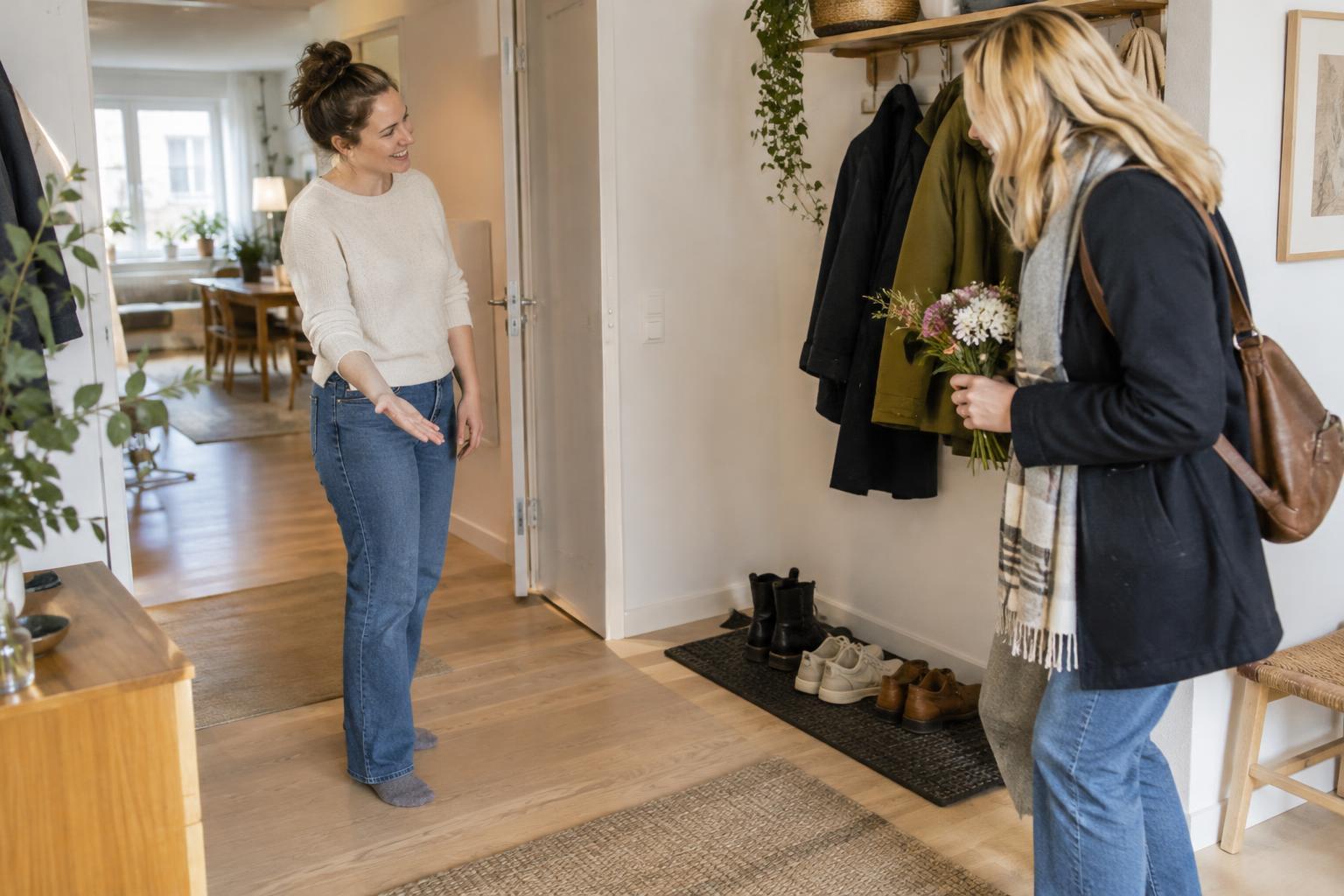
In many Swedish homes, people leave outdoor shoes near the entrance. The practice helps keep floors clean, especially when it is wet or gritty outside. Pause at the doorway and look for a shoe rack or other pairs of shoes. If you are unsure, ask, “Would you like me to take my shoes off?” That small question is less awkward than guessing, and it gives your host room to explain any exceptions.
Wear socks you feel comfortable showing, or bring a clean pair if you would rather change after traveling. Some hosts offer slippers, while others do not. You need not turn the moment into a ceremony: put your coat and shoes where your host indicates, then move into the living space when invited. If removing shoes is difficult for you, say so simply and ask what would work in that home.
Gifts and meals: thoughtful beats elaborate
A small host gift can be a kind gesture, but it is not a price of admission. Flowers, chocolates or another modest item may be welcome if you know your host’s tastes. For a shared meal, avoid bringing a dish without checking first; the host may already have a menu planned or limited space in the kitchen. When in doubt, an offer to bring something is more useful than a surprise.
If you have a dietary need, mention it when the invitation is arranged rather than at the table. You can keep the message straightforward: explain what you cannot eat and ask whether bringing something would help. During the meal, wait for a cue about where to sit and when to begin. Offering to help clear the table is considerate, though a host may prefer that guests stay seated. Accept either response graciously.
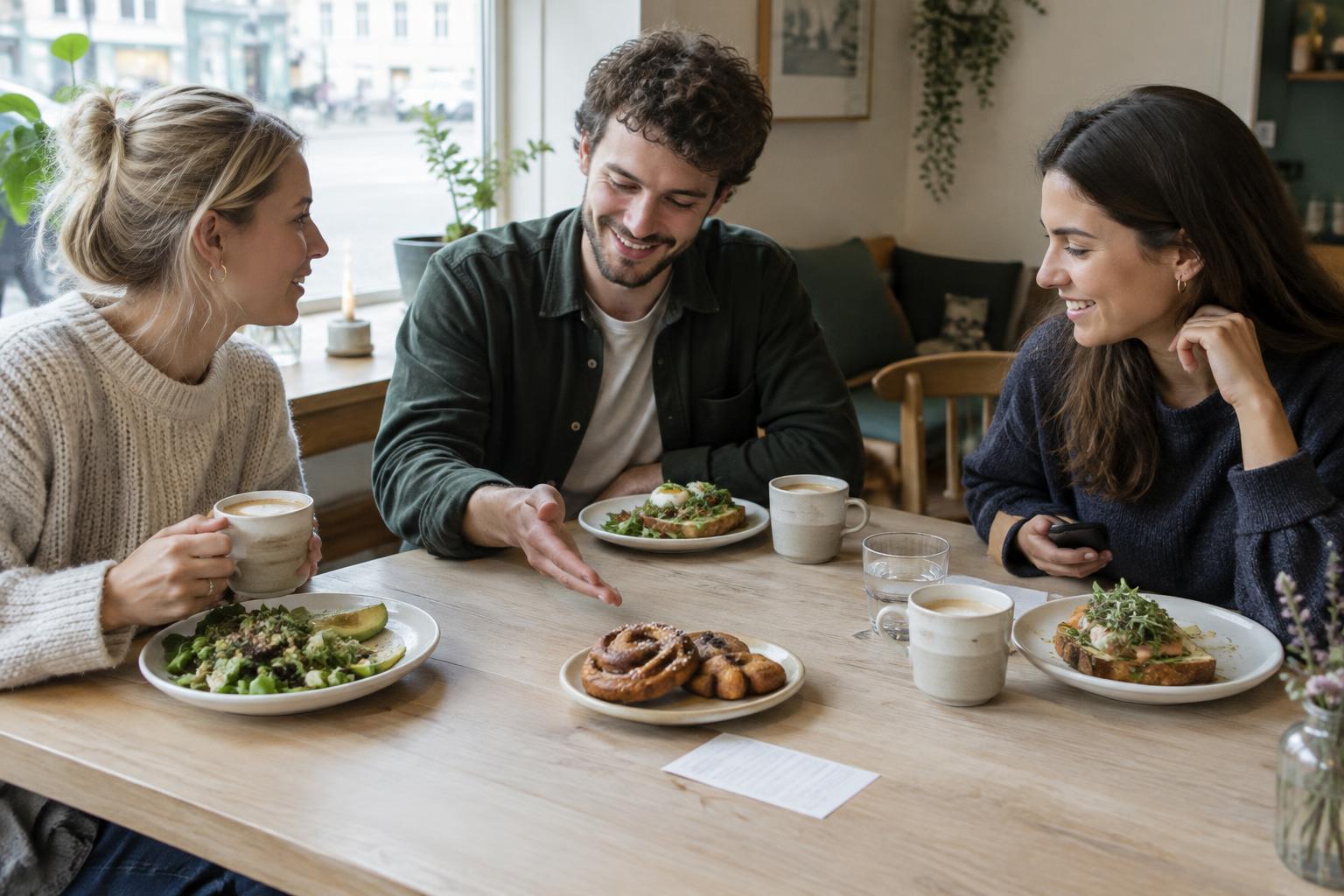
An invitation for fika—a pause over coffee or another drink, often with something to eat—may be simpler than a full meal. It can still be a meaningful chance to talk. Rather than worrying about doing fika the “right” way, make space for conversation and thank your host for what they have prepared.
Conversation and shared space
There is no single Swedish style of conversation. Some hosts enjoy lively debate; others prefer an unhurried exchange. Start by listening and letting the relationship set the tone. Questions about a home’s design, a meal or a local walk can open conversation, provided they sound interested rather than like an inspection. If several people are present, try to include quieter guests without pressing anyone to speak.
Treat the home as a private space. Ask before photographing rooms, children or other guests, and do not assume a picture is meant to be shared. Likewise, check before opening a window, adjusting the music or helping yourself to food. These are ordinary courtesies anywhere, but they are especially useful when you do not yet know a household’s routines.
Leaving well and keeping in touch
If no end time was discussed, pay attention to the pace of the visit. A host beginning to clear up or mentioning the next morning may be signaling that the evening is winding down. You do not have to leave at the first quiet moment, but it is considerate to avoid making your host announce that they need to rest. Thank them before you go and make sure you have your belongings from the entrance.
A brief message afterward—perhaps the next day—can be a warm way to say you enjoyed the visit, especially after a meal or an overnight stay. There is no need for a formal note unless that feels natural to you. The most reliable approach is simple: communicate clearly, notice what your host does and ask when you are unsure. Being a good guest is less about perfect etiquette than about making it easy for everyone to feel comfortable.