Plan for the place, not just the forecast
Insects are part of outdoor life in Sweden, but conditions can change considerably from one outing to the next. A breezy coastal path may feel comfortable while a sheltered lakeside trail is full of mosquitoes. Ticks are more likely to be a concern where vegetation brushes against walkers, including grassy edges and undergrowth. Before setting out, think about the terrain, how long you will be outside and whether you will stop in one place.
Pack a light extra layer even on a warm day. Long sleeves and trousers create a simple barrier, and closed shoes are more useful than sandals on overgrown paths. Light-coloured clothing can make it easier to spot a tick before it reaches your skin. If insects are troublesome at a picnic or campsite, moving away from dense vegetation or still, sheltered spots may help more than trying to tolerate them.
Reduce tick contact on walks
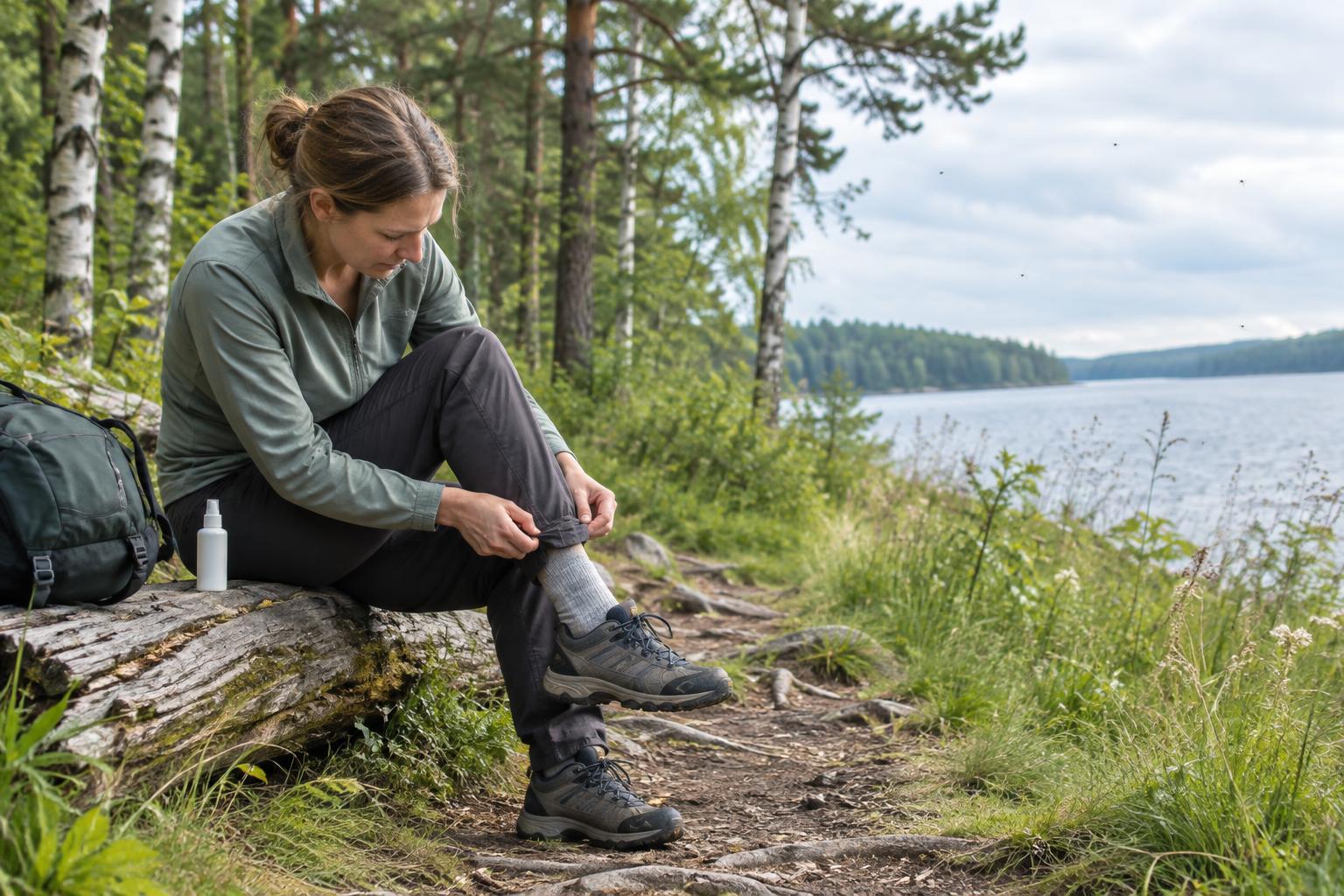
Stay near the centre of a path when practical, rather than brushing through tall grass or low plants. On routes with dense vegetation, trousers that cover the ankles and socks that close the gap above shoes can reduce exposed skin. An insect repellent labelled for tick protection can provide another layer of prevention; follow its directions, including any guidance about children, reapplication and use on clothing.
After time in grassy or wooded areas, check clothing, gear and skin. Look carefully at less visible places such as behind the knees, around the waist and along the hairline. Check children and pets too, since a tick can travel indoors on them or on a jacket or backpack. A shower and a change of clothes can make a post-walk check easier, but they do not replace looking for ticks.
Know what to do if you find a tick
If a tick is attached, remove it promptly with a tick-removal tool or fine-tipped tweezers. Grip it close to the skin and pull steadily, following the tool’s instructions. Avoid squeezing its body or applying substances in an attempt to make it detach. Clean the area afterward and keep an eye on how you feel over the following days and weeks.
A bite does not mean you will become ill. Still, seek local healthcare guidance if you develop a spreading rash, fever or other concerning symptoms after a bite, or if you are unsure about removal. This is general travel information, not a substitute for individual medical advice. If you expect to spend substantial time outdoors, you can ask a healthcare professional about any preventive measures relevant to your plans.
Make mosquitoes and midges less bothersome
Mosquitoes can be especially noticeable near water and in sheltered areas when conditions suit them. Small biting flies, often called midges, may also make a still evening uncomfortable. Both are easier to manage when you have options: pack long sleeves, choose a breezier place to sit and use window or tent screens where available. Keep tent doors closed rather than leaving them open while unpacking.
Apply insect repellent according to its label, paying attention to where it should not be used and how often it may be reapplied. For children, follow age-specific product directions. A head net can be useful when insects are persistent and you need both hands free for walking or setting up camp. It is less necessary on every trip than a good habit of carrying one when your route takes you into sheltered, insect-friendly terrain.
Handle other encounters calmly
Wasps may be drawn to food and sweet drinks outdoors. Cover food between servings, check open cans before drinking and move calmly if one approaches. Horseflies can deliver an uncomfortable bite on warm outings; covering skin and moving away from a spot where they are persistent are straightforward responses. Not every buzzing insect is a threat, so there is no need to swat at everything that passes.
The aim is not to make a Swedish walk insect-free. It is to be prepared enough to enjoy the forest, shore or meadow without giving every bite your attention. A simple routine—dress for the vegetation, carry suitable repellent, choose a comfortable stopping place and check for ticks afterward—covers many ordinary outings. Sweden Culture Guide is an independent magazine, not a consulate or government service.