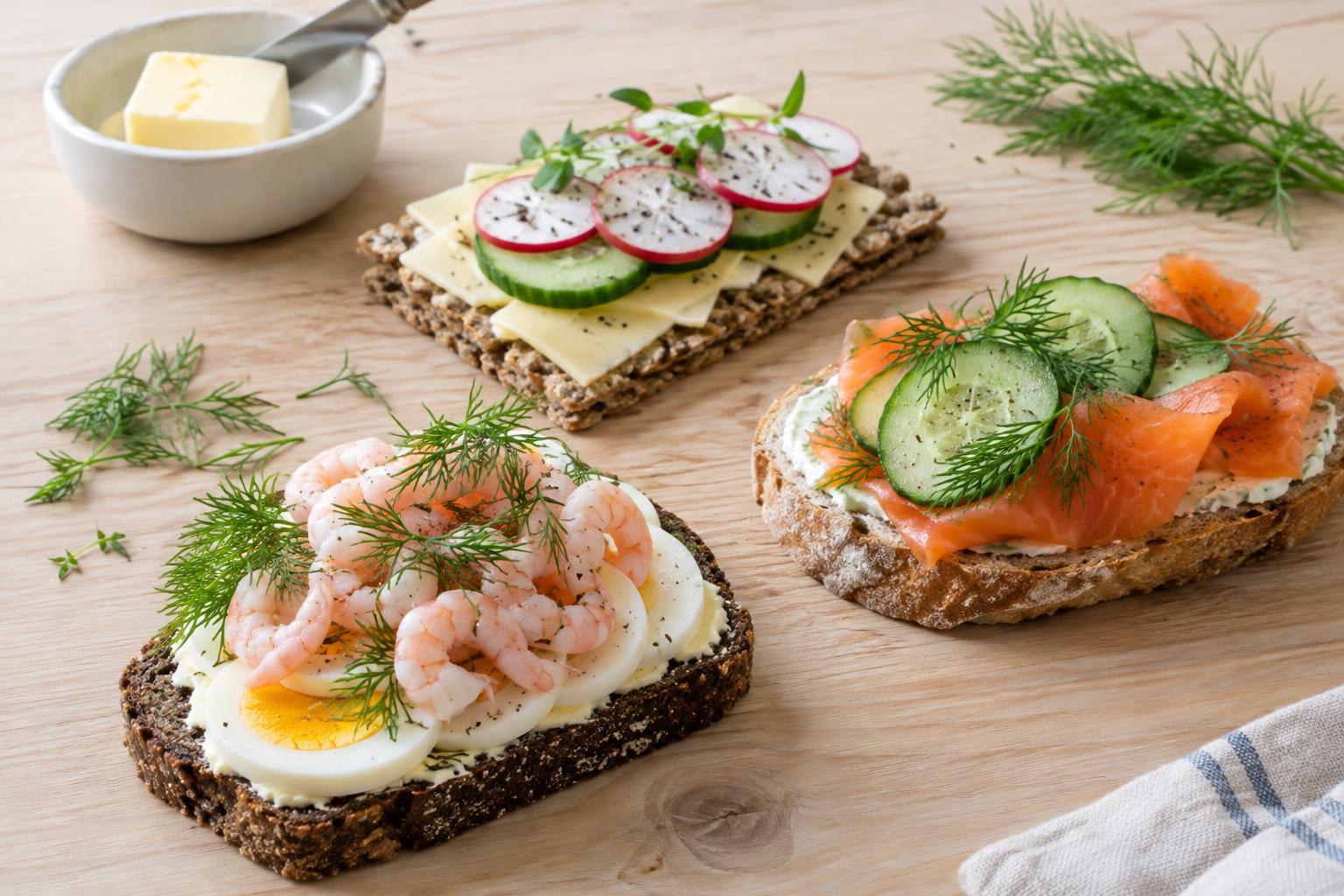
What is a smörgås?
A smörgås is a sandwich, and an open-faced version is a familiar way to serve one in Sweden. Instead of enclosing a filling between two slices, you put toppings on a single piece of bread. The result might be a quick breakfast with cheese or a more carefully arranged lunch with egg, vegetables and herbs. There is no single recipe to master: the useful idea is to make one slice feel complete without piling on more than it can hold.
Open-faced sandwiches suit everyday eating because they can use what is already in the kitchen. A slice of cheese, a little butter and a crisp vegetable may be enough. For a more filling plate, add an egg or another substantial topping. Swedish Culture Guide is an independent culture magazine, not a consulate or government service; this guide is about enjoying an everyday food custom, not arranging official travel services.
Start with bread that fits the topping
Bread sets the tone. A sturdy slice of rye bread gives a firm base for moist or generous toppings. Crispbread adds a distinct crunch but works best when topped shortly before eating, so it does not soften. A softer loaf is pleasant with simple layers such as butter and cheese, though very thin or delicate slices can become difficult to pick up once loaded.
Spread a thin layer of butter or another spread first if it suits your ingredients. Besides adding flavor, it helps small toppings stay in place. Then think about contrast rather than quantity: something creamy with something crisp, or something mild with something sharp. If a topping is wet, such as sliced tomato or cucumber, pat it dry and use a modest amount. Leave a little bread visible at the edge so the sandwich remains easy to handle.
Four combinations to try
For a simple breakfast, spread butter on soft bread and add sliced cheese and cucumber. For more bite, choose crispbread, cheese and thinly sliced radish. These are starting points, not rules: swapping the vegetable or bread changes the sandwich without making it complicated.
For a more substantial option, put sliced hard-boiled egg on buttered rye bread and finish with dill and a little salt. Another combination is cooked potatoes, a small spoonful of mustard and finely chopped chives on sturdy bread. Use leftover potatoes only if they have been stored safely, and slice them thinly so they sit flat.
If you enjoy fish, try a modest amount of smoked fish with cucumber and dill. Keep stronger flavors restrained at first; you can always add more mustard, onion or herbs after tasting. The aim is a bite in which the bread and toppings work together, rather than a stack that falls apart before you finish it.
Serve it simply, then adapt it
An open-faced sandwich can be served on its own as a snack or alongside fruit, soup or a salad for a larger meal. If you are preparing several for other people, set out bread and toppings separately and let everyone assemble their own. This keeps crispbread crisp and makes room for different preferences. Cut larger sandwiches into manageable pieces if they are difficult to lift.
There is no need to make every sandwich look elaborate. Begin with one bread, one main topping and one finishing touch, then notice what you would change next time. If you are curious about planning trips beyond Sweden as well as exploring food customs, browse Travel Planning · Andean Trails for more travel-planning ideas. At home, the most useful habit is simpler: choose ingredients you enjoy and build a sandwich you can comfortably eat.