Textiles as part of everyday design
Swedish interiors are often described through pale walls, timber and natural light, but textiles do much of the work that makes a room comfortable. A linen tablecloth softens a dining table; a wool throw adds warmth to a chair; a woven rug gives a room texture underfoot. These pieces are useful first, yet their fibres, colours and patterns also shape the character of a home.
There is no single Swedish textile look. A spare room with undyed fabrics and a colourful home full of patterned weavings can both draw on familiar materials and forms. Sweden Culture Guide is an independent culture magazine, not a consulate or government service. Here, the interest is in how textiles are made, used and enjoyed in everyday spaces.
Linen: practical, textured and easy to live with
Linen, made from flax fibre, is valued for its strength, absorbency and distinctive texture. In the home it suits tablecloths, napkins, kitchen towels, curtains and bedding. Fresh linen can feel crisp; with use and washing, many pieces become softer while keeping the slight irregularity that gives the cloth its appeal. Its tendency to crease is part of the material’s character rather than necessarily a flaw to hide.
Linen works particularly well where fabric needs to be handled often. A washed linen runner can make an ordinary meal feel considered without making the table precious. For curtains, a looser weave may filter light, while a denser cloth offers more coverage. When choosing a piece, feel its weight and look at the weave as well as the colour: two linens in similar shades can have quite different effects in a room.
Wool: warmth beyond the winter blanket
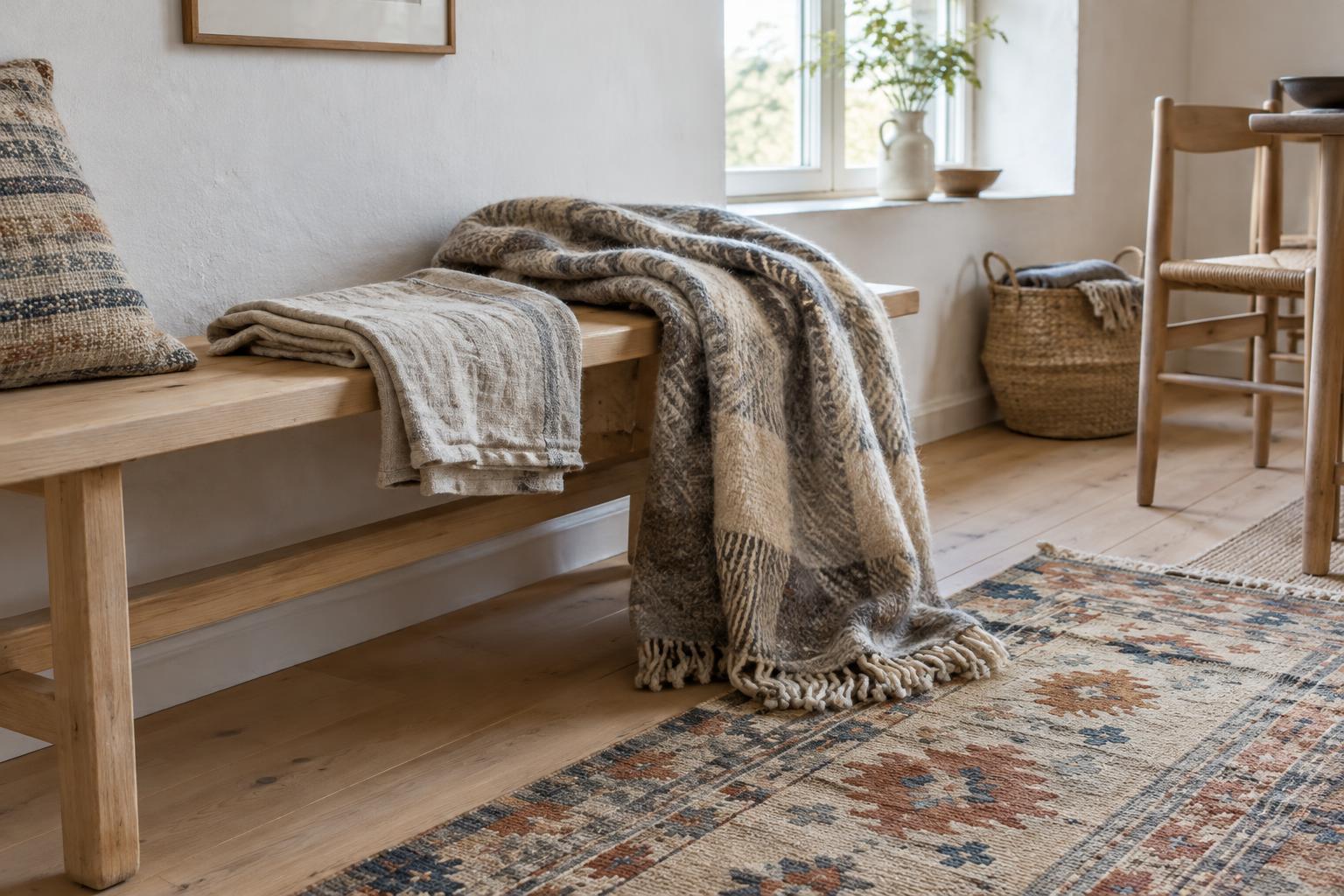
Wool brings softness and visual depth to Swedish home textiles. It appears in blankets, upholstery fabrics and rugs, where its springy fibres can make a surface feel substantial without looking heavy. A wool throw is an easy way to introduce colour or pattern to a neutral room. It can also move from sofa to bed or reading chair as the seasons and the household’s needs change.
Different wool textiles call for different kinds of care. A tightly woven blanket, a knitted cushion cover and a thick rug will not all respond to cleaning in the same way, so the maker’s care instructions matter. For everyday upkeep, airing a wool item and dealing promptly with small spills may be more appropriate than washing it frequently. If buying for a busy part of the home, consider how easily the item can be maintained.
What woven patterns bring to a room
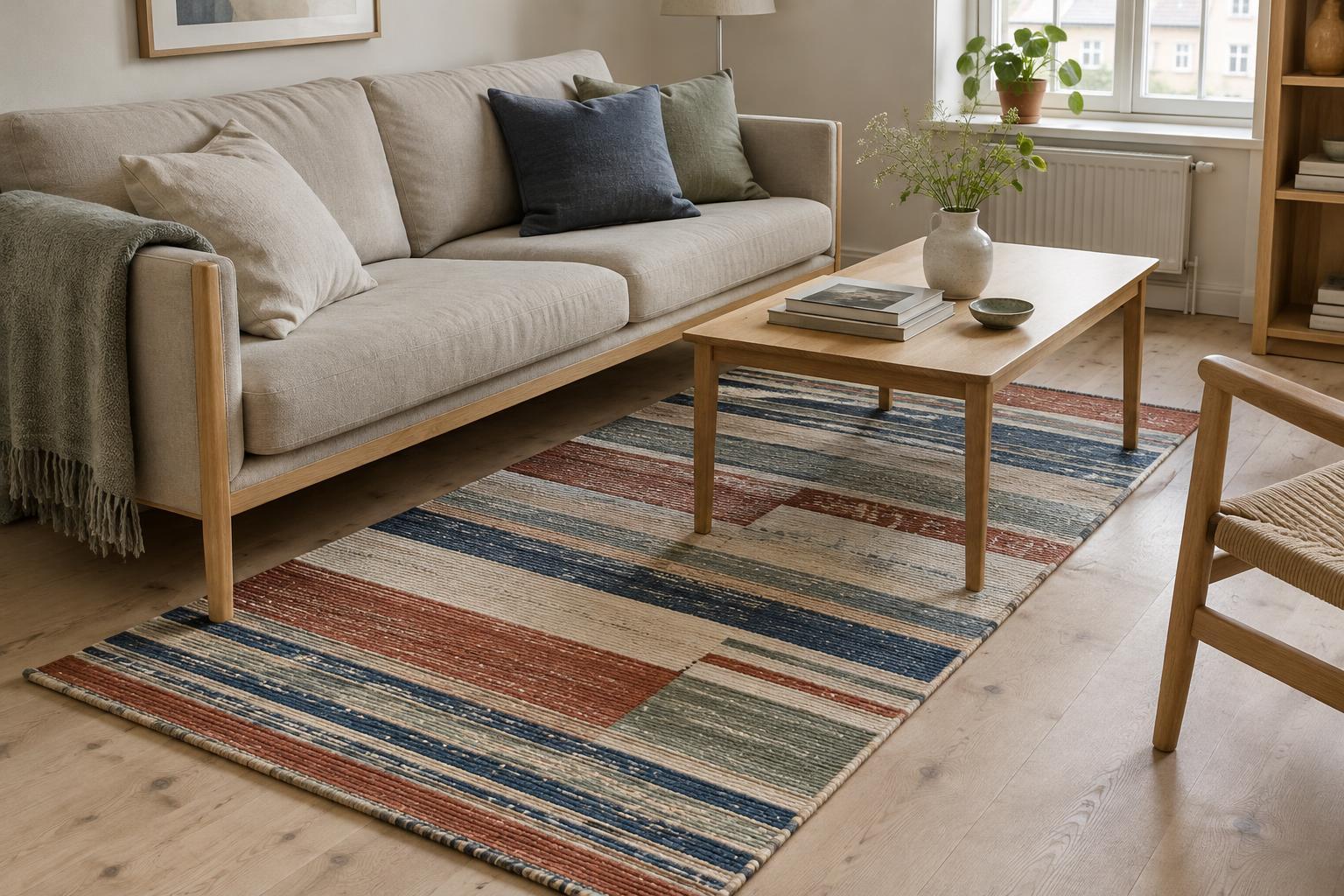
Stripes, checks and repeated geometric shapes sit comfortably alongside plain fabrics. Their effect depends not only on the design but also on scale: a narrow stripe can read almost as texture from across a room, while a bold check becomes a focal point. Traditional-looking patterns need not be reserved for a period interior. A patterned cushion or runner can give a simple room a point of contrast without overwhelming it.
Woven rugs show how practical reuse can become a design feature. A trasmatta, or rag rug, is commonly associated with strips of cloth woven into a durable floor covering. The result may be restrained or brightly coloured, depending on the materials and arrangement. Rather than treating every pattern as a fixed national symbol, it is worth noticing the decisions behind an individual piece: its colours, rhythm, edges and intended use.
Bringing the textures together
A room does not need matching textiles to feel coherent. Try starting with one larger piece, such as a rug or curtain, then picking up one of its colours in a smaller item. Varying the textures helps: a smooth linen cloth can sit beside a wool cushion, while a patterned rug grounds otherwise quiet furnishings. Leaving some surfaces plain gives the woven details space to be noticed.
When selecting textiles, think about where they will be used as well as how they look. A kitchen towel needs to work hard; a bedside throw can be chosen mainly for comfort; a hall rug should suit the traffic it will receive. Pieces that fit those routines are more likely to stay in use. That combination of purpose, material and personal choice is what gives textiles a lasting place in the home.