Start with the meal, not a matching set
A Swedish-inspired table does not need to look like a showroom. The useful starting point is what you serve and how you eat: breakfast at a small kitchen table calls for different pieces than a long supper with shared dishes. Choose tableware that fits those routines before thinking about color or a complete set.
This is a guide from an independent culture magazine, not a consulate or government service. It describes design ideas rather than rules that every Swedish household follows. Homes vary, and the most convincing table setting is usually one that works for the people using it.
For a flexible everyday collection, begin with a dinner plate, a smaller plate or bowl, a drinking glass and cutlery for each person. Add serving pieces only when you know you will use them. A few well-chosen shapes can cover toast, soup, salad and a simple evening meal without filling every cupboard.
Choose ceramics for touch as well as appearance
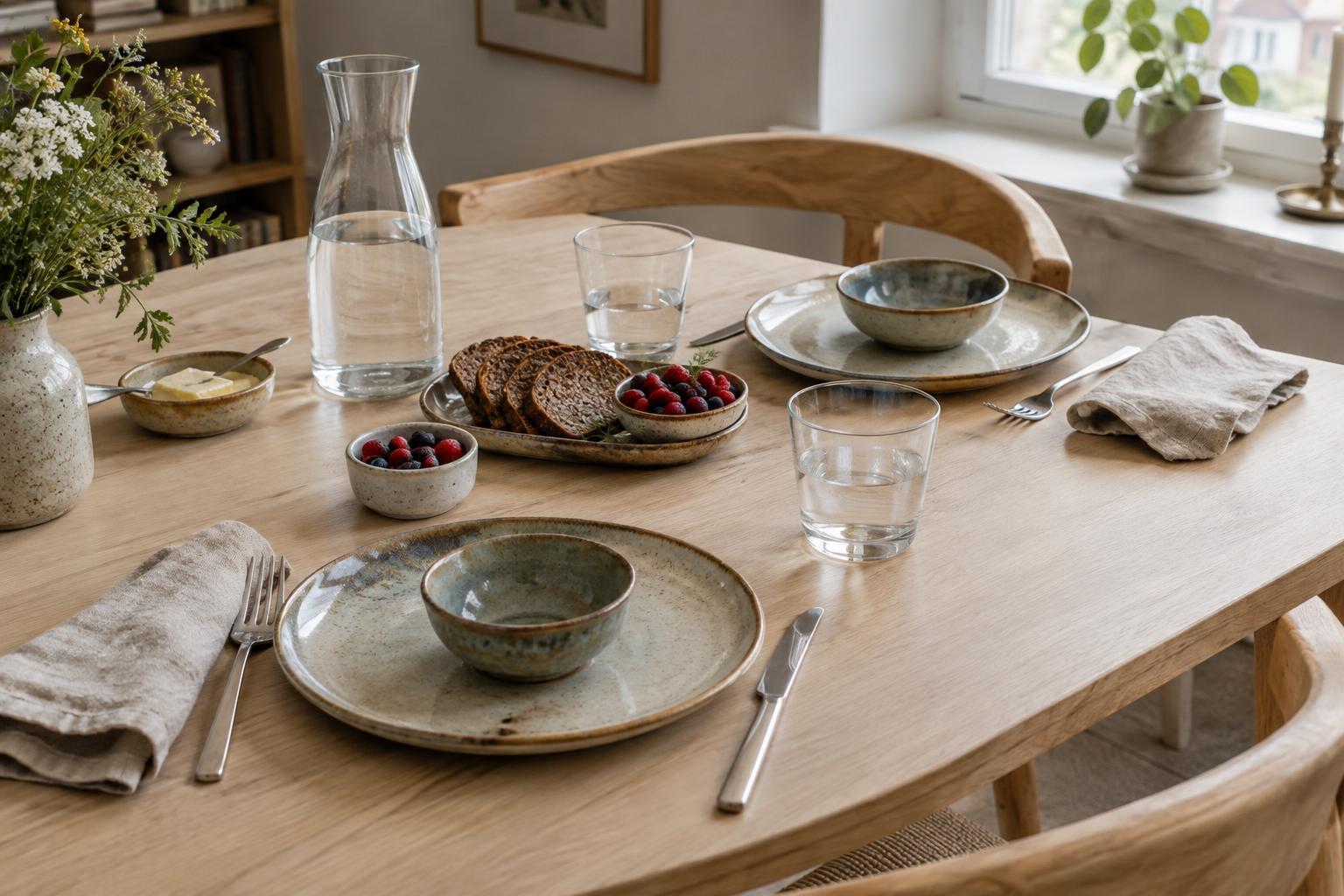
Ceramics bring warmth to a place setting because their surfaces, weight and edges are noticeable in the hand. A smooth glazed plate is easy to wipe clean; a softly textured bowl can make a plain meal feel inviting. Both polished and handmade-looking pieces can suit a Swedish-inspired table. There is no need to make everything rustic or everything perfectly uniform.
When buying plates, check the practical details. Will they fit your shelves and dishwasher? Is the rim comfortable to hold? Does the plate leave enough room for food without being awkwardly large? Bowls with a broad base tend to feel steadier, while shallow bowls can be especially adaptable for porridge, pasta and salads.
If you like mixed ceramics, repeat one element to give the table a sense of order. That might be a similar glaze tone, a shared shape or a consistent plate size. Off-white, gray and muted colors can create a quiet backdrop, but color is equally at home when it reflects your taste. A single patterned serving dish may be enough to animate otherwise simple pieces.
Let glassware do more than decorate
Clear drinking glasses are an easy foundation because they work with many ceramics and let the drink provide the color. For everyday use, look for a comfortable rim, a stable base and a size that suits water as well as other drinks. Stackable glasses can help in a small kitchen, provided they separate easily and are made for stacking.
Glass can also give a table a lighter visual feel beside substantial stoneware. A small vase or a plain carafe may serve as both a useful object and a modest centerpiece. Cut or colored glass adds interest, but it does not have to be reserved for guests. Using a favorite glass on an ordinary weekday is part of making everyday objects worthwhile.
Before combining vintage and new glassware, consider how each piece will be cleaned and stored. Delicate items may be better washed by hand, while sturdy daily glasses should suit your normal routine. Practicality matters more than keeping every glass in the same style.
Build an everyday place setting
A simple place setting needs only a plate or bowl, appropriate cutlery and a glass. Put these where they are comfortable to reach rather than following a formal diagram. If several dishes will be shared, leave open space in the middle of the table. A small plate can hold bread or something sweet later in the meal; it need not sit at every place from the start.
Textiles can soften hard surfaces and quiet the sound of plates and glasses. A cotton or linen napkin, a washable placemat or a straightforward tablecloth each changes the mood without requiring new crockery. Choose what you can clean easily. Bare wood or another tabletop surface can look welcoming too, especially when the ceramics themselves provide texture.
For contrast, try pairing pale plates with a darker textile, or colorful bowls with clear glasses and a plain cloth. Keep the arrangement low enough for people to see one another across the table. The aim is not symmetry at any cost, but a setting where passing food, pouring a drink and clearing up all feel easy.
Collect slowly and care for what you own
A small collection becomes more useful when its pieces work together. Before adding another set of mugs or plates, ask what it will do that your current tableware cannot. Replacing one broken piece, adding bowls that stack well or finding a serving dish in the right size may improve daily meals more than buying a coordinated set.
Check care guidance for individual items, especially ceramics with decorative finishes and older or delicate glass. Avoid sudden temperature changes unless a piece is made for them, and store stacks so that rims are not under unnecessary pressure. These small habits help keep favorite objects in circulation.
Swedish-inspired tableware is less about reproducing a fixed look than paying attention to ordinary use. Pieces that are pleasant to hold, simple to combine and easy to care for can make a weekday meal feel considered without making it complicated.