A local tradition, not a single Swedish costume
A Swedish folk costume, or folkdräkt, is best understood as a connection to a place rather than a uniform for an entire country. Dress traditions could differ between neighbouring districts and even parishes. The term bygdedräkt, meaning a costume associated with a particular locality, helps convey that close relationship between clothing and community.
The costumes seen today have varied histories. Some draw on garments once worn in rural daily life or for special occasions. Others were reconstructed, adapted or brought into use by people interested in preserving local traditions. That is why it is worth asking about a costume’s particular district and history rather than assuming that every detail has been worn unchanged for centuries.
How regional styles vary
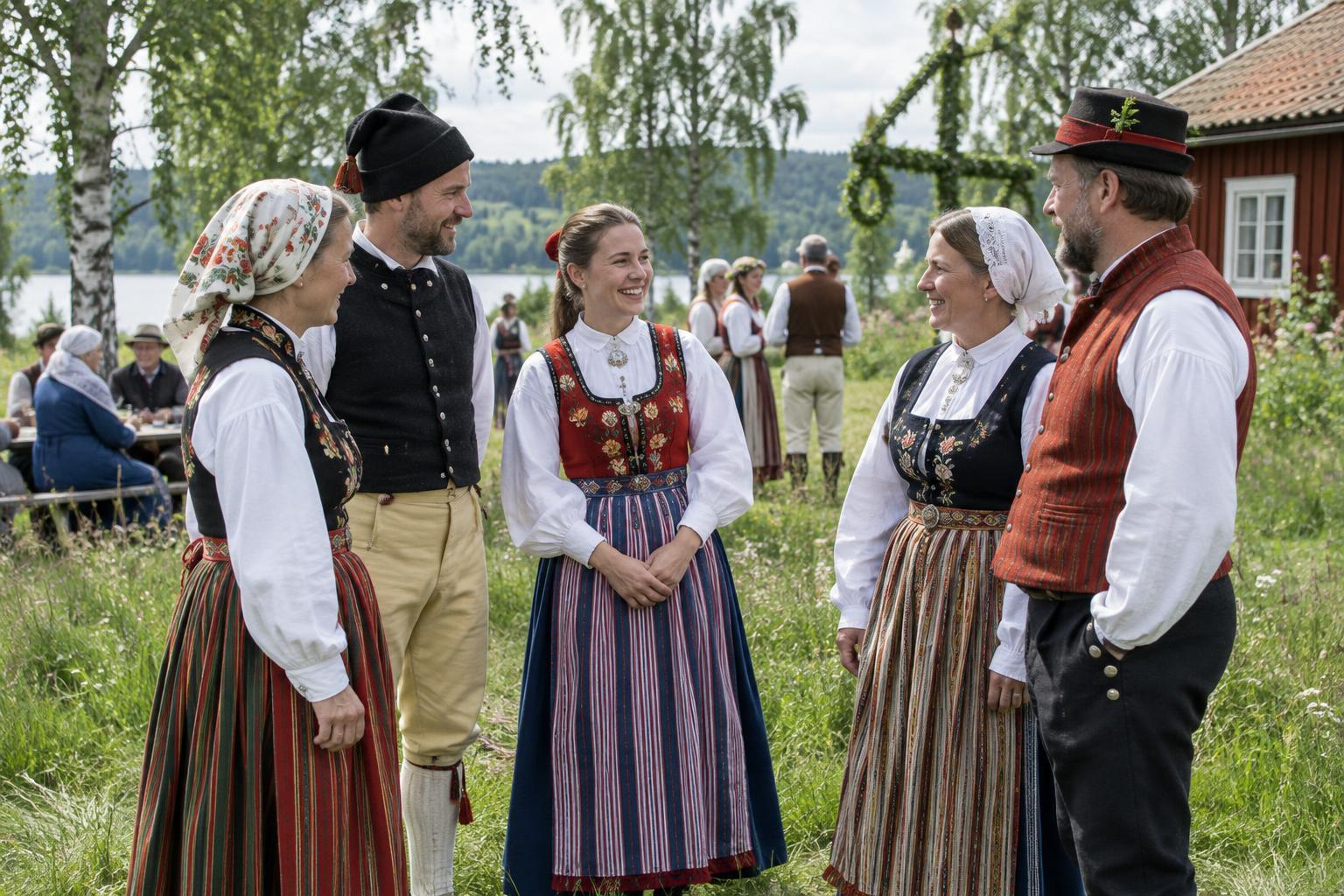
Differences may appear in a skirt’s weave or colour, the shape of a bodice, an apron pattern, embroidery, a cap or the way a scarf is tied. A complete outfit can also include a shirt, waistcoat, jacket, stockings, shoes and jewellery. Choices of fabric and ornament reflect local traditions, available materials and the occasion for which an outfit was made. No single feature reliably identifies every costume from a broad region.
Dalarna is particularly well known for its local costume traditions, but a costume associated with Rättvik should not be treated as interchangeable with one from Leksand or Mora. Looking farther across Sweden, dress associated with areas such as Skåne, Hälsingland and Gotland offers still more variation. These names are starting points for exploring local styles, not labels for one standard outfit shared by everyone in each region.
Sámi clothing, including forms of gákti, belongs to a distinct Indigenous cultural tradition. Its designs can communicate connections to particular Sámi communities and families. It should not be presented as merely another Swedish regional folk costume, even when a discussion of dress traditions in Sweden brings the two into view.
When people wear folk costumes today
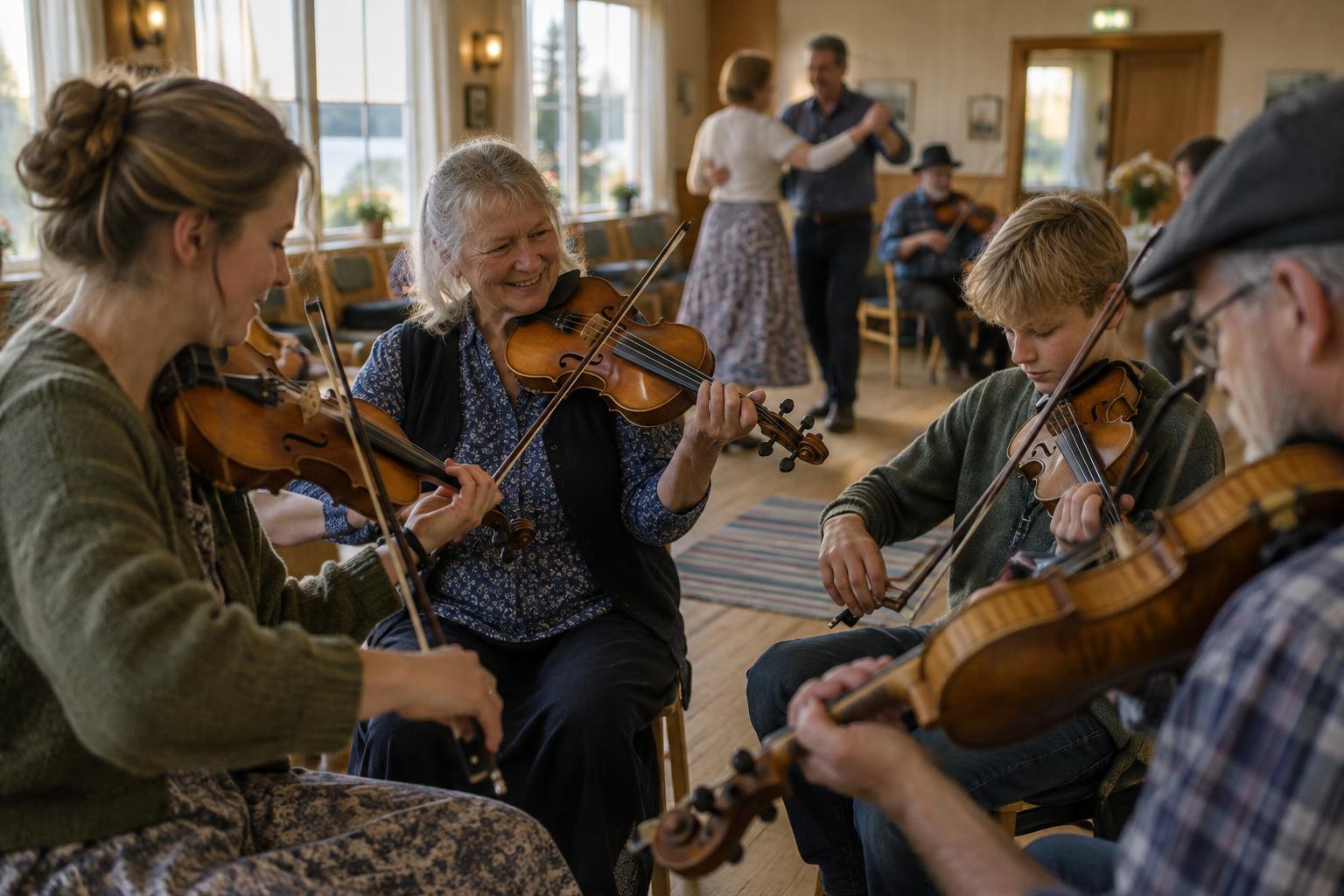
Folk costumes are usually reserved for occasions rather than everyday errands. You may see them at Midsummer celebrations, folk music and dance events, local festivals, weddings or other family gatherings. Some people wear them for national celebrations or events organised by a local heritage association. Whether a costume appears at any particular gathering depends on the people taking part; it is not a requirement of Swedish festivities.
Wearing one can express a family connection to a place, an interest in craft or participation in a community tradition. A person might own a full costume, borrow pieces or spend years learning how to assemble one. Others enjoy Swedish celebrations without wearing one at all. These choices are personal, and there is no need to treat costume as a measure of how Swedish someone is.
Reading the details with care
If you encounter a folk costume at a museum or event, start with the locality named in its description. Notice how the garments work together: a relatively plain shirt may make a patterned apron stand out, while a head covering or piece of jewellery may complete the look. Ask whether the display describes historical clothing, a later reconstruction or a costume in use today. Those distinctions can make the outfit more interesting, not less authentic.
Avoid assuming that colours or accessories always carry a fixed message. Details may have varied with local practice, period, occasion and the wearer’s circumstances. If someone is wearing a costume, a respectful question about its place or craft is more useful than guessing where they come from. Photography is best approached with the same courtesy you would offer anyone at a public celebration.
Why these traditions remain meaningful
Regional costumes bring together textile skills, local knowledge and the pleasure of dressing for a shared occasion. Repairing a garment, learning its name or comparing two neighbouring styles can open a conversation about how traditions are passed on and changed. Their variety is the point: Swedish cultural life contains many local histories, not one outfit that stands for them all.
Sweden Culture Guide is an independent magazine about Swedish culture, not a consulate or government service. This guide is intended to help readers appreciate regional dress and the people who keep its traditions visible.