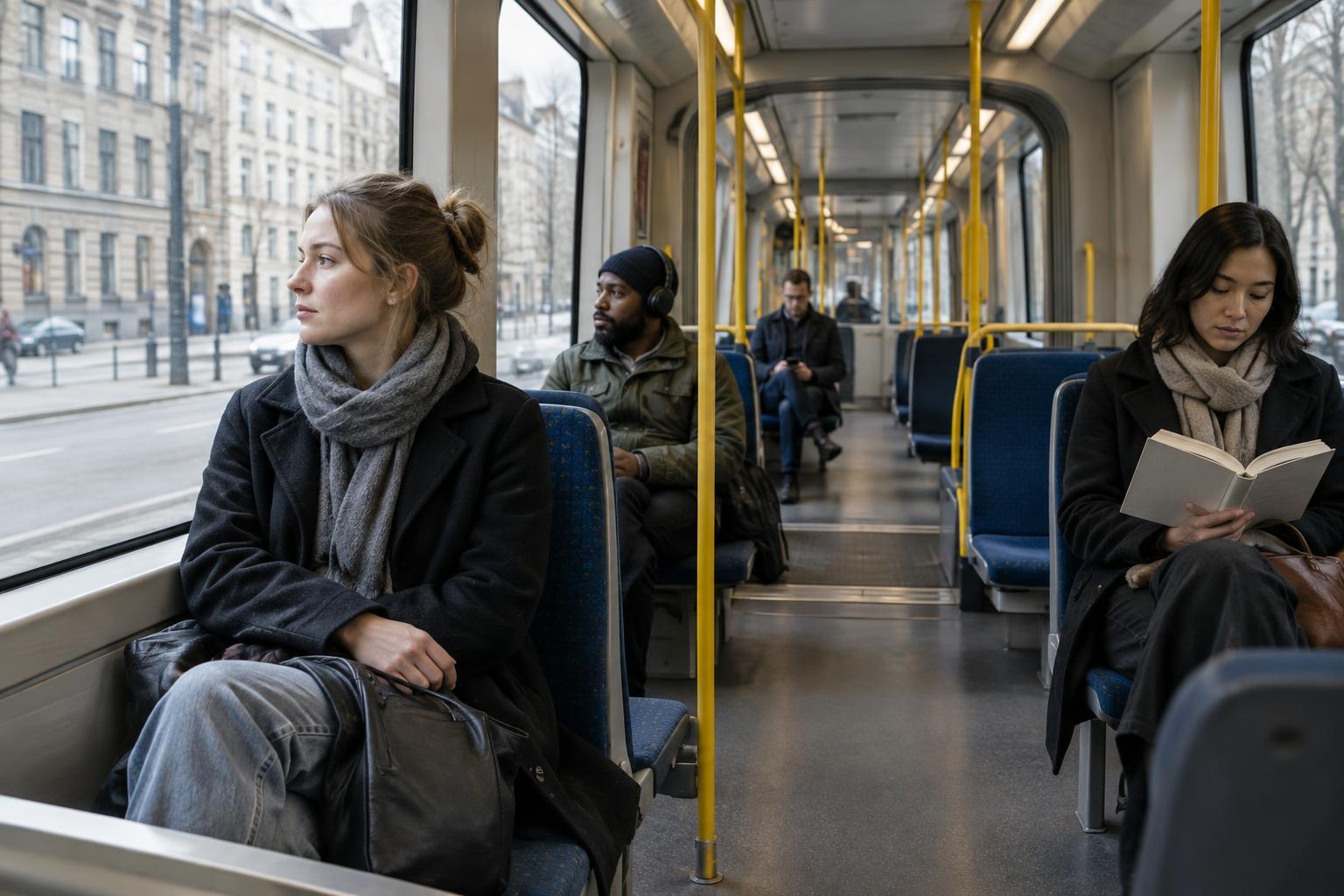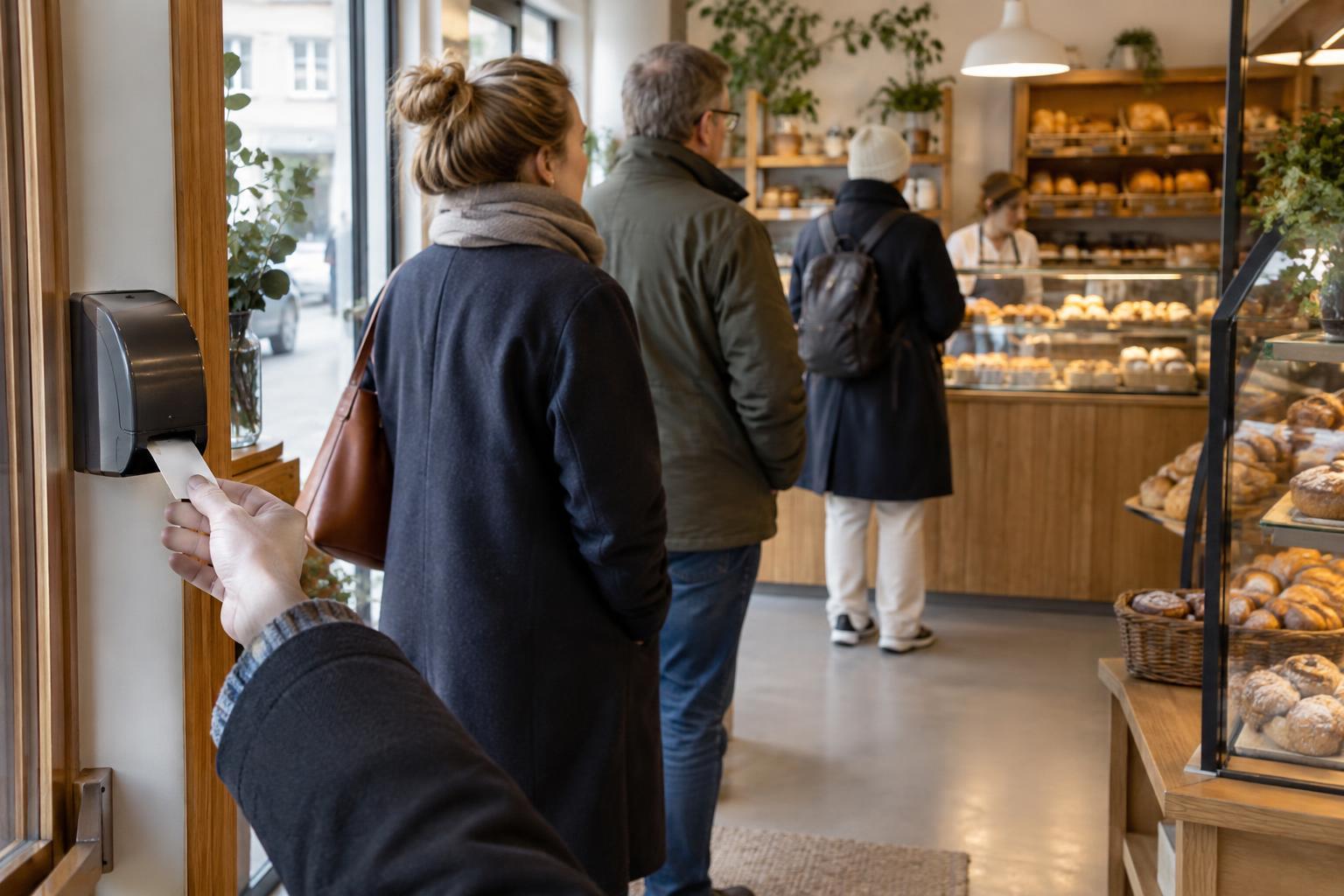
First, look for the queue system
You walk into a bakery, pharmacy, or service counter in Sweden and see several people standing apart. They do not seem to be forming a line, yet everyone appears to know whose turn is next. Before joining anyone, look near the entrance or counter for a small ticket dispenser. Taking a numbered ticket, often called a kölapp, may be how you enter the queue.
A display above the counter may show the number currently being served. Keep your ticket where you can see it, then compare its number with the display. There may be several counters or separate ticket choices for different services, so read the signs before pressing a button. If you are unsure, a brief question to a staff member or another customer is more useful than assuming the people closest to the counter are next.
What to do after taking a number
Once you have a ticket, you usually do not need to stand in a tight line. You can wait nearby, leaving room for others to reach the dispenser, browse, or move through the space. Stay close enough to hear an announcement or notice the display changing. When your number appears, go to the indicated counter and have your ticket ready in case the staff member asks for it.
Numbers may not always seem to advance in order. A business might use different ticket series for separate services, or one counter might handle a particular type of request. Rather than trying to work out the whole system from the display, focus on the letter and number on your own ticket. If you think your number has been skipped, ask politely when there is a suitable moment; it may be a simple misunderstanding.
When there is no ticket machine
Not every Swedish queue uses numbers. At a small shop, bus stop, café, or coat check, people may simply remember who arrived first. Take a moment to observe before moving toward the front. If the order is unclear, asking “Who is last?” or “Are you waiting?” helps establish your place without making a fuss.
Respecting the order matters more than standing in a perfectly straight line. Someone may step aside to look at a menu or let another person pass while still waiting. Likewise, a person standing near a counter may already be served or may only be browsing. A short, friendly check is better than either pushing ahead or silently waiting behind someone who is not in the queue.
Small courtesies that make waiting easier
Give other people a little space, especially where a narrow entrance makes the queue hard to read. Avoid blocking the ticket dispenser or standing directly in front of a display. If you are waiting with a group, check whether each person needs a ticket or whether one ticket covers your shared request. The answer depends on the place and what you need.
If you miss your number, do not assume you can interrupt the person now being served. Ask staff what to do; they may call your number again or ask you to take a new ticket. Similarly, if someone appears to need help with the machine, a simple explanation can be welcome, but let staff manage disputes about the order. Calm, clear questions tend to work better than trying to police the queue yourself.
Follow the local cues
The useful habit is to pause, look, and then join the system already in place. Find the dispenser if there is one, note your number, and watch for your turn. If there is no machine, establish who is waiting and take your place after them. Once you know which kind of queue you are in, the rest is usually straightforward.
This guide is part of an independent magazine about Swedish culture and everyday customs, not a consulate or government service. Its aim is to help you feel more at ease in ordinary public spaces. Queue arrangements vary from place to place, so any signs on site and directions from staff should guide what you do.