A pantry built on contrasts
Many familiar Swedish dishes rely less on a long list of spices than on a few clear contrasts. Fresh herbs lift rich fish and potatoes. Mustard adds bite to creamy sauces. Tart berries cut through savory food, while pickles bring sweetness and acidity to the plate. These ingredients appear in different combinations, so learning what each one does is more useful than trying to stock every specialty product at once.
This guide comes from Sweden Culture Guide, an independent magazine about Swedish culture and everyday life, not a consulate or government service. Think of the pantry below as a starting point for exploring home cooking, rather than a fixed set of rules. Families, regions and individual cooks all have their own preferences.
Dill: the fresh, grassy note
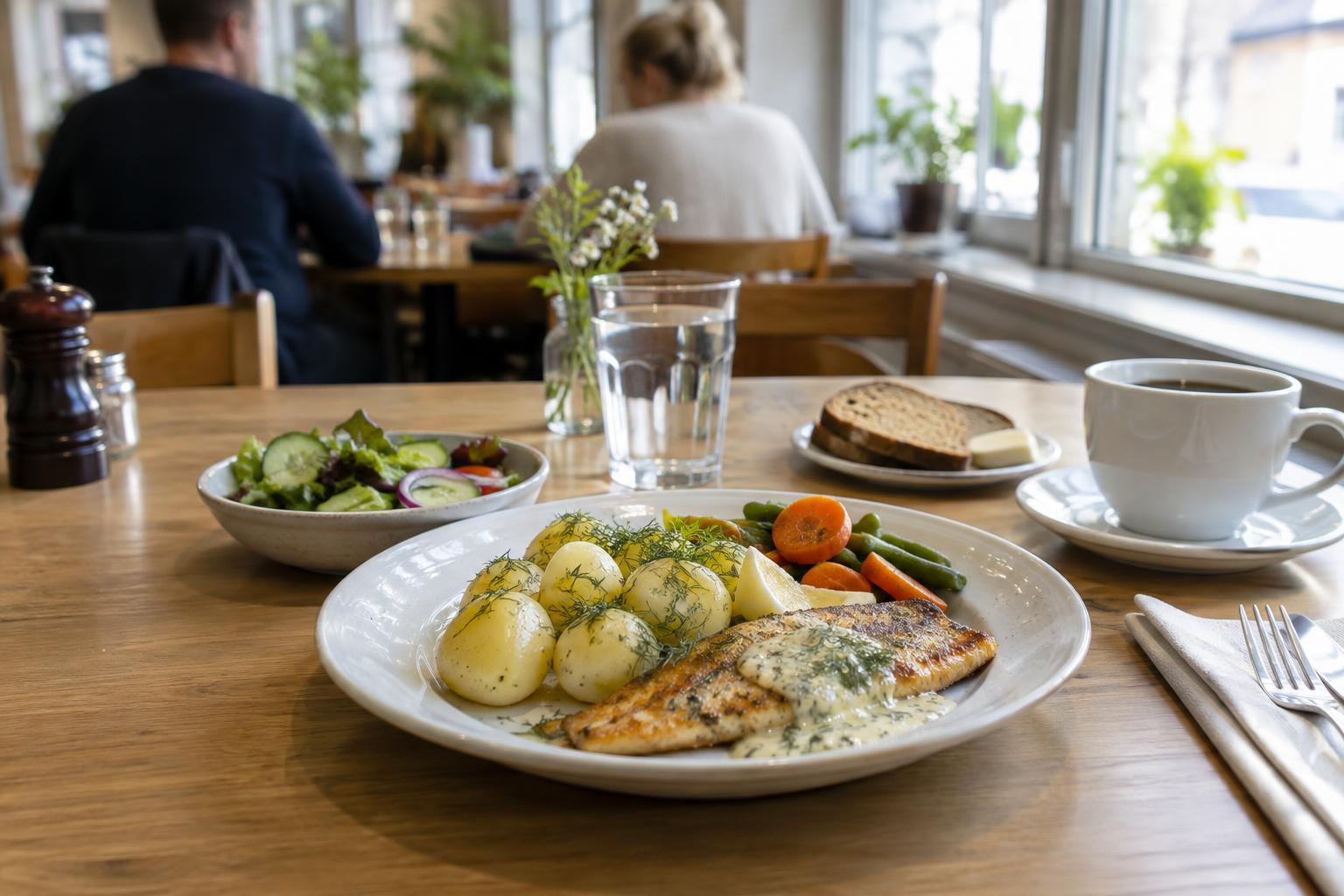
Dill is one of the easiest flavors to recognize on a Swedish table. Its feathery leaves pair especially well with boiled new potatoes, salmon, shrimp and cucumber. Chopped fresh dill can make a simple bowl of potatoes feel complete with little more than butter and salt. It also brightens a cold sauce made with sour cream or a similar cultured dairy product.
For a quick introduction, stir chopped dill into a dressing with mustard, a little sugar and vinegar, then spoon it over cooked fish or potatoes. Add fresh dill near the end of preparation to keep its flavor lively. Dried dill is convenient, but it will not give quite the same green, delicate finish. In pickling, dill stems or flower heads can contribute flavor too, so the leaves are not the only useful part of the plant.
Mustard, vinegar and the sweet-sour balance
Mustard appears both as a condiment and as an ingredient in sauces and dressings. Swedish-style mustards vary: some are smooth and sharp, while others are coarser and sweeter. A spoonful can give depth to a sandwich, a plate of sausages or a sauce for fish. Mustard and dill are particularly good partners because the herb softens mustard’s edge without hiding it.
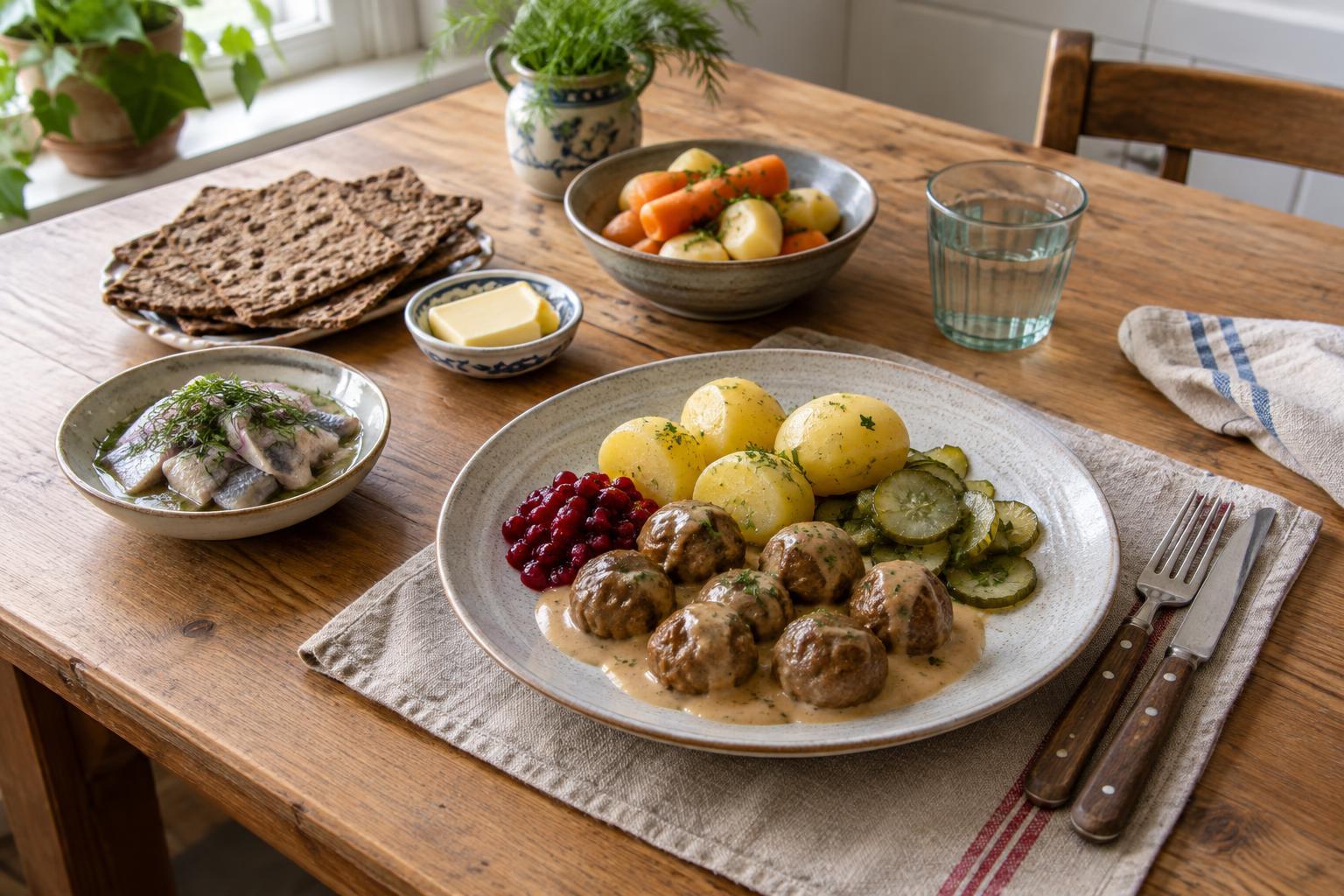
Vinegar, sugar and salt form another useful combination. Together, they create the sweet-sour taste found in many pickled accompaniments, including cucumber and herring preparations. The balance matters more than any single ingredient: too much sugar can flatten the acidity, while too much vinegar can overwhelm a mild dish. If you are making quick-pickled cucumber to eat soon, taste the liquid before adding the slices and adjust it to suit the rest of the meal. Follow a tested recipe for anything you intend to preserve or store for longer.
Allspice and the quieter warming spices
Despite its name, allspice is one spice, not a blend. Its warm, peppery flavor can suggest several baking spices at once, but it belongs in savory cooking as well. Whole berries are often associated with pickling liquids, while a modest amount of ground allspice can add warmth to meatballs. Start lightly: it should round out the dish rather than become its main flavor.
Other spices help mark the shift between everyday meals and baking. Cardamom is a distinctive addition to Swedish buns and sweet breads; cinnamon is familiar in pastries and porridge. Keep these flavors separate in your mind from the dill-and-mustard side of the pantry. They serve different purposes, even though they may all be stored on the same shelf.
Berries, bread and a small starter pantry
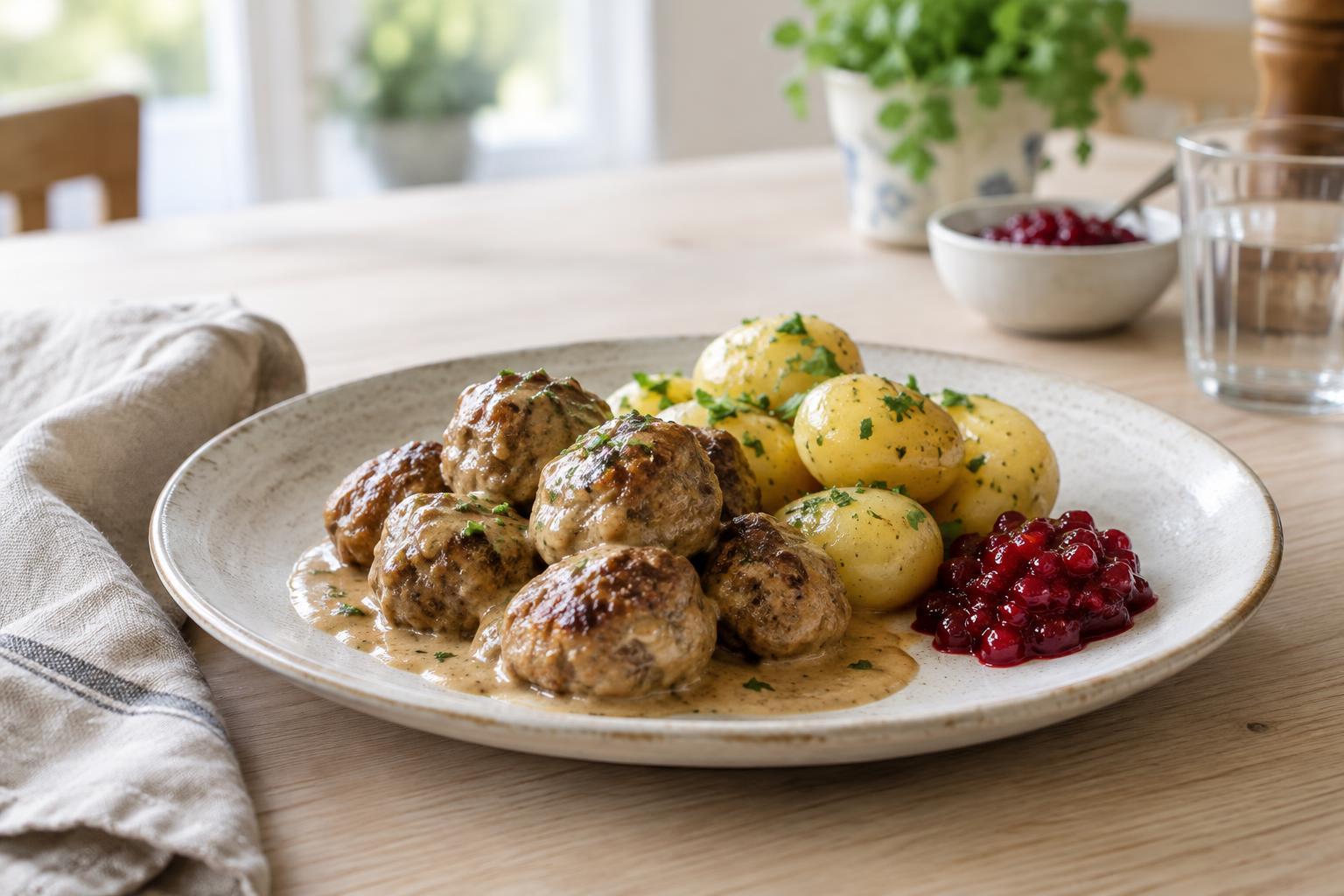
Lingonberries bring a tart, fruity counterpoint to rich savory foods. Lingonberry jam is a familiar accompaniment to meatballs and potato dishes, where its sweetness works best alongside the berry’s natural tang. If it is unavailable, another tart berry preserve can demonstrate the same contrast, though it will taste different. Crispbread offers a different kind of balance: its dry crunch is a useful base for butter, cheese, eggs or fish.
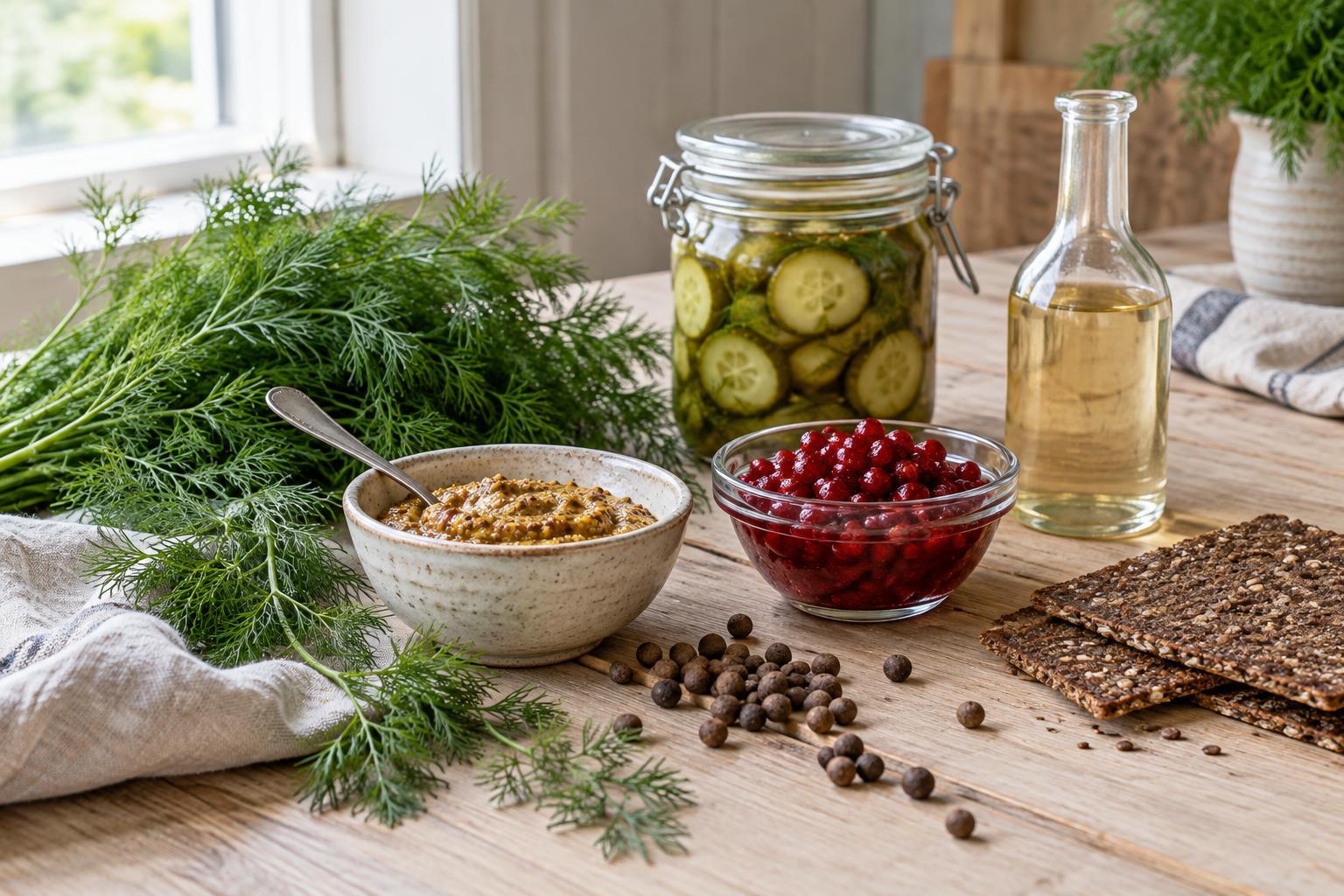
To begin, you do not need a cupboard full of specialty items. Fresh dill, a mustard you enjoy, allspice, vinegar, sugar and salt will let you try several characteristic combinations. Add cardamom if you bake, and lingonberry preserve or crispbread if you find them. Serve potatoes with dill, make a mustard dressing, or put something tart beside a rich main dish. Those small choices reveal how much Swedish pantry cooking depends on balance.