Start with a designated bathing area
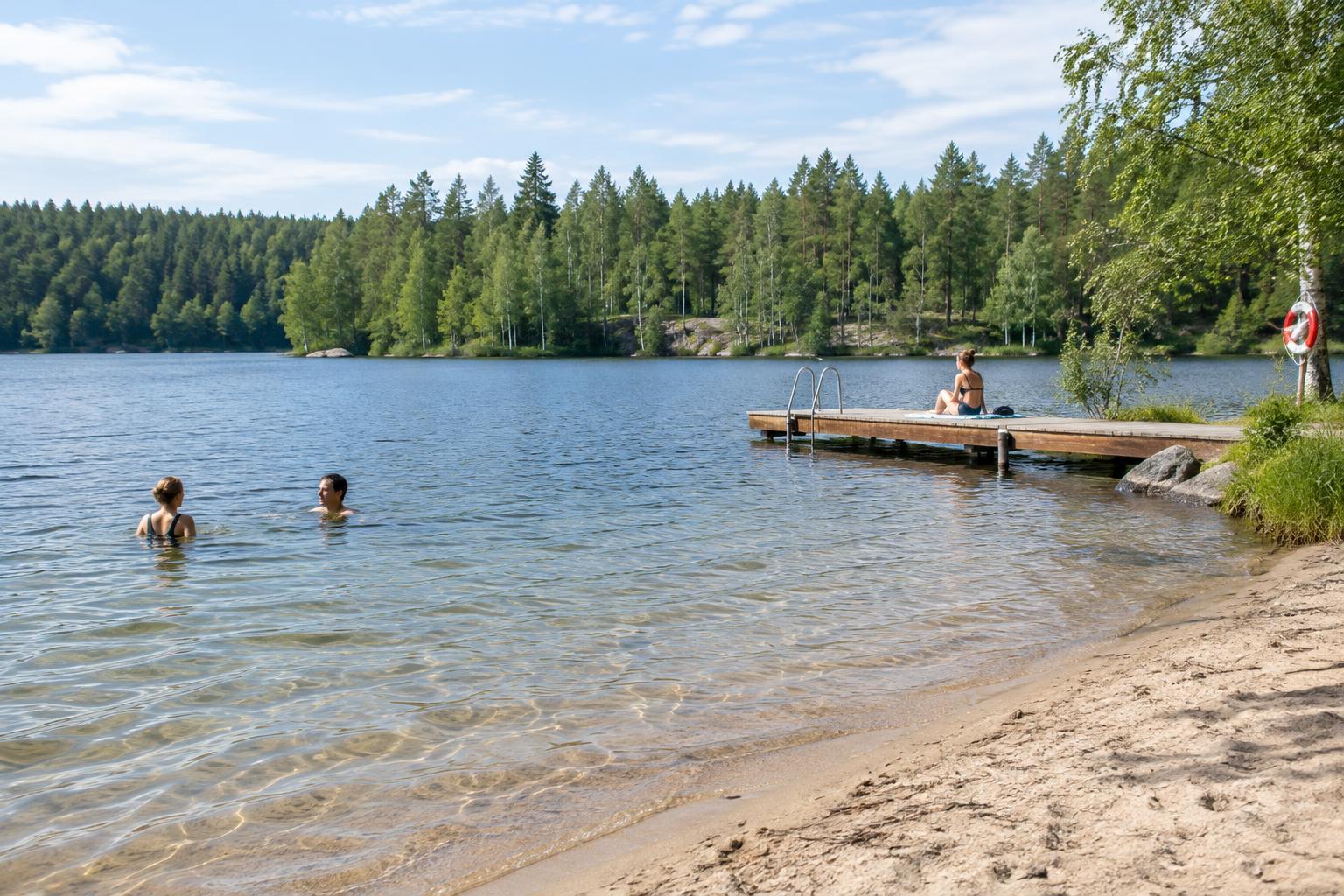
Sweden’s lakes offer many ways to spend time by the water, from a quick dip after a walk to an afternoon on a sandy shore. For a first swim, a designated bathing area, often called a badplats, is usually simpler than an unfamiliar stretch of shoreline. It may have a marked swimming area, a gradual entry, a jetty or space to sit and change. Facilities vary, so check the information for the specific place before setting out.
Look for a spot that suits everyone in your group rather than choosing solely for its appearance. A shallow, sheltered entry can feel more manageable than a ladder into deep water. Sand and grass may be comfortable for lingering; rocks can be slippery underfoot. If you are bringing children or someone who is not a confident swimmer, favour a place where you can easily see the water and stay close together.
Sweden Culture Guide is an independent English-language magazine about Sweden, not a consulate or government service. For site-specific rules, facilities and water information, use notices at the bathing area and the relevant local operator’s information.
Check the water before you get in
A calm-looking lake can still be cold, deep or uneven. Enter slowly and give yourself time to adjust, particularly early in the swimming season or after cool weather. Test the footing rather than assuming that a gently sloping bank continues underwater. Do not dive unless you are certain the water is deep enough and free of obstacles; even a familiar place can change.
Pay attention to posted warnings and to what you can see. If the water has a thick surface scum, unusual discolouration or an unpleasant smell, skip the swim and seek current local guidance. Avoid swallowing lake water, and rinse off when a shower is available. Conditions can differ from one part of a lake to another, so a previous pleasant visit is not a substitute for checking again.
Weather matters too. Wind can make a return swim harder than the outward swim, while a sudden shower can make rocks and wooden surfaces slick. If thunder is approaching, leave the water and head to shelter. A shorter swim close to shore is a perfectly good introduction.
Make safety part of the plan
Swim with another person when possible, and tell someone on shore if you are going into the water. Keep children within active, close supervision, even at a marked bathing area. Floating toys and inflatable mattresses can drift away from shore and are not substitutes for suitable safety equipment or attentive supervision.
Stay within your ability and choose a clear route back to land before you start. If you feel cold, tired or uneasy, turn back early. Avoid swimming near boats, fishing lines or areas where the shore makes it difficult to climb out. Knowing the name or location of the bathing area can also help if you need to explain where you are.
Bring a towel and warm, dry clothes for afterward. A charged phone kept dry and accessible is useful, but it should not encourage anyone to take risks. If someone is in difficulty, seek emergency help and use available rescue equipment rather than entering hazardous water without assessing your own safety.
Know what facilities to expect
Lake facilities range from little more than a path to a shore to beaches with toilets, changing areas, bins, picnic tables or swimming jetties. Some places may have accessible paths or water-entry features, but do not assume these are present or usable for every visitor. Check ahead if a toilet, step-free route or other feature is essential to your visit.
Pack for the simpler version of the outing: drinking water, sun protection, footwear you can walk in, a bag for wet clothes and another for any litter. A small mat can make a rocky or damp shore more comfortable. If you plan to stay awhile, consider whether there is shade, somewhere to eat and a practical way to get home in dry clothes.
Share the shoreline thoughtfully
Swedish lakes are enjoyed by swimmers, paddlers, anglers, walkers and nearby residents. Give others room, keep noise considerate and leave the place as you found it. Use bins where provided, or take rubbish away. Respect signs, private spaces and any restrictions on fires, dogs or particular parts of the shore; arrangements can differ between sites.
The best beginner’s lake day does not need an ambitious swim. Choose a manageable spot, read what is posted there, take a gentle first dip and leave time to sit by the water. That simple routine lets the landscape be the highlight while keeping comfort and safety in view.