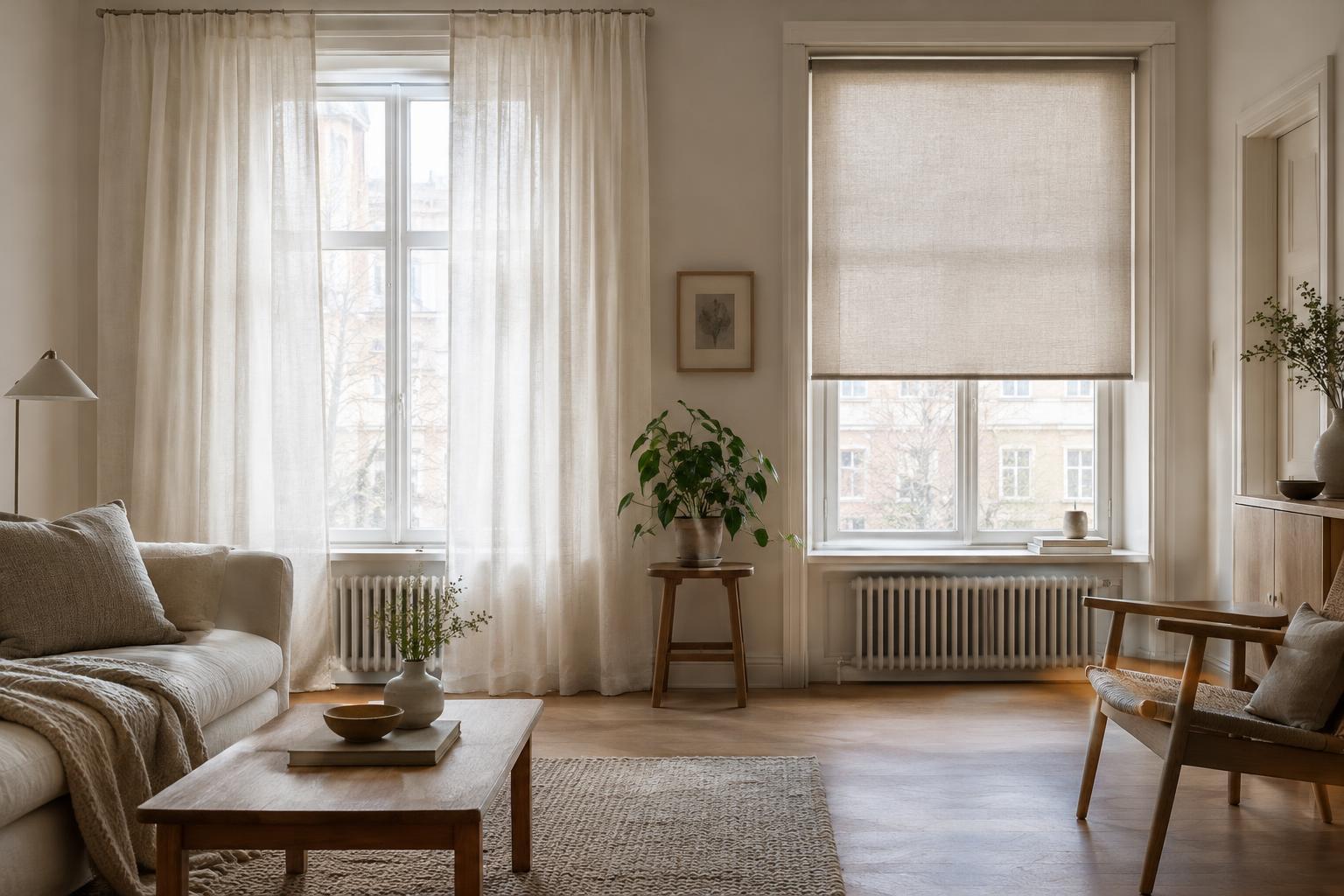
Start with what the window needs to do
A Swedish-inspired room often makes space for daylight, but leaving every window bare is not the only way to achieve a light, uncluttered look. A street-facing bedroom may need privacy and darkness; a kitchen window may need little more than glare control. Treat each window as a small design problem rather than applying one solution throughout the home.
Before choosing fabric or hardware, observe the room at the times you use it. Notice where direct sun falls, whether people can see in after dark, and whether a curtain would interfere with a radiator, desk or window handle. Sweden Culture Guide is an independent magazine about culture and design, not a consulate or government service; here, the aim is to help you make considered choices for your own space.
Choose the lightest treatment that meets the need
Sheer curtains can soften a window without making it feel closed off. They are useful where daytime privacy matters but a view of the outdoors is still welcome. Their effect changes after dark, however: when lights are on indoors, a sheer panel may offer little privacy. If that matters, pair it with a blind or a more opaque curtain.
Roller blinds offer a compact option for windows beside desks, counters or furniture. A pale, light-filtering blind can reduce glare while keeping the room bright; an opaque one suits a bedroom where darkness is a priority. Check how the blind operates before buying, especially if a window opens inward or has handles that project into the room. In homes with children, choose and install corded products with particular care, following the product’s safety instructions.
Use curtains to shape the room
Curtains do more than cover glass. Hung high and wide enough to clear the window when open, they can frame the view and make the wall feel more settled. A simple track often gives fabric an unobtrusive line, while a visible rod can add a deliberate detail. Either can work; the better choice depends on the window, ceiling and other fittings in the room.
For an understated effect, consider linen, cotton or a textured blend in a color close to the wall. These fabrics can bring softness to a room with painted wood, hard flooring or simple furniture. A heavier curtain may make a bedroom feel more sheltered, though fabric alone will not solve every draft or insulation problem. If warmth is the main concern, first check whether the window closes properly and whether curtains would block a heat source.
Keep pattern and proportion in balance
A Swedish-inspired interior need not be all white or pattern-free. A small woven check, stripe or botanical print can give a quiet room character. If the walls or furniture already carry strong pattern, a plain window treatment may provide a useful pause. Try looking at fabric samples both beside the window and across the room: a pattern that appears subtle up close can feel much busier when repeated across wide panels.
Proportion matters as much as color. Floor-length curtains can look composed in a living room, but they may be awkward behind a sofa or near a kitchen work surface. A blind fitted within the window recess can keep a small opening visually tidy; curtains extending beyond the frame can give a narrow window more presence. Decide which effect you want before measuring, then follow the hardware and fabric maker’s measuring guidance.
Make the choice easy to live with
The most successful treatment is one you will comfortably use every day. Consider whether the fabric can be cleaned in a way that suits your household, whether the blind is easy to reach, and where open curtains will gather. If you rent, look for a mounting method your tenancy permits rather than assuming you can drill into the wall or frame.
There is no single formula for a Swedish-looking window. The useful principle is restraint with a purpose: let daylight in where you want it, add privacy where you need it, and choose materials that sit comfortably alongside the rest of the room. Solving those practical needs first usually produces a calmer result than choosing a curtain for its appearance alone.