Two movements, one lasting conversation
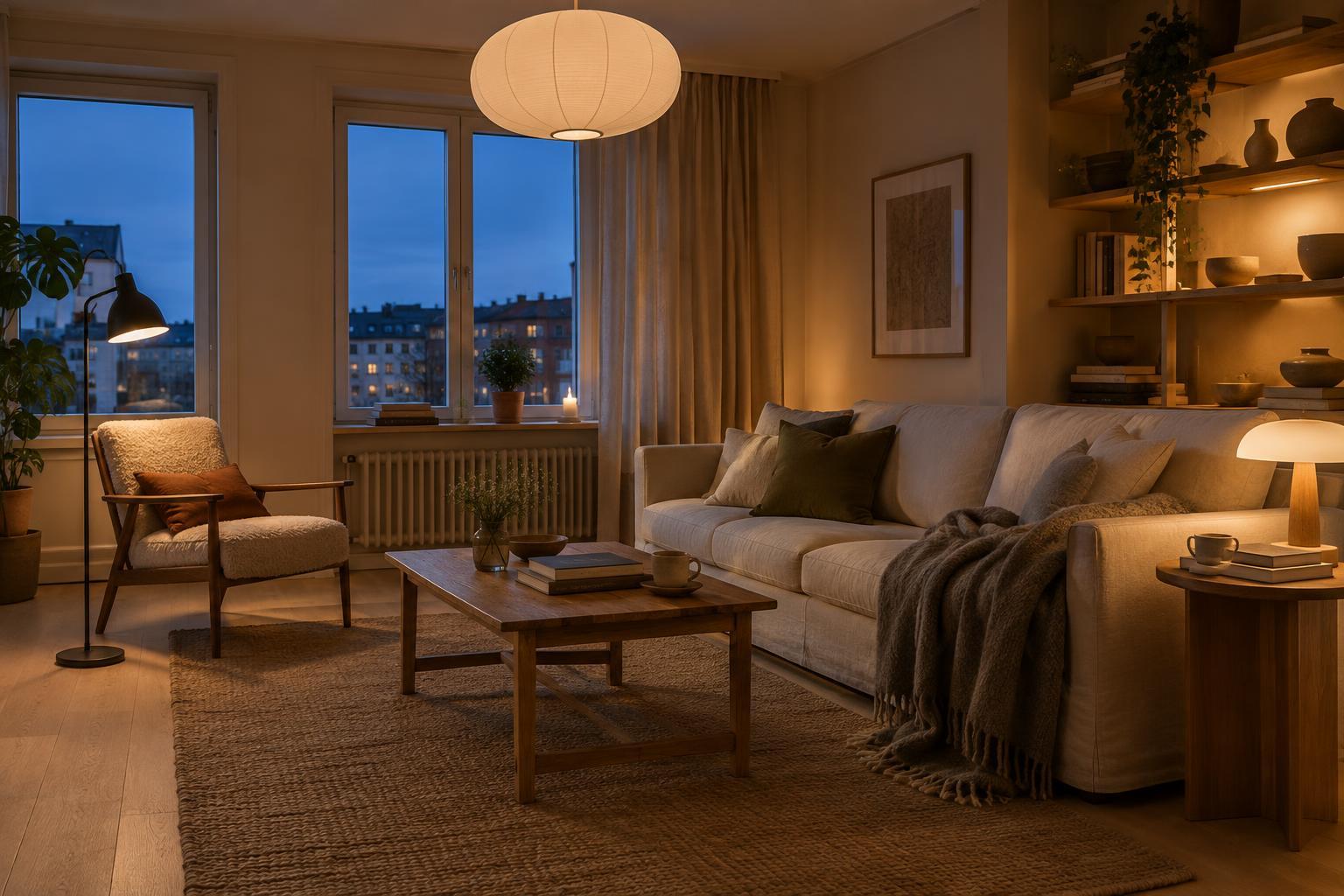
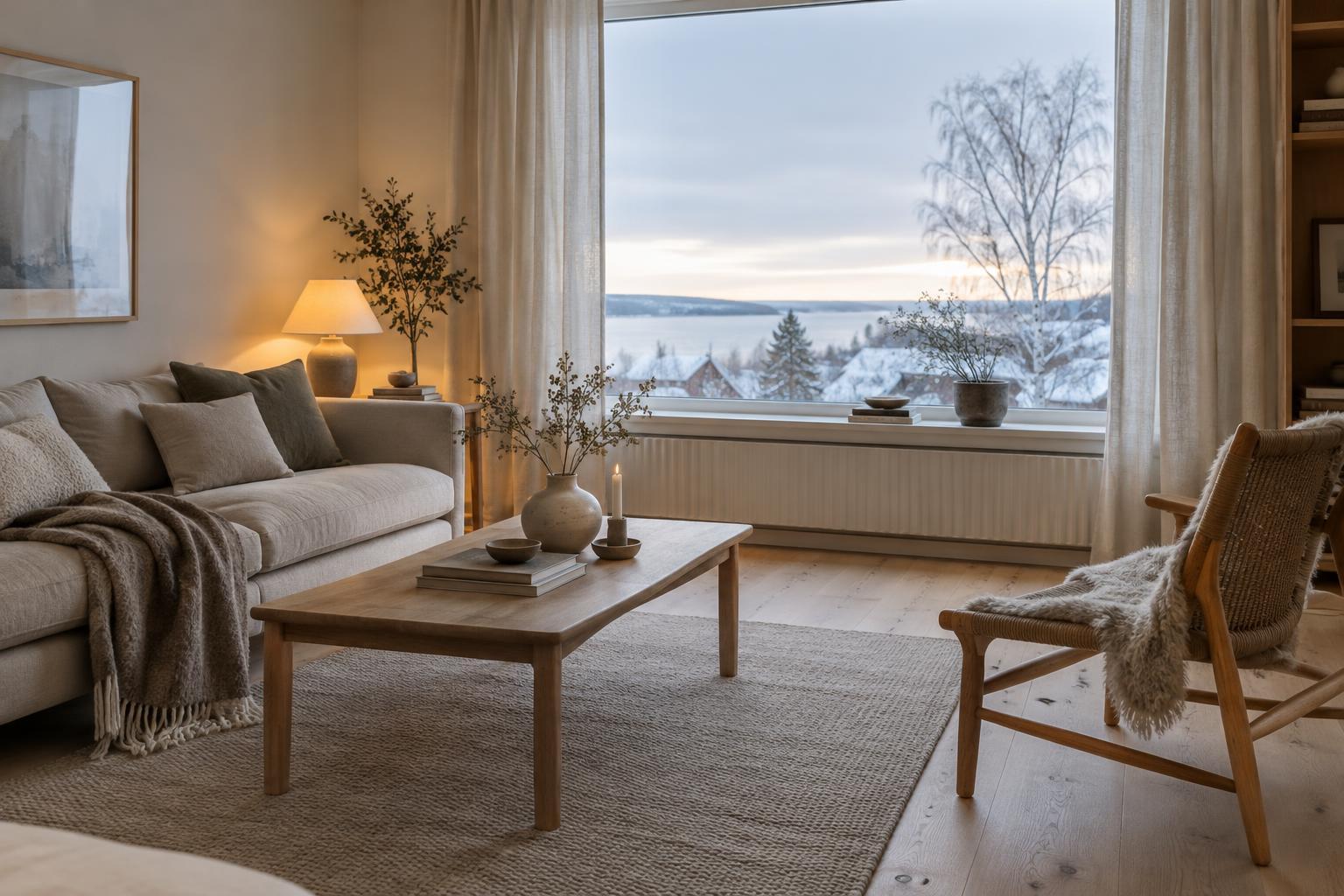
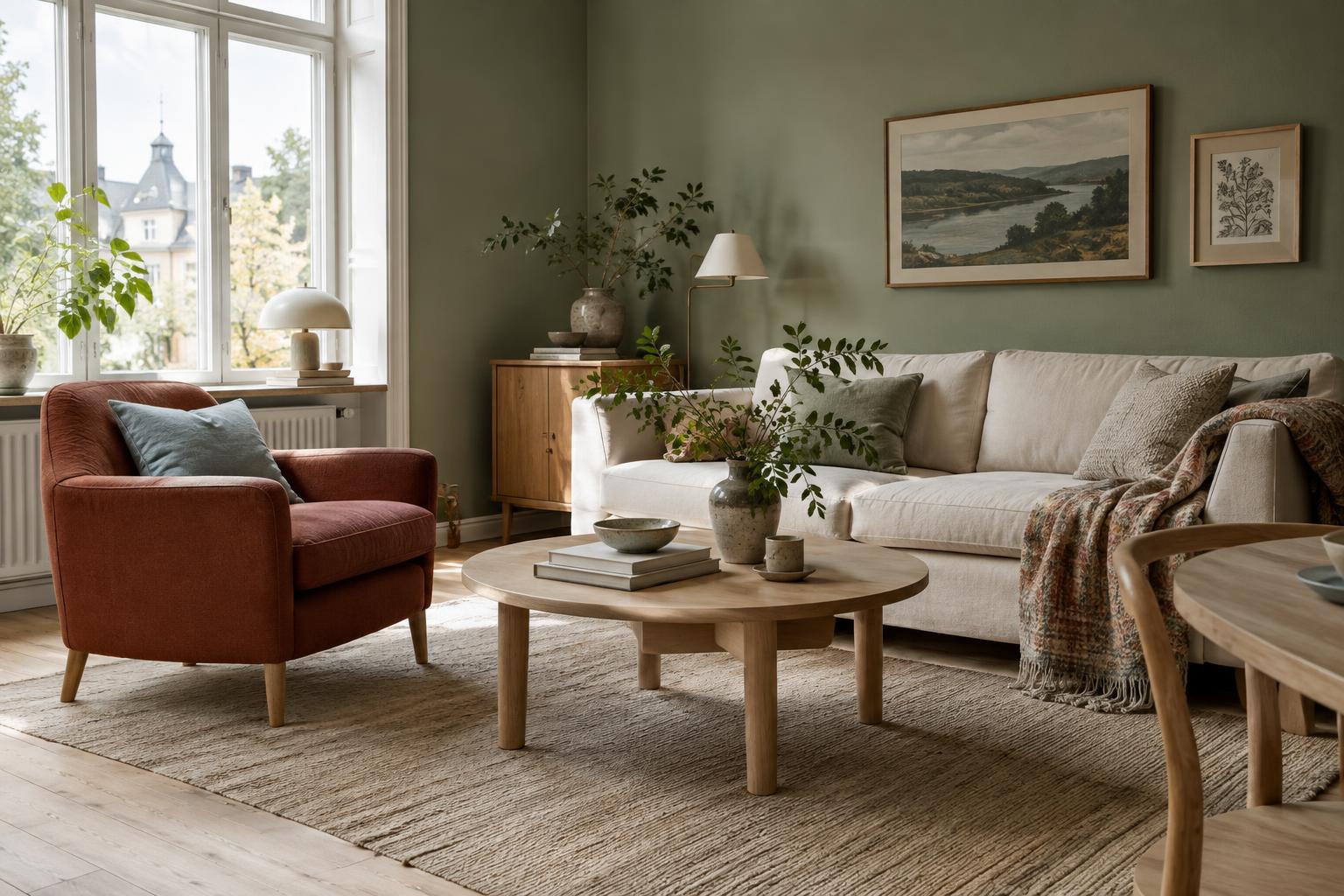
Swedish interiors are often described as pale, simple and practical. That picture leaves out an important contrast. In the early twentieth century, Swedish Grace favoured elegant proportions, skilled craftsmanship and restrained decoration. Functionalism, which gained influence in Sweden during the 1930s, asked more directly how a space could serve daily life. One looked for beauty through refinement; the other made usefulness a guiding principle. Neither can be reduced to a colour palette.
This article is from Sweden Culture Guide, an independent magazine about Swedish culture and design, not a consulate or government service. Here, the two movements offer a way to understand familiar interiors: why a carefully shaped chair can feel decorative without being ornate, and why an uncluttered kitchen can feel welcoming rather than bare.
What Swedish Grace brought into the room
Swedish Grace emerged in the 1920s, drawing on classical forms while giving them a lighter, more intimate character. Symmetry and balanced proportions mattered, but ornament was usually controlled rather than lavish. A cabinet might have a gently curved front or fine inlay; a chair could combine a familiar classical outline with slender, softened details. Materials and workmanship gave these objects much of their presence.
In an interior, this approach encourages attention to relationships. The scale of a table matters in relation to its chairs; a pendant light can mark the centre of a room without dominating it. Even a small decorative detail has more impact when it has space around it. Swedish Grace does not require a room full of period furniture. Its more adaptable lesson is that elegance can come from measured choices, good proportions and a few expressive objects.
Functionalism turns toward everyday use
Functionalism took a different starting point: what should a building or object do, and how can its design make that task easier? In Sweden, the 1930 Stockholm Exhibition became an important public showcase for functionalist ideas. Architects and designers explored simpler forms, modern materials, daylight and spaces planned around ordinary routines. The ambition was not merely to remove decoration, but to make well-designed surroundings more useful and accessible.
At room scale, that can mean circulation paths that stay clear, storage placed where it is needed and furniture chosen for comfort as well as appearance. A bright surface may help distribute available light; a flexible table may work for both meals and other activities. Functionalism is sometimes mistaken for a demand to own as little as possible. Its more helpful question is whether the arrangement of a room supports the people who use it.
Where the two approaches meet
Swedish Grace and functionalism are often presented as opposites: decoration versus utility, tradition versus modernity. In practice, both gave close attention to proportion and to the experience of living with objects. A well-made Grace chair still has to work as a chair. A functionalist room still depends on visual decisions about balance, texture and light. Their priorities differ, but each asks designers to be deliberate.
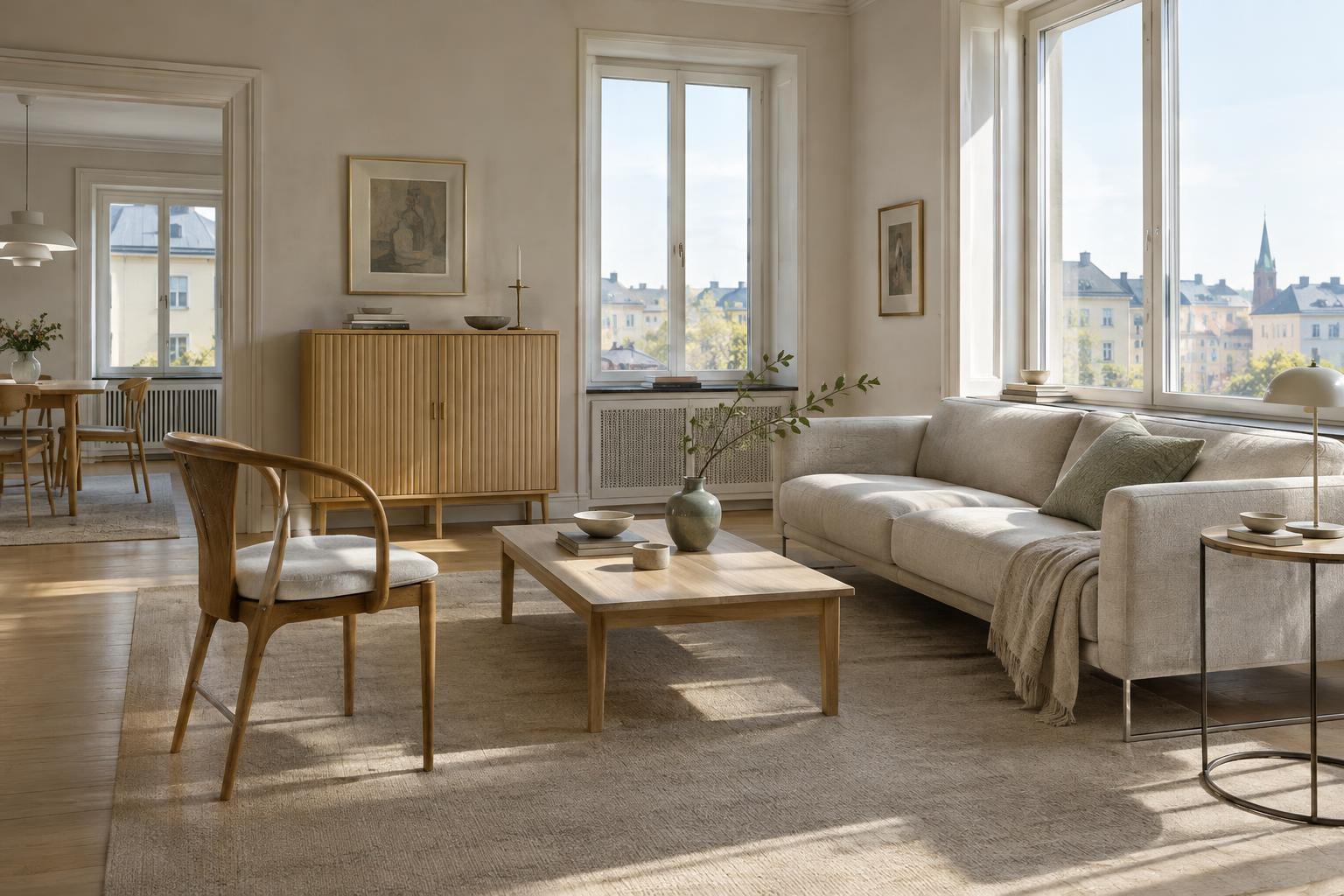
That overlap helps explain why elements associated with both can sit comfortably in a contemporary home. A finely detailed wooden sideboard can bring warmth to a room with simple walls and practical shelving. A straightforward dining table can give sculptural chairs room to be noticed. The result need not imitate a historical interior. It can borrow one principle from each movement: choose forms worth looking at, then make sure daily life has enough space.
How to use the ideas without creating a period room
Start with function. Notice where you read, eat, work or leave everyday items, and arrange furniture to support those habits. Keep frequently used things within reach and allow comfortable routes through the room. Then look at proportion: does one piece overwhelm the others, or does the room need a clearer focal point? These questions are useful whether you are furnishing a whole home or adjusting a single corner.
Finally, add character with restraint rather than following a rigid style checklist. You might pair a simple lamp with a more expressive chair, or let the grain of wood provide detail against a plain backdrop. Swedish Grace offers permission to value craft and subtle ornament; functionalism reminds you to test beauty against use. Together, they suggest an interior that feels considered without asking its occupants to live like exhibits.