What makes a rug flat-woven?
A flat-weave rug is made by interlacing yarns or strips of fabric rather than building up a deep pile. It usually has a low profile, so furniture sits firmly on it and it is less likely to catch under a door. The surface also makes woven patterns easy to see. If you are used to plush rugs, expect a different feel underfoot: a flat weave offers texture and definition rather than cushioning.
This guide comes from Sweden Culture Guide, an independent magazine about Swedish culture and design, not a consulate or government service. In Swedish interiors, flat-weave rugs can suit both spare rooms and layered, colorful ones. They can define a space without visually taking it over, which is one reason they work well alongside wood floors, simple furniture and mixed textiles.
Know the styles and materials
The Swedish rag rug, or trasmatta, is often woven from strips of reused fabric. Its familiar striped look can be lively or restrained, depending on the colors. Because fabric strips vary, rag rugs tend to have an informal, tactile character. They are a natural choice when you want a room to feel relaxed rather than precisely matched.
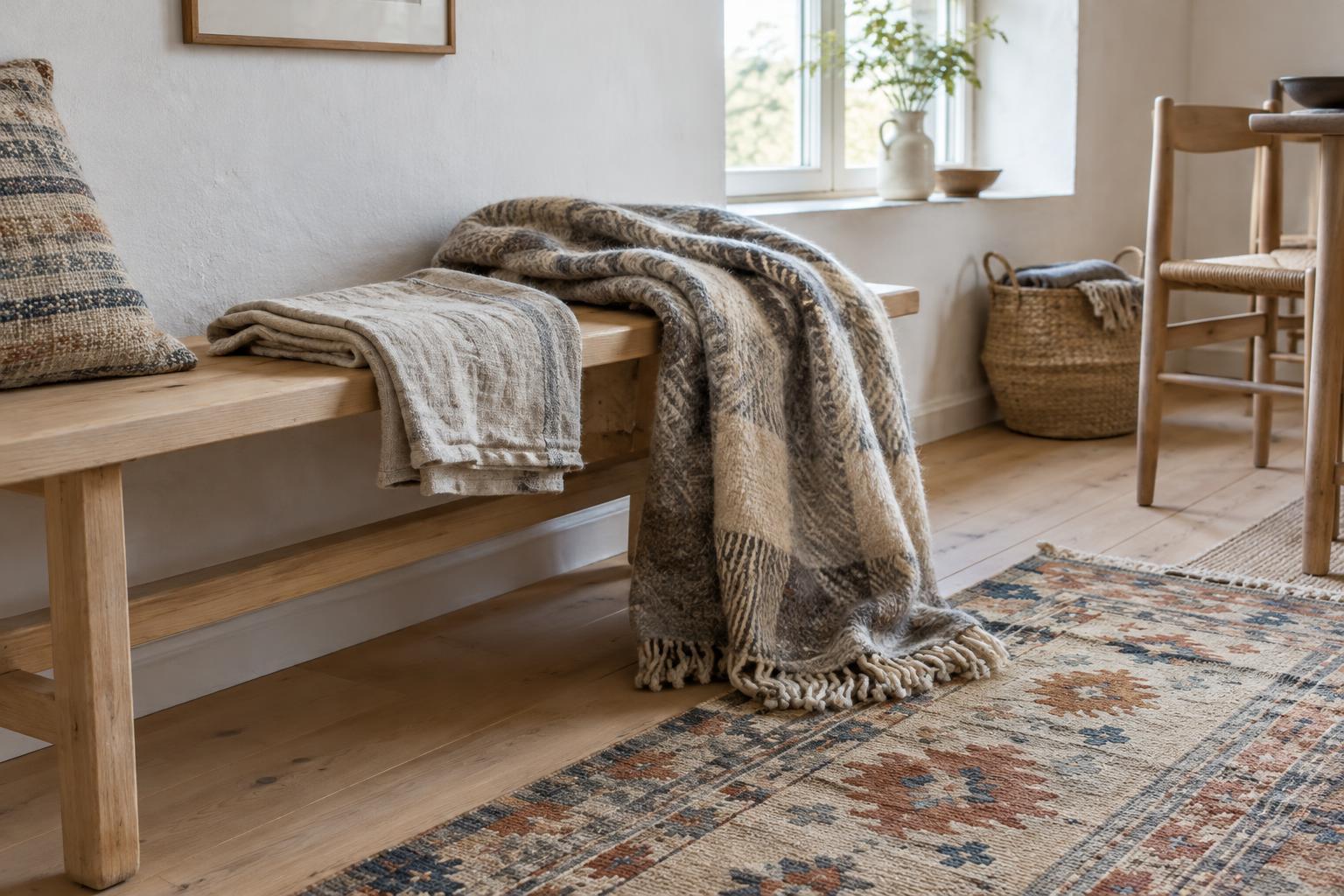
Another style to look for is röllakan, a flat-woven rug often associated with geometric shapes and clearly defined fields of color. Examples vary, so look at the individual rug rather than expecting a single palette or pattern. A wool flat weave may feel substantial and offer useful warmth, while cotton or fabric-strip rugs can feel lighter and more casual. Check the fiber label or ask the seller about materials; appearance alone does not always tell you what a rug contains.
Choose a rug for the room, not just the floor
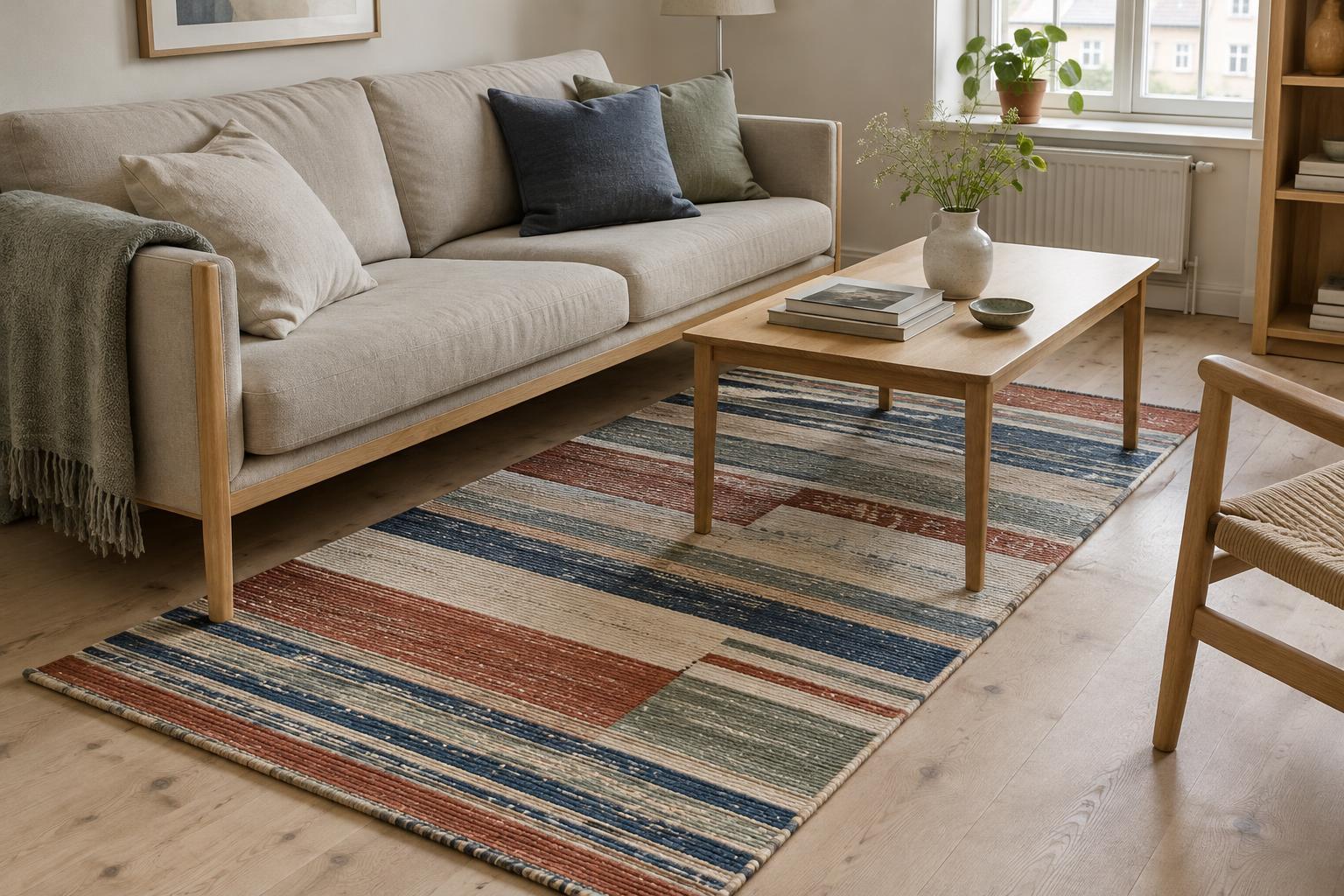
Start with the furniture arrangement. In a living room, a rug looks deliberate when it connects the seating: for example, it might reach beneath the front legs of the sofa and chairs. Measure the space before shopping, leaving a visible border of floor if you want the room to feel open. A small rug stranded in the middle of a seating group can make the furniture look disconnected, even when the rug itself is beautiful.
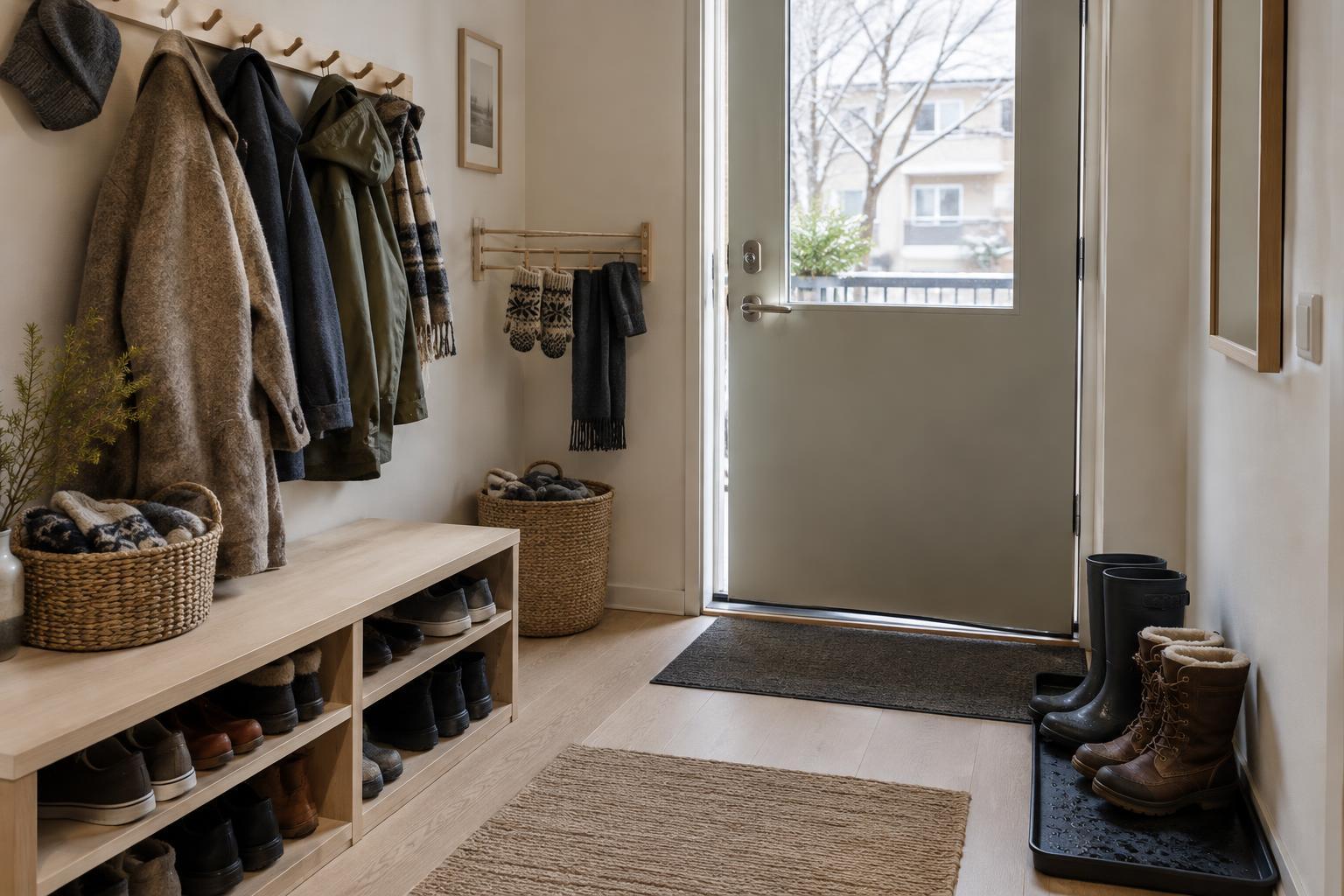
Flat weaves also suit dining areas because chair legs move more easily over a low surface than a deep pile. Choose a rug large enough that chairs remain on it when pulled out; otherwise their legs may catch at the edge. For an entryway or kitchen, look for a size that clears doors and leaves room to stand comfortably. Those spots receive frequent foot traffic and spills, so consider how readily the particular rug can be cleaned before putting it there.
Use color and pattern with intention
A striped rag rug can introduce several colors without requiring every one to appear elsewhere in the room. Pick up just one or two shades in a cushion, lamp or piece of artwork to make the combination feel connected. If the furniture and walls already have strong patterns, a rug with quieter stripes or a limited palette may give the eye somewhere to rest.
Geometric wool flat weaves can provide a stronger focal point. Try viewing a prospective rug from across the room as well as close up: small details may blend into broad areas of color at a distance. It also helps to look at a sample or clear photographs in the light where the rug will live. Daylight and evening lamps can make the same colors read differently. There is no need to build a strictly Swedish room around the rug; it can sit comfortably with furniture from different periods and places.
Keep it comfortable and practical
Because many flat-weave rugs are thin, a suitable rug pad can add grip and a little softness, especially on a smooth floor. Check that the pad is compatible with the floor finish, and trim it so it stays hidden beneath the rug. If corners lift or edges fall across a walking route, adjust the placement rather than accepting a trip hazard. A rug may be reversible, but do not assume it is: inspect both faces and check for labels or construction details first.
For routine care, vacuum gently according to the rug’s material and construction, and deal with spills promptly without rubbing them deeper into the fibers. Follow any care instructions supplied with the rug before washing or using a cleaning product; wool, cotton and mixed-fiber rag rugs may need different treatment. Rotating a rug from time to time can help distribute wear. The best choice is one whose pattern you enjoy and whose size, surface and upkeep suit the way you use the room.