A familiar bread with many uses
Crispbread, or knäckebröd, is a familiar part of Swedish food culture. It may sit beside a bowl of soup, form the base of a quick open-faced snack or share the table with softer bread. Its defining quality is its dry, brittle crunch, but there is no single Swedish crispbread: recipes, thicknesses, shapes and flavours vary. Some pieces are mild enough to let a topping take the lead; others bring a pronounced grain flavour of their own.
Sweden Culture Guide is an independent culture magazine, not a consulate or government service. Here, the interest in crispbread is culinary: what the different kinds taste like, what to put on them and how to keep an opened package from going soft.
Choosing a variety
Rye crispbread is a useful place to start. Depending on the recipe, it can be earthy and robust or comparatively light, with a coarse or fine texture. Wheat-based versions often have a gentler flavour. You may also find crispbread made with mixed grains or covered in seeds, which add richness and a different kind of crunch. Ingredients vary by product, so the name or appearance alone will not tell you everything in a package.
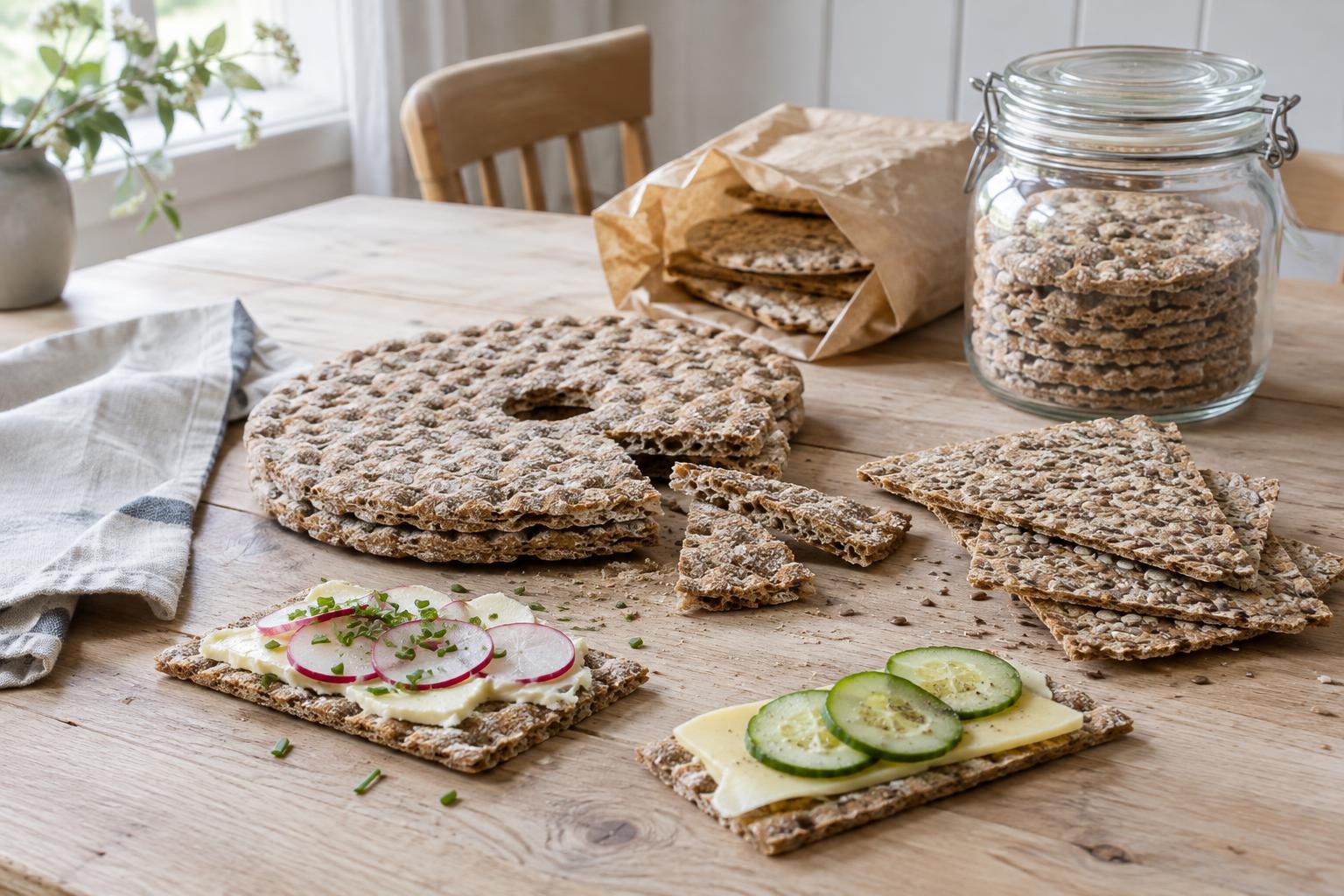
Shape changes how a piece works at the table. Large round loaves, sometimes made with a hole in the centre, can be broken into portions. Rectangles are convenient for everyday sandwiches, while small or thin pieces suit a snack plate. A thicker piece stands up well to a substantial topping; a delicate one is pleasant with a light spread. If you are choosing for someone with a dietary restriction, check the ingredient and allergen information rather than assuming that all crispbread is the same. Rye and wheat varieties, for example, contain gluten.
Toppings that suit the crunch
For an everyday combination, start with butter and cheese. Sliced cucumber or tomato adds freshness, though juicy toppings are best added just before eating. A boiled egg, sliced or mashed with a little seasoning, makes a more filling snack. Soft cheese, herbs and radishes offer a contrast between creamy and peppery textures. There is no need for an elaborate arrangement: one or two ingredients can be enough.
Crispbread also works with stronger flavours. Try a modest amount of pickled herring with potato or egg, or pair smoked fish with a creamy spread and dill. For something sweet, use a thin layer of butter or soft cheese with jam, berries or sliced fruit. Treat these as options rather than rules about a Swedish meal. A useful way to build a topping is to choose one element that clings to the bread, such as butter or a spread, then add anything loose or moist immediately before serving.
Serving it without losing the texture
The pleasure of crispbread is the contrast between a dry base and its topping. If you are putting out a platter, keep the bread separate from wetter ingredients and let people assemble their own pieces. For a packed lunch, carry tomato, cucumber or other moist toppings in a separate container if practical. Even a sturdy rye piece will gradually soften under a damp topping.
Crispbread can also be served plain alongside soup or a meal of leftovers. Break a large round into manageable pieces rather than worrying about perfectly even portions. If a variety seems too hard or strongly flavoured on its own, try it with a soft topping before deciding it is not for you. Comparing a few styles is often the easiest way to find one that fits your usual meals.
Storage tips for an open package
Keep crispbread dry and close its packaging firmly after each use. An airtight container or a well-sealed bag can help protect it from humid air, which makes the bread lose its snap. Store it in a cool, dry cupboard away from steam, splashes and strong-smelling foods. The refrigerator is generally unnecessary and may expose an unsealed package to moisture.
Check the package for its storage guidance and best-before information, especially for varieties rich in seeds or other fats. If a piece has softened but otherwise seems sound, brief warming in a low oven may help restore some crispness; let it cool fully before judging the texture or putting it away. Discard crispbread that shows mould or has an unpleasant stale or rancid smell. Good storage is simple: keep it sealed, keep it dry and add moist toppings only when you are ready to eat.