Dairy in an everyday Swedish kitchen
Swedish dairy is easy to explore through ordinary meals rather than a formal tasting. Cheese often appears in slices on bread for breakfast or a simple supper. Cultured dairy might be poured over cereal, spooned into a bowl with berries, or stirred into a cool sauce for potatoes and fish. These habits vary between households, but they offer a useful starting point for understanding what the products are for.
The names on a dairy shelf can be more helpful than the packaging. Ost means cheese; a cheese marked lagrad has been aged, although its exact flavor will depend on the variety and producer. Naturell usually identifies an unflavored product, while flavored versions may be sweetened. If you are comparing products, check the label for texture and intended use as well as the name: two tubs that look similar may behave quite differently in a recipe.
Cheeses for bread, snacks and the table
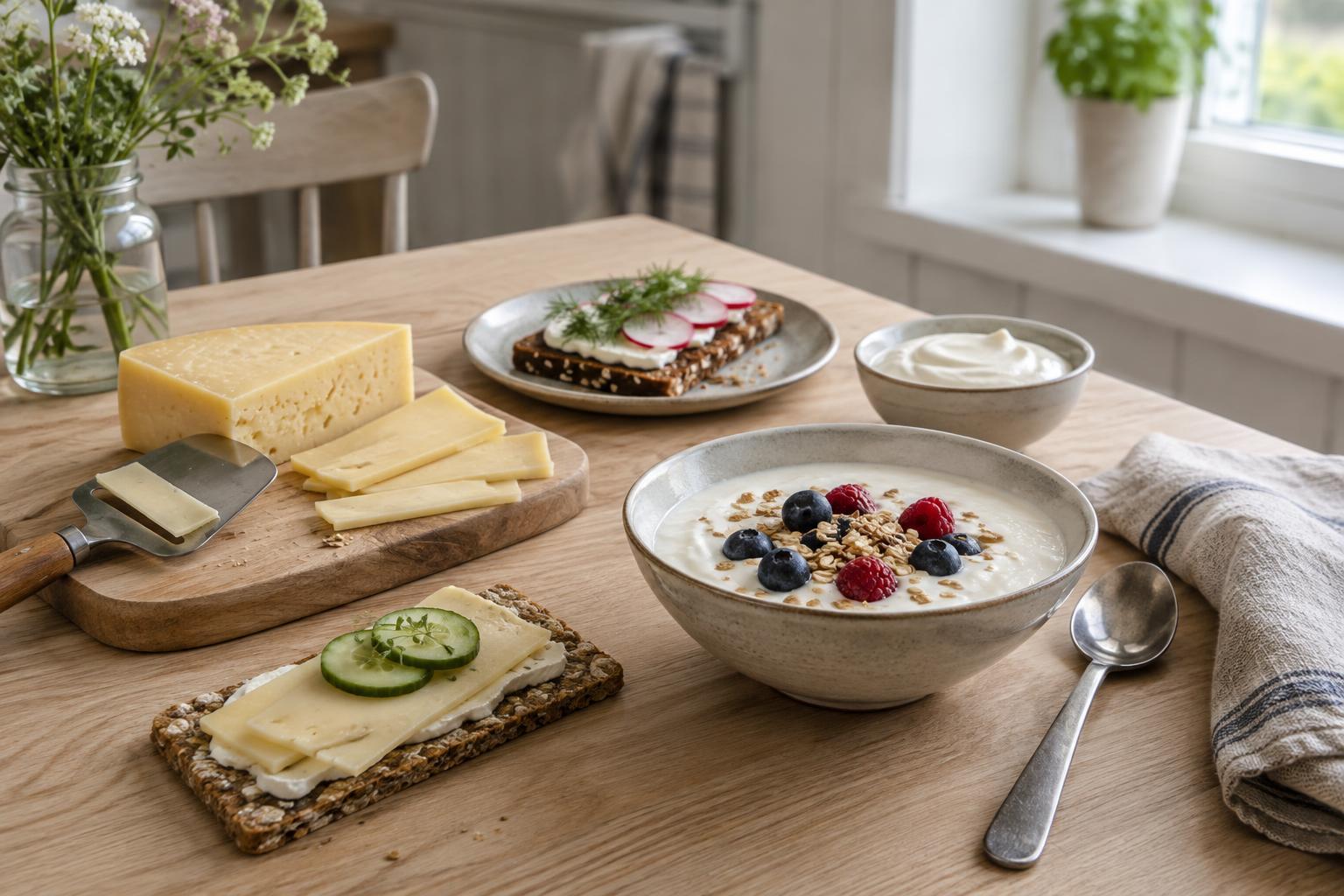
Hushållsost is a good introduction to Swedish everyday cheese. Generally mild and supple, it is comfortable on a sandwich and does not compete with cucumber, tomato or crispbread. Prästost tends to have a fuller, tangier character, particularly when aged. Herrgårdsost is often gentle and nutty, while Grevé is known for its rounded flavor and characteristic holes. Flavor and firmness can differ across versions, so a familiar name is a guide rather than a guarantee.
Västerbottensost occupies a different place in the kitchen. Its pronounced, savory flavor makes a little go a long way, and it is often grated into a pie or served in small pieces. If you are new to Swedish cheeses, try a mild sandwich cheese alongside a more mature one. Taste each plain first, then with bread or fruit. The contrast makes it easier to notice whether you prefer creamy, nutty or sharper flavors.
A cheese slicer is useful for making thin, even slices from a firm block. Thin slices suit open-faced sandwiches, where the bread and toppings remain visible. Keep cheese wrapped in the refrigerator, and take out only what you plan to serve; a brief rest at room temperature can make its flavor easier to appreciate.
Filmjölk and other cultured breakfast favorites
Filmjölk, often called fil, is a cultured milk with a mild sourness and a texture thicker than milk but usually looser than yogurt. It is commonly eaten cold from a bowl with cereal, muesli, berries or fruit. Plain fil lets you control the sweetness yourself. Products sold under the same broad name can vary in thickness and tang, making it worth trying more than one if the first is not to your taste.
Långfil is a more distinctive cultured milk associated with northern Swedish food traditions. It has a stretchy, almost elastic texture that can surprise someone expecting yogurt. That texture is part of its appeal, not a sign that it has gone wrong. Pour or spoon a small amount first if you are curious; served simply with a topping you know, its character is easier to understand.
Kvarg is another common sight in the chilled aisle. Thick and spoonable, it is a fresh cultured dairy product often eaten with fruit or used in simple desserts and spreads. Some versions are plain, while others are flavored. It is not a direct substitute for pourable filmjölk, but it works when you want a firmer base for a bowl or dip.
Sour cream, sauces and cooking choices
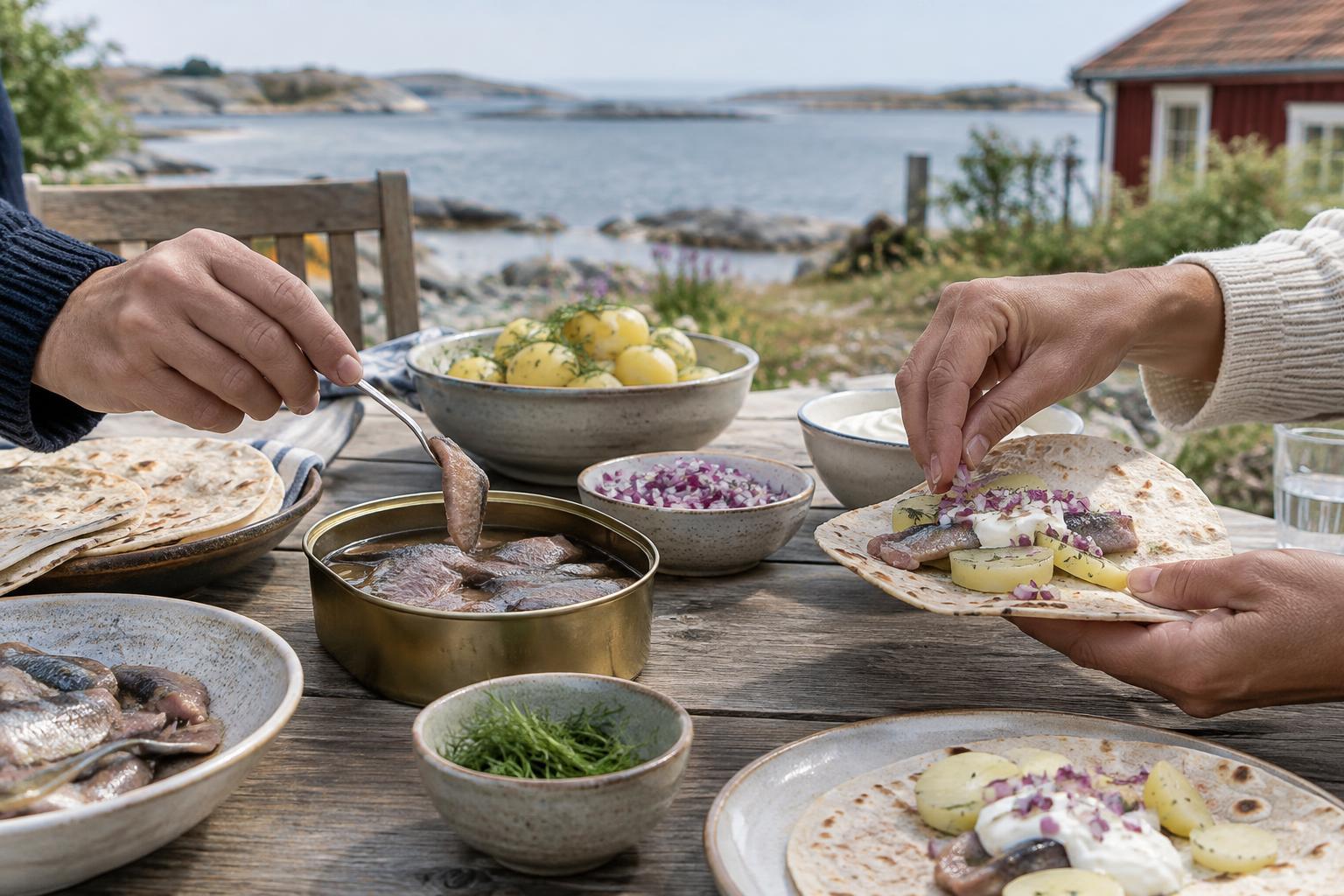
Gräddfil is a cultured cream with a fresh, sour taste. It is well suited to cold sauces: combine it with chopped herbs, a little mustard or finely cut onion, then serve it with boiled potatoes, vegetables or fish. It also makes a simple topping for a baked potato. Its appeal is the cool contrast it brings to warm food.
For a hot sauce, crème fraîche is often a more forgiving choice than gräddfil, which may separate when heated strongly. Stirring either product into a dish near the end can help preserve its texture, but follow the needs of the particular recipe. Fil and kvarg have their own uses too: fil belongs most naturally in cold bowls and dressings, while kvarg can give a cold dip more body. These are practical distinctions, not strict rules about what belongs in a Swedish kitchen.
How to explore without buying everything at once
Start with one mild cheese, one stronger cheese and one plain cultured dairy product. Make an open-faced sandwich, then try the cultured dairy with berries or unsweetened cereal. On another day, use gräddfil in a quick herb sauce. Small comparisons reveal more than a crowded tasting plate, and they make it easier to find products you would actually use again.
Sweden Culture Guide is an independent cultural magazine, not a consulate or government service. Here, the aim is simply to make everyday food traditions easier to recognize and enjoy. There is no single correct Swedish breakfast or cheese plate: the most useful guide is the one that helps you choose something appealing from the shelf and give it a place in an ordinary meal.