Three berries, three kinds of sweetness
Berries give many Swedish desserts their color and sharpness. Blueberries are soft and gently sweet, cloudberries are fragrant and tart, and lingonberries have a brisk acidity that can cut through rich cream or buttery pastry. You do not need a complicated recipe to enjoy them: a warm fruit sauce, a spoonful of jam or a handful of berries can change a simple bowl of ice cream or porridge.
This guide comes from Sweden Culture Guide, an independent magazine about Swedish life and culture, not a consulate or government service. Its focus here is the pleasure of making dessert—and choosing a berry that suits what you want to make.
Blueberries: the easy choice for baking
In Sweden, the berries called blåbär often come from low-growing forest plants. They may be smaller and darker throughout than the cultivated blueberries found in many shops. Both can make good desserts, although their flavor and the amount of juice they release can differ. Taste a few before deciding how much sugar to add.
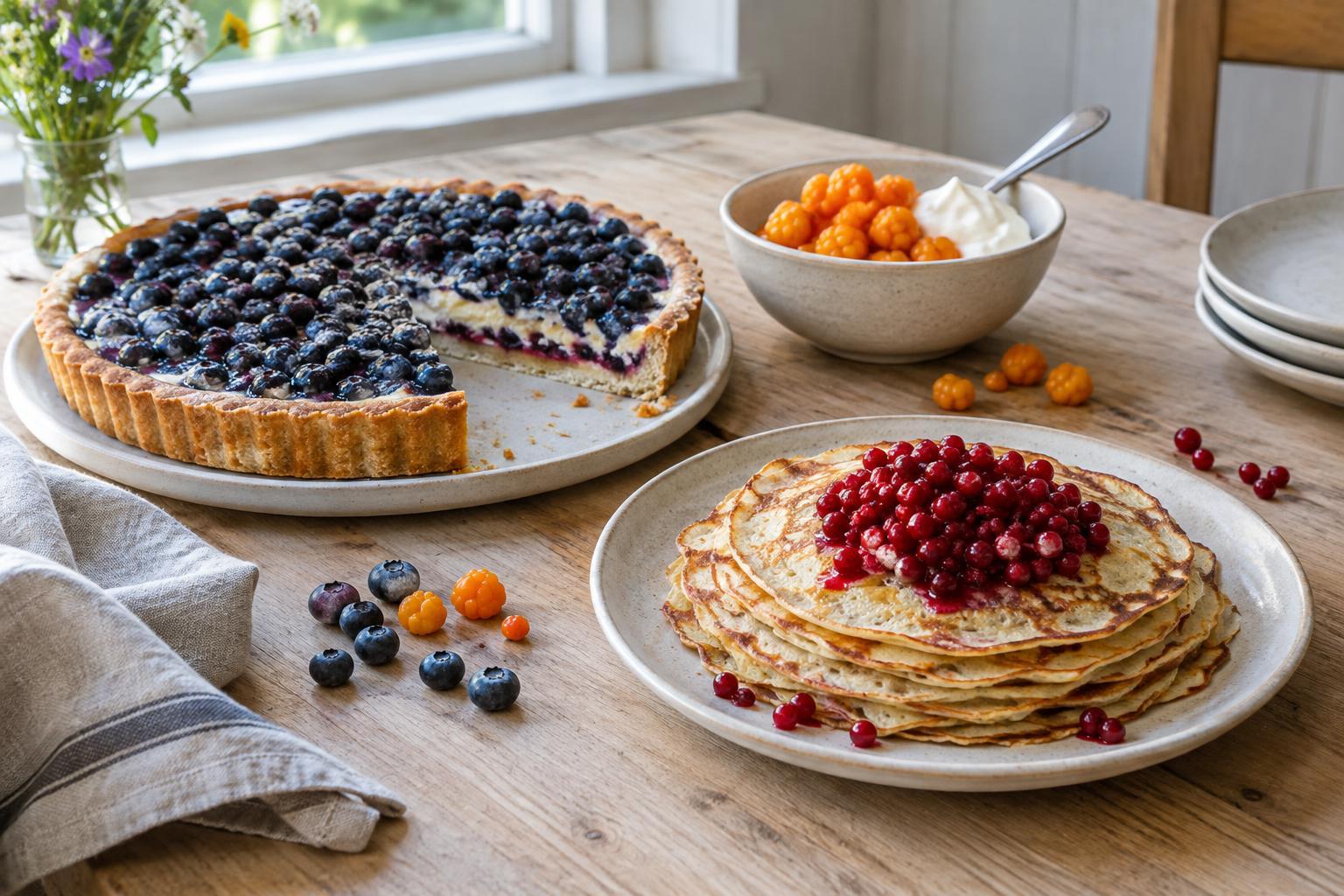
Blueberries work especially well in a crumb-topped pie. Put the berries in a baking dish with a little sugar and, if they are very juicy, a small amount of starch to help thicken the filling. Scatter a mixture of butter, flour, sugar and oats over the top, then bake until the fruit bubbles and the topping is golden. Let it rest briefly before serving so the juices are less runny.
For something quicker, warm blueberries in a saucepan just until they soften. Spoon them over pancakes, waffles or thick yogurt. Frozen berries are useful for both ideas; there is usually no need to thaw them before baking, though the filling may need more time in the oven.
Cloudberries: let their flavor lead
Cloudberries have an amber color and a distinctive flavor that can be both tart and floral. Fresh ones may be difficult to find outside the places where they grow, so cloudberry jam or preserves are often the most practical starting point. Check how sweet your preserves are before adding anything else.
A familiar way to serve cloudberries is with whipped cream. Fold a small amount of jam into lightly whipped cream, leaving a few streaks rather than mixing it completely smooth. Serve it in glasses, with crisp biscuits on the side, or spoon it over a plain sponge cake. The cream softens the berry’s acidity without hiding its character.
Cloudberries also suit warm desserts. Gently heat the preserves and serve a modest spoonful over vanilla ice cream or a simple baked pancake. If the jam seems very thick, loosen it with a little water as it warms. Avoid boiling it for a long time: the point is to make a pourable topping, not to cook away its delicate flavor.
Lingonberries: a bright contrast to rich desserts
Lingonberries are small, red and noticeably tart. They are often associated with savory Swedish meals, but that same sharpness makes them valuable in desserts. A little lingonberry jam can balance cheesecake, rice pudding or a slice of buttery pound cake. Start with a small spoonful; its flavor can stand out more than you expect.
For a simple layered dessert, alternate thick yogurt or softly whipped cream with crushed oat biscuits and lingonberry jam. Keep some jam near the top so its color remains visible. If your jam is sweet, use an unsweetened dairy layer. If it is quite tart, a lightly sweetened cream may give you a better balance.
Lingonberries can also be stirred into a cooked berry sauce, either alone or alongside sweeter blueberries. Add sugar gradually and taste once the berries have softened. A sauce that seems sharply tart on its own may taste just right when served with custard or vanilla ice cream.
Build a dessert around balance
A useful way to choose among these berries is to think about the base of your dessert. Blueberries can fill a pie or cake because their mild flavor is easy to eat by the spoonful. Cloudberries are often best as a distinct layer or topping, where their aroma is noticeable. Lingonberries bring contrast to creamy, sweet or buttery components.
Fresh berries need gentle handling; rinse them when you are ready to use them and discard any that look spoiled. For packaged frozen berries or preserves, follow the storage and preparation directions on the label. Then keep the dessert simple. One well-chosen berry, paired with cream, pastry or a plain pancake, is enough to show why berry flavors have such a comfortable place at the Swedish table.