Why June 6 matters
Sweden’s National Day, known in Swedish as Sveriges nationaldag, falls on June 6. The date connects two moments in the country’s history. On June 6, 1523, Gustav Vasa was elected king, an event commonly associated with Sweden’s emergence from the Kalmar Union. On the same date in 1809, Sweden adopted a new Instrument of Government, part of a constitutional shift that changed how the country was governed.
Neither event gives the day the character of an independence celebration built around a single declaration. Instead, National Day gathers several ideas about Sweden’s history into one occasion. It offers a chance to reflect on the country’s past, enjoy its shared symbols and take part in a community event—or simply spend a day together outdoors.
From Flag Day to a public holiday
June 6 was observed as Swedish Flag Day before it became National Day. That earlier name helps explain why flags remain so visible in celebrations. In 1983, the date received the designation of Sweden’s National Day. It became a public holiday in 2005, giving more people an opportunity to attend local events or spend time with family and friends.
National Day does not have the same established set of home rituals as some other Swedish holidays. There is no single meal everyone is expected to prepare and no prescribed way to celebrate. That flexibility is part of the day’s character: a town ceremony, a picnic and a quiet afternoon at home can all fit comfortably within it.
Flags, colours and traditional dress
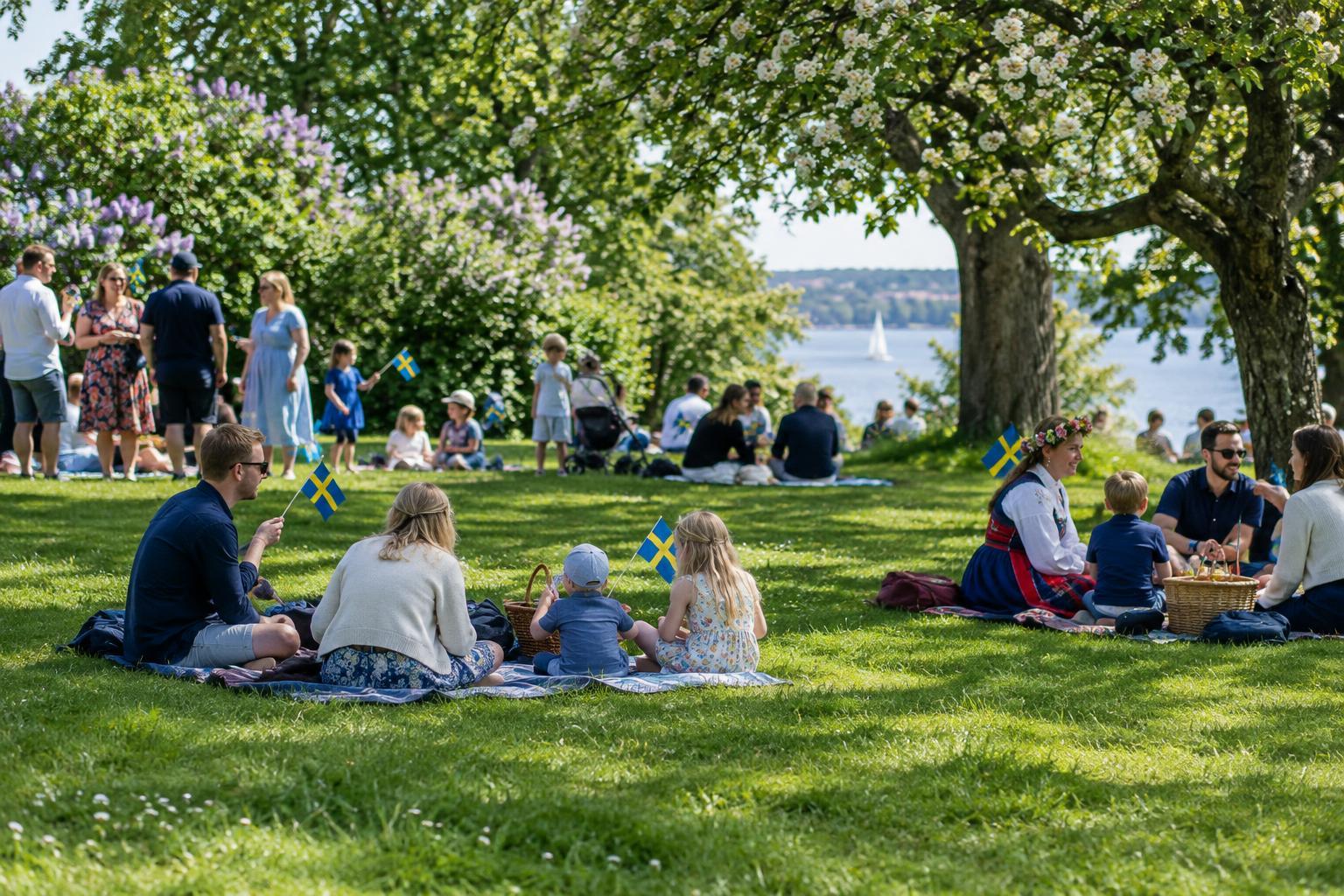
The blue-and-yellow Swedish flag is the most recognisable symbol of National Day. You may see it raised outside homes and public buildings, carried in parades or displayed as a small table decoration. Its colours have long been associated with Swedish heraldry, and on June 6 they provide a simple visual link between celebrations in different parts of the country.
Traditional clothing sometimes appears at public gatherings, too. Folk costumes vary by region and can reflect local patterns, materials and customs. Sweden also has a national costume in blue and yellow. Wearing either is a choice, not a requirement. Most people who attend celebrations dress as they would for a summer outing, with an extra layer ready if the weather changes.
What celebrations look like today
Municipalities and community groups may arrange flag-raising ceremonies, music, speeches and activities for children. Some places hold welcoming ceremonies for new Swedish citizens, making the day an occasion to recognise people who have become part of the country. Larger public celebrations can draw crowds, while smaller towns may gather in a park or around a local stage.
Away from organised events, the mood is often informal. Friends might share coffee and cake, families might take a walk, and neighbours might meet for an outdoor meal. Early June brings long daylight hours, but not guaranteed sunshine, so plans often leave room for a change in weather. The point is less to follow a fixed programme than to enjoy the day in a way that feels welcoming.
A day with room for different meanings
For some people, National Day is a moment of pride in Swedish history and culture. For others, it is a chance to think about what belonging means in a country shaped by many backgrounds and experiences. Visitors can join public celebrations without knowing every song or custom; watching, listening and asking thoughtful questions are good ways to take part.
If you want to mark June 6, start simply: look for a local public event, notice the flags, or share a meal with someone. Sweden Culture Guide is an independent magazine about Swedish life, not a consulate or government service. Here, the value of National Day lies in understanding the stories and everyday choices that give the occasion its meaning.