Start with the signs where you live
Sorting waste is a familiar part of everyday life in Sweden, but the setup is not identical in every building. An apartment block may have a shared waste room, while a house may have outdoor bins or use nearby collection points. The labels on your own bins are the best place to start. This independent culture guide is not a government service; for a local sorting rule, use the information provided by your municipality or building manager.
A helpful first distinction is between packaging and the things that came inside it. A plastic food tub is packaging, for example, but a broken plastic toothbrush is not. Paper packaging is likewise a different category from newspapers and other printed paper. Making these distinctions early prevents many common mistakes.
Food waste and residual waste
A bin marked matavfall is for food waste. Typical examples include vegetable peels, leftovers, coffee grounds and eggshells. You may be given a particular paper bag or liner to use; follow the instructions for your building, especially if they specify what can go into the bag. Letting wet scraps drain before putting them in the bin can make the bag easier to handle.
The residual-waste bin may be labelled restavfall or brännbart. It is for ordinary household rubbish that does not belong in a separate collection category, such as some used hygiene products and heavily soiled materials. It is not a catch-all for batteries, electronics or hazardous products. If you are unsure about an unusual item, check locally rather than putting it in the nearest bin.
The main packaging bins
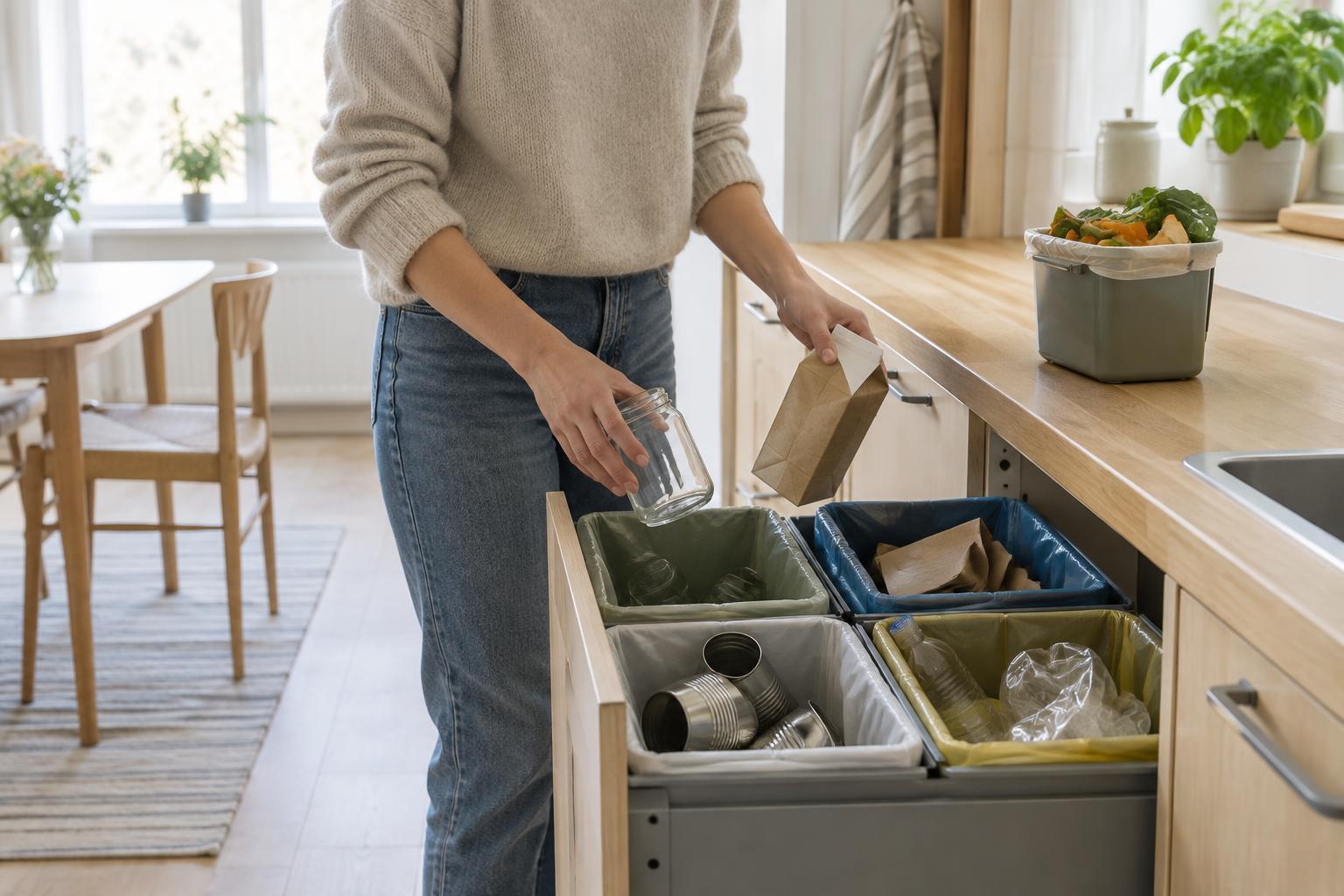
Packaging is commonly separated into paper, plastic, metal and glass. Paper packaging, often labelled pappersförpackningar, includes cardboard boxes, paper bags and empty drink cartons. Flattening boxes saves space. Plastic packaging, or plastförpackningar, includes many wrappers, bags, bottles and tubs. Metal packaging, or metallförpackningar, includes food tins, foil trays and metal lids. Empty packaging is generally easier to sort and handle; it usually needs only to be scraped or lightly rinsed, rather than washed thoroughly.
Glass packaging is often split into clear glass (ofärgat glas) and coloured glass (färgat glas). Bottles and jars belong in the appropriate glass-packaging container, but drinking glasses, ceramics and mirrors do not. Printed paper may have its own container marked tidningar, often for newspapers, magazines and similar paper. Labels and accepted items can vary, so read the examples posted at the collection point.
You may hear people refer to an återvinningsstation, a collection point often used for packaging, or an återvinningscentral, a larger recycling centre for items that do not fit the everyday bins. The names sound similar, but the places serve different purposes. Check what your building collects before carrying bags elsewhere.
Deposit containers and items needing special care
Many drink cans and plastic bottles carry a Swedish deposit marking called pant. These can usually be returned through a machine at a participating shop rather than placed in a packaging bin. Check the label: not every bottle or can is part of the deposit system. Keeping deposit containers in a separate bag at home makes returns simpler.
Batteries, light bulbs and small electronics need their own collection routes. Larger electronics, chemicals and paint may need to go to a recycling centre or another designated collection point. Medicines should not be put in household rubbish or poured down a drain; ask a pharmacy how to return unwanted medicines. The exact collection options near you depend on where you live, so consult local guidance before setting out with a difficult item.
Build a routine that fits your kitchen
You do not need a large kitchen to sort well. A small food-waste container, a bag for dry packaging and a separate spot for deposit bottles can cover much of the daily work. Divide the packaging into its final categories when you take it to the waste room or collection point. Keep batteries and other special items somewhere safe and visible enough that you remember to take them to the right place.
When an item is confusing, first ask whether it is packaging, a deposit container, food waste or something requiring special collection. Then check the bin label. Swedish sorting systems can feel detailed at first, but a few repeatable habits make the choices easier. Following the instructions at your own collection point matters more than memorising a universal list.