What is a semla?
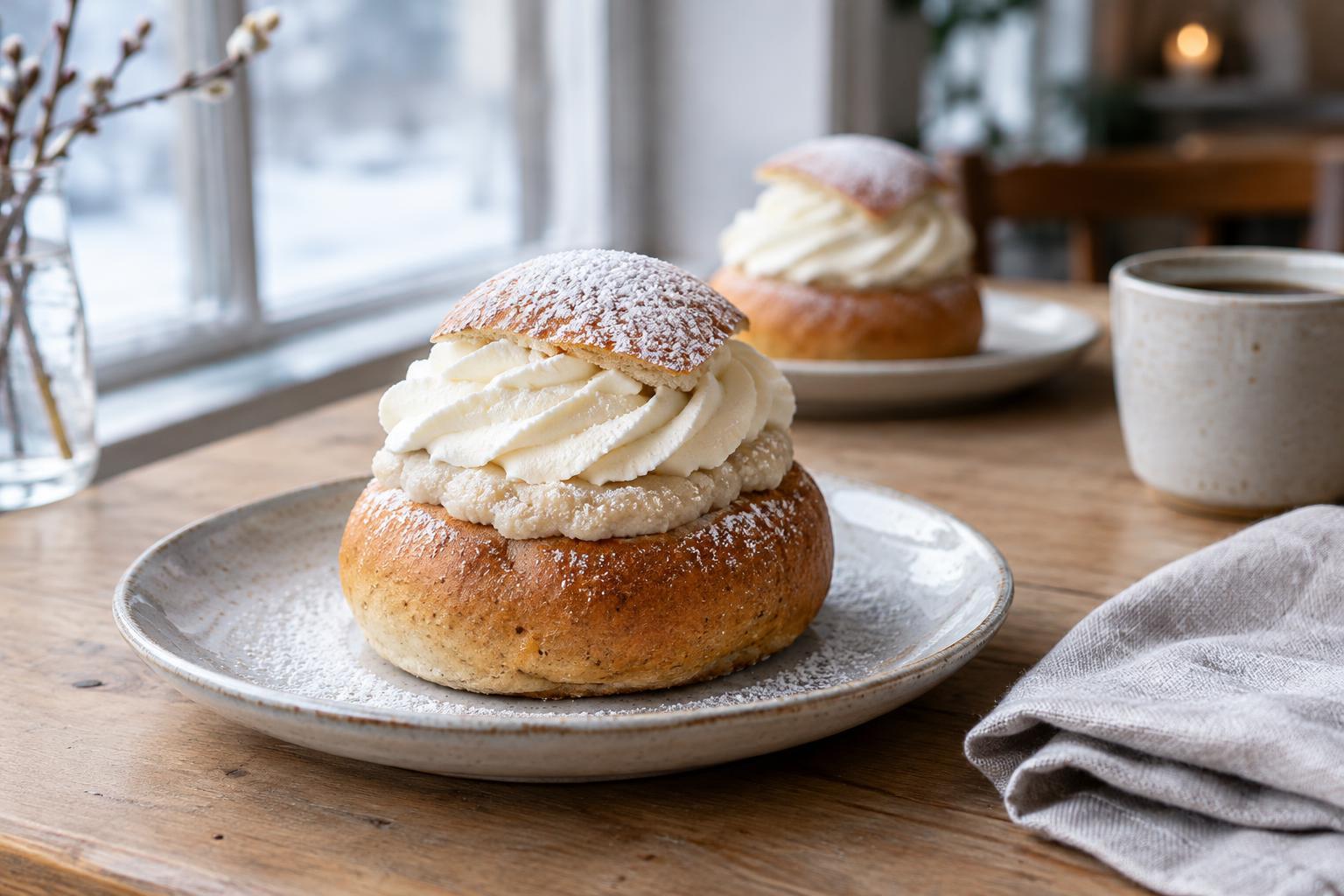
A semla is a soft wheat bun flavored with cardamom, split open and filled with almond paste and whipped cream. Its small top is set back on the cream like a lid, often under a dusting of powdered sugar. The combination is rich but not complicated: fragrant bread, sweet almonds and airy cream. In Swedish, the plural is semlor.
The bun is part of what makes a semla different from a cream-filled pastry made with cake or choux dough. A good one is tender enough to eat with a spoon but sturdy enough to hold its filling. The almond layer may be smooth or slightly textured, depending on how it is made. Some bakers mix crumbs from the bun into the filling, giving it a softer consistency and making use of the bread removed to create space for the cream.
Why does it have a season?
Semlor are closely associated with Fettisdagen, the Swedish name for Shrove Tuesday. Traditionally, this was a day for richer food before the fasting period of Lent. The name is often translated as “Fat Tuesday.” For many people today, buying or baking a semla is a seasonal pleasure rather than a religious observance.
You may see semlor before Fettisdagen and for some time afterward. Exactly when a bakery starts selling them varies, so there is no single date that marks the first acceptable semla of the year. The anticipation is part of the custom: a pastry available for a limited stretch can feel different from an everyday bun. Friends or coworkers might share semlor over coffee, while others pick one up simply because they have spotted it in a bakery window.
The classic layers, from bun to lid
The usual starting point is an enriched wheat dough seasoned with cardamom. After baking and cooling, the bun is cut across its upper third. Some of the soft center may be scooped out before the almond filling goes in. Whipped cream is then piped or spooned over the filling, and the cut top is placed above it. A final shake of powdered sugar gives the semla its familiar appearance.
Those layers offer a useful guide when choosing one. If you like a strong almond flavor, look for a filling that is generous without overwhelming the bun. If you prefer a lighter bite, the balance between cream and bread may matter more. Bakeries and home bakers make different choices about sweetness, size and texture. Variations exist too, but the cardamom bun, almond filling and cream remain the clearest picture of a classic semla.
How to eat one
There is no required technique. You can lift off the lid and use it to scoop up some cream, then eat the rest with your hands. A spoon is useful when the filling is plentiful or the bun is especially soft. Because whipped cream is best kept cool, a filled semla is generally more enjoyable fresh than after a long spell at room temperature.
Another way to serve a semla is in a bowl of warm milk, a preparation known as hetvägg. The warmth softens the bun and turns the pastry into something closer to a dessert eaten with a spoon. Not everyone prefers it this way: if you want to notice the contrast between soft bread and cool cream, try your first semla on its own. Coffee or tea makes an easy accompaniment.
Bringing the tradition home
To make semlor at home, bake cardamom buns and let them cool completely before adding the filling. Cut a lid from each bun, make a small hollow, add almond paste and top it with softly whipped cream. Assemble them near serving time so the cream holds its shape and the bread does not become too damp. For a smaller treat, make modestly sized buns rather than changing the basic layers.
Almond paste and wheat are central to the classic version, and the cream contains dairy, so check ingredients if you are serving someone with dietary restrictions. Whether you bake semlor or buy them, the tradition is easy to join without knowing every detail of its history. Sweden Culture Guide is an independent culture magazine, not a consulate or government service; this guide is simply an invitation to understand and enjoy a much-loved seasonal pastry.