More than a place to borrow books
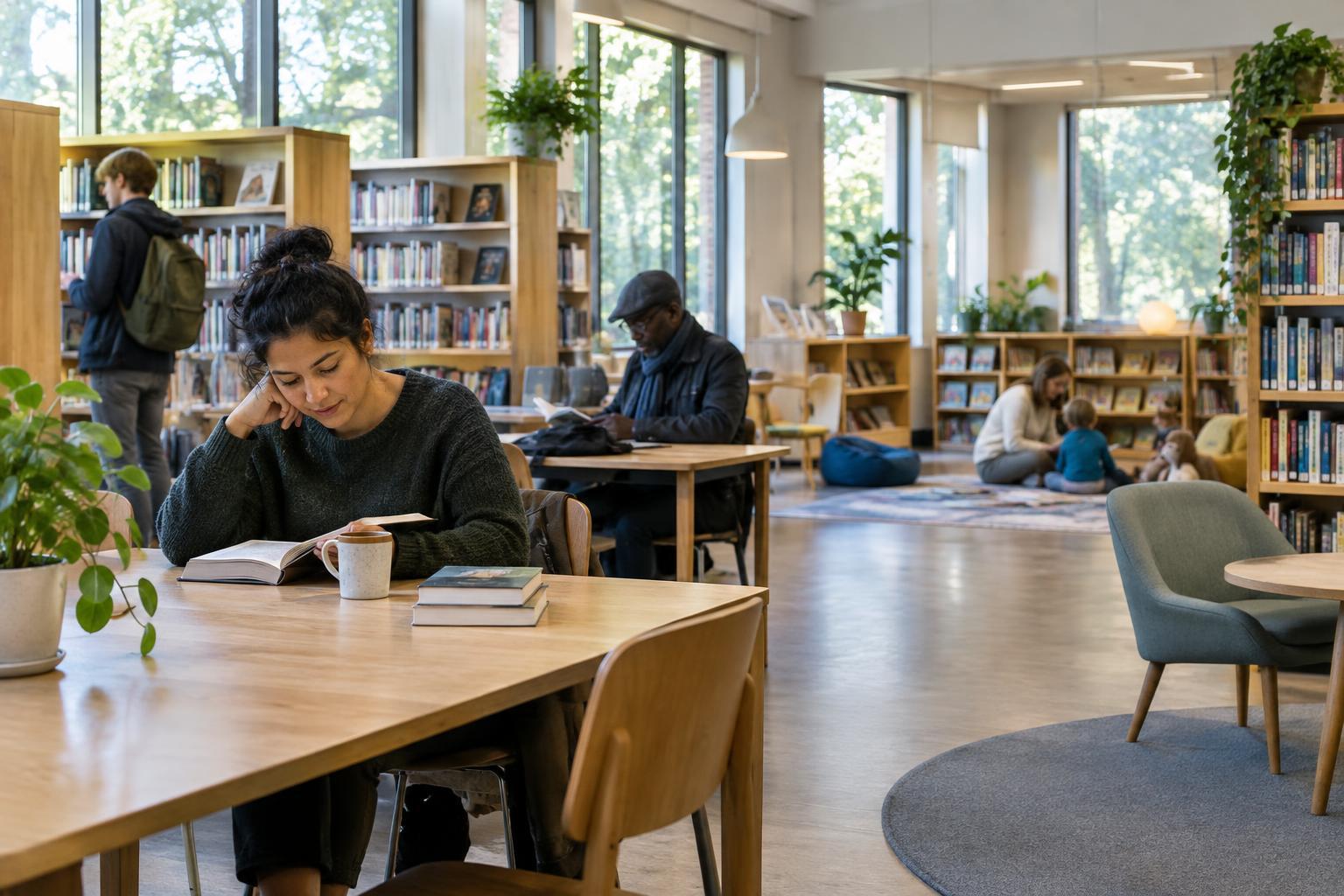
A public library can be one of the easiest places to get a feel for everyday life in Sweden. People come to find a novel, help a child choose a picture book, study quietly or spend a little time indoors. Alongside the shelves, many libraries have seating, newspapers and space for small exhibitions or events. What is available depends on the branch, but the basic idea is familiar: reading and learning should have a place in community life.
Libraries also offer something less visible than a book collection. They are shared spaces where a person can linger without being expected to shop or order a drink. That makes them useful to people at different stages of life, from families with young children to students, newcomers and older residents. A library is not silent everywhere, all the time; it often balances conversation and activity with areas intended for concentration.
How libraries make room for readers
Swedish libraries typically serve readers with different interests, ages and levels of confidence. A children’s area may invite families to browse together, while other shelves offer fiction, practical guides and books on local history. Many libraries also carry material in languages other than Swedish. The selection varies, so a small branch may look quite different from a larger city library.
Reading culture grows through more than lending. Storytimes, book discussions and author events, where offered, give people a reason to encounter books together. Displays can draw attention to a theme or introduce a writer someone might not otherwise have picked up. Even a simple recommendation from a librarian can make a large collection feel easier to navigate. These everyday encounters help explain why libraries matter to readers who are still finding their tastes, not only to those who already know what they want.
A meeting place with many kinds of activity
Libraries can act as modest cultural venues as well as reading rooms. Depending on the location, a visitor might find a talk, a craft activity, a small exhibition or a gathering aimed at a particular age group. These activities are not identical across Sweden. Local needs, staff, space and resources shape what a branch can offer.
The community role also appears in quieter ways. Someone may use a desk to work, meet a friend before an event or browse while waiting for a child. People can occupy the same public space without having to participate in the same activity. That mixture is part of a library’s character: it can be lively in one corner and calm in another. Respecting signs, staff guidance and other visitors’ need for space helps keep it welcoming for everyone.
What to expect on a visit
You do not usually need a plan to enjoy a library. Step inside, look for a map or signs, and browse the shelves or public areas. If you want to borrow materials, ask staff what registration and identification that library requires; rules can differ by municipality and by type of material. Opening hours, event schedules and available services also vary, so it is worth checking the individual library before making a special trip.
If you are visiting with children, a library can be a relaxed stop rather than a formal outing. Let them explore the books intended for their age, then check which areas welcome conversation and which are meant to be quiet. If you are learning Swedish, browsing a range of books can help you find language that suits your level, though the most useful collection will depend on the branch. Asking a librarian where to start is often simpler than trying to locate everything alone.
Why this everyday institution is worth noticing
A library visit reveals a side of Swedish culture that a landmark cannot always show. It brings together an interest in books, a practical approach to shared resources and the ordinary pleasure of having somewhere to go. No single branch represents every town or neighborhood, but each reflects something of the community around it through its collection, activities and visitors.
For a traveler or a new resident, the best way to understand that role is to visit respectfully and pay attention to how the space is used. Browse a local display, sit down with a book or see what events are advertised. This article is part of an independent culture guide, not a consulate or government service; its aim is to help you notice the cultural value of a familiar public place.