A familiar ingredient with many roles
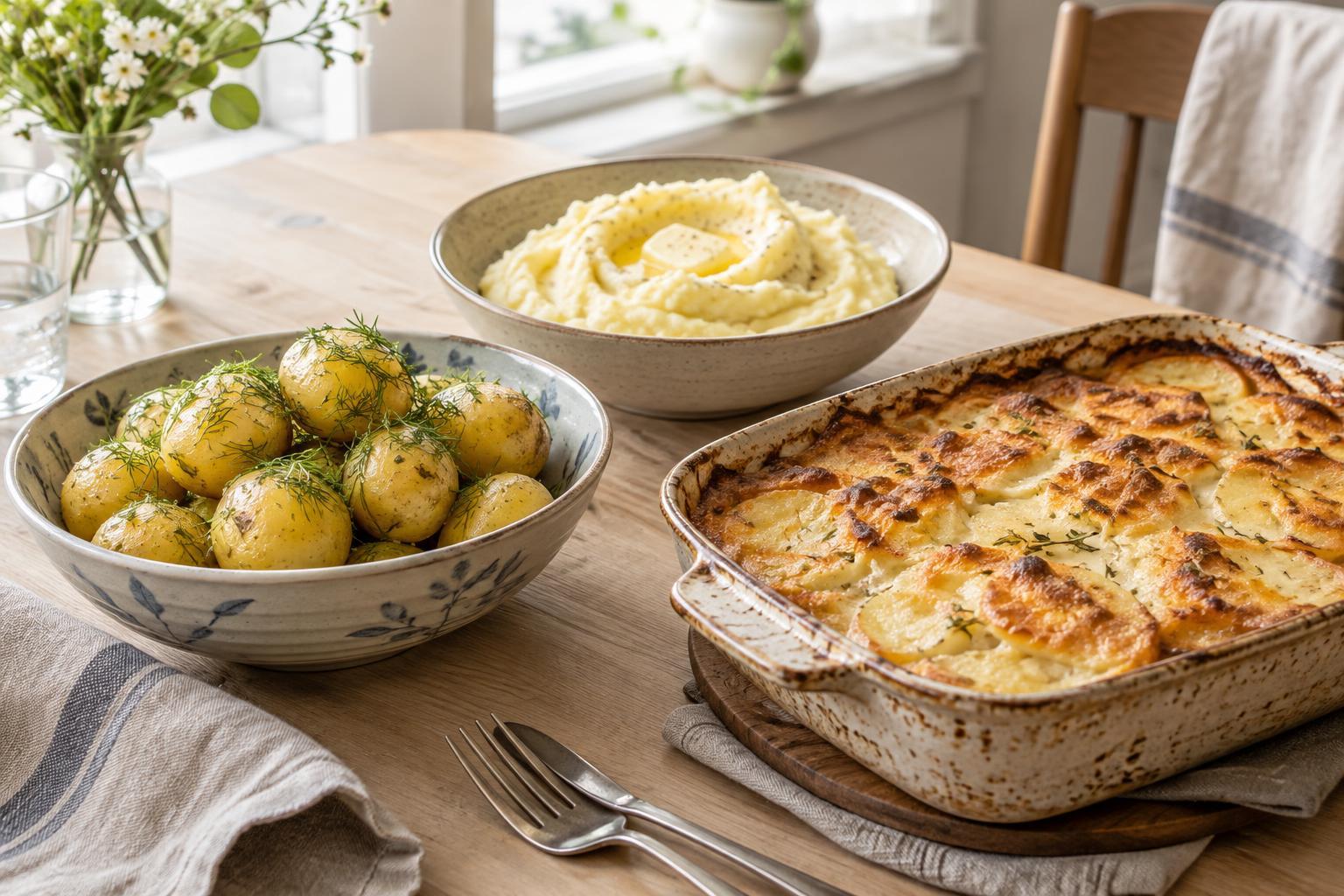
Potatoes appear across Swedish home cooking, but their role changes with the meal. Small boiled potatoes can sit beside fish and dill; a spoonful of mash makes a simple supper feel comforting; and a bubbling gratin can anchor a shared table. None requires an elaborate recipe. The difference lies largely in the potato you choose, how you cook it and what you serve alongside it.
This guide comes from Sweden Culture Guide, an independent culture magazine, not a consulate or government service. It focuses on three everyday culinary approaches rather than a single definitive Swedish recipe. Families and cooks have their own preferences, especially about whether to peel potatoes, how smooth to make mash and what belongs in a gratin.
Boiled potatoes: simple, seasonal and adaptable
Boiled potatoes are a quiet staple of many Swedish meals. Firm, waxy potatoes hold their shape well, making them useful beside fish, meatballs or a vegetable dish with sauce. To cook them, choose potatoes of similar size, cover them with water, add a little salt and simmer gently until a knife slips through the center. Drain them promptly so they do not become waterlogged. A little butter and chopped dill are often enough to finish them.
New potatoes, called färskpotatis, are especially associated with early summer eating. Their thin skins can usually be scrubbed rather than peeled, and their delicate flavor suits dill, butter and cool accompaniments. At a summer table they might appear with pickled herring, but they are just as useful with eggs, beans or grilled vegetables. If the potatoes are larger, cut them into even pieces before boiling so they finish cooking at roughly the same time.
Mashed potatoes: warmth and texture
Potatismos, or mashed potatoes, turns the same ingredient into a soft base for a meal. Floury potatoes tend to break down readily and produce a lighter mash than firm, waxy varieties. Peel and cut them into even pieces, simmer until tender, then drain thoroughly. Let the potatoes stand in the warm pan briefly to release excess moisture before mashing.
Warm milk and butter can be added a little at a time until the texture suits you. Season with salt, and keep the mash slightly rustic or work it smoother according to preference. Avoid prolonged beating in a food processor: overworking potatoes can make them gluey. Mash pairs well with meatballs and gravy, but it also works beneath sautéed mushrooms or alongside cooked greens. Its appeal is practical as much as comforting: it absorbs sauces and can bring several modest components together on one plate.
Potato gratin: a dish for the oven and the table
Potatisgratäng is a familiar name for potato gratin: thinly sliced potatoes baked in a creamy mixture until tender, with a browned top. It is often served when a meal calls for something that can be brought to the table in one dish. Recipes vary. Some cooks favor garlic or onion; others keep the seasoning restrained. Cheese may be added, but a satisfying gratin does not depend on it.
For an approachable version, slice potatoes thinly and evenly, then layer them in a buttered baking dish with salt and any aromatics you like. Pour over enough cream, or a mixture of cream and milk, to surround the slices without completely submerging them. Bake until a knife passes through the center easily and the top is golden. If the surface colors before the potatoes soften, cover the dish loosely and continue baking. Letting it rest briefly before serving helps the creamy layers settle.
Choosing the right potato for the meal
The easiest way to improve any of these dishes is to match the potato to the method. Choose firm potatoes when you want neat boiled potatoes that stay intact. Reach for floury ones when the goal is a fluffy mash. For gratin, an all-purpose potato is a forgiving choice: it should soften in the oven while leaving the dish with some structure. Shop labels may use different terms, so treat these as guides rather than strict rules.
Potatoes also make it easy to build a meal around what is already available. Boiled potatoes can be cooled for a later salad, while leftover mash can be warmed gently with a splash of milk. Gratin is particularly convenient when other parts of dinner need attention, since most of its cooking happens in the oven. Across all three preparations, the underlying idea is the same: give a familiar ingredient a texture that suits the occasion, then let the rest of the plate remain simple.