Start with the person, not a rule
There is no single Swedish way to celebrate a birthday. One person may invite friends for cake and coffee; another may plan a dinner, take the day off or prefer no fuss at all. Age, family habits and personal taste matter more than any fixed script. If you are unsure what someone would enjoy, a warm greeting is a better starting point than a surprise.
A straightforward “Happy birthday!” works well. If you know some Swedish, “Grattis på födelsedagen!” means the same thing. A message, a call or a greeting in person can all be appropriate, depending on how close you are. You do not need to turn a casual acquaintance’s birthday into a public occasion, especially if they have not mentioned it themselves.
Sweden Culture Guide is an independent culture magazine, not a consulate or government service. This guide describes everyday social choices rather than official rules.
Responding to an invitation
Birthday invitations range from an informal suggestion to drop by for coffee to a planned meal with a set start time. Read the invitation for practical details: when to arrive, whether food will be served and whether guests are being asked to bring anything. If the plan is unclear, it is fine to ask. For example, “Would you like me to bring something?” is more useful than guessing.
Reply when you reasonably can, particularly if the host is preparing food or arranging seats. If you accept, arrive at the agreed time or let the host know if you will be late. An invitation to coffee does not necessarily mean you should stay all evening; follow the host’s cues and any end time they have given.
Do not assume you may bring a partner, children or another friend unless the invitation includes them. Equally, declining need not be elaborate. A brief thank-you and a clear answer make planning easier for the host. You can still wish the person a happy birthday without attending.
Gifts, cards and shared treats
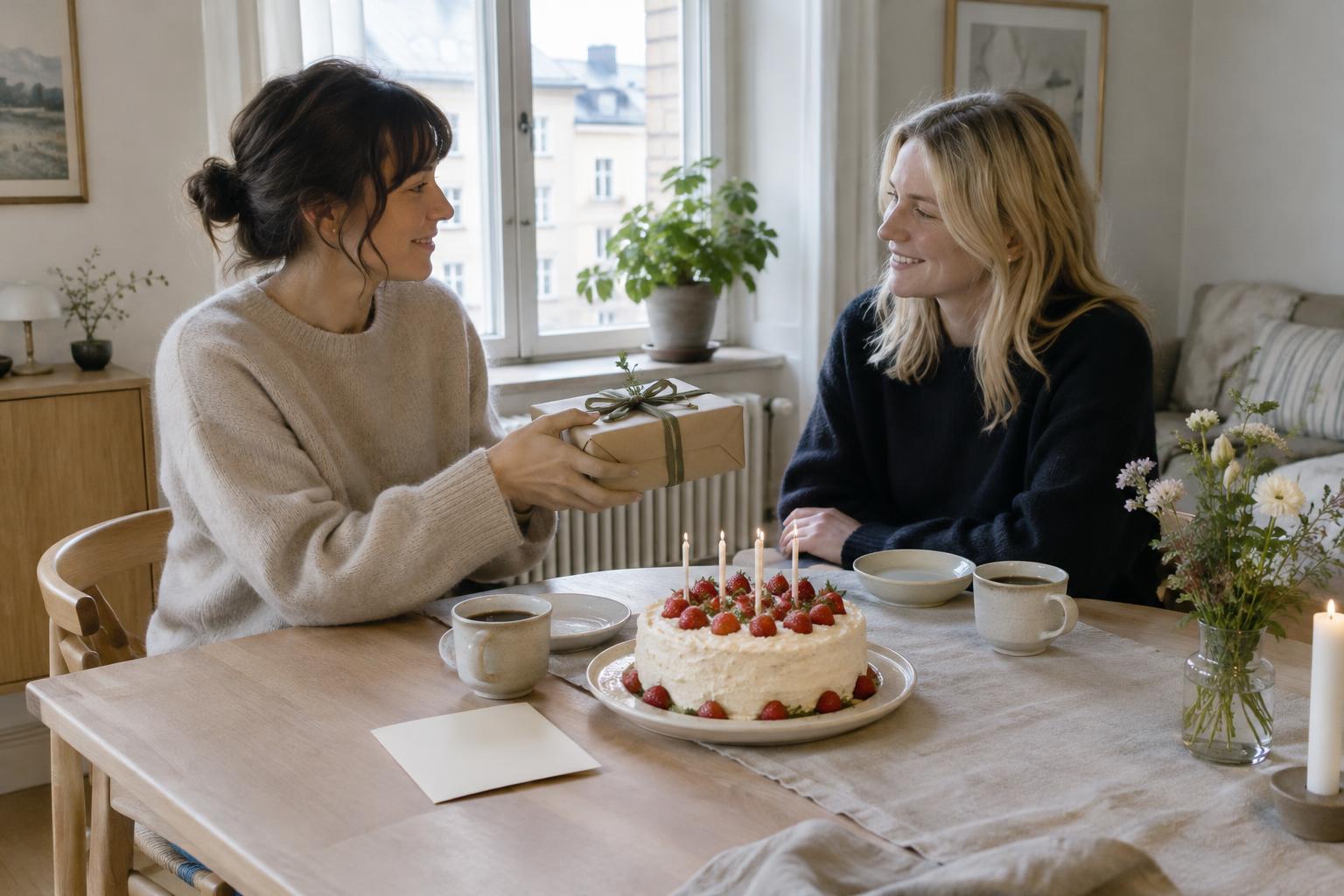
A gift can be thoughtful without being expensive. For someone you know well, their interests are a better guide than a supposed national custom. For a casual gathering, flowers, something edible or a card may feel suitable, but check the invitation first: some hosts explicitly say that gifts are unnecessary. Respecting that request is a considerate choice.
In a workplace or group of friends, people may organise a shared card or collection. Joining in is usually a personal choice, and the amount should not feel like a test of generosity. If you are organising, tell people what the plan is and make it easy to opt out discreetly. Avoid announcing who did or did not contribute.
Some people bring a cake or other treats to share on their own birthday, while others do nothing of the sort. If you are new to a workplace or social group, observe what people normally do and ask a colleague or friend if you want to take part. A kind greeting is enough when there is no established plan.
Celebrate without putting someone on the spot
Singing, speeches and surprise gatherings can be fun for someone who enjoys attention. They can also be uncomfortable for someone who prefers a quiet day. Before arranging a public celebration, check with the person or someone close to them. The aim is to make them feel appreciated, not obliged to perform gratitude in front of a room.
Be similarly careful with age. A milestone birthday may be a welcome theme, but not everyone wants their age announced, joked about or shared online. Ask before posting photos or birthday messages that reveal personal details. A celebration can stay warm and personal without becoming public.
After a gathering, thank the host for having you. If someone has celebrated your birthday, a sincere thank-you is enough; you do not need a formal speech. The most useful birthday etiquette is simple: notice the invitation, communicate clearly and leave room for the person whose birthday it is to choose how much celebration they want.