Why herring has a place at the table
In Sweden, pickled herring is known as sill. It appears on many tables at Midsummer, Christmas and Easter, but it need not be reserved for a celebration. A few pieces with boiled potatoes and a spoonful of sour cream can make a simple lunch. On a larger spread, several herring flavors sit beside other small dishes so everyone can try a little of each.
The word “pickled” covers a range of preparations. Some herring comes in a clear, sweet-and-sour brine; other varieties are coated in a creamy sauce. The fish has a distinctive salty flavor, while the seasonings can make one jar taste quite different from another. If you are new to sill, starting with two contrasting varieties is an easy way to find out what you like.
Common flavors to look for
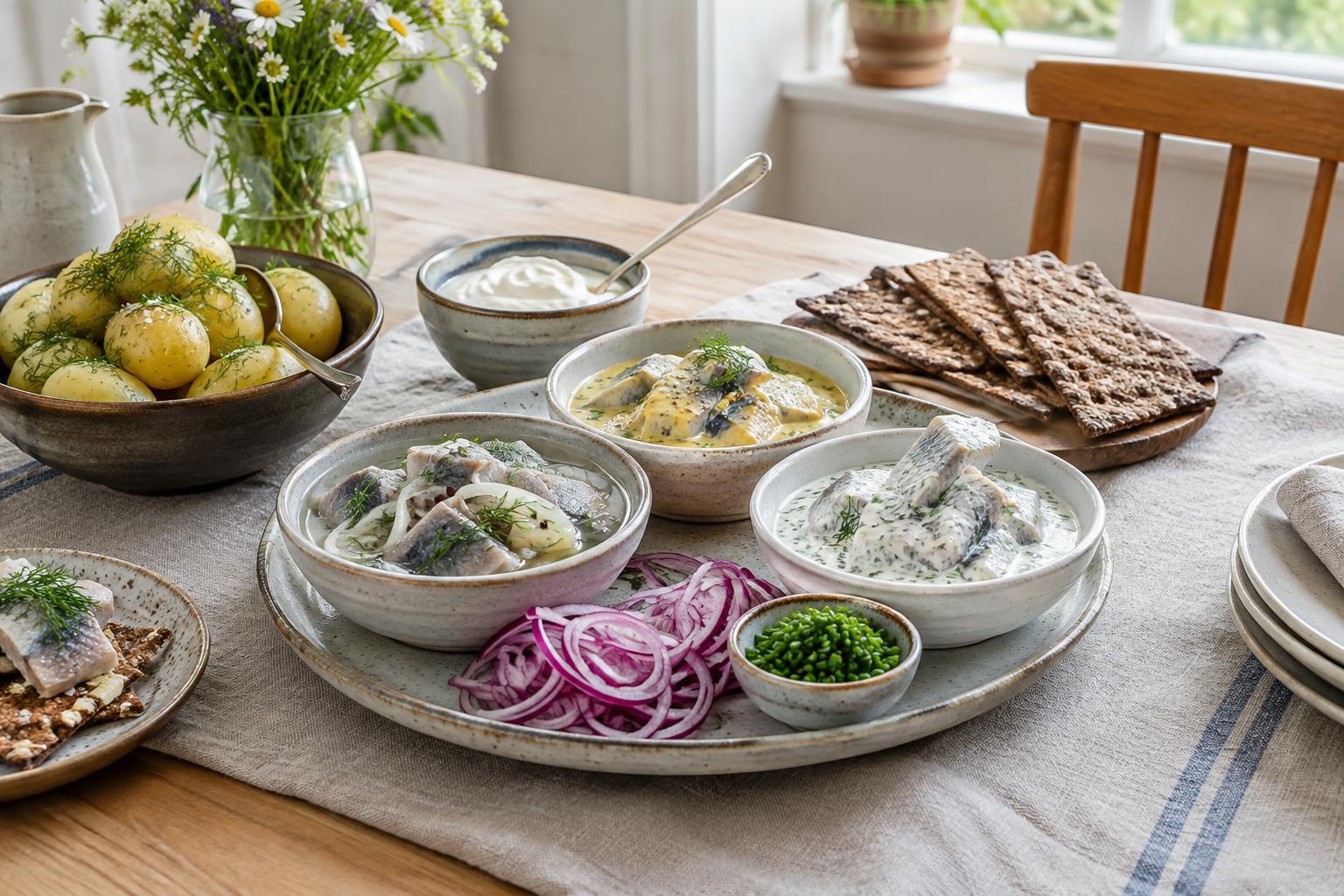
Onion herring, often called löksill, is a straightforward place to begin. Slices of onion sit with the fish in a sweet-and-sour brine, giving it a sharp, gently sweet character. Dill herring, or dillsill, brings a fresh herbal note to a similar style. Both work well when you want the flavor of the herring itself to remain prominent.
Mustard herring, senapssill, is usually coated in a creamy, sweet-tangy mustard sauce. It makes a useful contrast to brined varieties, especially on a plate with warm potatoes. You may also see herring flavored with garlic, pepper or herbs. Recipes and packaged versions vary, so the name on a jar is a guide to its main flavor rather than a promise of one exact taste.
Matjes herring, often sold as matjessill, is another familiar choice. Swedish-style matjes is seasoned and has a characteristic sweet-spiced flavor. It is often served with potatoes, sour cream and chives. If you are buying it outside Sweden, check the label: products with similar names do not always use the same seasoning or preparation.
Build a simple herring plate
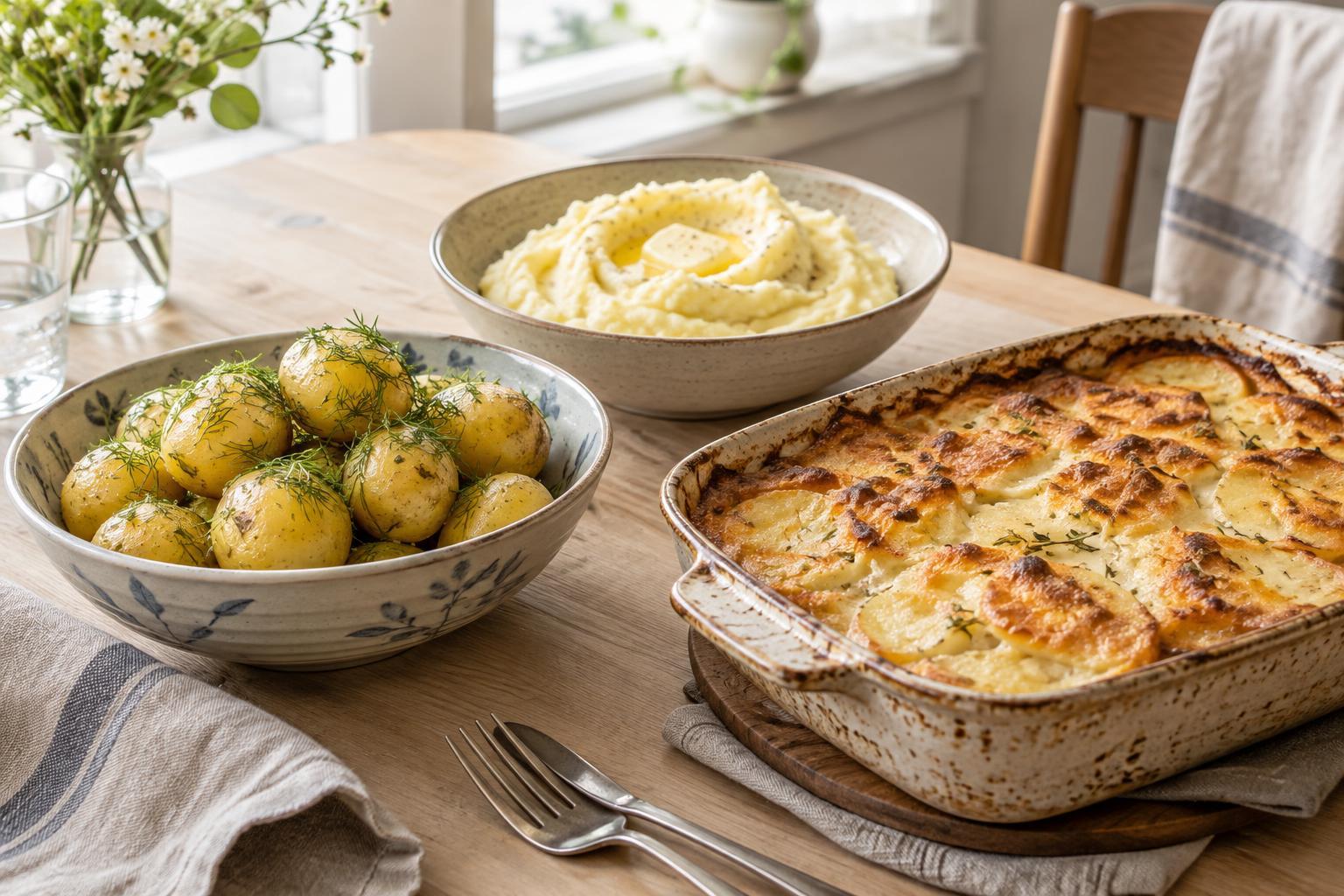
For an uncomplicated serving, put out two or three herring varieties in small dishes, each with its own spoon or fork. Add boiled new potatoes when available, or other small waxy potatoes, served warm or at room temperature. A bowl of sour cream or crème fraîche and a generous scattering of chopped chives let people balance the sharper flavors to their taste.
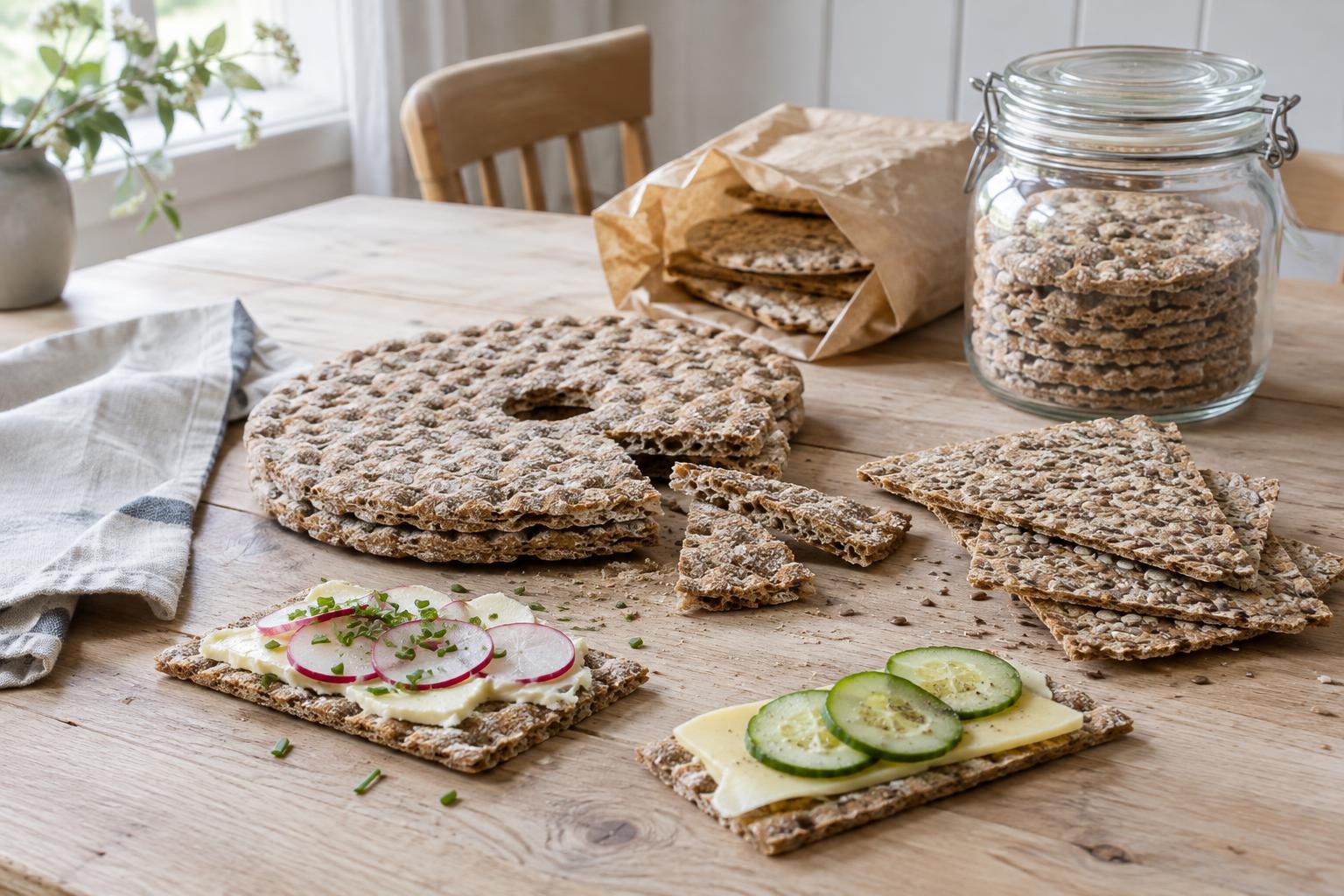
Crispbread and butter give the meal a crisp, mild counterpart to the fish. Sliced hard-boiled eggs are another common addition. These accompaniments are useful because herring is strongly flavored: a small piece can be enjoyed with a bite of potato or bread rather than eaten on its own.
For a casual lunch, there is no need to assemble a full festive spread. One variety of herring, potatoes and something creamy make a satisfying plate. For guests, offering a brined herring alongside a mustard or other creamy variety creates more choice without much extra preparation.
Serving and storing it with care
Most packaged pickled herring is ready to eat, but follow the directions on the product you buy. Some varieties are served with their brine or sauce; others can be lifted from the jar and plated with less liquid. Use clean utensils, keep the herring chilled until serving, and return leftovers to the refrigerator promptly. The label is the best guide to storage and how long the product keeps after opening.
Serve modest portions at first, particularly if several flavors are on the table. Guests can come back for a favorite, and each variety stays distinct rather than blending into the others. If you are introducing friends to sill, naming the flavors helps them choose between a bright brined version and a richer, creamy one.
A tradition you can make your own
There is no single required arrangement for a Swedish herring meal. Families and hosts have their preferences, and a small everyday plate can feel quite different from a holiday buffet. The useful starting point is simple: choose a flavor or two, add potatoes and a few mild accompaniments, and let people combine them as they please.
Sweden Culture Guide is an independent magazine about culture and everyday life, not a consulate or government service. Here, the aim is to make a familiar Swedish food easier to recognize, serve and enjoy.