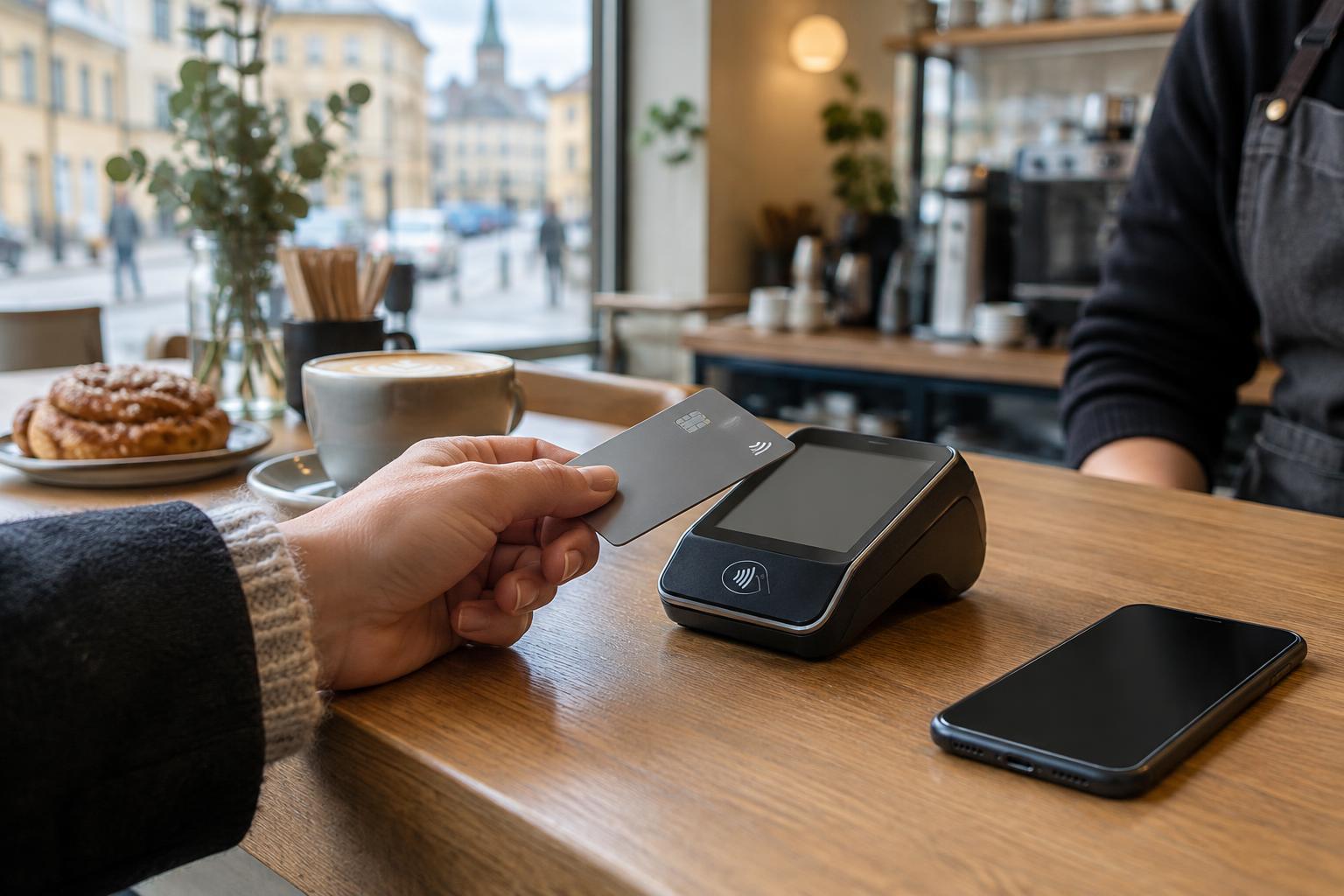
Start with a card you can use abroad
In Sweden, a payment card is often the simplest way to buy groceries, pay for a meal or pick up a coffee. Many businesses accept contactless payments, while a terminal may sometimes ask you to insert your card and enter a PIN. Before travelling, check that your card is enabled for use abroad and make sure you know its PIN. If you have two cards, keeping them separately gives you a useful backup if one is lost or declined.
Your bank or card provider may charge for foreign-currency purchases or cash withdrawals. When a terminal offers a choice of currencies, paying in Swedish kronor generally leaves the conversion to your card provider; compare your provider’s terms rather than assuming the terminal’s suggested conversion is a better deal. It is also worth checking your available balance or credit limit before a day of travel, when small purchases can add up.
Phone payments are convenient, but bring the physical card
If your card is set up in a phone or watch wallet, you may be able to use it wherever a compatible contactless terminal is available. That can make a quick purchase feel familiar, especially if you already use your device to pay at home. Test the wallet before you leave and check that the underlying card works internationally.
Do not make your phone your only way to pay. A flat battery, a damaged device or a terminal that cannot complete the transaction can interrupt an otherwise simple errand. A physical card takes little space and is easier to hand over or insert when a contactless attempt does not work. You may also need your PIN even if most of your purchases are tap-and-go.
Understand where Swish fits in
You may see signs for Swish at market stalls, cafés or other small businesses. Swish is a widely used Swedish mobile payment service, particularly handy for sending money between people. It is not the same as tapping a foreign card through a phone wallet. Using it generally requires access to Swedish banking and the associated identification setup, so a short-term visitor should not assume they can download it and start paying.
If a seller displays only a Swish number, ask whether they also accept a card before you order or take an item to the counter. The same habit helps at a small event or temporary stall, where payment choices may differ from those at a larger shop. A polite question—“Can I pay by card?”—usually settles the matter faster than guessing from the signs.
Check payment methods before transport and meals
Local transport payment arrangements can vary by region and service. Some journeys may be paid for through an app, a ticket machine, a travel card or a contactless option, while buying a ticket from a driver may not be possible. Look up the payment choices for the particular route before setting out, and leave enough time to buy any ticket you need. A card that works in a supermarket does not necessarily mean you can board and pay in the same way.
At restaurants, tell the server if you would like to split a bill; the available method may depend on the payment setup. Tips are generally a choice rather than something you need to add automatically. Before confirming an amount on a terminal, take a moment to check the total, especially if the screen invites you to enter a tip yourself.
Keep a simple backup plan
Cash can still be useful in some circumstances, but carrying it does not guarantee that a business will accept it. If you expect to visit a small venue, ask about payment methods in advance when possible. For an ordinary day out, a practical combination is a working card, a second payment option and a charged phone. Keep enough flexibility in your plans to use another shop or return later if a payment system is temporarily unavailable.
This guide is from an independent culture magazine, not a consulate or government service. Its aim is to help you navigate an everyday custom: check what a particular seller accepts, have a backup ready and pay in the way that works for both of you.