What makes an open-air museum different?
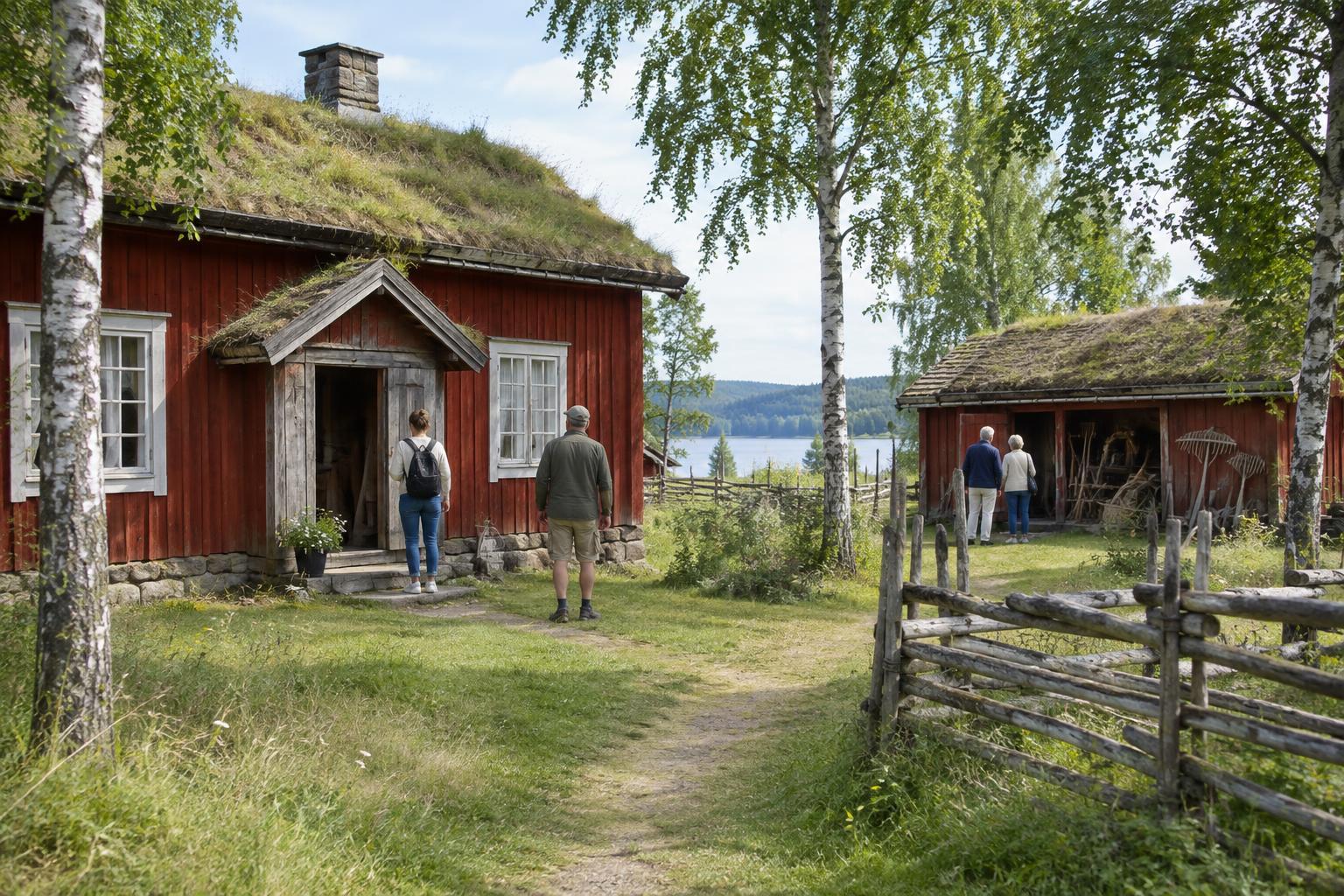
An open-air museum places historic buildings and outdoor spaces at the center of the visit. Instead of moving only from display case to display case, you might walk between a farmhouse, a workshop, a garden and a yard. Some sites include interiors, demonstrations or interpreters who explain how particular tasks were done. Others are quieter places where buildings and signs do most of the storytelling.
The buildings are usually selected and arranged to help visitors understand a particular place or period. That makes them useful introductions to everyday history, but not complete pictures of the past. A reconstructed street, for example, may bring several kinds of work into view while leaving less visible experiences harder to imagine. Approach each setting as a starting point for questions rather than a perfect snapshot of earlier life.
Look closely at ordinary spaces
Open-air museums can make domestic details feel surprisingly important. Notice where people cooked, stored food, washed, slept or gathered. Look at the distance between a house and its outbuildings, the size of the windows and the materials used for walls and roofs. These choices can prompt questions about climate, available resources, labor and family routines without requiring you to know the name of every object.
Try choosing one familiar activity, such as making a meal, and following it through the site. Where might ingredients have been kept? What fuel was needed? Who would have carried water or cleaned up afterward? The answers may differ by region, household and era. If a room looks inviting to modern eyes, pause to consider the physical work required to keep it warm, supplied and usable.
Explore work and regional differences
Workshops, fields, boats and farm buildings can help connect cultural traditions to the skills behind them. A craft demonstration is more than a chance to watch an old technique: it can reveal the time, tools and materials involved in producing something people used. Ask what the work was for, who learned it and whether the method changed when new tools became available.
Avoid treating one museum as a model for all of Sweden. A coastal community, a farming district and an urban neighborhood may have relied on different resources and ways of earning a living. Even neighboring households could have had unequal means. When a site presents a regional custom, look for clues about its local setting before assuming it was shared everywhere.
Make room for the people a display may miss
A carefully furnished home can suggest a single household story, yet many people may have worked in or around it. Children, hired workers, craft apprentices and people without property can be less visible than owners whose names appear on signs. Consider whose belongings survived, whose work left a physical trace and whose account might need to be told in another way.
It is also worth distinguishing between a historical object and a modern interpretation. Furniture may be original, restored or chosen to represent a period; a demonstration may combine documented techniques with practical adjustments for visitors. You do not need to resolve every detail to enjoy the experience. Simply asking what is known, what has been reconstructed and what remains uncertain can make the visit more rewarding.
Plan a visit that leaves time to wander
Before you go, check the museum’s own visitor information for opening arrangements, accessibility details and any scheduled activities. Outdoor grounds, older buildings and uneven paths can make movement different from a conventional gallery visit. If you are traveling with others, agree on a few shared stops but leave time for individual interests. A small garden or unassuming storage building may spark the best conversation.
Once there, begin with the site map and any introductory explanation, then slow down. Read a few signs carefully rather than trying to cover every building. If staff are available, ask a focused question about something you noticed. Afterward, compare what the museum showed clearly with what you still wonder about. Sweden Culture Guide is an independent culture magazine, not a consulate or government service; our aim here is to encourage thoughtful exploration of Swedish cultural life.