Start with the space you share
A phone can be useful for finding a route, paying for coffee or letting someone know you are running late. In a shared space, though, the question is not simply whether phone use is allowed. It is whether the sound, movement or attention it demands affects the people nearby. A helpful default in Sweden is to keep your phone use unobtrusive, then adjust to the setting.
There is no single rule for every café, carriage or waiting room. A lively place may comfortably absorb a short conversation, while the same call would stand out in a quiet corner. Notice posted signs and the behavior of people around you, but do not treat either as a perfect test of what everyone wants. When in doubt, lower the volume or step away.
Sweden Culture Guide is an independent culture magazine, not a consulate or government service. This guide describes everyday courtesy, not official rules.
In cafés, keep the table pleasant for everyone
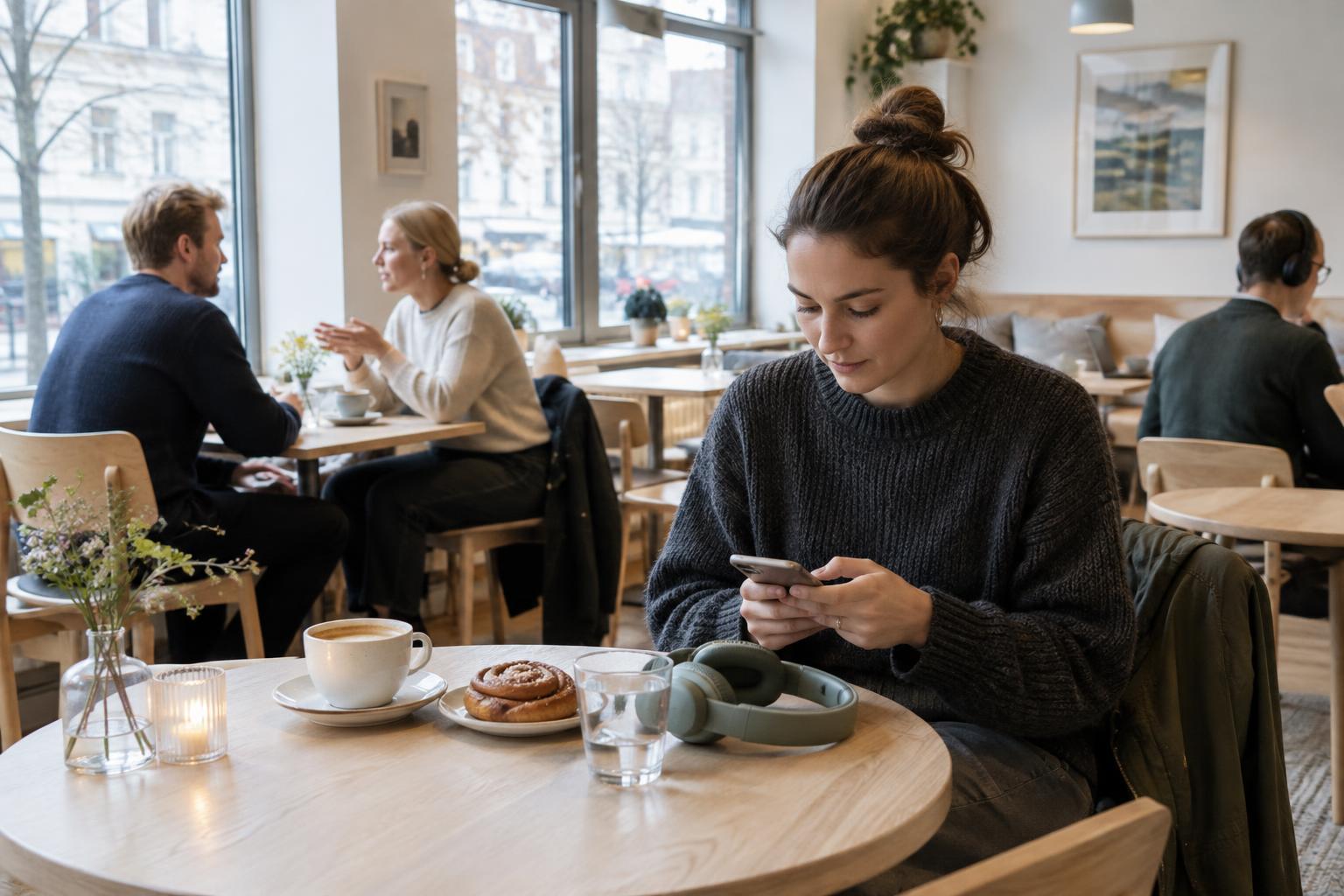
Cafés are places for conversation, work and a pause in the day, often at tables close enough for neighboring customers to hear each other. If you need to take a call, a brief exchange in a normal speaking voice may be fine in a busy café. For a longer or personal conversation, consider going outside or finding a less crowded spot. A call on speakerphone makes your conversation everyone else’s soundtrack, so it is best avoided.
The same principle applies to videos, voice notes and games: use headphones, with the volume low enough that sound does not leak into the room. If you are using a laptop or phone for a video meeting, remember that your own voice carries even when you wear headphones. A café that welcomes someone checking email may not be a comfortable place for an extended meeting.
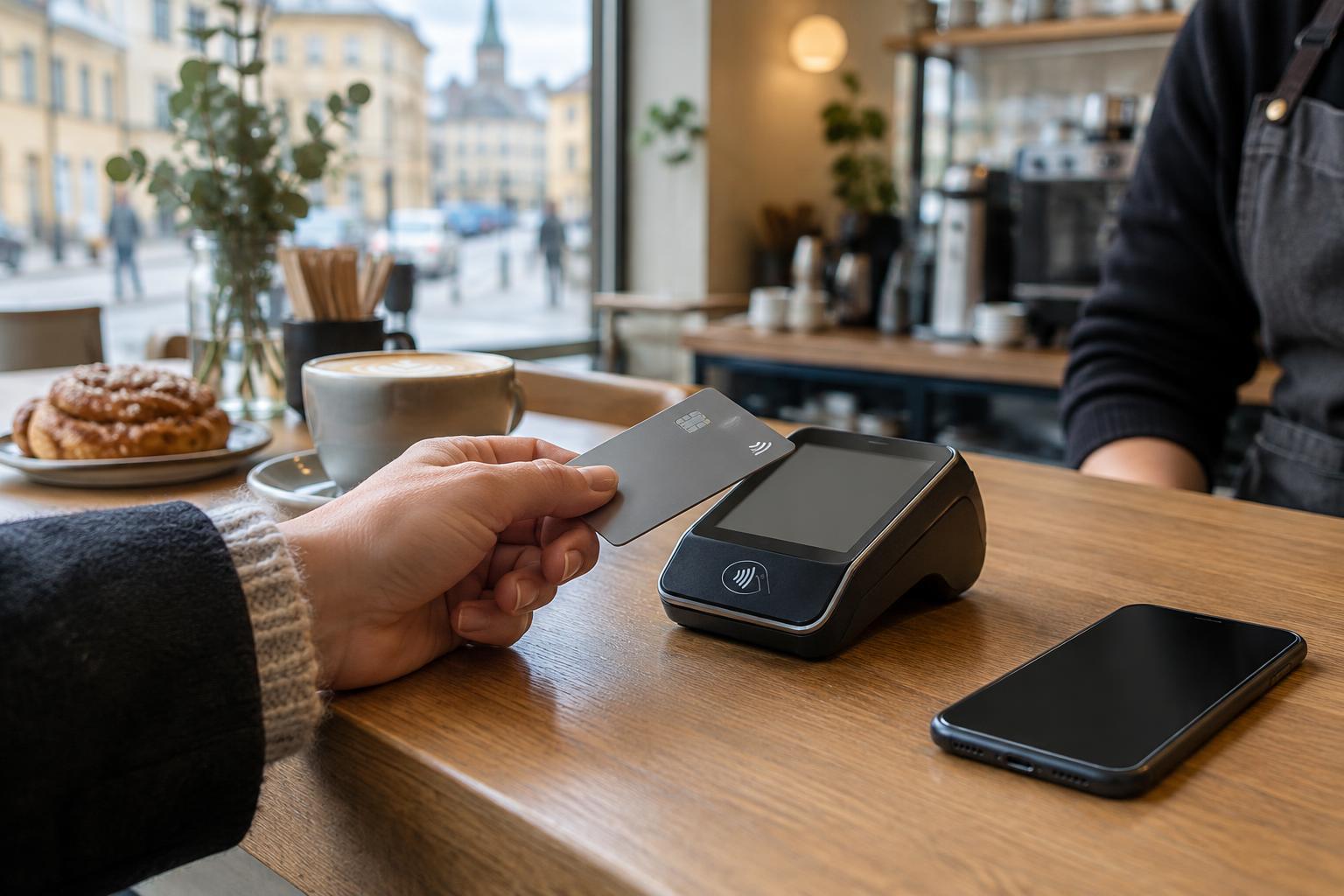
Phone manners also include how you use the space. If you are ordering, have your attention ready for the person serving you rather than continuing a call through the exchange. If you take a seat for a long stretch, be aware of people looking for tables, especially at busy times. These are considerations, not a demand to put your phone away entirely.
On trains and other public transport, sound travels
A train carriage can feel private when you are looking down at your screen, but it is a room shared with strangers. Set notifications to silent or a low volume, and use headphones for music and video. Even with headphones, check for sound leakage. A quick way to think about it: if someone sitting beside you can follow what you are watching, turn it down.
For calls, keep your voice moderate and the conversation short where practical. If the train has an area marked as quiet, follow its posted guidance; a whispered call may still be unwelcome there. Elsewhere, a call is not automatically discourteous, but an animated discussion can be difficult for nearby passengers to escape. If a conversation becomes long or sensitive, you can offer to call back.
Be mindful when moving through stations and boarding areas, too. Looking at directions on your phone is ordinary; stopping suddenly at the top of an escalator or in a doorway creates a problem for people behind you. Step to one side before checking a platform number or writing a message.
Match the moment in queues and smaller rooms
Waiting rooms, libraries, museums and shop queues each have their own atmosphere. Some have explicit phone rules; others rely on visitors to notice whether the space is quiet or focused. Silence your phone when a sudden alert would interrupt others, and leave calls until you can take them without making everyone listen. If you must answer, a short “I’ll call you back” is often less disruptive than trying to hold a full conversation in a hush.
A shared space is also a shared visual space. Filming a meal, an interior or a view may seem harmless, but take care not to include identifiable strangers without their agreement. Avoid holding a camera where it blocks a walkway or makes people feel they must move for your shot. When photographing in a venue, respect any signs or requests from staff.
Use courtesy rather than a rigid checklist
Good phone manners do not require guessing what every Swedish person thinks. People differ, and the setting matters more than a sweeping national rule. The reliable habits are simple: keep sound to yourself, speak at a volume suited to the room, give people your attention during direct interactions and move aside when a call or screen task will take time.
If you misjudge a situation, a quiet adjustment is usually enough. Lower the volume, finish the call or step away; there is no need to make a performance of apologizing. The aim is to make everyday spaces workable for everyone, including you. Your phone can still be part of the journey or the coffee break without becoming the center of someone else’s.