A meal built around the season
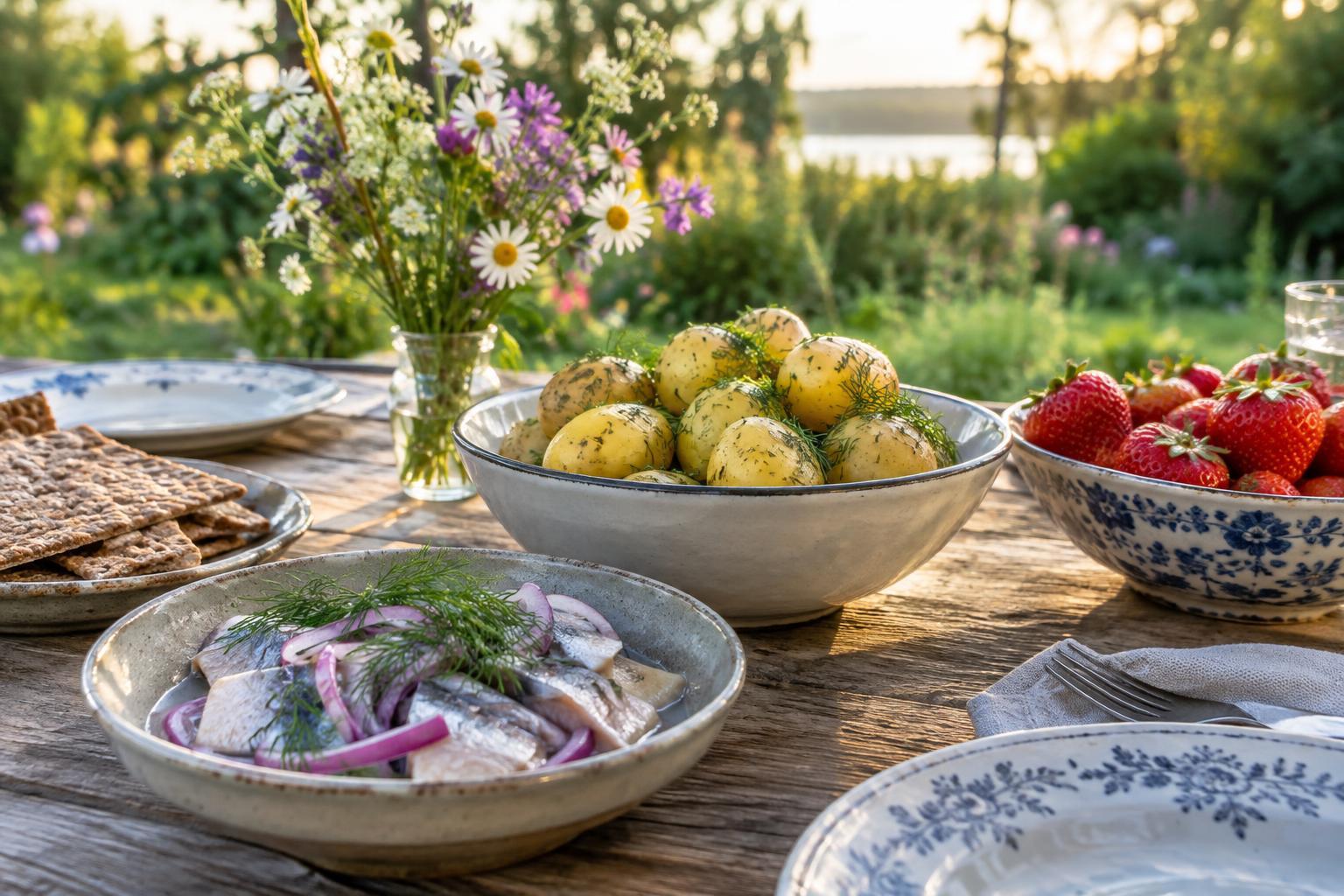
Midsummer food in Sweden is less about a complicated recipe than a table of familiar seasonal ingredients. Pickled herring, new potatoes, sour cream, chives and dill make a classic savory spread, while strawberries often provide a sweet finish. The dishes can be set out for people to serve themselves, which suits a long, relaxed meal shared with family or friends.
There is no single menu that every household follows. Some hosts add eggs, crispbread, cheese or other cold dishes; others keep the meal small. What matters most is the combination of fresh flavors and an unhurried gathering. Sweden Culture Guide is an independent cultural magazine, not a consulate or government service; this guide is about the food and customs, not official services.
Pickled herring: the savory centerpiece
Pickled herring, known as sill, is a familiar part of the Midsummer table. It is served cold, often in several varieties so guests can try different flavors. The fish may be presented in a clear, sweet-tart marinade with onion and spices, or in a creamy sauce flavored with mustard or herbs. Matjessill, a seasoned type of herring, is another common choice.
For someone tasting herring for the first time, its flavor can be easier to appreciate as part of a forkful rather than on its own. Try a small piece with potato, a little sour cream and chopped chives. The potato softens the sharpness of the pickle, while the herbs add freshness. If fish is not for everyone at the table, the potatoes and accompaniments still make a satisfying starting point for other dishes.
Why new potatoes belong beside the herring
New potatoes are young potatoes with thin skins and a tender texture. For a Midsummer meal, they are commonly boiled and served simply, often with dill. Their mild flavor gives the strongly seasoned herring room to shine. Butter, sour cream and chopped chives may be offered on the side, letting each person assemble a plate to taste.
To prepare them, scrub the potatoes gently rather than peeling away their delicate skins. Boil them until they are tender when pierced, then drain and serve warm with dill. If you are setting out a buffet, put the potatoes near the herring and toppings: the dishes make sense together. They need little embellishment, so it is worth keeping the herbs fresh and the accompaniments easy to reach.
Strawberries for a simple finish
After the salty and tangy savory dishes, strawberries offer a change of pace. They may be served plain, with cream, or with a little sugar if needed. Strawberry cake is another festive option, but a bowl of berries and a jug of cream can feel just as suited to a relaxed gathering. The appeal lies partly in letting the fruit remain the focus.
If you are planning the meal, dessert need not require much work at the last minute. Wash and prepare the berries ahead of serving, then bring out cream or another topping separately so guests can choose how much they want. For a larger table, a simple cake and a bowl of extra strawberries make it easy to accommodate different appetites.
Putting together your own Midsummer table
A practical Midsummer spread can start with one or two kinds of herring, a pot of new potatoes, dill, sour cream and chives, followed by strawberries. Crispbread and cheese can round out the savory course. Offer water or other drinks alongside the food; celebratory toasts are part of some gatherings, but alcoholic drinks are not required to take part.
Set everything out in serving dishes and let guests build their own plates. This makes it easy to adjust for preferences and gives the meal its informal rhythm. Whether you serve a full buffet or just the central trio of herring, potatoes and strawberries, the guiding idea is the same: simple foods, enjoyed together while the season is at its brightest.