Start with the situation you share
Small talk in Sweden can feel understated if you are used to lively conversations with strangers. That does not mean people are unwilling to talk. As anywhere, it depends on the person and the setting. A useful approach is to begin with something both of you can notice, then leave room for a short answer. Sweden Culture Guide is an independent cultural magazine, not a consulate or government service.
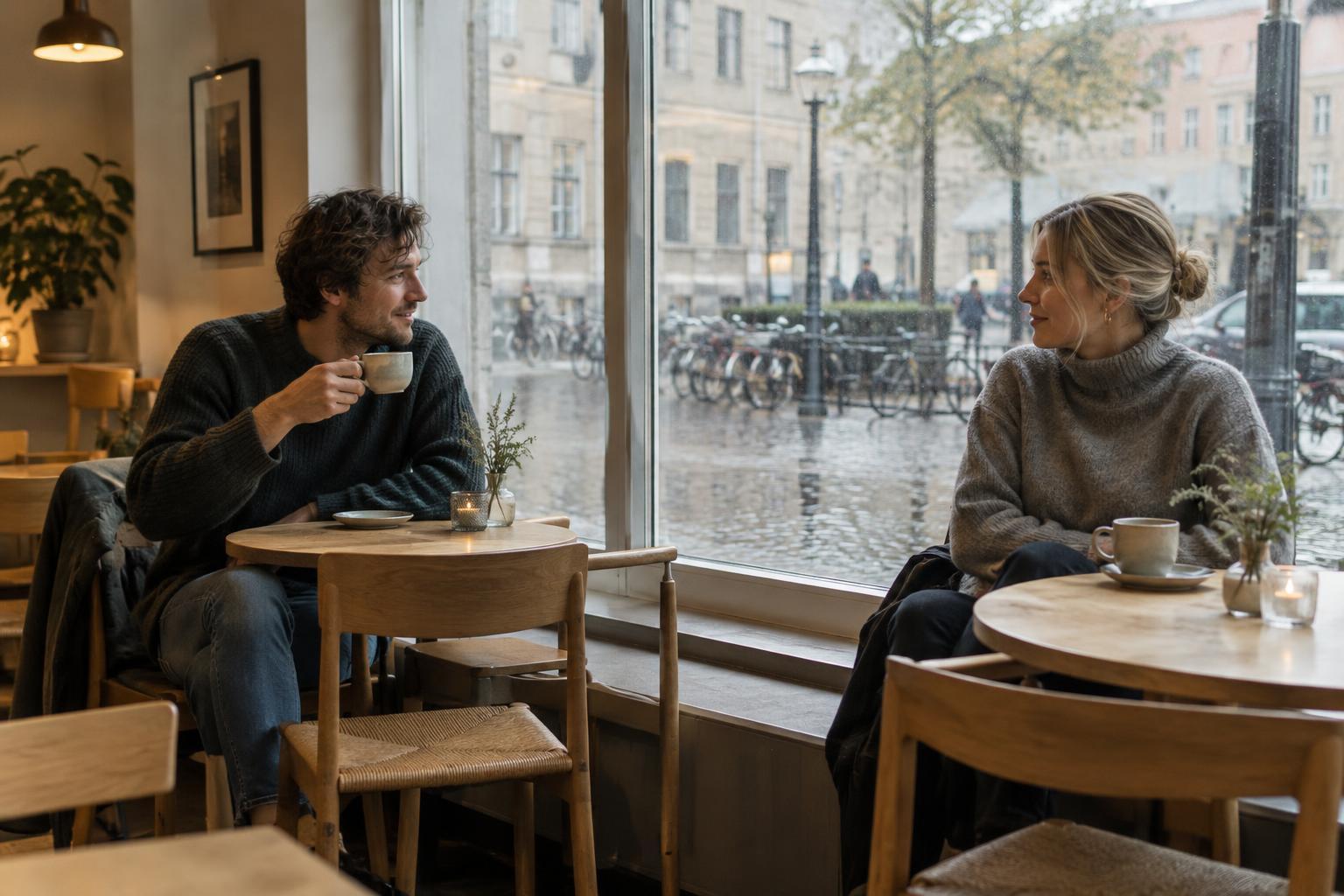
At a gathering, you might ask, “How do you know the host?” At a café with a colleague, “Have you been here before?” can open a conversation without demanding a personal story. Weather is another easy starting point, especially when it affects the day: “It turned out sunny after all” or “Did you get caught in the rain?” These comments work because the other person can respond briefly or build on them.
Context matters. A shared wait at a bus stop may invite a passing remark, but someone wearing headphones or reading is probably occupied. At work or at a social event, there is more reason to expect a conversation. Rather than treating any opener as a guaranteed technique, look for a setting in which talking makes sense.
Keep the first question easy to answer
An opening question need not be clever. If someone mentions a weekend trip, you can ask what they enjoyed about it. If you are both at a dinner, you can ask whether they have tried a particular dish. Questions about food, local places, hobbies or the occasion itself give the other person a choice about how much to share.
It helps to offer a little information about yourself, too. “I’m visiting this area for the first time. Is there a place nearby you like to walk?” feels more like an exchange than a string of questions. If you are learning Swedish, a simple greeting such as “Hej” may be welcome, but you can ask whether English is comfortable rather than assuming. Many people speak English, though comfort and preference vary.
Listen to the length and tone of the reply. A brief answer followed by a question back is an invitation to continue. A brief answer followed by attention returning to a phone, book or task may be a natural endpoint. You can be friendly without making every exchange last.
Let a pause be a pause
A moment of silence does not always signal that something has gone wrong. Some people prefer to think before answering; others are simply content to share a space without filling it with talk. If a pause comes after your question, give the person time rather than immediately asking another one.
In a group, notice how others join in. You can make space by asking, “What do you think?” but avoid putting someone on the spot if they seem happy listening. One way to keep a conversation comfortable is to follow a topic the other person has introduced. If they mention a book, a garden or a favorite place to swim, ask about that before jumping to something unrelated.
If the conversation winds down, a simple “Nice talking with you” is enough. An easy ending can make an encounter pleasant even when it was short.
Save personal subjects for mutual conversations
With someone you have just met, questions about salary, family plans, relationships, religion or voting choices can feel intrusive. That is not a rule about what Swedish people will or will not discuss. It is a useful boundary for early conversation: start with subjects that are easy to step away from, and let more personal topics arise through mutual interest.
Pay attention to what a person volunteers. If they say they moved recently, “How are you finding the area?” gives them room to talk about a café, a commute or a feeling. Asking why they moved may call for an explanation they do not want to give. Likewise, a colleague’s mention of a holiday does not require questions about its cost or their family situation.
You can also set your own boundaries without making the moment awkward. “I’d rather not get into that, but I’d love to hear about the place you visited” acknowledges the question and offers a new direction. Respecting a change of subject is part of making conversation feel safe for both people.
Aim for connection, not a script
No single conversational style represents everyone in Sweden. Friends may tease each other warmly, colleagues may chat freely over coffee, and strangers may keep an exchange short. Place, age, personality and familiarity all make a difference. It is more useful to be attentive than to memorize a list of supposedly correct topics.
A practical pattern is to open with the shared situation, offer something small about yourself, ask one easy question and see what comes back. If the other person expands, follow their lead. If they do not, let the conversation rest. Small talk does not have to turn into a friendship to succeed; sometimes it simply makes a shared moment more comfortable.