A golden bun for Lucia
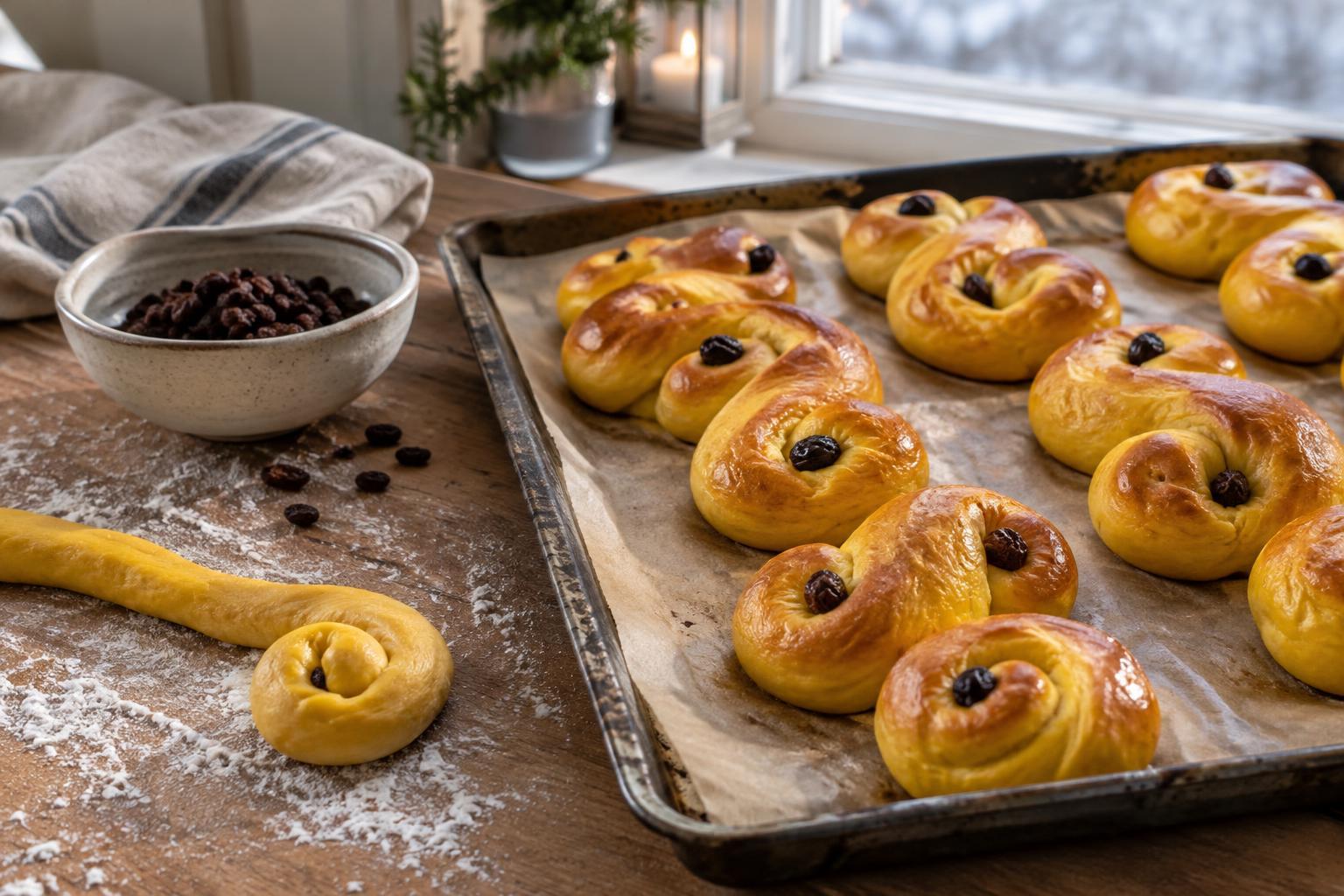
Lucia celebrations in Sweden often feature lussekatter: soft, golden buns flavored with saffron and commonly decorated with raisins. Their curled shapes make them distinctive, but they are still everyday yeast buns at heart. You do not need elaborate equipment to make them—just time for the dough to rise and a light hand when shaping it.
Sweden Culture Guide is an independent magazine, not a consulate or government service. Here, the focus is on the baking tradition: what helps a batch turn out soft, fragrant and pleasant to share.
Start with a soft, manageable dough
For about 16 buns, use roughly 500 g wheat flour, 250 ml milk, 75 g butter, 75 g sugar, 25 g fresh yeast or about 7 g instant yeast, ½ tsp salt and 0.5 g saffron. You will also need raisins for decoration and a beaten egg for brushing. Flour absorbs liquid differently, so treat the quantity as a starting point rather than a reason to force the dough to feel stiff.
To distribute the saffron, crush its threads with a little of the sugar, then stir them into the milk. Melt the butter and let it cool until warm, not hot. If using fresh yeast, dissolve it in the warm milk mixture; if using instant yeast, follow the packet’s directions for adding it. Combine the ingredients and knead until the dough is smooth and elastic. It should feel soft and slightly tacky. Add extra flour a spoonful at a time only if it is too sticky to handle.
Cover the dough and let it rise until noticeably puffy, often around an hour in a comfortable room. A cooler kitchen may take longer. Rather than relying only on a timer, look for a dough that has expanded and feels airy.
Shape the familiar curls
Divide the dough into 16 similar-sized pieces so the buns bake at roughly the same pace. Roll each piece into a rope about 25 cm long. If a rope keeps shrinking back, let it rest for five minutes and try again. Working from opposite ends, curl the rope inward to make an S shape. Leave a little space between the coils; they will swell as the buns rise.
Place the shaped buns on lined baking trays with room between them. Press a raisin into the center of each curl, firmly enough that it is less likely to pop out during baking. If your raisins feel very dry, you can briefly soak and drain them first. Cover the trays loosely and let the buns rise again until they look puffy, commonly 30–45 minutes. Brush gently with beaten egg just before baking, taking care not to flatten the shapes.
Bake for color without drying them out
Preheat the oven to about 200°C (180°C fan), or approximately 390°F. Bake the buns for around 8–12 minutes, checking early if they are small or your oven runs hot. They should be golden on top and cooked through. If you bake two trays at once, their positions may affect browning; rotating them partway through can help, provided you can do so without leaving the oven door open for long.
Move the buns to a rack once they are cool enough to handle. They are especially inviting while still slightly warm. If you are making them ahead, let them cool fully before storing them in an airtight container or freezing them. A brief, gentle warming after thawing can bring back some of their softness.
Common mistakes and easy fixes
Dense buns often begin with too much flour or too little rising time. Keep the dough soft, and give it time to become puffy at both stages. Hot milk is another possible problem: it can damage the yeast. Aim for liquid that feels pleasantly warm rather than hot to the touch. If the dough seems reluctant to rise, move it to a warmer spot and give it more time before changing anything else.
Dry buns are frequently overbaked. Because individual buns are small, the difference between golden and too dark can be short; start checking before the suggested time is up. If the curls lose definition, try rolling slightly longer ropes and leaving room between the coils. And if raisins fall out, press them in more deeply after the second rise, just before the egg wash.
The first tray need not look identical to a bakery display. Slightly different curls are part of the pleasure of shaping lussekatter by hand. Focus on a soft dough, a full rise and a watchful bake; the saffron scent and shared ritual do the rest.