Start with the building, not a list of assumptions
Neighbourly life in Sweden often depends as much on the building as on any wider custom. An apartment block may have house rules covering quiet hours, shared laundry facilities, waste sorting and storage. These can differ between a rental building and a housing cooperative, and between one address and the next. If you are new to a building, read the notices in the entrance, laundry room and recycling area, and keep any information you received when you moved in.
Everyday courtesy usually begins with leaving shared spaces ready for the next person. Keep stairwells clear, close doors behind you and avoid treating a corridor as an extension of your flat. A brief greeting when you pass a neighbour is welcome, but you need not turn every encounter into a long conversation. Respecting someone’s space can be just as friendly as making conversation.
Think about how sound travels
Apartment living comes with ordinary sounds: footsteps, children playing, a chair moving or someone arriving home late. At the same time, music, a television, home repairs or a lively gathering can travel farther than they seem to from inside your own flat. Rugs, felt pads under furniture and a lower volume in the evening are simple ways to reduce the impact on others.
Check your building’s rules before drilling, moving heavy furniture or planning a party. If you expect an unusually noisy evening, a short note or conversation beforehand can help neighbours know what to expect. Advance notice is a courtesy, not permission to ignore house rules. When guests leave, asking them to keep their voices down in the stairwell may make a bigger difference than turning down the music indoors.
If a neighbour’s noise bothers you, begin with a calm, specific request when it is safe and reasonable to do so. Explaining that sound carries into your bedroom is more useful than accusing someone of being inconsiderate. A neighbour may not realise how clearly they can be heard.
Use shared rooms as though someone is arriving after you
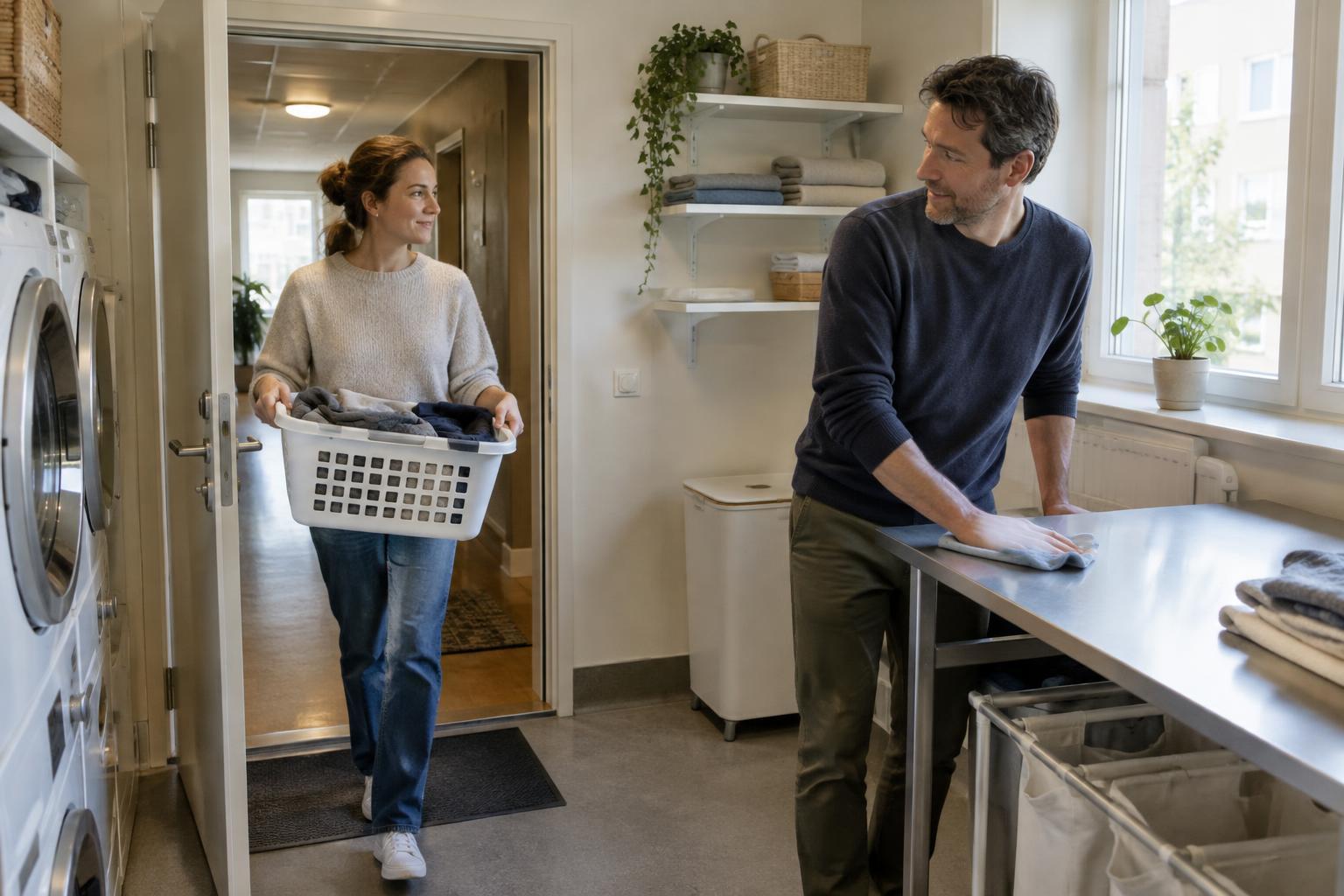
Many apartment buildings have a shared laundry room, often called a tvättstuga. Booking systems vary: you might use a board, a key cylinder or a digital calendar. Follow the instructions at your address rather than assuming an unused machine is free to take. Start and finish within your booked time, remove your clothes promptly and clean lint filters or surfaces where the posted rules ask you to.
The same principle applies to bicycle rooms, storage areas and communal courtyards. Use only the space assigned to you, and check before leaving large items anywhere shared. In recycling rooms, sort waste according to the labels on the containers. If you are unsure where something belongs, it is better to find out than to leave it beside a bin for someone else to handle.
Keep small problems small
A forgotten laundry booking or a door that slams can become irritating when it happens repeatedly. Try addressing the behaviour rather than guessing at a neighbour’s intentions. Choose a neutral moment, describe the issue briefly and ask for a practical change. You might also discover a misunderstanding about a shared rule that is easy to resolve.
For an ongoing building issue, such as a broken entrance door or unclear laundry schedule, contact the landlord, building manager or housing cooperative through the usual channel. For repeated disturbances, check the building’s guidance on whom to contact. Keeping track of what happened and when can help you explain a pattern clearly without escalating a conversation in the hallway.
Neighbourly courtesy is reciprocal. You do not have to be close friends to make a building pleasant to live in: follow local rules, make room for others and offer the benefit of the doubt when a minor mistake occurs. Sweden Culture Guide is an independent culture magazine, not a consulate or government service; this article offers general everyday guidance, while your building’s own rules are the place to check for specific expectations.