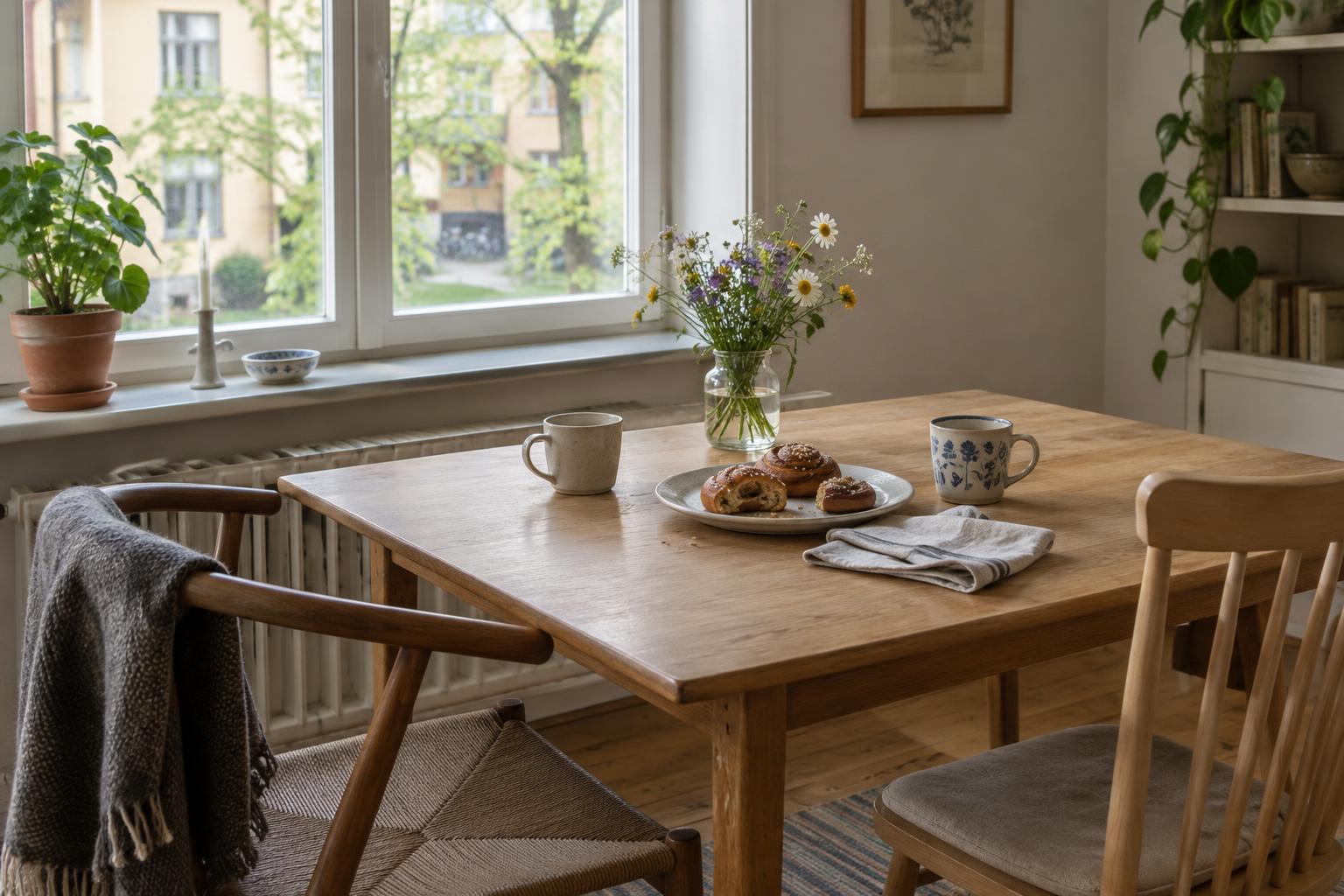
A useful idea, not a fixed formula
Lagom is commonly explained in English as “just enough” or “the right amount.” Those translations are helpful, but they can make the word sound more precise than it is. What counts as lagom depends on the situation, the people involved and what they need. A serving of food, the volume of music or the length of a meeting might all be described as lagom for different reasons.
In everyday use, the idea invites a simple question: is this enough without being excessive or insufficient? It does not demand the smallest possible portion or the cheapest possible option. A generous dinner can feel lagom if it suits the occasion; a quiet evening can feel lagom if that is what someone wants. The point is proportion, not a universal standard.
How it can shape ordinary choices
Consider a shared kitchen. Taking what you need while leaving enough for others is one way to understand lagom. So is keeping a communal space usable without expecting it to look untouched. The idea becomes practical when it helps people notice that their choices affect someone else’s comfort.
It can also be a check on pace and effort. When hosting friends, a lagom approach might mean making people welcome without turning every detail into a performance. At work or at home, it might mean doing a task thoroughly while recognizing when extra polishing will add little. These are possibilities, not instructions: sometimes an elaborate celebration or an ambitious project is exactly right for the occasion.
What lagom does not mean
Lagom is not a ban on pleasure, strong opinions or individuality. It does not mean that Swedish homes must be plain, that meals must be modest or that people should avoid standing out. Treating the word as a complete explanation for Swedish design, behavior or national character flattens a varied society into a single slogan.
Nor should “just enough” become a reason to dismiss someone’s needs. A person asking for more time, food, quiet or support is not necessarily asking for too much. The right amount changes when circumstances change. Used thoughtfully, lagom makes room for that difference; used carelessly, it can sound like pressure to settle for less.
Finding balance without keeping score
If you want to try the idea in your own routine, start with choices you can adjust easily. When planning a meal, ask whether the amount suits the people eating rather than aiming for an impressive spread by default. When buying something for your home, ask whether it will serve a real purpose and whether you have space for it. When speaking in a group, consider both whether you have contributed and whether others have had room to speak.
These questions are more useful than a checklist of supposedly Swedish habits. There is no lagom score to achieve. One day, “enough” may mean protecting free time; another day, it may mean putting more energy into a friendship or a difficult job. The value of the idea lies in paying attention, then making a choice that fits.
A word to use with curiosity
Lagom can be a helpful entry point into conversations about everyday life in Sweden, especially when treated as a word with flexible uses rather than a national rule. If someone calls the coffee strength or the room temperature lagom, they are making a judgment about that moment—not announcing a philosophy everyone must share.
Sweden Culture Guide is an independent English-language culture magazine, not a consulate or government service. Our aim here is to make a familiar cultural term easier to recognize and more useful to think with. The most grounded way to understand lagom is to notice its context, allow for different preferences and resist turning “just enough” into “one size fits all.”