Start with the kind of landscape you want to see
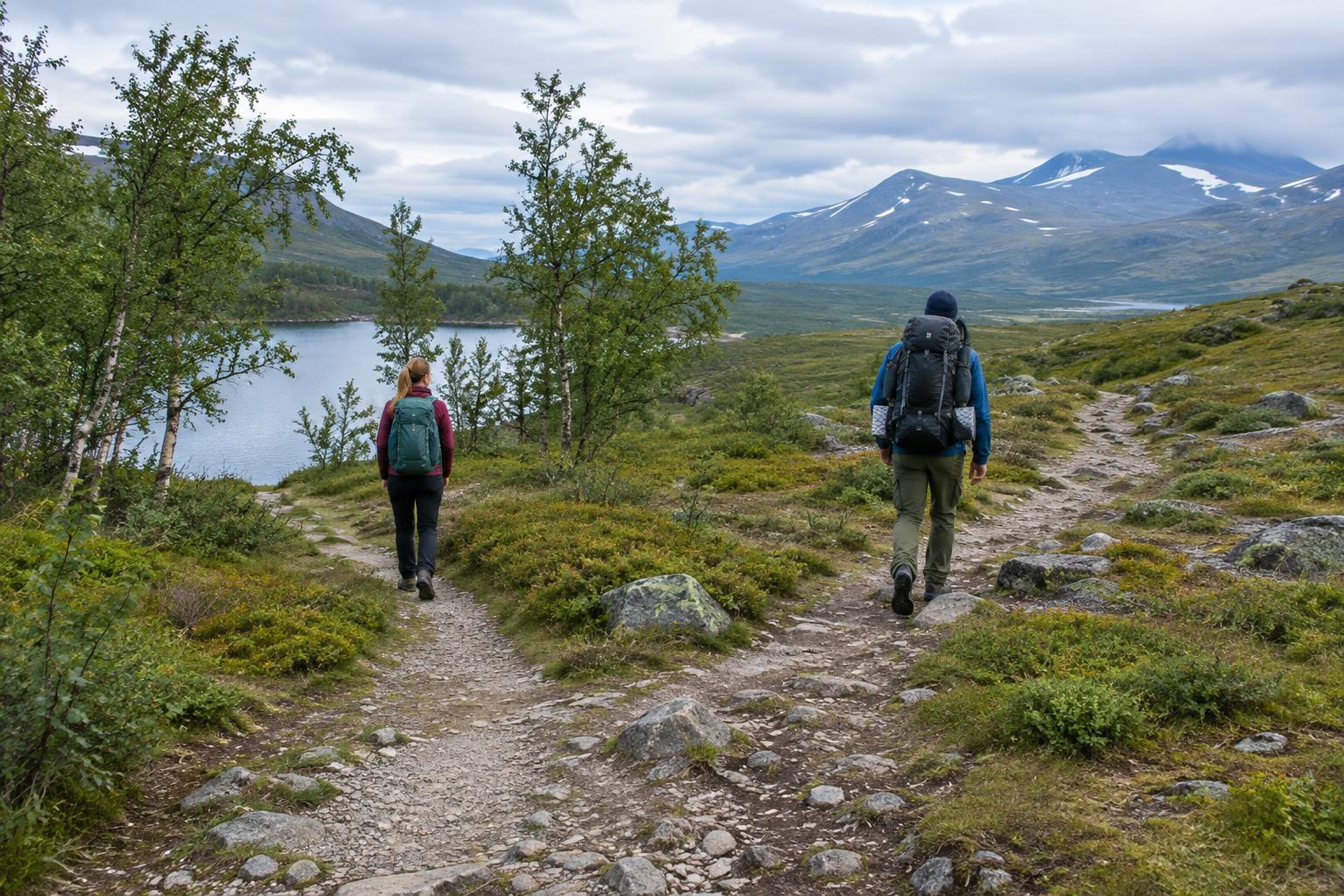
Sweden offers very different hiking experiences. In the south, marked paths can lead through beech woods, farmland and coastal villages. Around cities, nature reserves often have short loops that are easy to reach for a day walk. Farther north, mountain trails cross open terrain where shelter, transport and weather require more planning. For a first trip, choose the setting and level of remoteness before choosing a famous trail name.
Long-distance routes such as Skåneleden, Sörmlandsleden and Kungsleden are made up of sections; you do not need to walk an entire route. A manageable introduction might be a signed day hike with a clear return option, followed by a one-night trip if you enjoy it. Check the specific section rather than relying on the reputation of the wider trail: surfaces, climbs, services and access points can vary considerably.
Choose a distance you can enjoy, not just complete
Distance on a map is only part of a hiking day. Rocky ground, roots, mud, hills and a heavy pack can slow you down, while stops for meals and views take time too. If you are new to hiking, begin with a short route that leaves plenty of daylight in reserve. A comfortable walk near home is a better guide to your pace than an ambitious itinerary found online.
For a multi-day trip, plan each day around the slowest person in your group and identify places where you could shorten the walk. Note where the route begins and ends, how you will get there, and whether transport still runs when you expect to finish. If a trail depends on a boat crossing or a particular accommodation, confirm those arrangements before setting out. Build in flexibility rather than treating every planned kilometre as a requirement.
Check the route and conditions before you leave
Use a current trail map or information from the organisation responsible for the route to look for junctions, water crossings, steep sections and places to rest. Download a map for offline use if you navigate by phone, and carry a backup suited to the trip. Phone coverage and battery life should not be your only way to find the trail, particularly in remote areas.
Swedish conditions change with region and season. A warm afternoon can turn wet or chilly, and exposed mountain terrain can feel very different from a sheltered forest. Snow may linger on higher routes when lower paths are clear. Before departure, check the forecast and any local trail notices, then be willing to choose an easier route or postpone the hike. Tell someone your intended route and when you expect to return, especially if you are walking alone.
Pack for comfort and a change of plans
Wear footwear you have already tried on uneven ground, and dress in layers you can adjust as you move. A waterproof outer layer, warm spare layer, food, drinking water, basic first-aid supplies and a charged phone are sensible starting points even for a day hike. The amount of water you need depends on the walk and the weather; do not assume that every stream is a dependable drinking source.
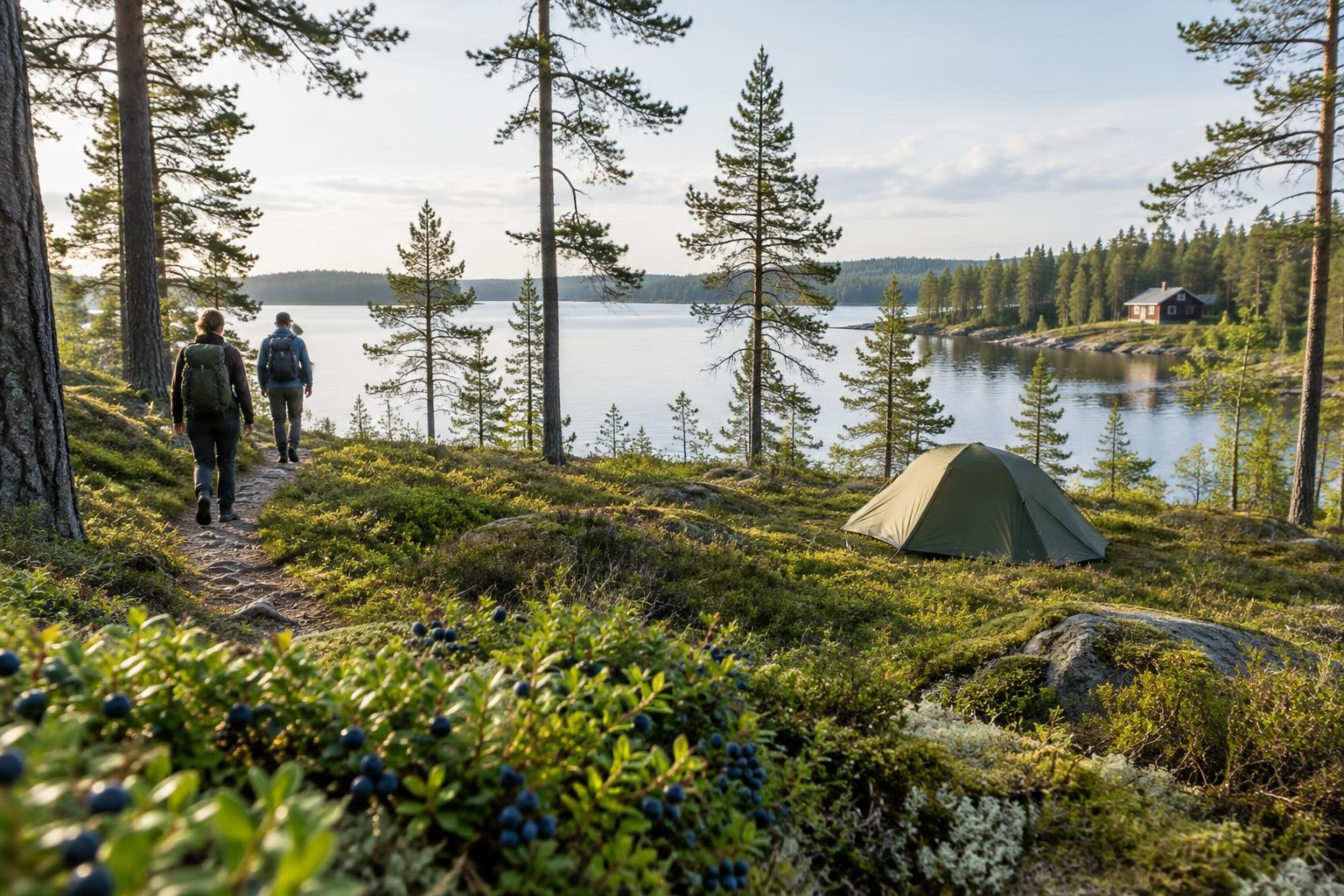
For an overnight trip, add suitable shelter or confirmed accommodation, a sleep system and enough food for the full itinerary. Check what a hut or campsite actually provides rather than assuming equipment or supplies will be available. Keep essentials where you can reach them without unpacking everything in the rain. A short practice walk with your loaded pack can reveal uncomfortable straps or forgotten items before they become problems on the trail.
Leave room for the experience
Sweden’s public-access tradition makes it possible to enjoy many outdoor places, but it comes with responsibilities. Respect homes and cultivated land, avoid disturbing wildlife, take litter away and follow signs or local restrictions in protected areas. Rules for camping and fires can differ by location and conditions, so check before relying on either. Staying on a marked path where requested also helps protect sensitive ground.
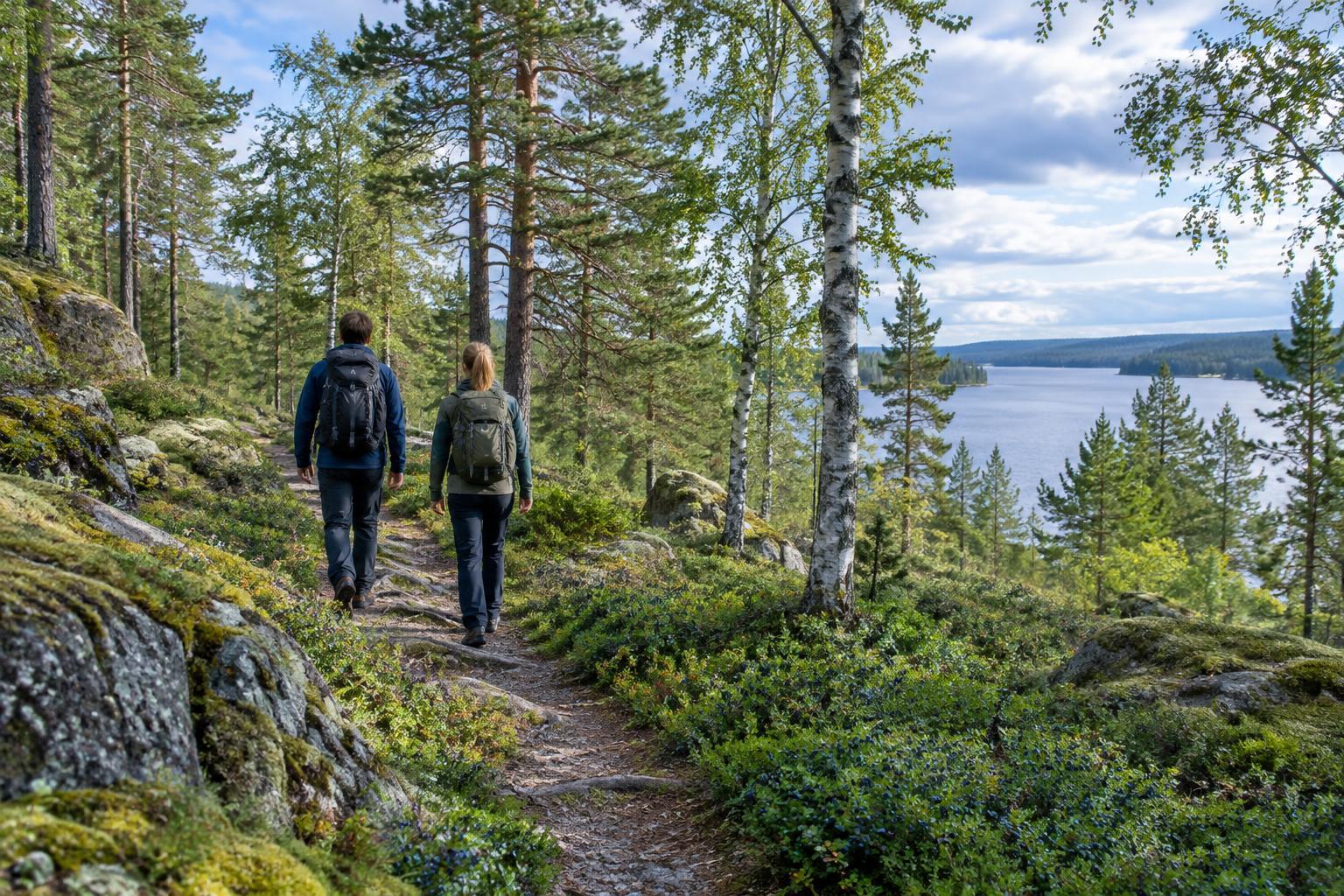
Your first Swedish hike does not need to be a wilderness expedition. A modest route with time to pause beside a lake, watch the light change in a forest or stop for a packed lunch can be more rewarding than rushing to cover ground. This independent culture and travel guide is not a consulate or government service; for route rules and on-the-ground conditions, consult the relevant local trail or park information.