Start with the kitchen you actually use
The most convincing Swedish-style kitchens often look calm because someone has thought carefully about what happens in them. Before choosing cabinet colors or pendant lights, notice how you move through your current kitchen. Where do you put groceries down? Does anyone prepare breakfast while someone else washes dishes? Which items stay on the counter because their assigned storage is inconvenient? These observations are a better starting point than a showroom image.
Write down the activities your kitchen needs to support: cooking, eating, working, entertaining or simply making coffee before everyone else wakes up. Keep the things used for each activity close to where they are needed. For example, mugs near the kettle make more sense than mugs displayed across the room. If space is limited, prioritize clear work surfaces and an unobstructed path between the sink, cooking area and food storage over an extra decorative feature.
Sweden Culture Guide is an independent culture magazine, not a consulate or government service. Here, “Swedish-style” describes a useful design approach rather than a fixed set of rules: make daily life easier, let materials feel honest and leave space for the people who live there.
Choose a quiet foundation, not a blank personality
Light-colored cabinets, simple fronts and natural wood can help a kitchen feel open, especially when daylight is scarce. But an all-white room is not required. Muted green, warm gray, soft blue or deeper colors can work just as well if they suit the room and the rest of the home. Look at samples in morning and evening light before committing; a color that appears warm in a shop may feel cool beside your own walls and floor.
Use a restrained palette to make decisions easier, then bring in variation through texture. Painted cabinetry, a wood table, ceramic dishes and a washable textile can provide interest without competing for attention. If you already own a table with scratches and a history, it may add more character than a perfectly matched new set. The goal is a kitchen that feels settled, not one that appears untouched.
Give storage a job
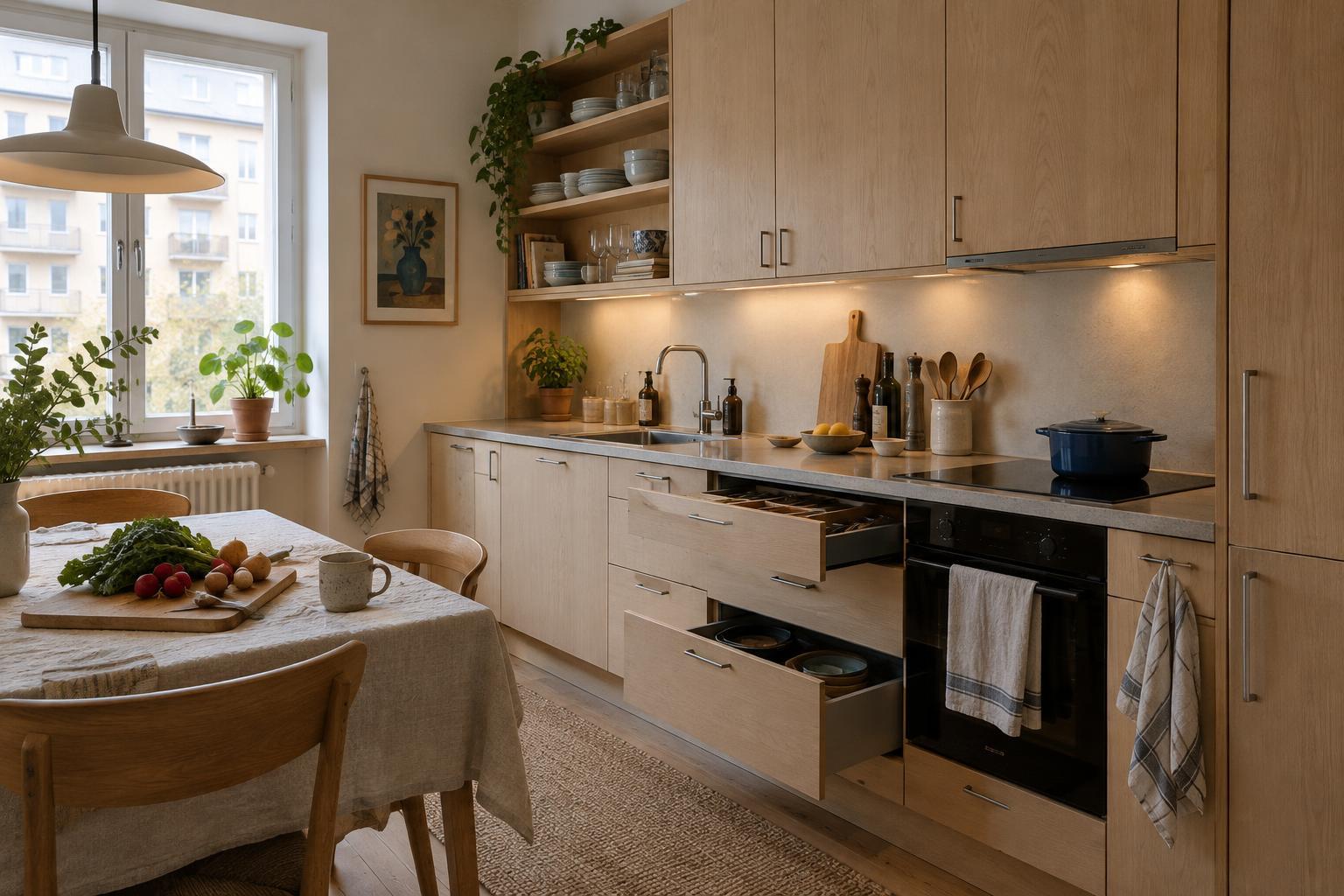
A tidy appearance depends on storage that fits real belongings. Group similar items, check their dimensions and decide what deserves the easiest-to-reach space. Deep drawers can make pots and pans easier to see than a low cupboard with a dark back corner. Narrow pull-outs may help with small bottles or cleaning supplies, but only if they hold things you actually use. Before adding specialist fittings, test whether a simple shelf or drawer divider would do the job.
Open shelves can make everyday plates easy to grab and lend warmth to a room. They also leave everything visible and may need frequent cleaning. Try one short shelf rather than replacing all upper cabinets. Keep less attractive necessities behind doors and reserve open space for objects you enjoy seeing and use often. A practical mix is usually easier to live with than either completely concealed storage or an entirely open display.
Plan light and materials for ordinary days
Good kitchen lighting has several tasks. Daylight is welcome, but you also need clear light where you chop and wash, plus softer light for meals or late evenings. Under-cabinet lighting can illuminate a worktop without relying on a bright ceiling fixture. A pendant above a table may create a comfortable gathering spot, provided it does not block views or leave the work surface in shadow. Place switches where you will naturally reach for them.
Choose finishes with your habits in mind. A beautiful worktop that demands more care than you want to give it may become a source of irritation. Consider how a material responds to water, heat, crumbs and routine cleaning, and check its care requirements before buying. Wood can bring warmth through a table, stool or small accessory even if you prefer a more forgiving material beside the sink. Durable choices are easier to appreciate when they still work well after the novelty has worn off.
Leave room for change
A showroom presents one finished moment; a home has to adapt. If your budget is limited, focus first on layout, lighting and reliable fittings. Paint, handles, textiles and chairs can be adjusted later. Try living with a clear stretch of counter before filling it with decorative objects. You may discover that a tray for daily essentials is useful, while another display only gets in the way.
Finally, include something that belongs unmistakably to you: a familiar bowl, a well-used cookbook or a chair brought from another room. Swedish-style design is most useful as a way to edit thoughtfully, not as a shopping list. When each choice supports how you live, the kitchen can feel both orderly and personal.