Start with a room that works
Swedish-inspired interiors are often described as simple, but simplicity need not mean filling a room with new furniture. An older table can sit comfortably beside a contemporary chair when both suit the space and the people using it. The starting point is not a strict period or style. It is a clear idea of what the room needs to do.
Before choosing pieces, notice the room’s daily patterns. Where do people sit to read? Does the dining table also serve as a workspace? Which routes need to stay clear? These questions help decide whether a vintage item belongs in a prominent position or would be better placed elsewhere. A handsome cabinet that blocks a doorway will make a room feel less considered, however well it matches the décor.
This is an independent culture magazine about Sweden, not a consulate or government service. Its interest here is in how design choices can make an ordinary home useful, welcoming and personal.
Give each piece a reason to be there
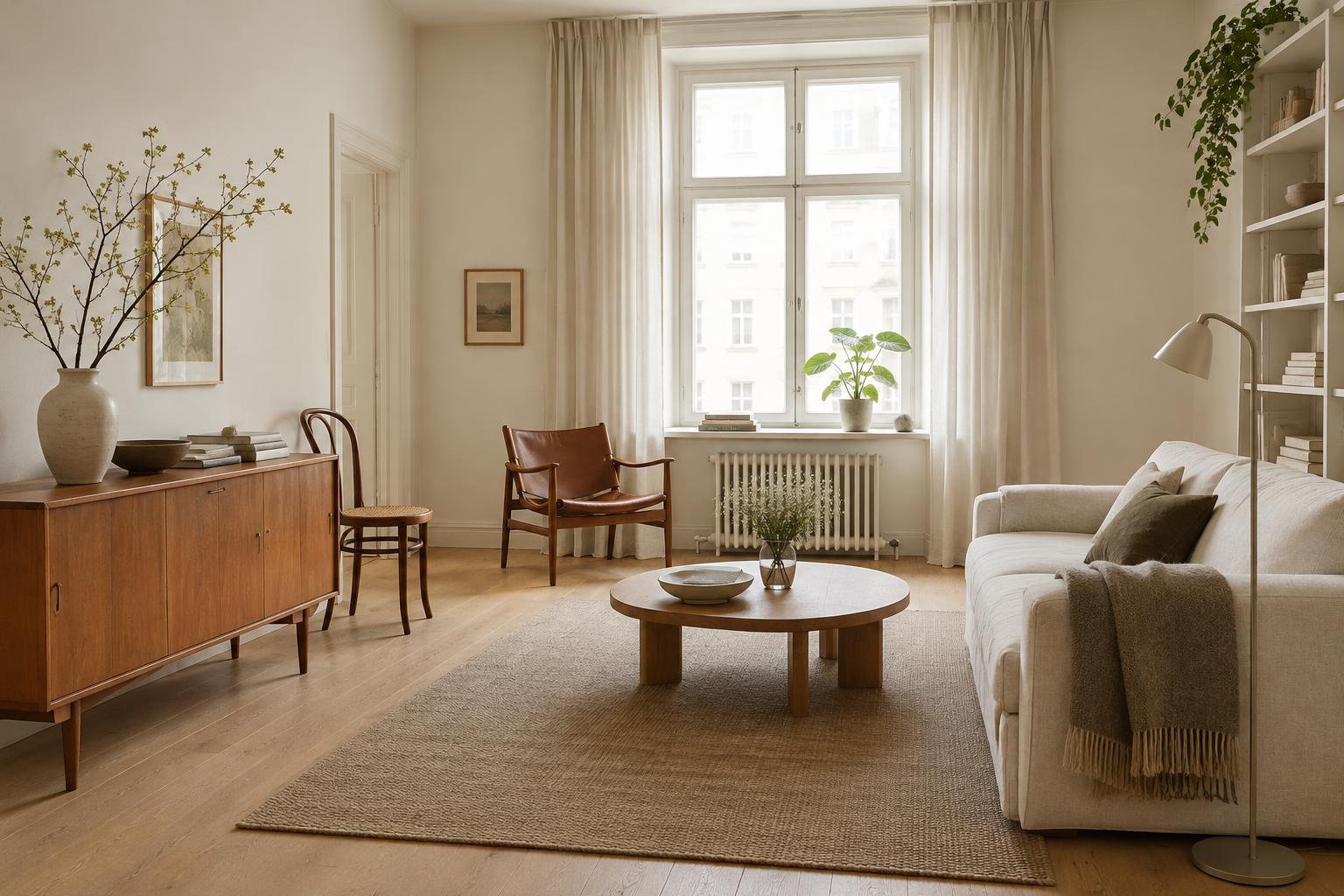
A vintage piece often has distinctive details: a shaped handle, a worn wooden top or a silhouette associated with another era. Contemporary furniture may have quieter lines. Pairing them works best when each contributes something different. An older sideboard can offer storage and warmth, while a restrained modern lamp keeps the arrangement from feeling like a period display.
Try choosing one substantial older piece as an anchor rather than distributing small vintage finds evenly around the room. A dining table, bookcase or armchair gives the eye a place to settle. Then leave enough space around it to appreciate its shape. Smaller objects can be added later, once the main furniture is in place.
There is no need for every item to have a known designer or an elaborate history. A well-used chair inherited from family can be as meaningful as a sought-after market find. What matters in a working home is its condition, comfort and relationship to the other pieces. Check that drawers move, joints feel stable and upholstery is suitable for the use it will get.
Connect old and new through materials
Natural materials can provide a gentle link between different decades of design. Wood, wool, linen, ceramic and metal each have their own texture, and repeating one or two of them across a room helps varied pieces feel related. A vintage wooden desk, for example, can sit near a contemporary shelf if their tones complement rather than compete with each other.
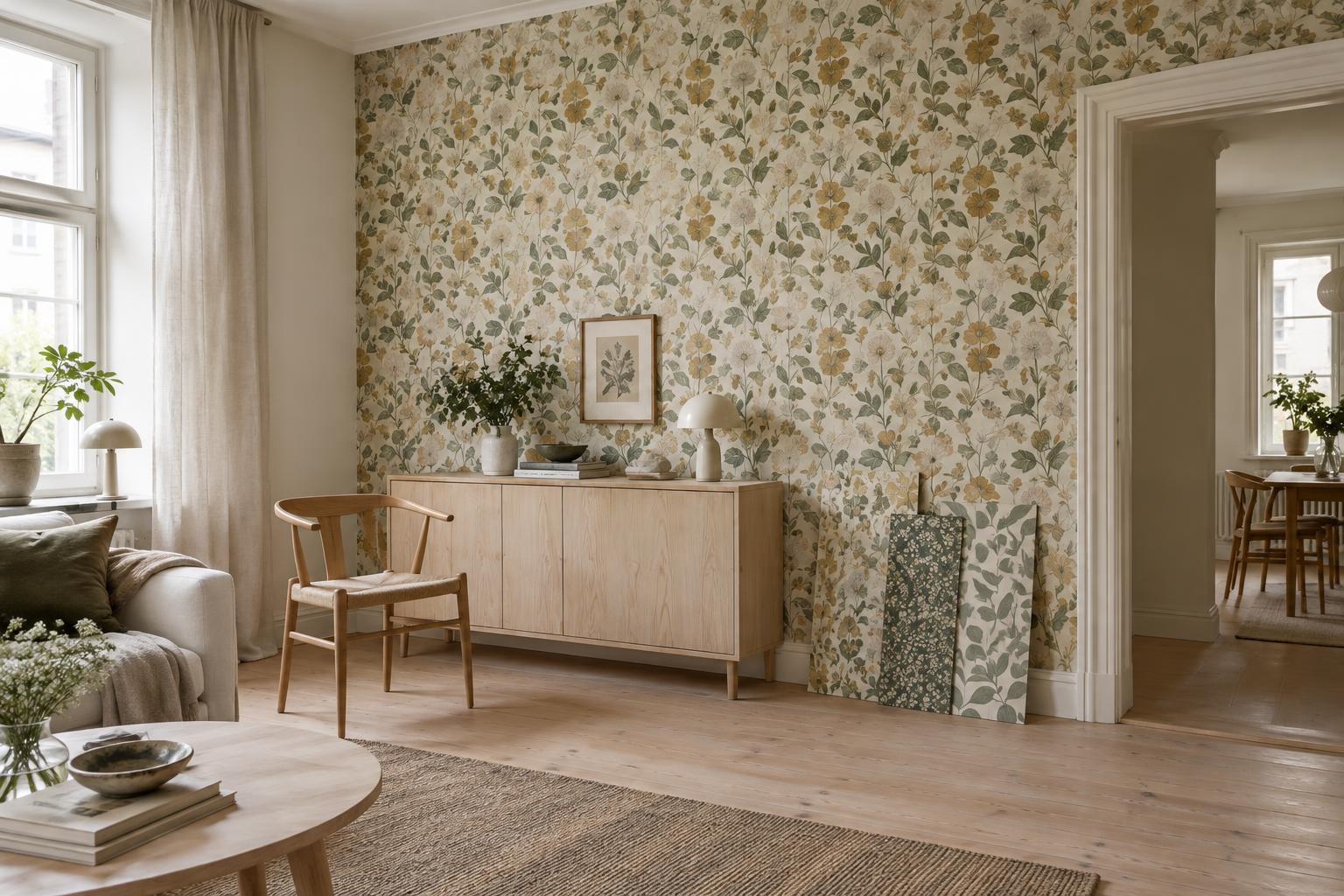
The wood does not have to match exactly. In fact, a room with identical finishes can feel overly planned. Look instead for a loose relationship: warm woods with other warm notes, or a darker antique against a lighter, quieter background. If several pieces have strong grain or ornament, give them visual breathing room with plain upholstery or a simple wall color.
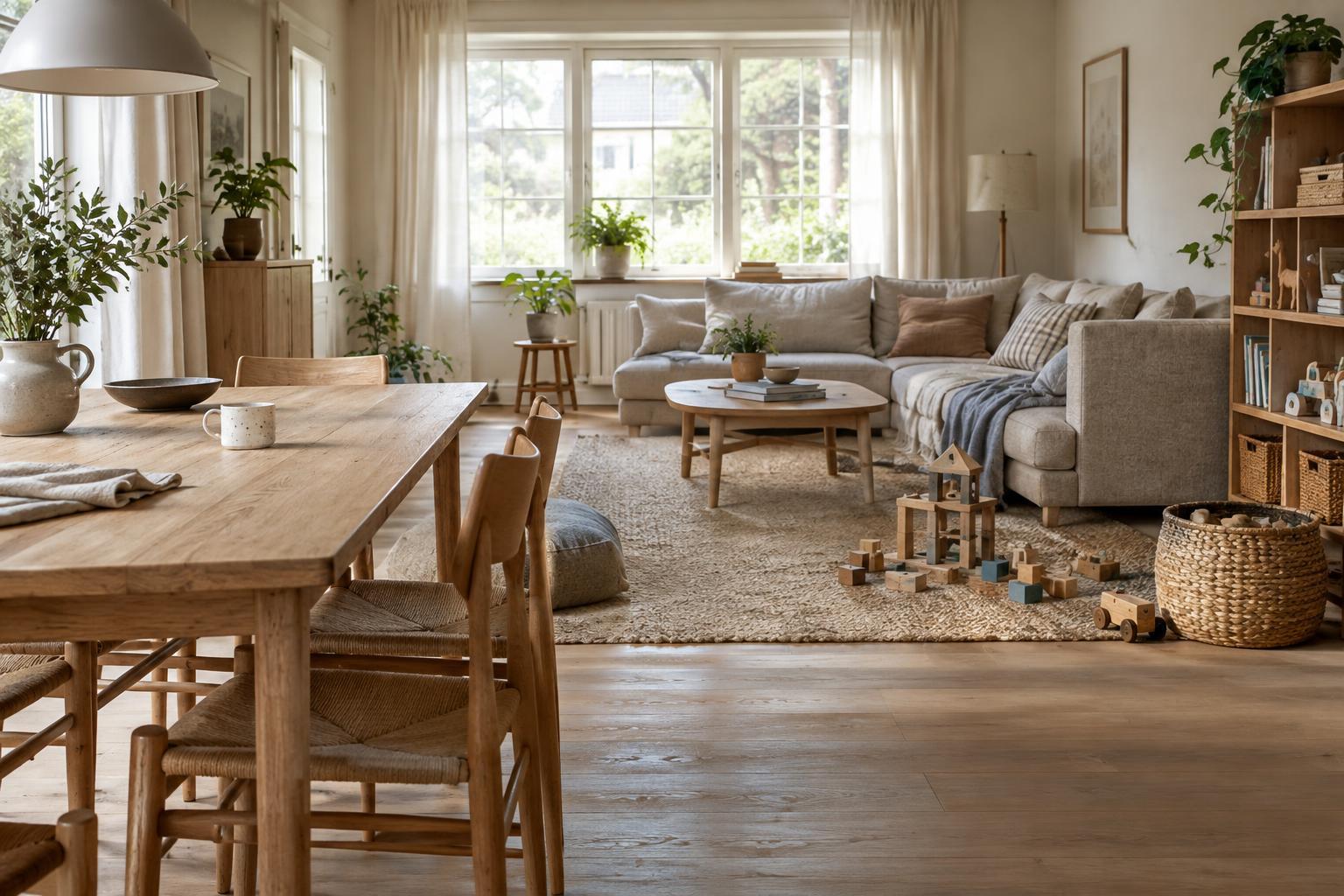
Textiles are an easy way to soften the join between eras. A throw can make an angular sofa feel less stark; a contemporary rug can give older chairs a shared setting. Choose fabrics for how they feel and how they will wear, not just for a photograph. Removable covers and durable weaves may be especially useful in a busy household.
Use light and empty space deliberately
Lighting changes how old and new pieces appear together. Rather than relying on a single ceiling fixture, consider what needs illumination at different times: a task light by a chair, a pendant over a table and softer light in a corner. Mixing lamp styles can be effective, provided the light they give is comfortable for the activity nearby.
Daylight also deserves attention. Keep windows reasonably clear where possible, and notice whether a dark cabinet absorbs light in a small room. Moving it to a brighter wall, or placing it opposite a lighter surface, may help. These adjustments are more useful than applying a fixed rule about which colors a Swedish-inspired room must contain.
Empty space is part of the composition. Not every surface needs a collection, and not every wall needs artwork. A gap beside an old chest allows its proportions to register; a clear patch of floor makes circulation easier. Restraint gives characterful pieces room to speak without asking them all to compete.
Let the room change gradually
A balanced interior rarely needs to be assembled at once. Living with a room for a while reveals whether it needs another seat, better storage or simply fewer objects. Additions can then solve a real problem rather than fill an apparent gap. This slower approach is particularly helpful when buying secondhand, because the right size and condition may take time to find.
It also makes room for personal attachments. An old object may carry memories even if its finish differs from everything nearby. Instead of hiding it or trying to make the whole room match, look for a small connection: a repeated color in a cushion, a similar material in a lamp, or a position where its scale feels right.
The most convincing mix of vintage and contemporary design is not a formula. It is a room in which useful things, older favorites and newer choices can coexist without crowding one another. When comfort and daily life guide the decisions, contrast becomes a source of character rather than a problem to conceal.