The difference begins with the preparation
Gravlax and smoked salmon often arrive as thin slices beside bread, potatoes or a generous spoonful of sauce. Their similar appearance makes them easy to confuse, but the distinction is simple: gravlax is cured, while smoked salmon gets its defining flavor from smoke. Both may also be salted as part of their preparation.
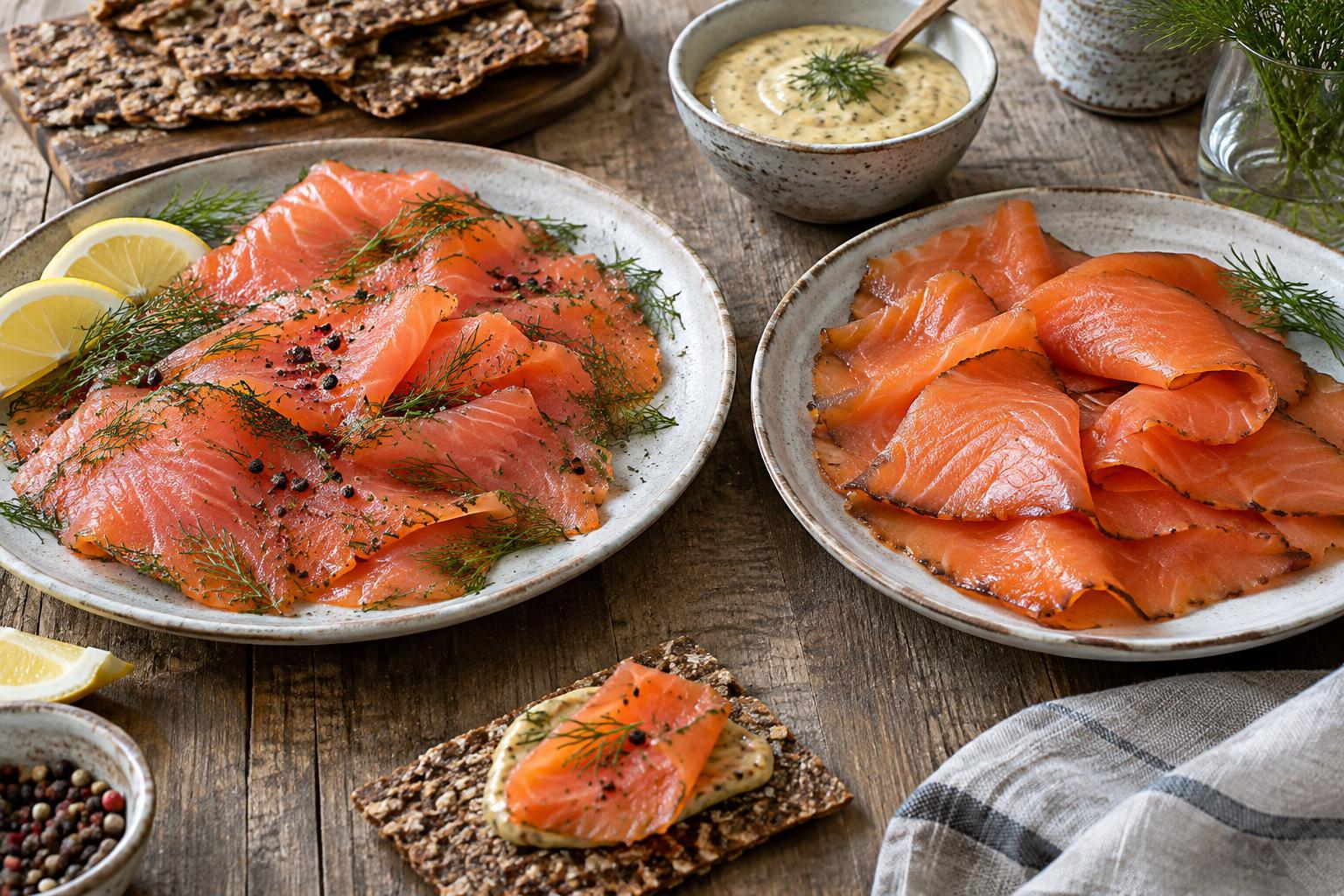
Traditional gravlax is made by coating salmon with salt and sugar, usually along with dill, then leaving it chilled while the cure draws moisture from the fish. The finished salmon is sliced thinly. Its name recalls an older practice of preserving fish, but the gravlax served today is generally prepared in a refrigerator, not buried in the ground. There is no smoking step.
Smoked salmon covers more than one style. Cold-smoked salmon is cured and then exposed to smoke without being cooked through, giving it a silky texture. Hot-smoked salmon is smoked at a higher temperature and cooks as it smokes. It tends to be firmer and breaks into flakes rather than draping into thin, translucent slices.
What you notice on the plate
Gravlax has a tender, dense texture and a clean salmon flavor shaped by its cure. Salt and sugar balance one another, while dill adds a fresh, herbal note. Recipes vary: some include pepper or other seasonings, so one gravlax may taste more aromatic or sweet than another.
Cold-smoked salmon can look much like gravlax, especially when both are finely sliced. Taste is the clearest clue. Smoke adds a savory aroma that may be gentle or pronounced, depending on how the fish was prepared. Hot-smoked salmon is easier to distinguish: its cooked, flaky texture makes it well suited to larger pieces or to mixing into a dish.
If you are choosing from a counter or a buffet, check the label rather than relying on color alone. A vivid orange slice is not necessarily gravlax, and a pale slice is not necessarily smoked. The preparation method tells you more about what to expect than the shade of the fish.
How they fit into a Swedish meal
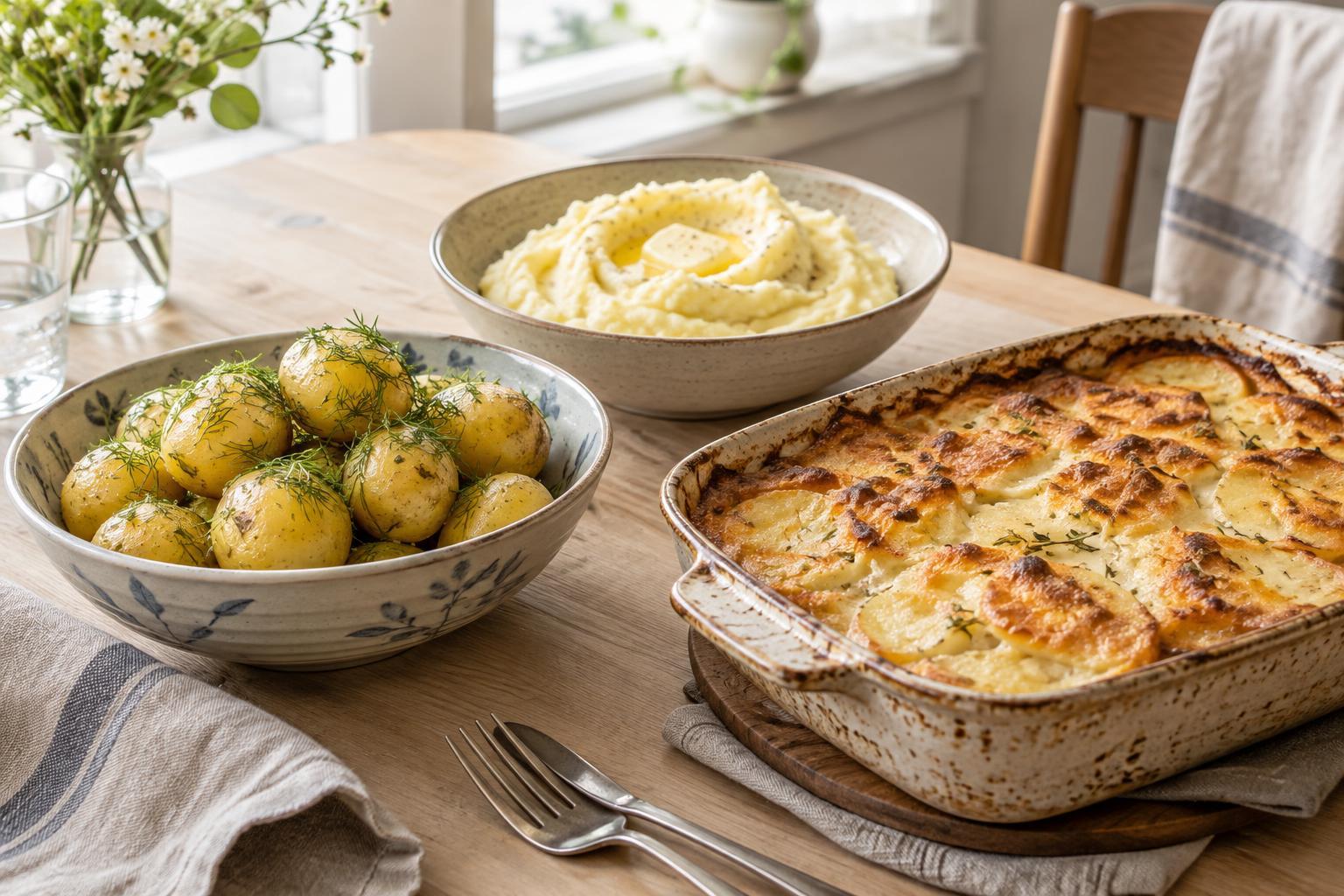
Gravlax is often served as a starter or as part of a spread of smaller dishes. Thin slices work well with boiled potatoes, crispbread or rye bread. A common companion is hovmästarsås, a sweet-tangy mustard and dill sauce. Its sharpness cuts through the richness of the salmon without overwhelming the cure.
Smoked salmon is just as adaptable, though the style matters. Cold-smoked slices are easy to arrange on open sandwiches with a mild topping or a squeeze of lemon. Hot-smoked salmon can be served in pieces with potatoes and vegetables, or flaked into a salad. Both can appear at a celebratory table, but neither needs a special occasion.
For an informal comparison, serve gravlax and cold-smoked salmon side by side with plain bread or potatoes. Taste each before adding sauce. You may find that dill and the sweet-salty cure stand out in the gravlax, while the smoked fish leaves a lingering savory note. Add accompaniments afterward to see how they change each bite.
Choosing and keeping salmon
Choose gravlax when you want dill-forward flavor and a soft, sliceable fish that pairs naturally with mustard sauce. Choose cold-smoked salmon when smoke is the flavor you want to highlight. For a firmer fish that can be served in chunks or flakes, look for hot-smoked salmon. These are preferences rather than rules; a good plate depends on what tastes balanced to you.
Because the preparations differ, follow the storage and serving directions on the product you buy. Keep chilled products refrigerated and avoid leaving them out longer than necessary during a meal. If you plan to make gravlax yourself, use a recipe with clear food-handling guidance rather than treating curing as a substitute for safe storage.
A food tradition, not an official label
There is room for variation within all three styles. A household might use more dill in its gravlax, while a producer might choose a lighter smoke for its salmon. Knowing the basic methods lets you enjoy those differences instead of looking for a single definitive version.
Sweden Culture Guide is an independent English-language magazine about Swedish life and culture, not a consulate or government service. Here, the useful distinction is a culinary one: cured gravlax, silky cold-smoked salmon and flaky hot-smoked salmon each bring something different to the table.