Two archipelagos, two kinds of scale
Sweden’s west and east coasts both have remarkable island landscapes, but a trip into one archipelago does not feel quite like a trip into the other. Gothenburg’s islands face the open waters of the west coast. The Stockholm archipelago stretches east from the capital through sheltered channels toward the Baltic Sea. In either place, the experience changes as you move farther from the city: busy ferry landings give way to quieter paths, smaller harbours and longer views over the water.
This is a travel guide from an independent English-language magazine about Sweden, not a consulate or government service. Its purpose is to help you choose a landscape and a pace, rather than provide official travel services.
Gothenburg: open horizons and easy island wandering
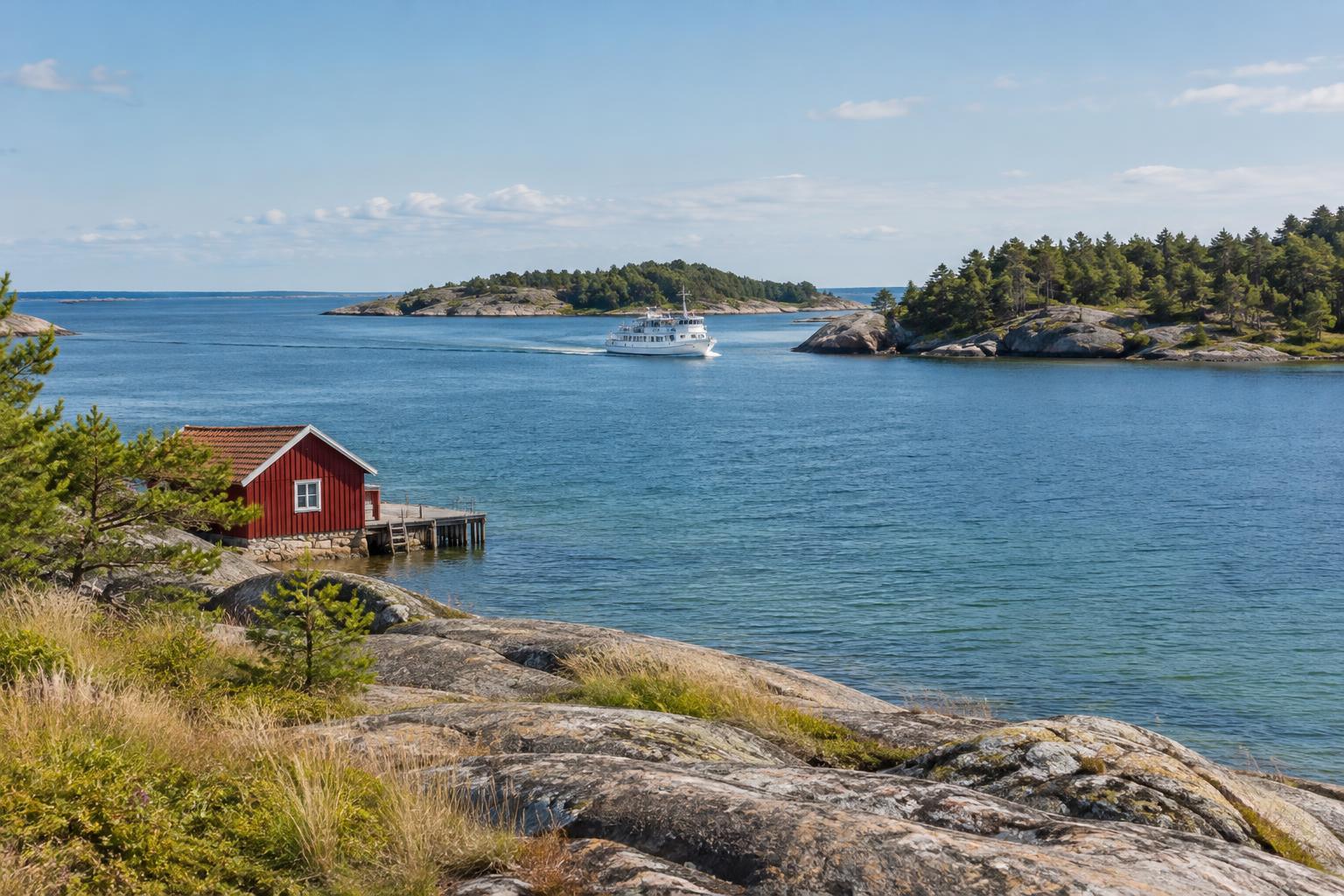
The Gothenburg archipelago often appeals to visitors who want the sea to shape the whole day. Exposed rock, low vegetation and views toward the horizon give many islands an open, windswept character. Fishing villages, small harbours and places to swim add variety without requiring a packed itinerary. A simple outing might consist of a ferry ride, a walk across an island, lunch and time on the shore.
The southern islands are particularly suited to exploring on foot, as ordinary private car traffic is absent from many of them. That does not mean every path is short or every landing has the same facilities. The northern islands offer other options, and access arrangements vary by island. If you are travelling with a bicycle, pushchair or limited mobility, check the particular ferry and destination instead of assuming that all islands work alike.
Stockholm: sheltered passages and room to roam
The Stockholm archipelago feels expansive in a different way. Close to the city, a short boat journey can introduce you to wooded islands, waterfront settlements and sheltered inlets. Longer journeys lead through a changing pattern of narrow passages and more open water. Some destinations lend themselves to an uncomplicated day trip; others make more sense when you have time to stay overnight.
That range is Stockholm’s strength, but it also makes choosing a destination important. A nearby island may suit a first visit or a relaxed afternoon, while a farther one can make the boat journey part of the attraction. You can build a trip around a village, a walk through woodland, a swim or simply watching the shoreline change from the deck. The farther you go, the more carefully you will need to plan your return.
Match the destination to your travel style
Choose Gothenburg if you are drawn to bare rock, west-coast light and a straightforward day of walking between sea views and a small settlement. Choose Stockholm if you want more choice in journey length and enjoy the idea of travelling through a broad network of islands. Neither comparison is absolute: both regions have lively stops and quiet corners, and a calm or windy day can change how either coast feels.
Think about how much of the day you want to spend in transit. If the ferry is mainly a way to reach a walk or swim, pick an island with enough time ashore before the last useful return. If the journey itself is the pleasure, a longer route may be worthwhile. Travelling with children or a mixed-ability group? One island, one comfortable walking plan and a generous margin before the return boat often make for a better day than trying to see several places.
Plan lightly, but check the essentials
Boat routes, frequencies and onboard arrangements can differ by destination and season. Before setting out, check the operator’s current timetable, where the boat departs and whether you need to arrange a ticket in advance. Look at the full return journey, not just the outward crossing. Bring layers for changing weather, comfortable shoes and water; even a warm city day can feel cooler on a boat or an exposed shore.
Leave room for unplanned pauses, while treating the islands as lived-in places rather than open-air attractions. Follow local signs, respect homes and private spaces, and take your rubbish with you when facilities are limited. The best archipelago day is rarely the one with the most stops. It is the one that gives you enough time to notice the details: a sheltered harbour, a smooth stretch of granite or the changing view between islands.