What you might see on a Swedish stage
A theatre night in Sweden might mean a classic play, a new Swedish work, a musical, a dance performance or a production for children. Some programmes feature familiar stories in unfamiliar settings; others focus on contemporary life. Repertory varies by venue and season, so it is worth reading a production description rather than choosing by title alone.
Most spoken theatre is performed in Swedish. English-language productions do appear, but visitors should not assume that an English title means an English performance. Some venues offer surtitles or other language support for selected productions. If following every line matters to you, check the performance language and any surtitling information before buying a ticket. If you are comfortable watching for movement, music and visual storytelling, dance or a visually led production can be another way in.
Choosing a venue
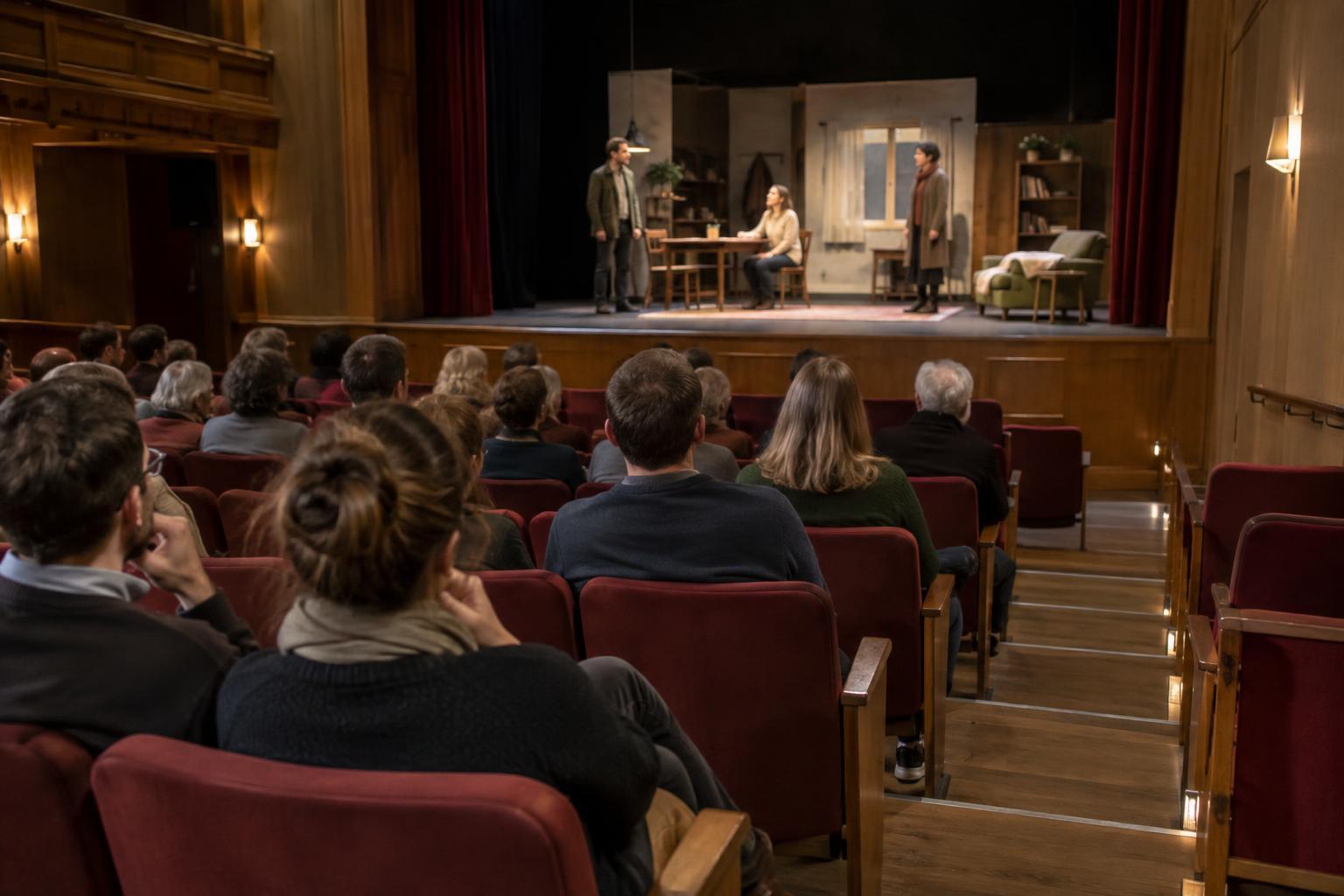
Sweden’s theatre scene extends beyond the large stages of Stockholm, Gothenburg and Malmö. Regional theatres, touring companies and smaller independent venues bring performances to towns across the country. A grand auditorium may offer a very different evening from an intimate studio where the audience sits close to the performers. Neither is necessarily more representative of Swedish theatre.
Venue names and listings can take a little decoding. Teater means theatre, scen means stage, and föreställning means performance. One organisation may use several stages, sometimes in different buildings, so check the address printed on your ticket. A venue’s programme can also tell you the running time, whether there is an interval and whether a production has an age recommendation. These details are especially useful when planning an evening with children or arranging transport afterwards.
Booking and arriving
Many theatres sell tickets online, and some also have a box office. Seating may be assigned or unreserved; look at the ticket details rather than assuming either arrangement. Prices can differ by seat and performance, and some venues offer reduced-price categories. If you need step-free access, a companion seat or another accommodation, contact the venue before booking where possible. Accessibility arrangements vary, and staff can usually give more useful guidance than a seating chart alone.
Aim to arrive with time to find the entrance, leave a coat if you wish and locate your seat. A garderob is a cloakroom; its availability and any charge depend on the venue. Bars or cafés may open before a show or during an interval, but food and drink rules differ between auditoriums. If you arrive after the performance starts, staff may ask you to wait for a suitable moment to enter, or late entry may not be possible.
Audience customs during the performance
The safest approach is familiar to theatre-goers in many countries: silence your phone completely, put it away, and avoid talking while performers are onstage. Even a bright screen can distract people nearby. Photography and recording are often restricted during performances, so look for the venue’s rules rather than assuming a quick picture is acceptable. If you need to step out, wait for a natural pause when you can and follow staff directions.
Audience responses depend on the production. Laughter is welcome when something is funny, and applause commonly comes at the end of an act or performance. A quiet moment after a final scene does not necessarily mean the audience is unimpressed; people may simply be letting it settle before clapping. You do not need to know a special local ritual. Follow the room, give neighbouring audience members space and enjoy the show in the way that feels natural.
Making an evening of it
An interval, often called a paus, gives you time to stretch, visit the restroom or talk about what you have seen. Check whether your performance has one: shorter shows may run straight through. If you plan a meal, leave some flexibility around the stated running time, which may be approximate. Theatre districts can be lively after a show, while smaller venues may have fewer nearby options later in the evening.
For a first visit, choose a production that genuinely interests you, then check its language, length, venue address and access information. That small amount of preparation makes it easier to relax once the lights go down. Sweden Culture Guide is an independent magazine about culture and everyday life, not a consulate or government service; for performance-specific details, the theatre itself is the best place to check.