The pause matters more than the cup
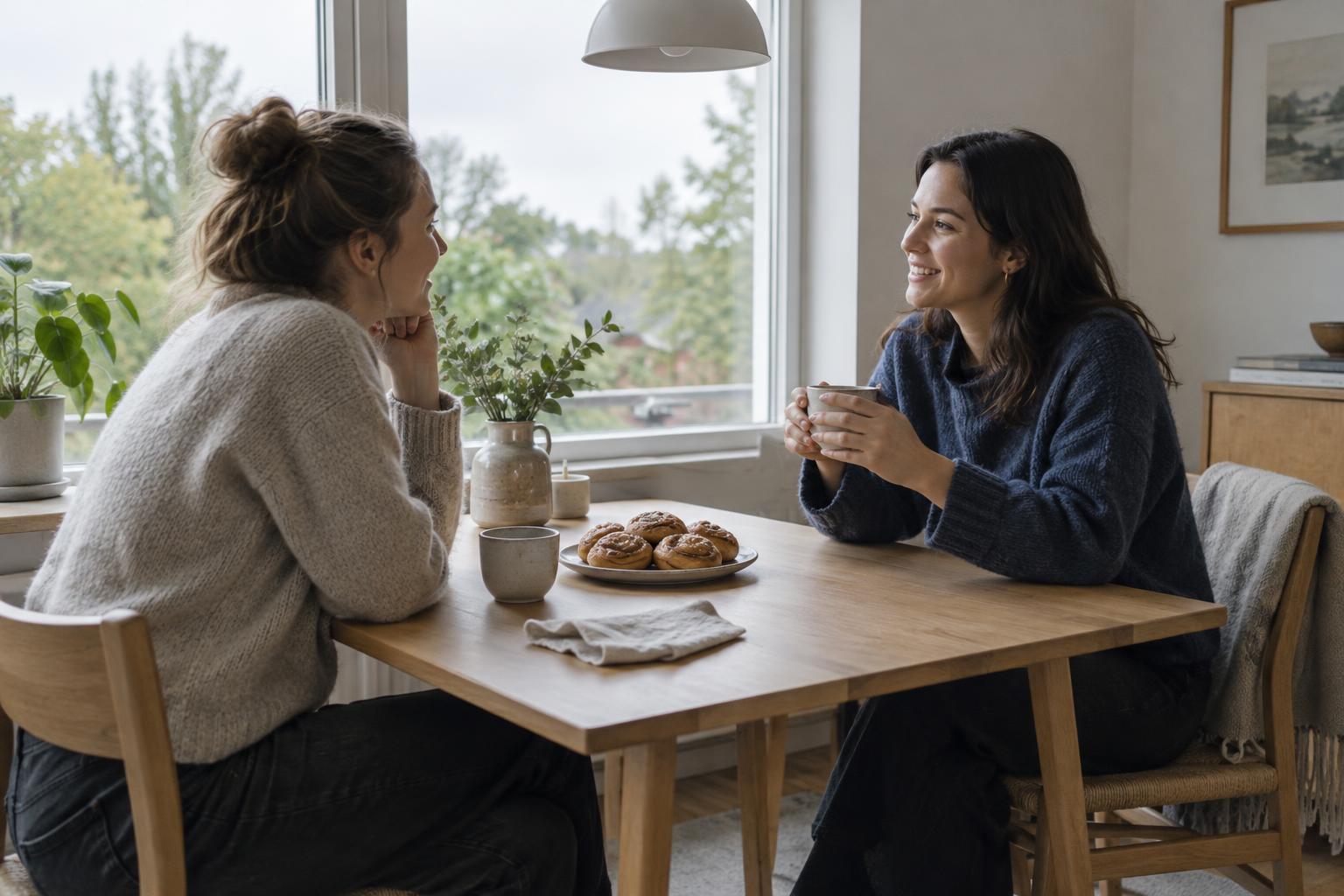
Ask what fika means and you may hear a simple answer: coffee and something sweet. That describes a familiar version of it, but misses the reason people make time for it. Fika is a pause shared with someone else, or sometimes a quiet pause taken alone. At its most social, it offers a reason to sit down, put other tasks aside and talk without needing a special occasion.
Coffee is common, but it is not a requirement. Tea, another drink or no drink at all can fit the moment. A cinnamon bun or biscuit may appear, yet food is not the test of whether a gathering counts. The useful question is whether everyone has a little space to slow down and be present. Sweden Culture Guide is an independent magazine about Swedish life, not a consulate or government service.
How fika creates an easy invitation
A suggestion to have fika is often less formal than an invitation to lunch or dinner. It can fit into an afternoon without asking anyone to commit to a long visit. That modest scale makes it useful for catching up with a friend, welcoming a neighbour or getting to know a colleague. There is something to do with your hands, but no elaborate activity to organise.
The conversation need not be profound. People may talk about weekend plans, a shared project or whatever is happening around them. The value lies partly in giving that conversation a place to happen. A short, unhurried exchange can make everyday contact feel more personal than a hurried greeting in a corridor.
Fika at work and at home
In some Swedish workplaces, fika is a familiar shared pause. Colleagues might gather around a table or in a break room rather than drink coffee alone at their desks. Arrangements vary: one team may have a regular time, while another takes breaks more casually. The pause can help people talk across roles and exchange small pieces of news that would not call for a meeting.
At home, fika may be as simple as putting on the kettle when someone visits. It can also be a more planned occasion, with cups set out and something baked or bought to share. Neither version needs to be impressive. Offering what you have, making a comfortable seat and allowing time for conversation usually matter more than a carefully arranged spread.
Joining in without a rulebook
If someone invites you for fika, you do not need to study a fixed set of rules. Accept the drink or snack you would like, and feel free to decline what you do not want. In a workplace, notice how others handle timing and shared food; customs differ between groups. If people take turns bringing something, asking how that works is more helpful than guessing.
Hosting can be equally straightforward. Suggest a time, offer a drink and provide something small if you wish. A shop-bought pastry is fine, and a piece of fruit may suit the occasion just as well. Give guests a chance to settle in before moving on to the next task. The aim is not to perform a perfect Swedish custom, but to make the pause welcoming.
A small ritual with room to adapt
It is tempting to treat fika as a formula: coffee plus cake equals Swedish culture. In practice, its shape depends on the people involved. A quick break between tasks feels different from an afternoon with an old friend. Some people enjoy lively group conversation; others prefer a calm chat with one person. The ritual is flexible enough to hold both.
That flexibility is what makes fika useful beyond a café setting. It gives an ordinary day a gentle stopping point and makes time together feel intentional. You can borrow the idea without copying every detail: invite someone to sit down, offer what you have and let the conversation unfold. The most important ingredient is the time you set aside.