Why make time for a wetland?
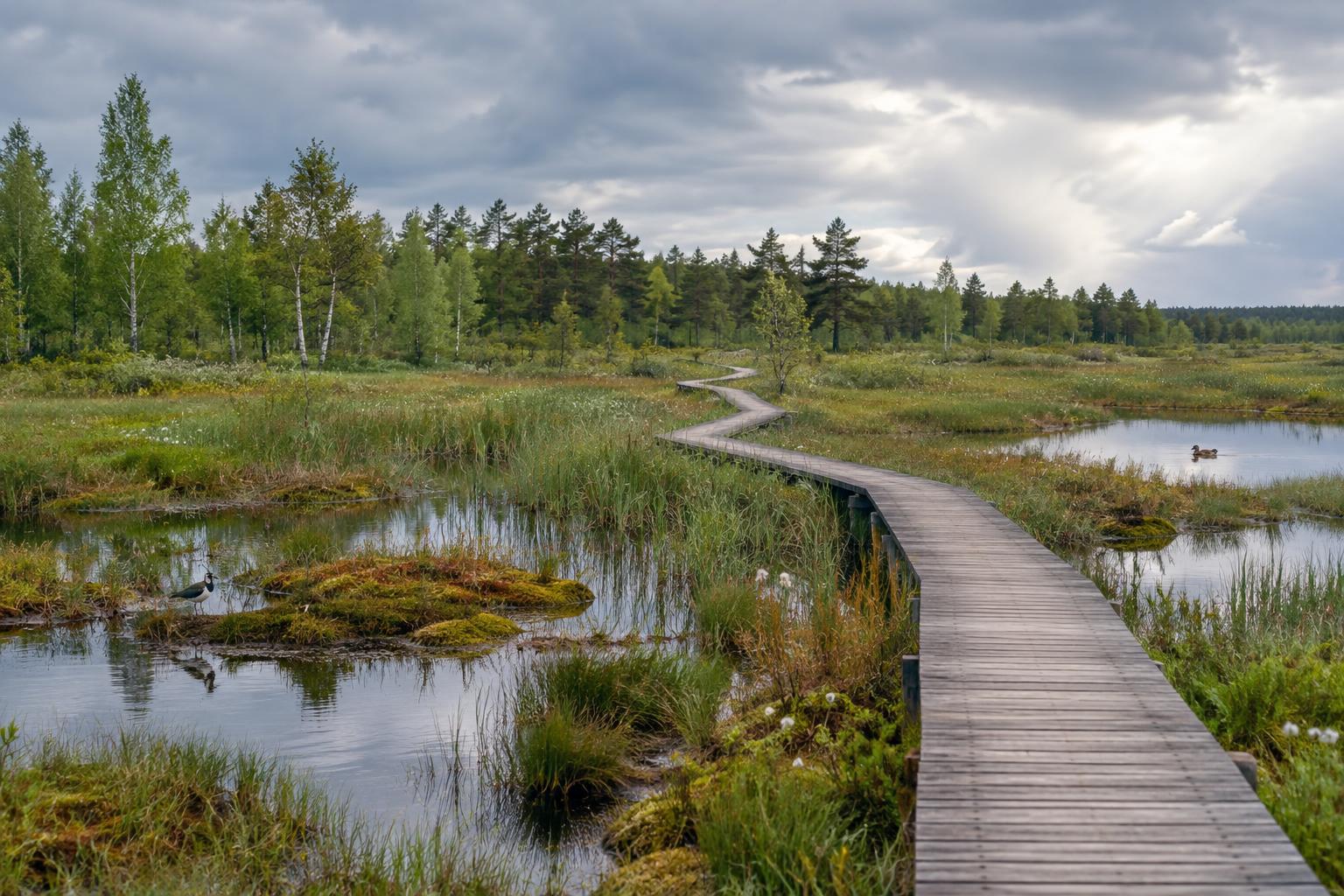
A wetland walk can feel different from a hike through forest or across open hills. The ground may be covered with moss, reeds or shallow water, and the best view might come from standing still rather than covering distance. Some routes cross bogs on wooden boardwalks; others follow firm paths around marshes or lead to a birdwatching platform. Each offers a chance to notice small changes in light, sound and plant life.
Wetlands vary considerably, so choose a destination for the experience you want rather than assuming every site has the same facilities. A short loop with a viewing platform suits a relaxed outing. A longer route over open, exposed ground calls for more attention to weather and navigation. Look for a route description and map before setting out, including whether the path returns to its starting point.
Choose a route that matches your group
Start by checking the length, surface and access points of a proposed walk. A boardwalk may make soft terrain easier to cross, but it is not necessarily level, wide or suitable for wheels. Steps, gaps, uneven planks and muddy approaches can change how manageable a route feels. If accessibility matters, seek specific details about the whole route rather than relying on a photograph of one smooth section.
Give yourself more time than the distance alone suggests. Narrow boardwalks may require people to pass carefully, and a viewing platform invites a pause. If you are walking with children, agree in advance that everyone stays on the marked route. If you are bringing a dog, check the rules for that particular area and keep it close enough not to disturb wildlife. Nature reserves may have site-specific restrictions in addition to general expectations for considerate outdoor access.
Prepare for damp ground and open skies
Footwear with a steady grip is useful even when most of the route is built. Wood can be slippery when wet, while the path to a boardwalk may be muddy. Dress in layers and carry a waterproof outer layer: an open wetland can feel breezy, and shelter may be limited. In warmer periods, consider insect protection, especially if you plan to stop for long stretches.
Carry drinking water, a snack and a map that you can use without relying on a phone connection. Check the weather and available daylight when planning your return. If heavy rain, ice or damaged planks make a route look unsafe, turn back rather than stepping onto soft ground to get around an obstacle. A bog or marsh can be difficult to cross and easy to damage, even when firmer land appears close by.
Watch quietly and leave the habitat as you found it
You do not need specialist equipment to enjoy a wetland. Pause at the edge of a clearing, look across different heights of vegetation and listen before moving on. Binoculars can help you see birds without approaching them. If an animal changes its behavior because you are nearby, give it more space. Keep voices low near viewing areas, particularly when others have stopped to observe.
Stay on designated paths and platforms, take litter away and avoid picking plants. These habits protect fragile ground and make the visit better for the next person. Before you leave, allow a few minutes to look back across the landscape: a slow walk can be rewarding without a summit, a long mileage target or a wildlife sighting.
Sweden Culture Guide is an independent magazine about Sweden’s culture and landscapes, not a consulate or government service. For local access conditions and rules, check information provided for the specific place you plan to visit.