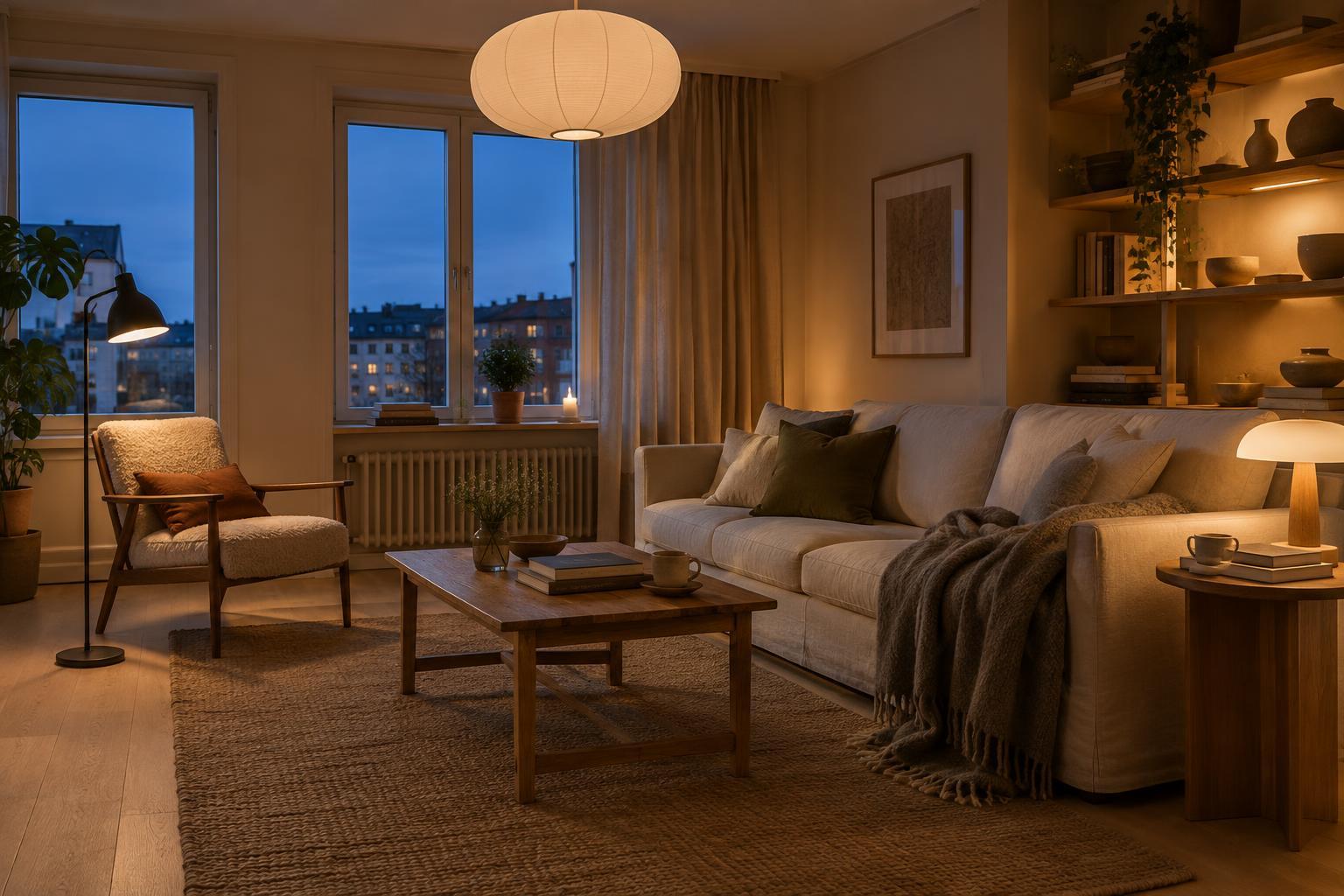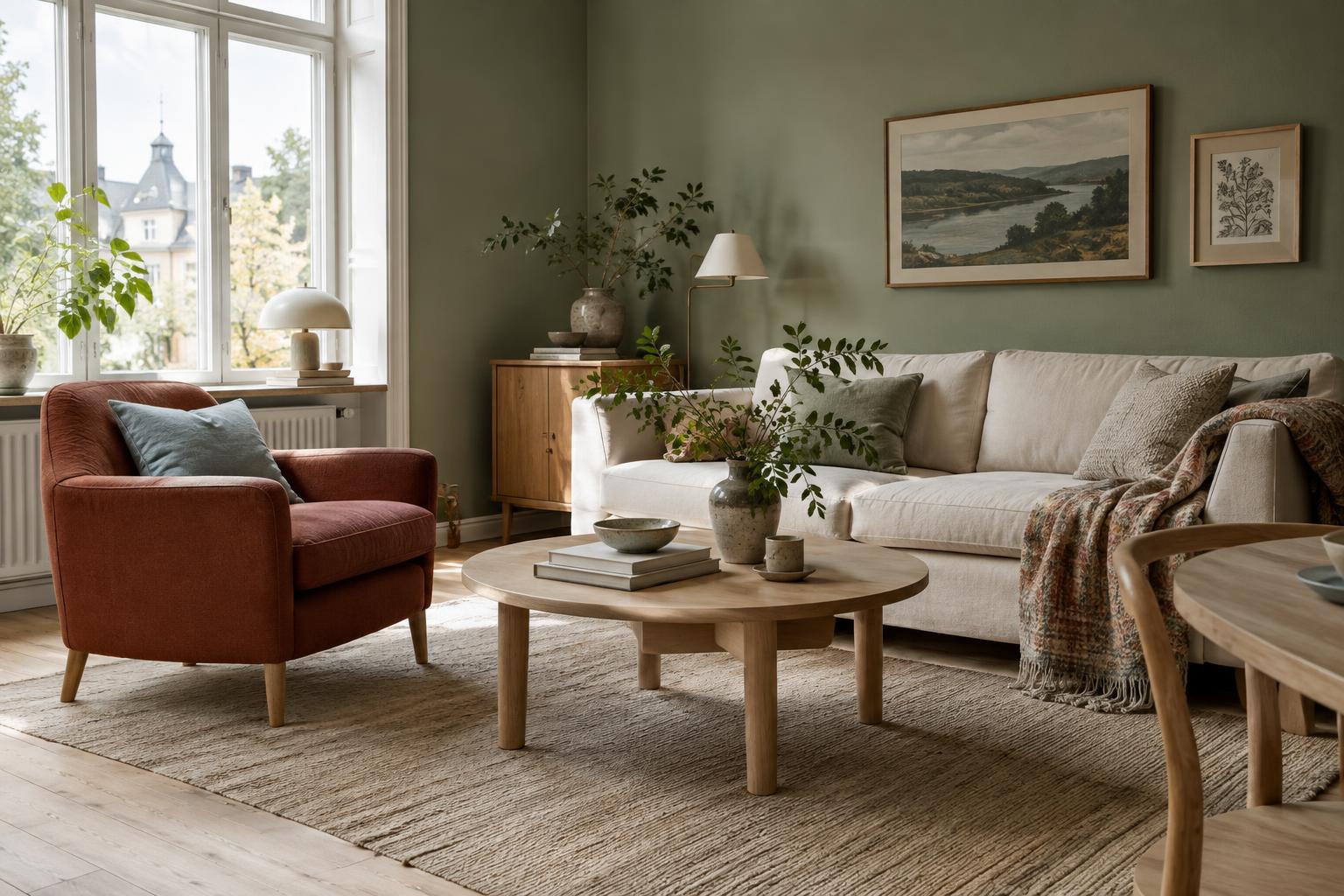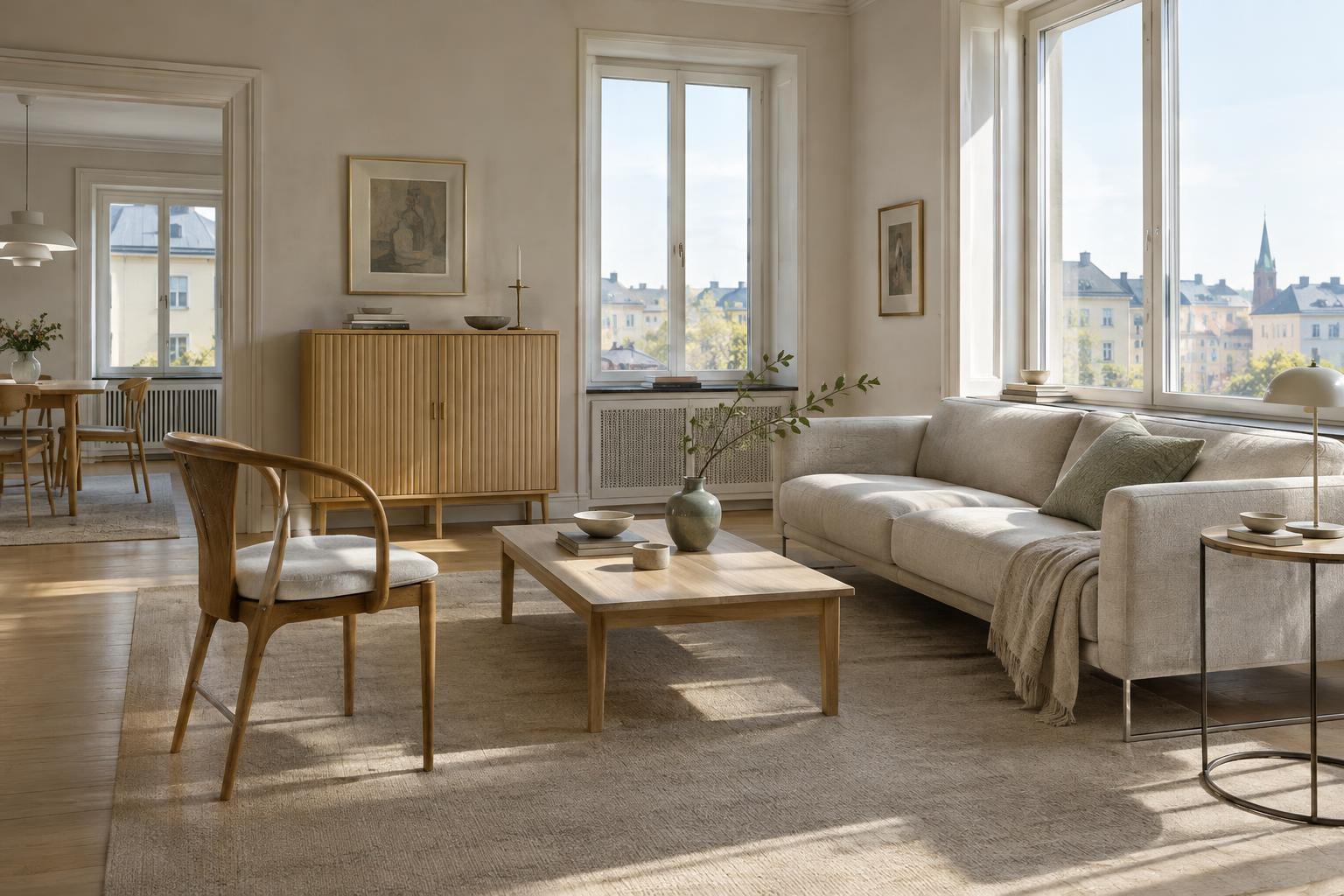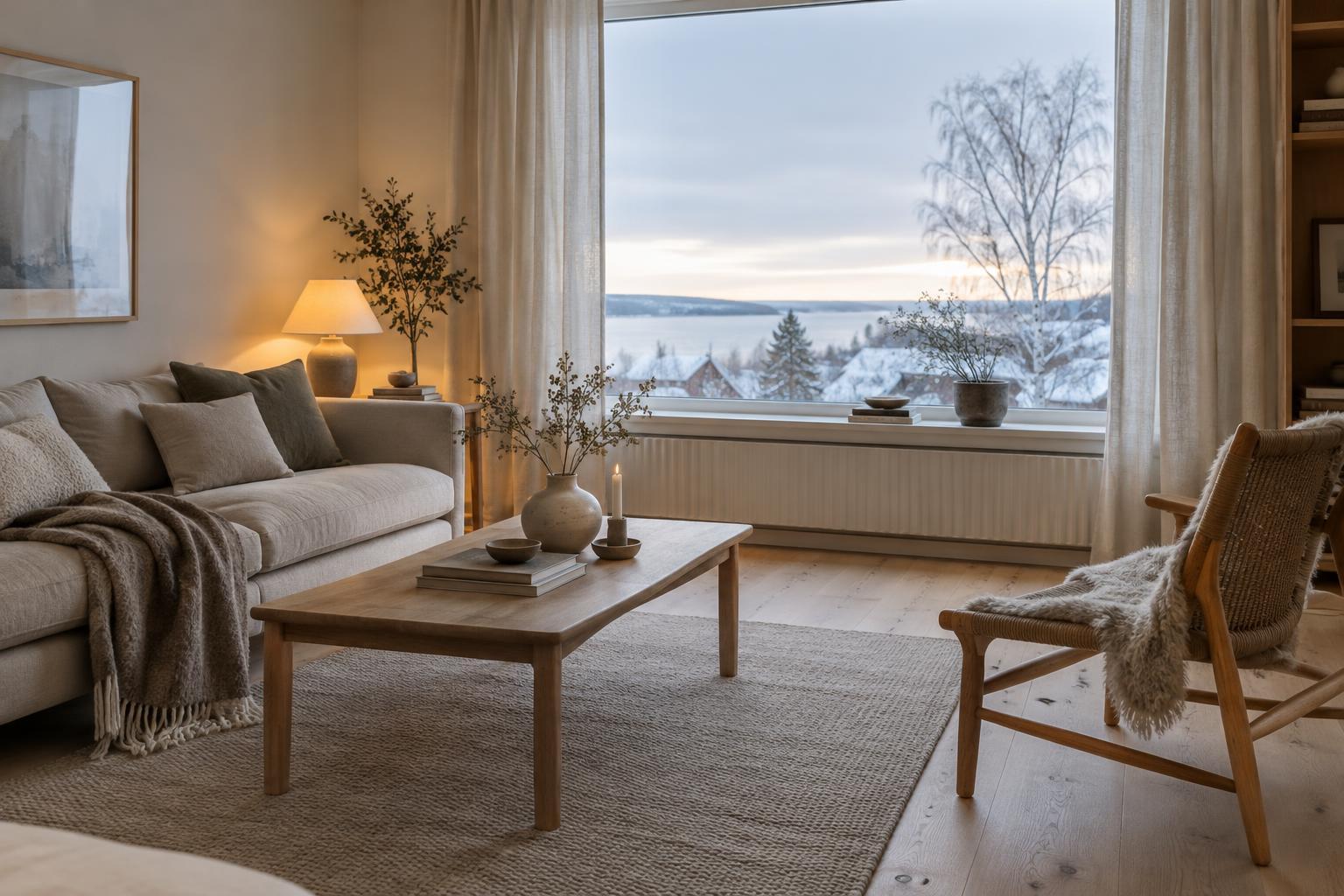
Begin with the light you actually have
Daylight is a useful starting point for a room, but there is no single Swedish light to design around. Seasonal differences are pronounced, and a home in the far north experiences a different rhythm from one in southern Sweden. Buildings, trees, nearby walls and window direction matter as much as the season. Before moving furniture or choosing paint, notice where light falls in the morning, at midday and in the evening. Repeating that observation at different times of year can reveal more than a floor plan does.
Think about what each room needs to do when daylight is scarce as well as when it is plentiful. A bright window may be an appealing place to read on a winter weekend, yet uncomfortable for working at a screen on a summer afternoon. Treat furniture placement as something you can adjust, rather than a decision that must remain fixed all year.
Make the most of a short winter day
In darker months, preserving available daylight can make a room more comfortable to use. Keep windowsills from becoming crowded, and consider whether tall furniture blocks light as it enters. Light-colored walls and ceilings can help spread daylight through a space, although they need not be stark white. Warm off-whites, pale wood tones and muted colors can create a gentle backdrop without making the room feel bare.
Place activities that benefit from daylight near a window when practical: a desk, a dining table or a favorite chair. Then plan for the hours when the sun is no longer doing the work. Instead of relying on one strong ceiling fixture, combine light at different heights. A reading lamp serves a chair; a pendant can define a table; a small lamp can soften a dim corner. This makes the room adaptable and lets you light the activity rather than every surface at once.
Soften the brightness of summer
Long summer evenings can make a room feel open and lively, but generous light is not always easy to live with. Direct sun may create glare on a screen, fade delicate belongings over time or make a bedroom difficult to settle in. The aim is not to shut daylight out completely. It is to give yourself ways to filter it.
Sheer curtains can soften a view and diffuse bright light while leaving the room airy. A blind or more substantial curtain adds control when privacy or darkness matters, particularly in a bedroom. Layering the two offers more choices than a single heavy covering. If you rent, look for options that suit the window and your rental agreement rather than assuming major alterations are necessary. Moving a desk slightly away from direct sun or changing its angle may solve a glare problem without changing the window at all.
Choose surfaces that work in both seasons
Materials change character with the light. A glossy surface may bring sparkle to a subdued room but become distracting when low sun strikes it. Matte finishes generally produce softer reflections, while wood, woven fabrics and textured ceramics offer visual warmth even when the daylight is cool. Try samples in the room before committing to a large area: a color that looks calm under a shop light may feel different beside your own window.
Contrast matters, too. An entirely pale room can make winter daylight feel expansive, but a few darker elements can give it depth. In summer, those same elements may provide a restful counterpoint to bright windows. Rugs, cushions and curtains are easier to change than floors or cabinets, making them useful for small seasonal adjustments. The goal is not to redecorate twice a year, but to build a room that has room to respond.
Create a routine, not a rigid formula
The simplest seasonal design habit is to check how a room feels as the light changes. In winter, you might open curtains fully during the day, shift a chair toward a window and switch on task lighting before you need it. In summer, you might draw a sheer curtain during the brightest hours and leave a lamp off until late evening. These small choices can be more effective than searching for one perfect paint color or fixture.
Design also has to account for daily life. Privacy, sleep, shared spaces and personal preference all shape what counts as comfortable light. A useful Swedish-inspired approach is to make the most of what the season offers while keeping control close at hand: an unobstructed window, an adjustable shade and several well-placed lamps. Sweden Culture Guide is an independent magazine, not a consulate or government service; this is an invitation to observe and shape a home, rather than a rulebook for how it should look.