Start with the experience you want
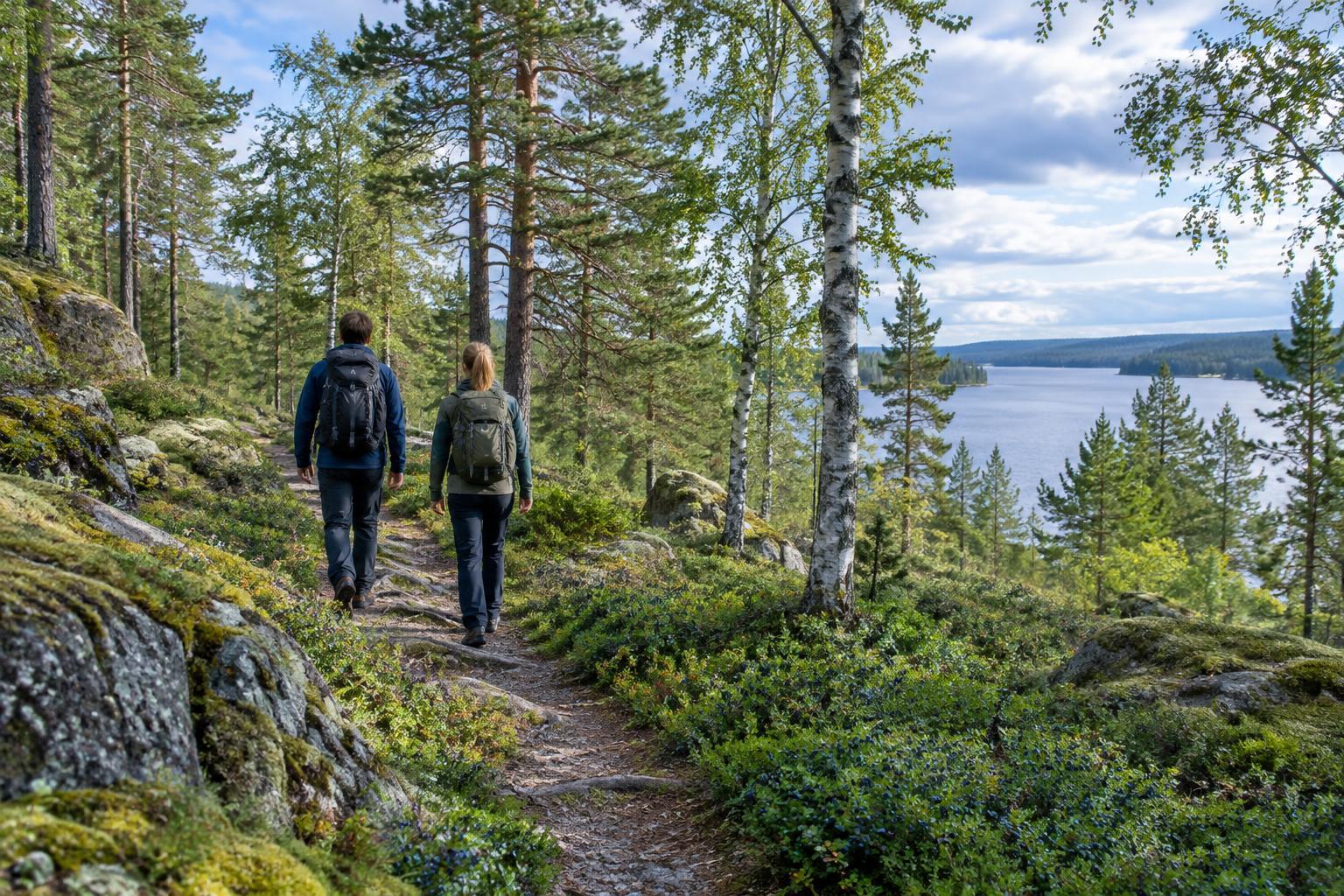
A day hike can give you a satisfying taste of Sweden’s landscapes without requiring a full trekking setup. You might follow a marked forest path, walk between lakes or climb to a viewpoint, then return to your starting point before evening. It is a good choice if you are new to hiking in Sweden, travelling with a mixed-ability group or fitting a walk around other plans.
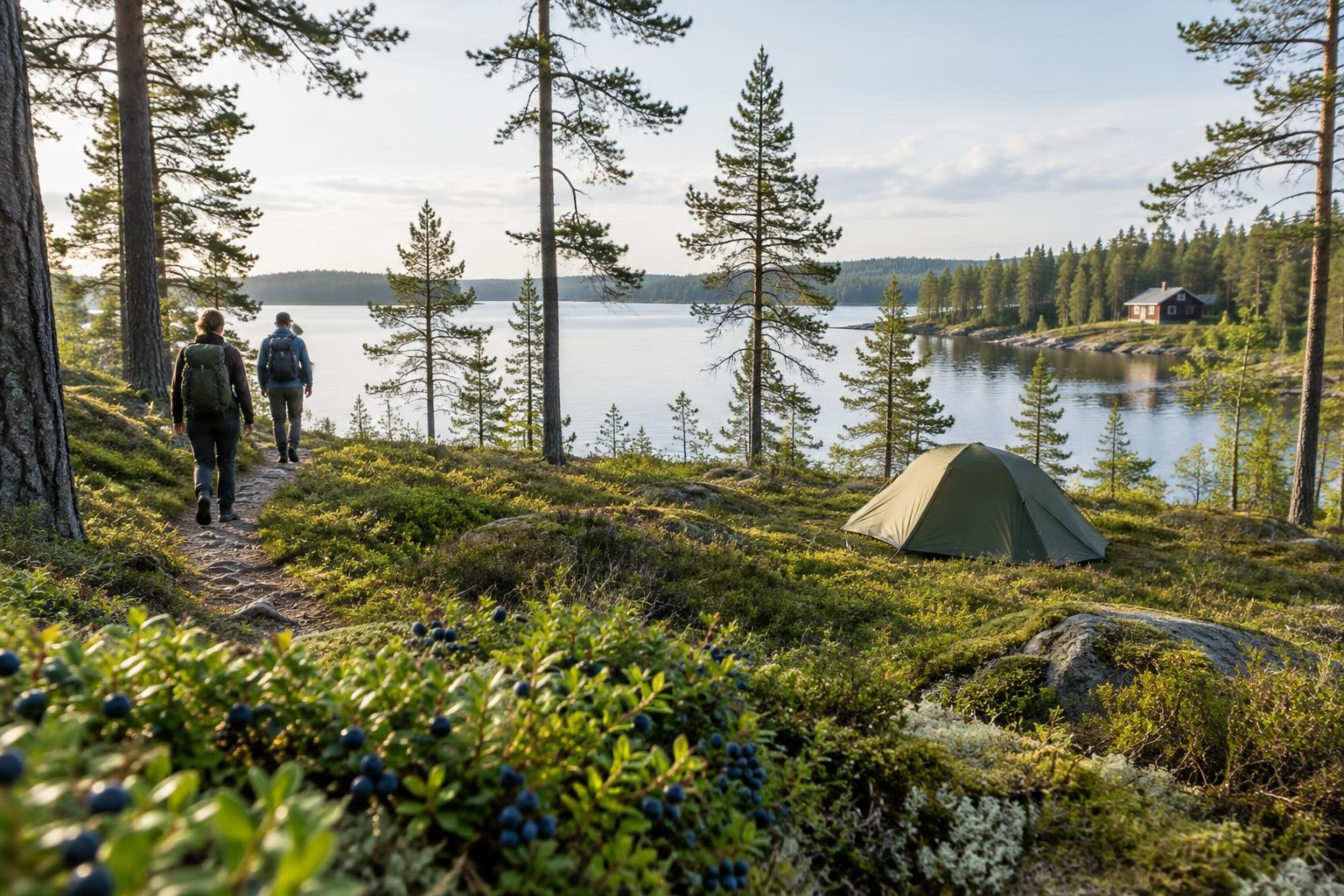
A multi-day trek offers something different: the slower rhythm of walking, eating and sleeping along a route. It also asks more of you. A pack feels heavier after several hours, and a wet or windy day matters more when you cannot simply head home. Choose an overnight route because you want that experience, not because a short walk seems too modest.
Match the route to your time and pace
Begin with the time you can genuinely spend on foot, including breaks and the journey to and from the trail. Distance alone is a poor guide to difficulty. A smooth path near a town may feel easy, while a shorter stretch over rocks, roots, boggy ground or steep slopes can take much longer. If you do not know your comfortable pace, try a shorter route first and leave room to turn back.
For a multi-day trek, think in stages rather than total distance. Consider where you can stop each night, how much climbing each day involves and whether the route has practical exit points. An itinerary with spare time is often more enjoyable than one that depends on reaching a distant campsite or shelter by a strict hour. Build in flexibility, especially if someone in your group has not carried an overnight pack before.
Let terrain and weather shape the choice
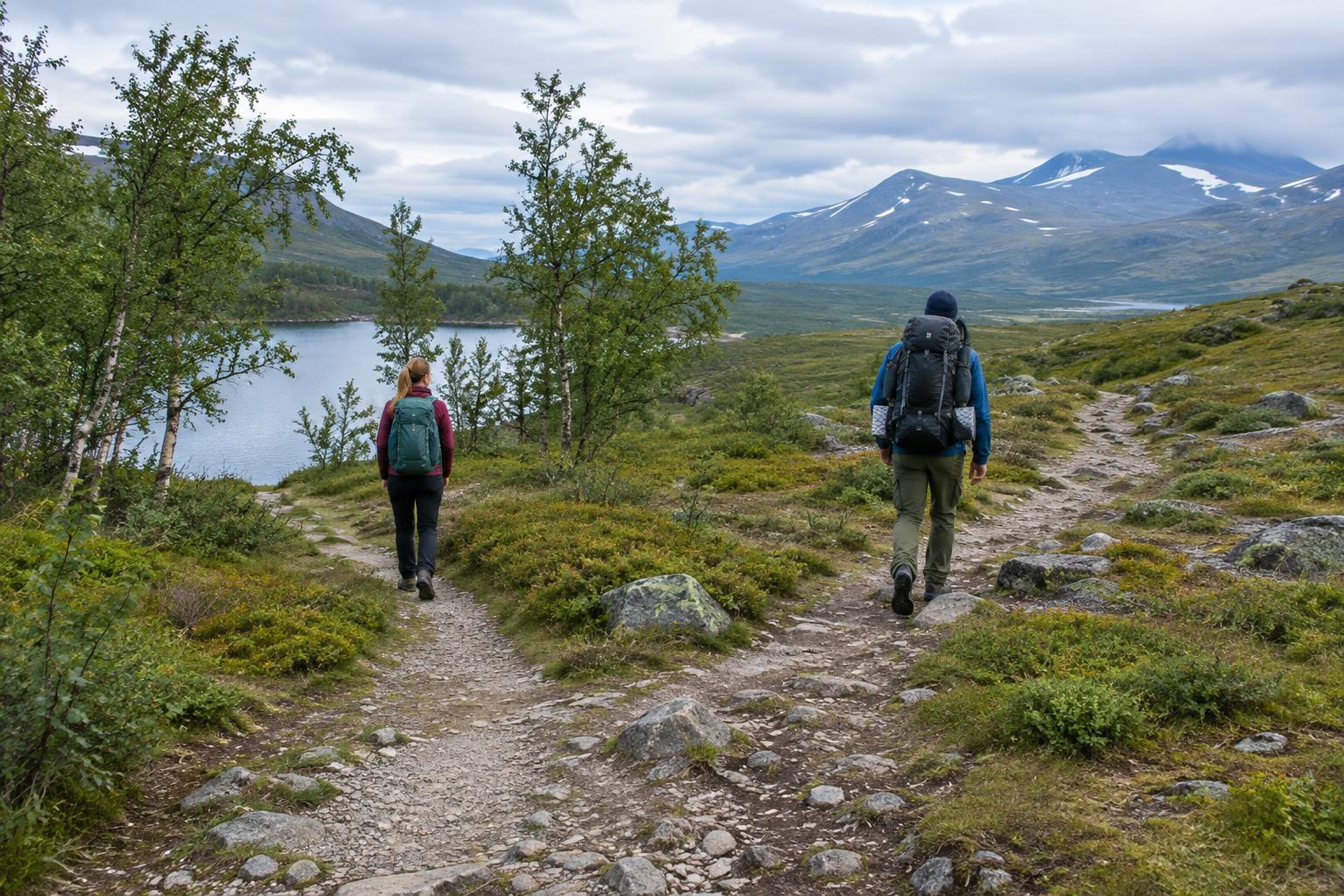
Swedish hiking does not have a single difficulty level. Trails near settlements can offer frequent path junctions and relatively straightforward navigation. In less developed forest areas or mountain terrain, markings may be harder to follow, streams may affect your progress and mobile reception may be unreliable. Read a route description alongside a map, and check whether its terrain matches your skills rather than judging it by attractive photographs.
Conditions can change what is reasonable in a day. Rain may make rock and boardwalk slippery; wind and low cloud can make exposed ground uncomfortable or difficult to navigate. Daylight also varies greatly with season and location. Before setting out, check a current local forecast and plan a turnaround time. For a longer trek, carry enough protection and supplies to cope with a slower-than-expected day, and be willing to shorten or postpone the route.
Plan access, overnight stops and responsibilities
A day hike is often simplest when you choose a loop or an out-and-back path with a clear starting point. If you plan to finish elsewhere, check your return transport before committing to the route. For a multi-day walk, look more closely at water, food, shelter and how you will reach the trailhead and leave the trail at the end. Do not assume a shop, staffed hut or phone signal will be available when you need one.
Sweden’s right of public access makes many outdoor experiences possible, but it comes with a responsibility to avoid disturbing people or damaging nature. Rules for camping, fires and access can differ in national parks, nature reserves and other protected places. Check the guidance for the specific area you intend to visit, respect signs and restrictions, and carry out your rubbish. This article is from an independent culture and travel magazine, not a consulate or government service.
Pack for the commitment you are making
For a day hike, take a map or reliable route information, a charged phone, weather-appropriate layers, water, food and any essentials your group needs. A downloaded map can help where reception is weak, but it is worth knowing how to locate yourself without relying entirely on a screen. Tell someone your intended route and when you expect to return, particularly if you will be walking somewhere quiet.
An overnight trek adds decisions about sleeping equipment, meals, water treatment and the weight you can carry comfortably. Test your pack and footwear on a shorter walk before depending on them for several days. If those preparations sound like the most appealing part of the trip, a trek may be right for you. If you would rather travel light and still have time to linger by a lake or viewpoint, choose a day hike. The best route is one you can enjoy while retaining the freedom to change plans.