Mistake 1: Treating white as the whole design plan
Pale walls can help a room feel open, especially when daylight is limited, but an all-white scheme is not automatically warm or distinctly Swedish. White walls, white furniture and white textiles may flatten a space if nothing provides contrast. The aim is not to remove every trace of color. It is to give the eye somewhere to rest while keeping the room welcoming.
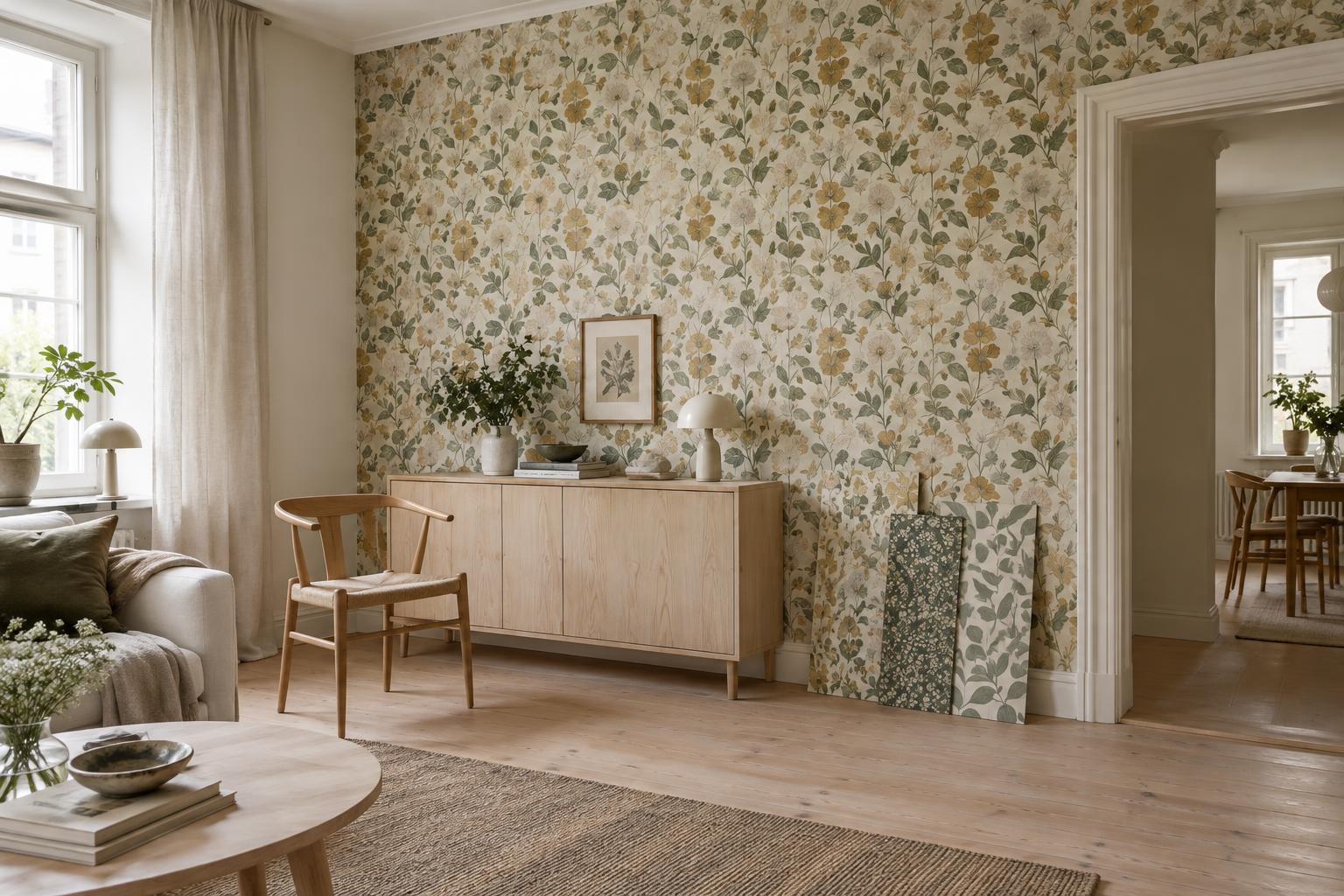
Start with the light the room actually receives rather than a photograph you admire. A bright room may accommodate cooler whites; a shaded one can feel more comfortable with a warmer off-white. Then bring in a small range of muted colors through cushions, ceramics, artwork or a painted chair. Soft blue, green and earthy tones can sit comfortably alongside pale timber. Test paint samples on more than one wall and look at them at different times of day before committing.
Mistake 2: Relying on one overhead light
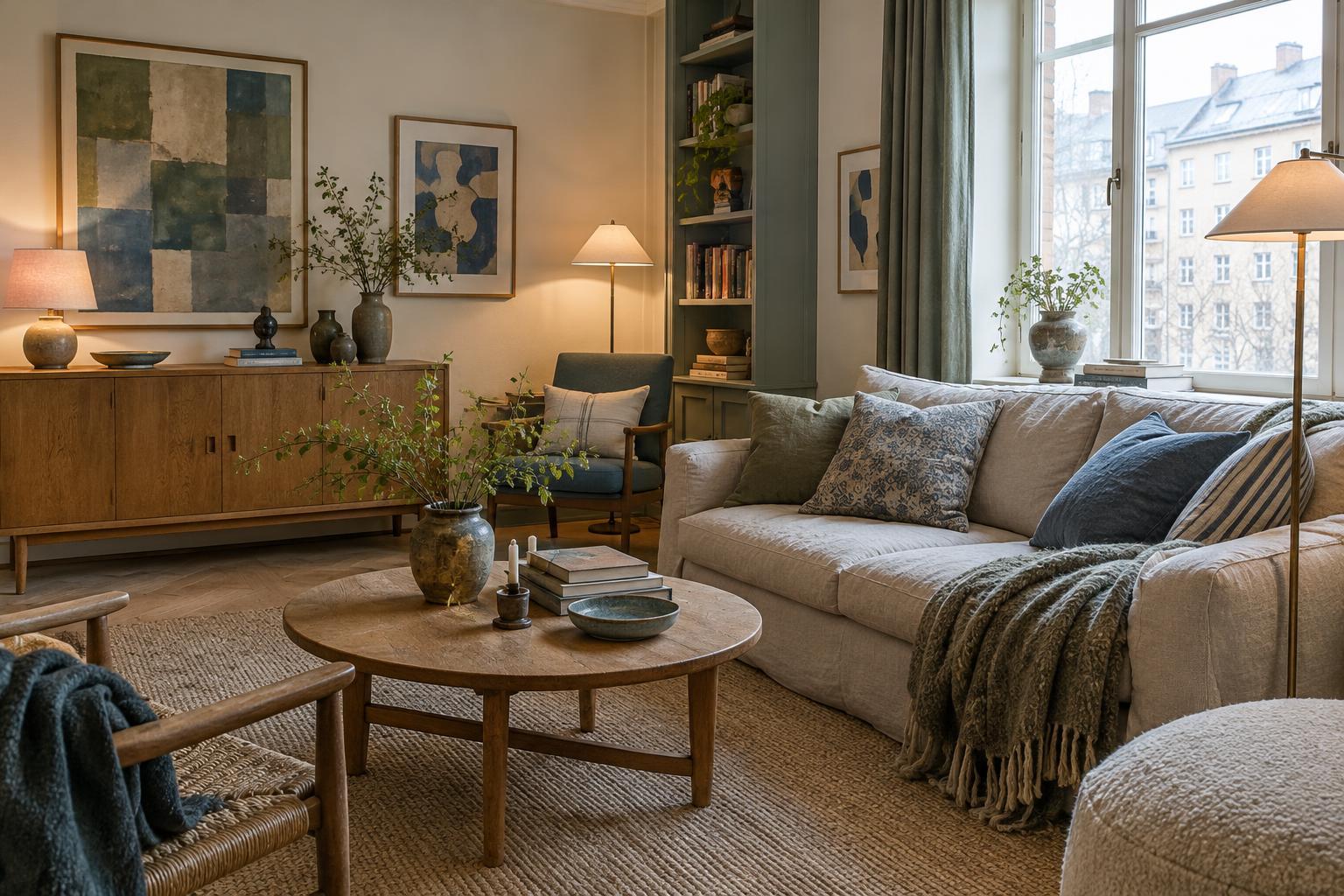
A room can look calm in daylight and feel stark after dark if its only light comes from the ceiling. Swedish-inspired interiors often benefit from a gentler mix of light sources. A table lamp by a sofa, a reading light beside a chair and a floor lamp in a dim corner give the room several ways to function. They also let you change the atmosphere without changing the furniture.
Think about what happens in each part of the room. Place useful light where people read, cook or work, then add softer light where they relax. Lampshades that diffuse glare can make a noticeable difference. Candles can contribute to a cozy setting when used safely, but they should not have to do all the work. A practical lighting plan makes the room pleasant on an ordinary evening, not just when it is styled for a picture.
Mistake 3: Choosing minimalism over comfort
Simple forms and clear surfaces are appealing, but taking away too much can leave a room feeling unused. A single rigid sofa, bare floor and empty shelves may look tidy without giving anyone a reason to stay. Function is a better guide than a rule about how many objects you may own. Ask whether there is a comfortable place to sit, somewhere to set down a cup and enough storage to keep daily necessities close at hand.
When selecting furniture, pay attention to scale as well as appearance. Slender pieces can make a small space easier to navigate, but a chair that is too small or a table too low for its purpose will quickly become frustrating. Leave clear paths between pieces, then add the comforts you genuinely use: a throw within reach, a side table by the sofa or a bench that also holds shoes. A room can feel orderly without being sparse.
Mistake 4: Making everything new, smooth and identical
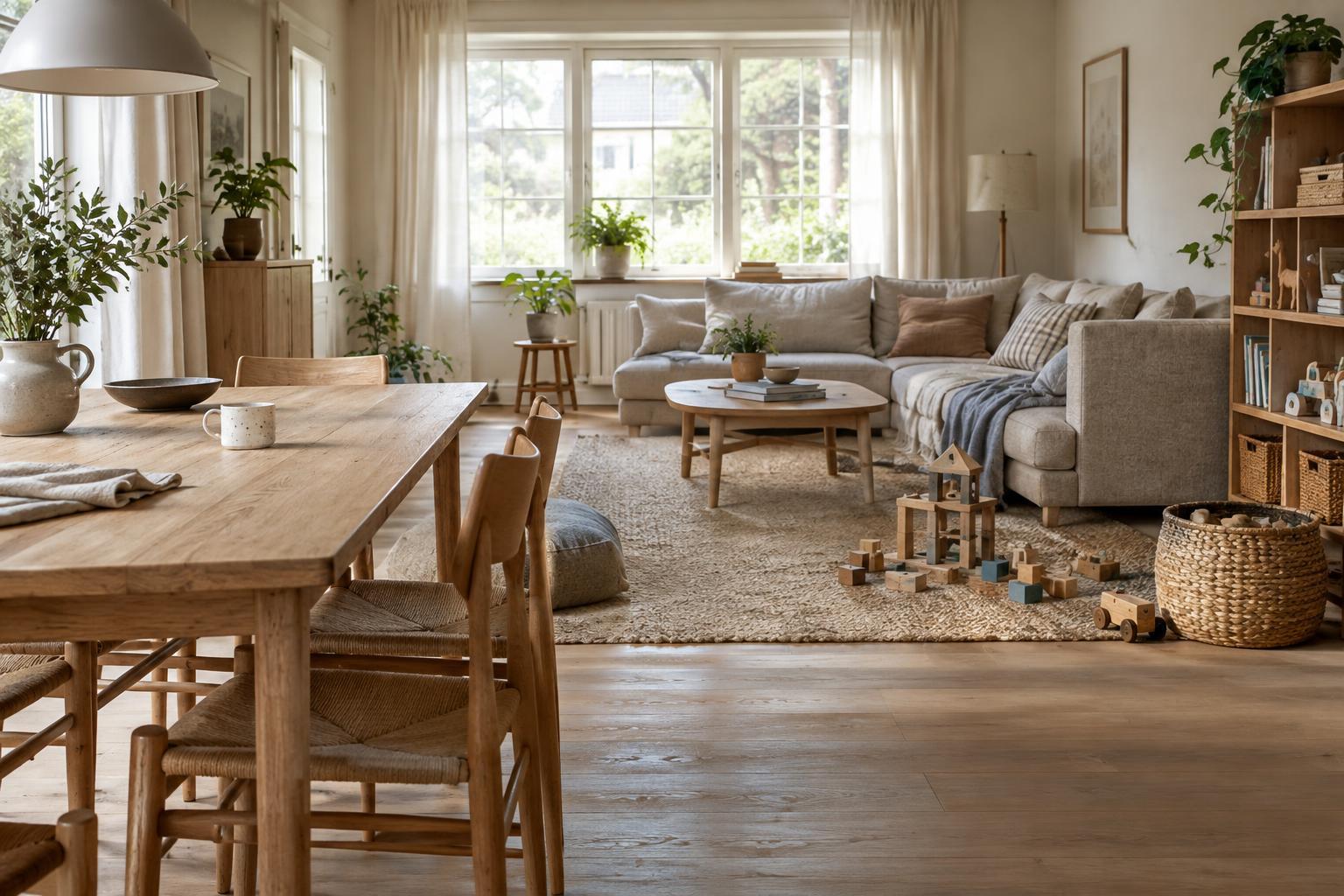
Matching furniture sets and uniform finishes can make a room feel staged. Texture gives a restrained palette depth: woven linen, wool, matte ceramics, wood with visible grain or a rug that softens the floor. These materials need not all be expensive or rustic. Even a modest mix of surfaces can keep light colors from looking flat.
Consider keeping one or two pieces that carry a personal story, such as a secondhand table, a framed print or a chair you have repaired. Pair them with simpler contemporary items rather than trying to reproduce a complete period interior. Avoid adding texture at random, though. Repeating a few materials or colors across the room creates a connection between old and new pieces. The result is more convincing when it reflects how you live than when every object appears to have been purchased for the same photograph.
Mistake 5: Copying the look without considering your home
Swedish-inspired design is often presented in rooms with generous windows, pale floors and carefully edited belongings. Your room may have different light, dimensions or storage needs. Covering a useful window with heavy layers can make it dimmer, while removing curtains entirely may sacrifice privacy or comfort. Similarly, open shelving looks airy only when it suits what you need to store.
Keep the ideas that serve your space: accessible daylight, useful furniture, thoughtful lighting and a balance of uncluttered surfaces with familiar possessions. Adapt the rest. Choose window coverings that work for your setting, keep closed storage where it helps and allow room for the colors or objects you love. A Swedish-inspired interior is most successful when it supports everyday life rather than imitating an image. Sweden Culture Guide is an independent culture magazine, not a consulate or government service.