Start with the dish, not a stereotype
Swedish home cooking includes hearty dinners, baked treats and dishes made for sharing. It is not all one flavor, and it does not require every plate to be covered in cream. A common mistake is to make a recipe richer or sweeter before tasting what its main ingredients contribute. Potatoes, fish, warm spices and tart berries each have a role; keeping those flavors distinct often makes the finished dish more satisfying.
This is a guide to food, not an official account of how every household cooks. Sweden Culture Guide is an independent culture magazine, not a consulate or government service. Recipes vary by family and occasion, so treat the suggestions below as useful starting points rather than rules.
Swedish meatballs: avoid a dense mixture and a crowded pan
When making köttbullar, it is tempting to work the meat mixture until it looks perfectly smooth. Too much handling can make the meatballs firm rather than tender. Mix the ingredients just until combined, then shape them with a light touch. A small test meatball, cooked before you form the rest, lets you check the seasoning while it is still easy to adjust.
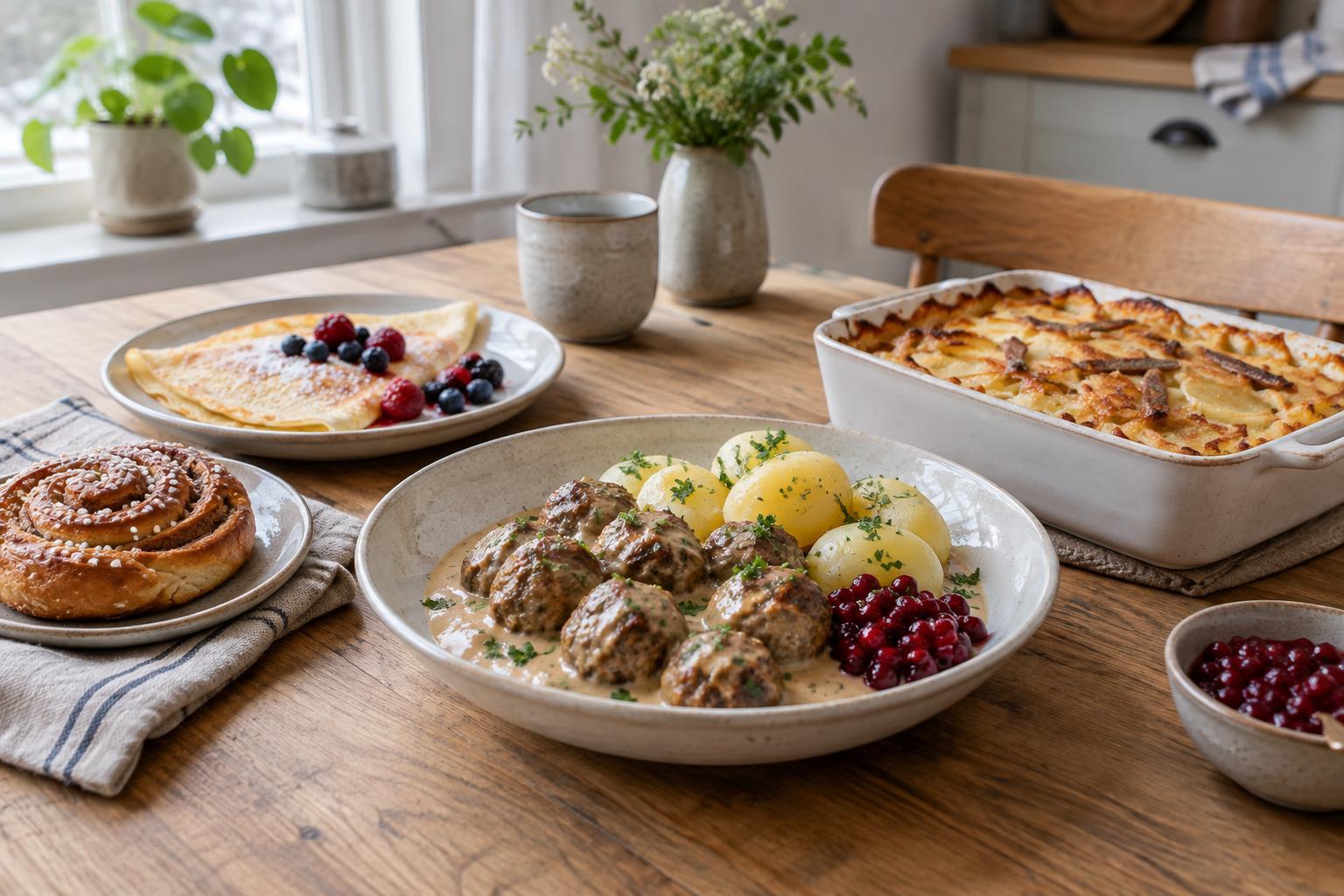
Another mistake is filling the pan in one go. Crowded meatballs tend to steam instead of brown, so cook them in batches if needed. Turn them as they color and make sure they are cooked through. If you are making a pan sauce, use the flavorful browned bits left behind, but taste before adding more salt. Meatballs served with potatoes and a little lingonberry preserve benefit from that contrast between savory, mild and tart; the preserve need not become the main sauce.
Jansson’s temptation: choose the fish carefully
Jansson’s frestelse is a potato gratin whose character depends on the fish mixed among the potatoes and onions. The ingredient called ansjovis in Sweden is a spiced, preserved sprat. It is not the same as the strongly salty anchovy fillets commonly sold under the English name “anchovies.” Swapping one for the other without adjusting the recipe can overwhelm the dish. If Swedish ansjovis is unavailable, look for a recipe written specifically for an alternative rather than assuming the quantities will be interchangeable.
The potatoes matter, too. Cut them into reasonably even strips so they cook at a similar pace, and give the gratin time in the oven until the potatoes are tender. Pouring in extra cream to fix a dry-looking surface too early can leave the center soupy. Follow the recipe’s liquid amounts first, then judge the texture as the dish cooks. Letting the gratin settle briefly before serving also makes it easier to portion.
Cinnamon buns: give the dough time and keep the spice balanced
Swedish cinnamon buns, or kanelbullar, should be pleasant to eat without relying on a thick layer of frosting. A frequent mistake is adding enough flour to make the dough easy to handle immediately; that can lead to heavy buns. Add flour gradually, allowing for a dough that is soft but workable, and give it the rising time specified in the recipe. If it is sticky, a short pause may make it easier to shape without a large addition of flour.
Cinnamon is central, while cardamom is a familiar companion in many Swedish bun doughs. You do not have to use a great deal of either: an even spread of filling makes every bite more consistent. Avoid rolling the dough so thin that it tears or piling filling along one edge. Finally, watch the buns as they bake. Their exposed folds can brown before the centers are ready, so a moderate oven and similar-sized buns help them bake evenly.
Swedish pancakes: think thin, not fluffy
Swedish-style pancakes are usually thin and flexible, closer to a delicate pan pancake than a tall breakfast stack. Using a thick batter or adding a raising agent because you expect fluffiness changes the result. Start with a recipe intended for Swedish pancakes, whisk the batter until smooth and let it rest if the recipe calls for it. Stir it again before cooking, since it may settle.
An overheated pan is another common problem: the first side can brown before the batter has spread thinly. Use enough batter to coat the pan in a light layer, swirl promptly and adjust the heat if the edges darken too fast. The first pancake may be a useful trial rather than a failure. Serve the finished pancakes simply, perhaps with jam and a little whipped cream, so their tender texture remains the point of the dish.