Assuming a short walk needs no plan
A walk that looks easy on a map can feel different in winter. Snow may hide uneven ground, a familiar path may be icy, and a slow pace can turn a quick outing into a longer one. Before leaving, check the local forecast, choose a route you can shorten, and tell someone where you are going if you will be walking alone. A charged phone is useful, but it is no substitute for knowing your way back.
Daylight is another easy detail to overlook. Its length varies greatly across Sweden and through the season, so plan around the light where you are rather than relying on a usual walking routine. Leave time to return before dark, or bring a light if you might be out later. If the weather worsens or progress is slower than expected, turning back is a sensible choice, not a failed walk.
Dressing for the temperature, not the activity
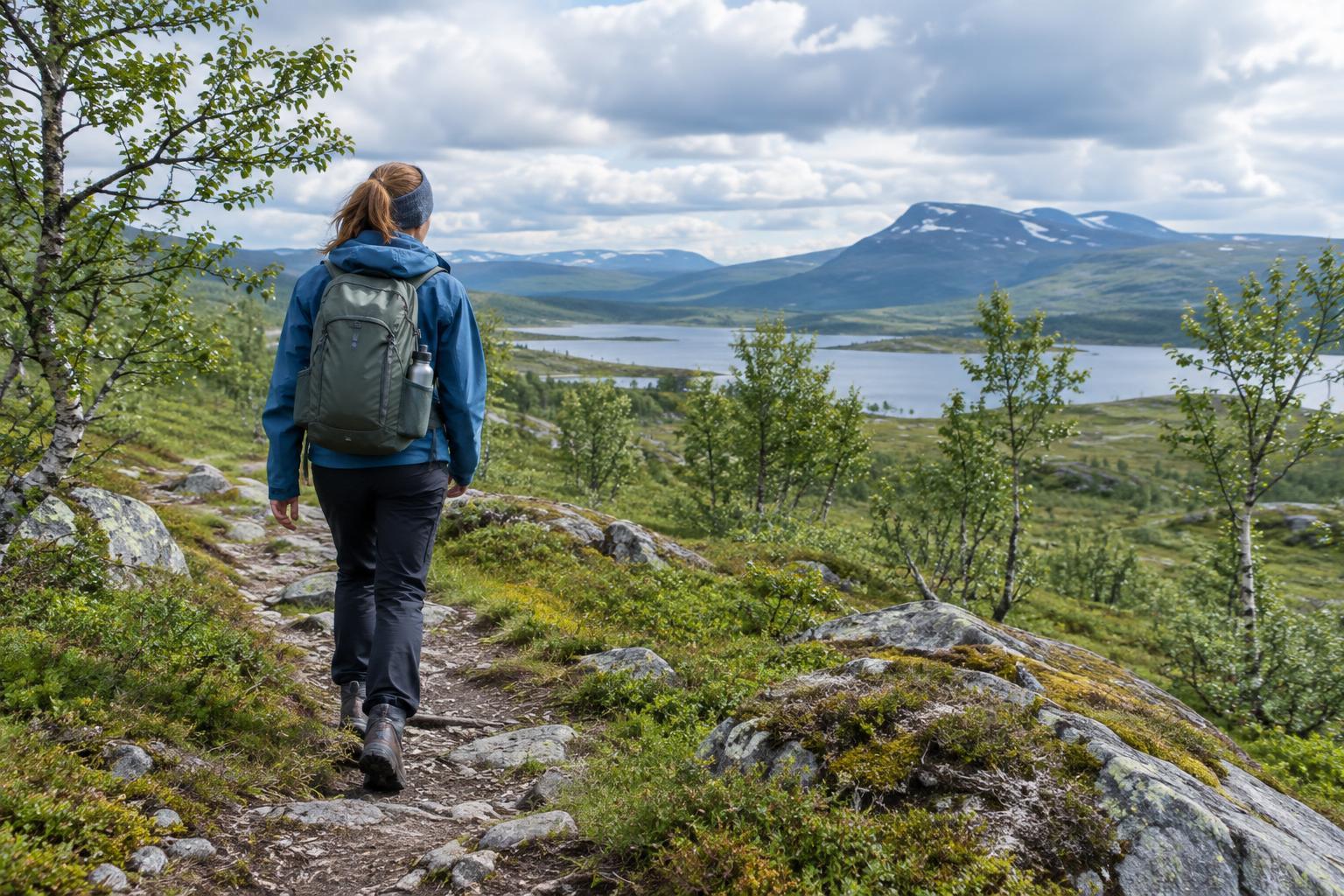
The coat that feels perfect while standing still may be too warm once you start climbing a hill. Sweaty clothes can then feel cold when you stop. Instead of relying on one heavy layer, wear layers you can adjust: something comfortable next to your skin, a warmer middle layer, and an outer layer suited to wind or precipitation. The right combination depends on the conditions and how briskly you walk.
Do not forget the small exposed areas. A hat, gloves and something to protect your neck can make a walk much more pleasant. Bring a spare dry layer if you expect a long outing or a stationary break. Choose footwear with grip and room for warm socks; boots that squeeze your feet can be uncomfortable even if they look sturdy. Check your clothing before setting off, then make small adjustments as you warm up.
Treating every white surface as solid ground
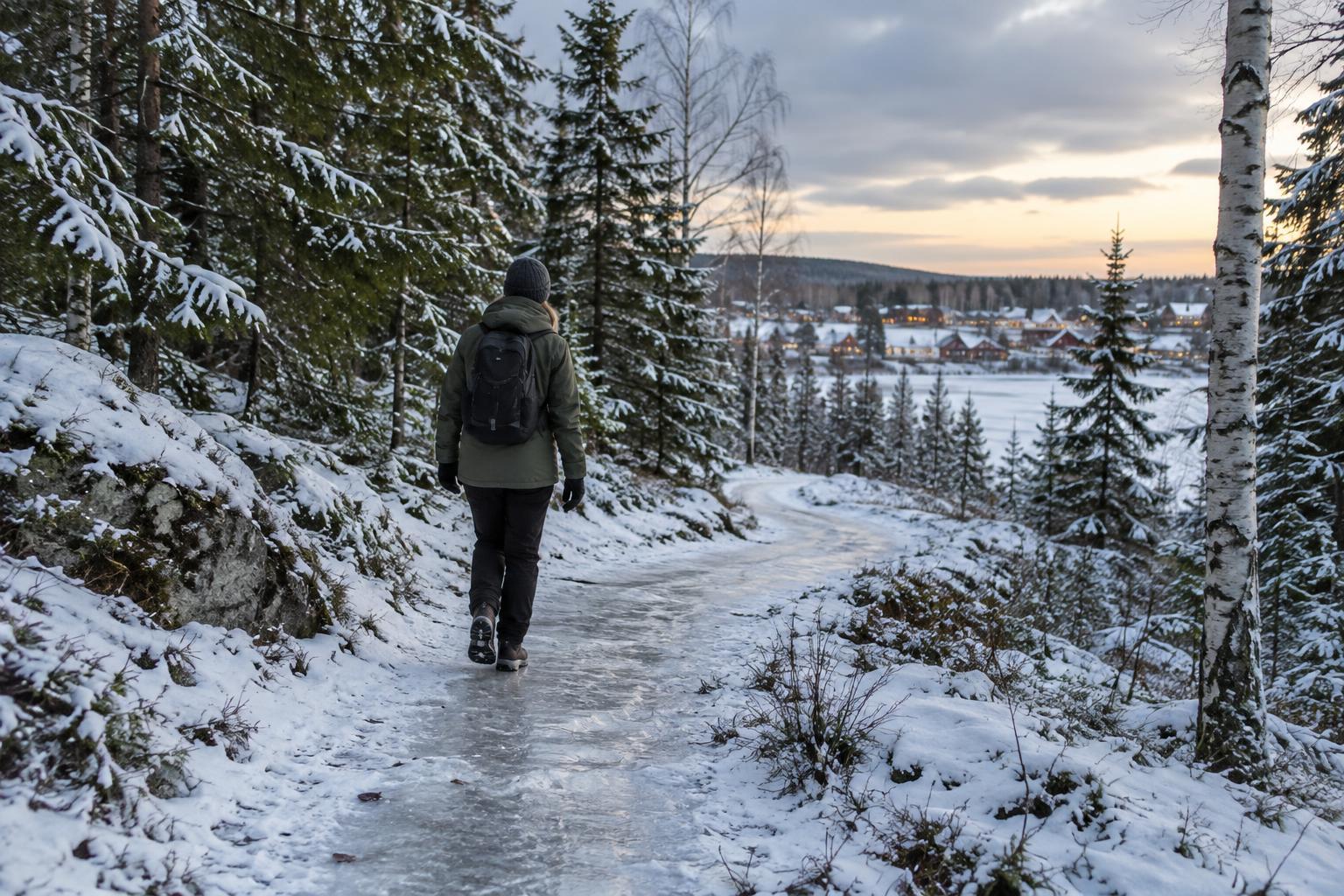
Fresh snow can make a path look smooth while concealing ice, stones or steps. Take shorter strides on slippery sections, avoid rushing downhill, and use a handrail where one is available. Traction aids for shoes may help on icy paths, but they do not make every surface safe. On maintained routes, conditions can still change between shaded and sunny stretches.
Frozen water deserves particular caution. The appearance of ice is not a reliable measure of its strength, and conditions may vary across the same lake or shoreline. Unless you have appropriate local knowledge, equipment and a sound reason to be on the ice, keep your walk on land. The same restraint applies near steep banks and snow-covered edges: give them space rather than stepping closer for a photograph.
Following a summer route without reconsidering it
A pleasant summer trail may be harder to follow after snowfall. Markers can be obscured, boardwalks can become slippery, and an unploughed approach can add effort before the walk even begins. Start with a modest route, especially if you are unfamiliar with the area. Look for clear paths and a straightforward way back, and consider a local loop rather than a long point-to-point walk.
When walking near roads, remember that snowbanks can narrow the space available to pedestrians. Stay visible, use designated paths where possible, and do not assume a driver has seen you. In a town or city, a park path may be an easier winter choice than a remote trail. There is no requirement for a winter walk to feel like an expedition.
Forgetting to leave room for a pause
Winter walks are often more enjoyable when the plan includes a warm place to stop or a simple way to head home. Carry water and a small snack for longer outings, and be aware that sitting still can cool you quickly. If you stop for a drink or a view, put on an extra layer before you begin to feel chilled.
Pay attention to how everyone in your group is doing, not just to the distance remaining. Tiredness, cold hands or a wet sock are good reasons to change the plan early. Swedish winter landscapes can be rewarding at an unhurried pace: the aim is to notice them and return comfortably. This independent culture and travel magazine is not a consulate or government service; for any walk, use local conditions and your own judgment to guide your plans.